
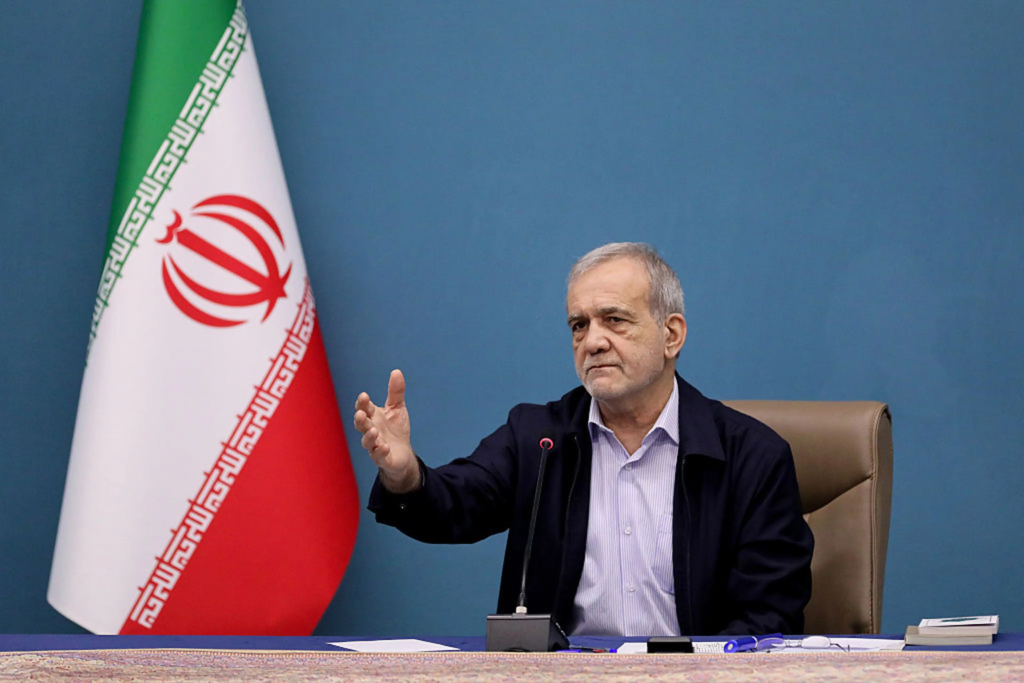
Tension just exploded on the stage of the United Nations General Assembly in New York. World leaders watched in shock as the presidents of the United States and Iran traded fierce warnings in front of the entire world.
The dramatic face-off reached a boiling point when Iranian President Masoud Pezeshkian took the podium. Looking directly toward the international audience, he sent a fierce message to US President Donald Trump. He declared that no matter how many sanctions or military threats Washington throws at them, Iran will never bow its head or bend the knee.
This heated clash comes after months of rising conflict, military exchanges, and soaring global energy prices. People around the globe are watching closely because what happens between these two countries directly touches gas prices, global safety, and international trade.
Here is the full breakdown of what went down in New York, why both leaders are refusing to back down, and what this dramatic showdown means for the rest of the world.
What Caused the Explosion at the UN General Assembly?
The hall of the United Nations is supposed to be a place for quiet diplomacy, but this week it felt more like an arena. The confrontation started on Tuesday when US President Donald Trump delivered his address to world leaders.
The $0 Secret To Launching Your Entire Online Empire
Why pay hundreds every month for separate software? Build funnels, send emails, and make sales with Systeme.io completely free.
Get Started For $0Free Forever • No Credit Card Needed • Beginner-Friendly
Trump did not hold back. He gave Iran a harsh ultimatum, presenting two extreme choices.
On one hand, Trump said Iran could choose to make a deal with the United States. He claimed that if Iran agreed to American conditions, the country could rebuild and become far greater than ever before. On the other hand, Trump openly raised the option of taking massive military action. He asked the room whether he should annihilate the Islamic Republic quickly so it could never pose a threat again.
When Trump made those comments, the Iranian delegation at the UN got up and walked out of the room in protest. The stage was set for a massive response.
The very next day, Iranian President Masoud Pezeshkian stepped up to give his address. The moment he began talking, a single diplomat representing the United States stood up and walked out, returning the gesture from the day before.
Pezeshkian carried a photograph up to the podium. He held up an image showing victims of violence from recent strikes and accused the United States and Israel of committing acts of terrorism against the Iranian people. He insisted that Iran has never been the nation to start a war, but made it clear that Iran will defend itself with maximum force.
Inside Pezeshkian’s Speech: “We Will Stand Until Our Last Breath”
Pezeshkian’s speech was designed to show total strength to his citizens at home and to adversaries abroad. He directly addressed the pressure campaign led by Washington, which includes strict trade sanctions, military posturing, and harsh political language.
He told the assembly that the American government must realize something basic about the Iranian people. The more pressure and bullying the US applies, the stronger Iranian resistance will grow.
Key Points from the Iranian President’s Address
- Refusal to Yield: Pezeshkian stated clearly that Iran will never bow its head or bend the knee to external force or threats.
- Defending the Homeland: He declared that Iranians will stand in defense of their country until their very last breath.
- Rejection of Hegemony: He argued that the 21st century must not slide back into an era where powerful nations bully smaller ones.
- Building Defensive Strength: He explained that Iran built its military capabilities specifically so that no foreign power could bomb Iranian cities without facing an immediate, painful response.
Pezeshkian also brought up the issue of nuclear capabilities. He pointed out what he viewed as a major double standard in international politics. He noted that international inspectors constantly monitor Iranian facilities, even though Iran insists its program is strictly for peaceful energy and scientific progress. Meanwhile, other nations in the region hold nuclear arsenals without facing the same level of global sanctions.
He insisted that while Iran will never seek nuclear weapons, it will also never give up its right to peaceful nuclear technology for domestic energy and medical research.
The Crisis at the Strait of Hormuz and Global Energy Markets
While politicians deliver speeches in New York, the real-world impact of this conflict is hitting ordinary people straight in their wallets. A massive portion of this conflict centers around the Strait of Hormuz.
The Strait of Hormuz is a narrow waterway in the Middle East. It is one of the most vital oil shipping lanes on planet Earth. Roughly twenty percent of the world’s petroleum passes through this tight corridor every single day.
Since the outbreak of hostilities, Iran has used its navy and coast guard to restrict access through the strait. Shipping companies have had to pull back, tankers have been rerouted, and global oil delivery has slowed down dramatically.
During his speech, Pezeshkian spoke directly about the waterway. He said Iran cannot allow hostile foreign nations to have free access to the Strait of Hormuz to build up their economic interests, while simultaneously using those same ocean routes to attack or squeeze Iran.
How the Shipping Blockade Affects Everyday Consumers
- Surging Crude Oil Prices: When oil tankers cannot pass through the strait safely, the global supply drops overnight, pushing crude oil prices higher.
- Rising Diesel and Gasoline Costs: Higher crude prices mean immediate price hikes at local gas stations in America, Europe, Africa, and Asia.
- Expensive Shipping and Freight: Trucks, cargo ships, and delivery vans rely on diesel. When fuel gets expensive, transporting everyday goods like groceries and clothes costs more.
- Inflation Spike: As transportation costs climb, retail stores are forced to raise prices on everyday supermarket items, hitting family budgets everywhere.
This economic pain is already creating serious domestic pressure inside the United States. Soaring diesel prices are worrying voters as important political elections approach. High gas prices have historically caused huge trouble for sitting leaders, making the economic side of this conflict just as dangerous as the military side.
Secret Talks Behind Closed Doors: Is Diplomacy Still Alive?
Despite all the loud speeches and public threats, there are signs that neither side has completely closed the door on negotiations. High-stakes diplomacy often happens far away from camera lenses and news microphones.
Send, Spend & Hold Money Worldwide Without Hidden Fees
Transfer money internationally at the real exchange rate and hold 40+ currencies in one account.
Open a Wise AccountMid-market rate • Fast transfers • 40+ currencies
Behind the scenes at the United Nations, representatives from both nations held secret, three-hour talks in New York. US special envoys Steve Witkoff and Jared Kushner met directly with key mediators and Iranian officials, including Foreign Minister Abbas Araghchi.
When asked about these private meetings later, Trump described them as very good discussions. He expressed optimism that a deal could still be worked out, repeating his belief that Iran has a choice between total destruction or unbelievable future growth.
Pezeshkian also left a small opening for talks during his address. He reiterated that Iran has always been willing to sit down at the negotiating table. However, he emphasized one major condition: negotiations can only happen if the United States treats Iran as an equal partner and stops using threats and sanctions as leverage.
This dynamic creates a fascinating political reality. In public, leaders use tough rhetoric to show strength to their citizens. In private, envoys work behind closed doors to figure out a path that prevents full-scale global war.
How Technology and Modern Systems Drive Modern Warfare
Geopolitical battles in this era are no longer fought with basic traditional military units alone. The technology behind defense systems, intelligence gathering, and media distribution has completely transformed how international conflicts unfold.
Advanced tracking technology, autonomous systems, and long-range defense hardware play central roles in how nations protect their borders today. Rapid innovations in technology and AI now power military surveillance, early-warning radar systems, and smart defense networks. These tools give armies the ability to monitor naval routes in places like the Strait of Hormuz in real time.
At the same time, the war of information moves faster than ever. Moments after Pezeshkian or Trump finish speaking on stage, clips of their speeches are chopped up, analyzed, and uploaded across digital video networks instantly. Content creators around the globe use automated tools like YouTube automation to publish breaking news updates, breakdown videos, and political commentary within minutes of major events taking place.
Because information spreads across social media almost instantaneously, public opinion can shift within hours. Both American and Iranian leaders know that every word spoken at the United Nations is being watched live by millions on smartphones across the planet.
What Happens Next in This High-Stakes Rivalry?
The world now stands at a critical crossroads. Both nations have laid down clear markers that will dictate how the coming weeks play out.
If diplomatic envoys manage to turn those three-hour private meetings into a formal framework, we could see a gradual reduction in military actions, a reopening of shipping lanes, and a drop in world fuel prices. A successful agreement would give both sides a victory they can present to their public.
The $0 Secret To Launching Your Entire Online Empire
Why pay hundreds every month for separate software? Build funnels, send emails, and make sales with Systeme.io completely free.
Get Started For $0Free Forever • No Credit Card Needed • Beginner-Friendly
However, if public posturing hardens and neither side yields on its core demands, the situation could escalate further. Continued blockades in the Persian Gulf will keep energy costs high, hurt international commerce, and increase the likelihood of accidental military skirmishes.
International observers, regional neighbors, and global financial markets are holding their breath. The coming days will reveal whether tough talk leads to a diplomatic deal or pushes the world deeper into unpredictability.
Frequently Asked Questions (FAQs)
Why did the Iranian President say Iran will never bend at the knee?
Iranian President Masoud Pezeshkian made this statement at the UN General Assembly to show that Iran will not surrender to US sanctions, military threats, or economic pressure. He wanted to demonstrate domestic strength and signal that Iran expects to be treated as an equal in any diplomatic talks.
What did Donald Trump demand during his UN speech?
US President Donald Trump presented a choice to Iran. He stated that Iran could either agree to a strict new deal with the US to rebuild its nation, or face severe military action that could devastate its government and infrastructure.
Why is the Strait of Hormuz so important in this conflict?
The Strait of Hormuz is a narrow waterway through which roughly one-fifth of the world’s daily oil supply passes. Disruption or closure of this shipping route forces oil prices to rise globally, causing gas and diesel prices to spike for everyday consumers.
Are the US and Iran still talking behind the scenes?
Yes. Despite the fiery speeches on stage, high-level envoys including US special envoys and the Iranian Foreign Minister held three-hour private meetings in New York to discuss potential paths forward.
How does this conflict affect everyday gas and grocery prices?
When energy supply lines are threatened, crude oil becomes more expensive. Higher oil prices increase the cost of fuel for freight trucks and ships. Transporting food and manufactured goods costs more, leading to higher prices on store shelves worldwide.
Staying updated on world events helps us understand how international news shapes our local economy and daily lives. Want to learn more about who we are and what we do? Head over to our about page to see our story. If you have thoughts on this UN standoff or want to share feedback, drop us a message through our contact page.
Join our growing community online to stay connected with the latest breaking news and viral updates! Follow us on Instagram, check out our updates on Facebook, and join the ongoing discussions on X (Twitter). Let us know your thoughts on where this conflict is heading next!
