
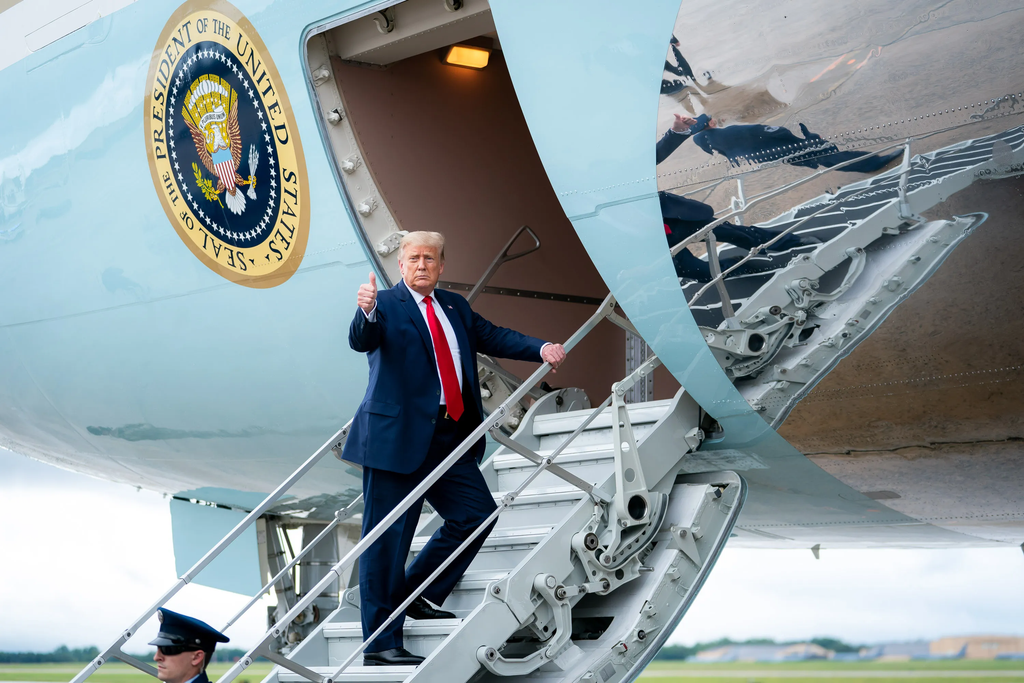
U.S. President Donald Trump made a surprise political statement during a visit to Ireland, declaring his support for Northern Ireland leaving the United Kingdom to unite with the Republic of Ireland. Speaking to reporters while visiting his golf resort in Doonbeg, Trump described bringing the two parts of Ireland together as one of the most natural things to happen.
When asked if he supported Scottish independence from the UK as well, Trump chose to stay quiet for now. He mentioned that he would not talk about Scotland yet and would save that topic for another day.
His statements quickly created strong reactions across London, Belfast, and Dublin. For decades, American presidents have tried to remain neutral when discussing the constitutional status of Northern Ireland. Trump broke away from that long-standing custom, bringing fresh attention to one of Europe’s most delicate political subjects.
The Unification Comment That Caught World Leaders Off Guard
Trump’s comments began during meetings in Dublin and continued as he toured his Trump International Golf Links resort in County Clare. While attending the Irish Open tournament, he told reporters that merging Northern Ireland with the Republic of Ireland made total sense to him.
In his classic direct style, Trump expressed that he would love to see a united Ireland happen sooner rather than later. He noted that when looking at the map, seeing Northern Ireland and the Republic of Ireland side by side makes putting them together feel natural.
Build Funnels, Email Lists & Sell Online With One Free Tool
Create funnels, send emails, and sell online using Systeme.io without paying for multiple tools.
Create Free AccountFree forever • No credit card • Beginner-friendly
For people following global news, this was not a standard diplomatic speech. Foreign leaders usually choose their words with extreme care when talking about the border between Northern Ireland and the Republic. Trump’s casual framing of the issue surprised government officials on both sides of the Irish Sea.
Reports from major news outlets like Reuters highlighted how quickly the comments sparked debate among British and Irish politicians. Within hours of his public statements, news channels and political commentators were analyzing what this meant for future diplomatic relations between the U.S., the UK, and Ireland.
Why Trump Thinks Merging Northern Ireland and the Republic Makes Sense
To understand why Trump made these remarks, it helps to look at how he views international issues. He often approaches complex political situations through a practical, deal-making lens. To an outsider looking purely at geography, Ireland appears as one single island.
Trump mentioned to reporters that putting the two regions together seemed like a simple, logical outcome. He explained that since Northern Ireland shares the island with the Republic of Ireland, combining them into one country feels like an obvious fit.
However, local history makes the situation much more complicated than geography alone. Northern Ireland has been part of the United Kingdom for over a century, while the Republic of Ireland is an independent nation. The two areas share deep cultural ties, but they also have distinct political systems, legal frameworks, and currencies.
While Trump saw the idea as straightforward, local leaders were quick to point out that joining two separate regions involves deep emotional, historical, and legal factors that go far beyond basic logic.
Breaking Down the Politics Behind the Good Friday Agreement
To fully grasp why Trump’s comments created such a stir, it is helpful to review the history of Northern Ireland. For decades, the region experienced intense conflict between two main groups. On one side were nationalists, who wanted Northern Ireland to leave the UK and join a united Ireland. On the other side were unionists, who wanted Northern Ireland to remain part of the United Kingdom.
This painful period came to an end in 1998 with the signing of the Good Friday Agreement. This historic peace treaty established a clear set of rules for how Northern Ireland would be governed.
The agreement clearly states that Northern Ireland remains part of the UK unless a majority of its citizens vote otherwise in a special vote called a border poll. Under the treaty, only the Secretary of State for Northern Ireland has the power to call such a vote, and only if it appears likely that a majority of voters want a change.
Because the Good Friday Agreement relies on careful balance and peaceful agreement, unexpected comments from outside leaders can make political groups nervous. Unionists worry that outside pressure could destabilize their position in the UK, while nationalists see foreign support as a sign of progress toward their long-term goal.
Scotland’s Turn Next? Why Trump Said He Will Wait to Speak
While Trump was open about his views on Ireland, he took a different approach when asked about Scotland. Scotland is also part of the United Kingdom, and arguments over Scottish independence have been active for years.
When a journalist asked Trump if Scotland should also break away from the UK, he paused and declined to give a direct answer. He stated that he would not talk about Scotland yet and preferred to save that discussion for another day.
Trump’s choice to hold back on Scotland is interesting because his family owns major investments there, including world-famous golf courses in Turnberry and Aberdeen. Taking a hard stance on Scottish independence could impact his business relationships and reputation in Scotland.
Back in 2014, Scotland held an official referendum where citizens voted to remain part of the United Kingdom. Since then, independence supporters have pushed for another vote, but the British government has consistently stated that the 2014 referendum settled the question for a generation. By saying “not yet,” Trump left people wondering if he might share his thoughts on Scotland during a future trip.
Tariff Relief and Whiskey: The Unexpected Golf Resort Announcement
Trump’s trip to Ireland was not just about constitutional politics. It also featured major economic news for Irish trade. During his appearance at the Doonbeg golf course, Trump presented the Irish Open trophy to champion golfer Shane Lowry.
Before leaving the stage, Trump announced a significant trade decision that caught many business owners by surprise. He declared that the United States would eliminate the 10 percent import tariff on Irish whiskey.
Trump explained to the cheering crowd that people had been asking him to fix what they felt was an unfair tax on Irish whiskey. He stated that on behalf of the U.S., he was removing the tariff to support the Irish spirit industry.
The tariff had previously been put in place as part of trade actions involving imports from the European Union. The tax placed Irish whiskey at a price disadvantage compared to Scotch whisky and Northern Irish whiskey, which were not subject to the same duty.
By removing this tax, Trump gave Irish distilleries a major commercial win. Industry leaders welcomed the news, noting that it would make Irish whiskey more affordable and competitive for American shoppers.
How British and Irish Politicians Are Reacting
Trump’s statements produced very different reactions across the United Kingdom and Ireland, highlighting the deep political divisions surrounding the issue.
The Reaction in London and Northern Ireland Unionists
In London, British Prime Minister Andy Burnham made it clear that the UK government has no plans to hold referendums on Northern Ireland or Scotland. A spokesperson for Downing Street confirmed that the British government believes there is currently not enough public support to trigger a border poll under the Good Friday Agreement.
Northern Ireland unionist politicians were critical of Trump’s comments. Former Democratic Unionist Party MP Ian Paisley Jr. pointed out that while everyone is entitled to an opinion, Trump’s view does not reflect reality. Paisley emphasized that Northern Ireland remains culturally, politically, and economically part of the United Kingdom.
Coverage from outlets like The Guardian highlighted that unionist leaders felt Trump stepped over the line by commenting on internal UK matters.
The View from Dublin and Irish Nationalist Leaders
In Dublin, Irish Prime Minister (Taoiseach) Micheál Martin urged people to keep a calm perspective. Speaking to reporters after having lunch with Trump, Martin explained that Trump simply sees things from a different angle.
Martin clarified that while he personally supports a united Ireland in the long run, he does not expect it to happen right now. He noted that if a vote were held immediately, it would likely fail to get the necessary support. Martin emphasized that maintaining peace and building good relationships between communities is the real priority.
On the other hand, Irish nationalist leaders welcomed Trump’s statements. Former Sinn Féin leader Gerry Adams stated that Trump’s views reflect widespread support for Irish unity among the Irish diaspora in North America. Adams argued that governments should actively prepare for eventual reunification rather than delaying the conversation.
What This Means for Global Diplomacy and U.S. Relations
When a U.S. president makes strong statements on international borders, it carries diplomatic weight. America played a major role in brokering the 1998 Good Friday Agreement, and the U.S. government has historically acted as an impartial guarantor of peace in Northern Ireland.
Build Funnels, Email Lists & Sell Online With One Free Tool
Create funnels, send emails, and sell online using Systeme.io without paying for multiple tools.
Create Free AccountFree forever • No credit card • Beginner-friendly
Trump’s willingness to break from traditional neutrality could alter how Washington interacts with London and Dublin in the future. The United States has millions of citizens with Irish heritage, making Irish political issues surprisingly important in American domestic politics.
At the same time, the U.S. maintains a special relationship with the United Kingdom on defense, intelligence, and trade. Statements supporting the breakup of the UK can create temporary friction between American and British diplomats.
Moving forward, international observers will watch closely to see whether Trump’s comments remain informal opinions or if they influence official foreign policy decisions.
Exploring Broader Topics and Digital Trends
Following fast-breaking news stories across the world requires reliable sources and modern tools. Millions of people get their daily news updates through social media, online blogs, and video platforms.
If you want to discover more about our mission and story, you can visit our about page. If you have questions, feedback, or news tips you would like to share, feel free to reach out through our contact page.
For readers interested in how modern creators use online tools to cover trending topics and global events, check out our guide on YouTube automation. You can also explore our updates on technology and AI to see how intelligent tools are transforming how information is gathered and shared.
You can also stay connected with us on social media for quick updates and community discussions. Follow our latest posts on Instagram, join our conversations on Facebook, and follow our real-time updates on X.
Frequently Asked Questions (FAQs)
What did Donald Trump say about Northern Ireland?
Donald Trump stated that he supports Northern Ireland leaving the United Kingdom to unite with the Republic of Ireland. He described combining the two regions as one of the most natural things to happen.
What was Trump’s response regarding Scottish independence?
Trump declined to comment directly on Scottish independence. He told reporters that he would not talk about Scotland yet and would save that topic for another day.
Why did British leaders disagree with Trump’s remarks?
British officials and Northern Ireland unionist leaders pointed out that Northern Ireland is constitutionally part of the United Kingdom. British Prime Minister Andy Burnham stated that referendums on Northern Ireland or Scotland are off the table.
How did the Irish Prime Minister react to Trump’s statements?
Irish Prime Minister Micheál Martin described the reaction from unionists as an overreaction, noting that Trump views issues from his own perspective. Martin added that while he supports unification in principle, he does not see it happening in the immediate future.
What economic change did Trump announce during his visit to Ireland?
Trump announced that the United States would eliminate the 10 percent import tariff on Irish whiskey, providing relief to Irish distilleries selling to the U.S. market.
What Comes Next for Ireland and the UK
Trump’s remarks have reopened an ongoing international conversation about the future of the United Kingdom and Ireland. While immediate changes to borders are unlikely without official referendums, the public discussion highlights how historic issues can re-emerge at any time.
Leaders in London, Dublin, and Belfast will continue working through everyday trade agreements, regional governance, and community relations under the Good Friday Agreement. Meanwhile, political observers will watch to see if Trump brings up the question of Scottish independence during his next European tour.
