
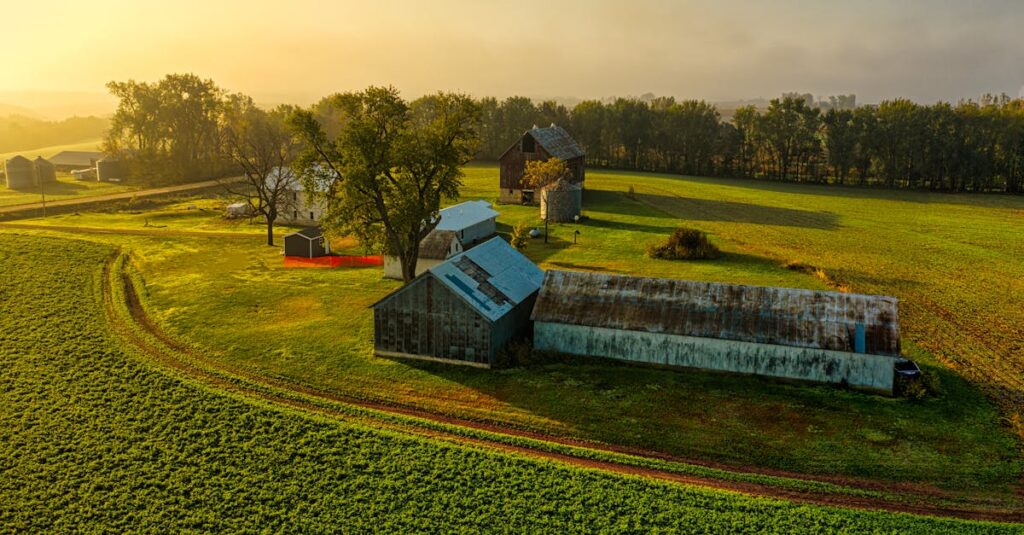
You want to start a farm. Not the daydream version where you sip coffee on a porch while chickens peck around peacefully. The real version. The one where things break, weather doesn’t cooperate, and you still have to show up.
Good. Let’s talk about how to actually do it.
Starting a farm in the US isn’t as impossible as people make it sound. But it’s also not something you stumble into successfully without a plan. I’ve walked through this process with enough people to know what works and what burns through savings accounts.
Here’s the straight truth on getting your first farm off the ground.
First, Ask Yourself The Hard Questions
Before you even look at land, get honest with yourself.
Build Funnels, Email Lists & Sell Online With One Free Tool
Create funnels, send emails, and sell online using Systeme.io without paying for multiple tools.
Create Free AccountFree forever • No credit card • Beginner-friendly
Do you actually like physical work? Not the idea of it. The reality of moving fence posts in July heat or fixing a water line in November rain. Farming is manual. Even with equipment, your body will hurt.
Do you have savings? Most farms don’t turn a real profit for two to three years. Sometimes longer. You need money to live on while the farm finds its feet.
What’s your actual goal? A homestead that feeds your family is different from a vegetable farm selling to restaurants. Different from a flower farm or a small livestock operation. Get clear on this now.
These questions matter because they shape everything that follows.
Pick What You’ll Actually Grow Or Raise
New farmers often try to do too much. Ten vegetable varieties, three kinds of livestock, plus a cut flower patch. Then nothing gets done well.
Start with one thing.
Vegetables work well for small spaces. You can farm intensively on just one or two acres. Tomatoes, salad greens, peppers, cucumbers. Things that grow fast and sell fast.
Livestock needs more space but can mean higher prices per pound. Pasture-raised chickens, goats for milk or meat, sheep, or a small beef herd. Pigs are popular for beginners too.
Specialty crops like mushrooms, cut flowers, or herbs often bring the best money per square foot. But they also need specific knowledge.
Pick one. Master it. Then add more later.
Find Land Without Going Broke
Here’s where most people get stuck. They think they need to buy a farm. Then they see prices and give up.
Don’t buy land yet.
Lease it first. Many landowners want someone to work their fields. Check with your local extension office (more on them in a minute). Ask about land linking programs. Put up a notice at the feed store.
Start in someone else’s dirt.
If you do buy, look away from trendy farm areas. An hour outside a city costs half what land near town costs. Land with a house on it costs triple what raw land costs. Consider buying raw land and living simply while you build.
USDA loans exist for beginner farmers. The Farm Service Agency has programs specifically for people who can’t get regular bank loans. The paperwork is annoying. But the rates are good.
Get Your Soil Tested Immediately
This isn’t optional.
Before you plant a single seed, send soil samples to your state’s agricultural lab. It costs around $15 to $30. You’ll learn exactly what your soil has and what it’s missing.
Most new farmers skip this. Then they wonder why their tomatoes look sad while the weeds are thriving.
The test tells you:
- pH levels (most vegetables want 6.0 to 7.0)
- Nutrient levels (nitrogen, phosphorus, potassium)
- Organic matter content
- Heavy metals if you’re near old industrial areas
Fix your soil before you plant. Add lime if it’s too acidic. Compost if it’s low on organic matter. You can’t grow healthy food in unhealthy dirt.
Understand Water Rights Before You Dig
Water laws in the US are weird and vary by state.
In the eastern US, if water runs through your land or falls on it, you can mostly use it. In the western US, someone else probably owns the rights to that water. Even the rain that falls on your roof in some places.
This is not a detail to ignore. I’ve seen farmers buy land, dig a pond, and get sued.
Call your local water rights office. Ask about permitting for agricultural use. Find out if you need to register your wells. It takes an afternoon. It could save your farm.
Register Your Farm As A Real Business
You’re not a hobbyist. Act like it from day one.
Choose a legal structure. Most small farms start as sole proprietorships or LLCs. LLCs cost more to set up but protect your personal stuff if someone gets hurt on your land or claims your carrots made them sick.
Build Funnels, Email Lists & Sell Online With One Free Tool
Create funnels, send emails, and sell online using Systeme.io without paying for multiple tools.
Create Free AccountFree forever • No credit card • Beginner-friendly
Get an EIN from the IRS. It’s free and takes ten minutes online.
Open a separate bank account for the farm. Do not mix farm money with personal money. This gets messy fast and makes taxes miserable.
Check if you need agricultural permits. Some states require them for selling meat, eggs, or dairy. Others don’t care until you hit a certain size. Your local extension office knows the rules.
Figure Out Your Water Source
Plants need water. Animals need water. You need a reliable way to get it.
City water is expensive for farming. It adds up fast when you’re irrigating half an acre.
Wells cost money upfront but save long-term. A drilled well runs $5,000 to $15,000 depending on depth. Shallow wells are cheaper but risk going dry in summer.
Ponds work if you have the right land and enough rain. But ponds need permits in most states.
Rain catchment is legal in some places, illegal in others. Check before you buy barrels.
For most beginners, starting with a property that already has a working well is the smart move. You’ll pay more for the land but save the headache.
Buy Used Equipment, Not New
New farmers love shiny tractors. Then they have no money left for seeds or fencing.
Buy used. Facebook Marketplace, farm auctions, and equipment consignment lots are full of perfectly good tools.
What you actually need:
- A good wheel hoe or small tiller for vegetables
- A garden cart or small wagon
- Basic hand tools (shovels, hoes, pruners)
- Fencing materials (depends on what you’re growing or raising)
- Irrigation supplies (hoses, timers, drip tape)
That’s it for year one. You don’t need a $30,000 tractor to start. You need sweat and smart planning.
If you’re doing livestock, add:
- Livestock panels or electric netting
- Water troughs
- Basic handling equipment
Everything else can wait.
Learn From Your Local Extension Office
Every state has a cooperative extension service. It’s connected to the land-grant university in your state. And most farmers don’t use it enough.
These people are free. They know your local climate, soil, pests, and markets. They offer soil testing, business planning help, and often free classes.
Find yours by searching “[your county] extension office” or “[your state] extension agriculture.”
Go introduce yourself. Ask what beginner farmer resources they offer. Some have equipment lending libraries. Some have business mentors. Some have grant money.
This is the best free resource in American farming. Use it.
Get Your Sales Channels Ready Before You Harvest
Here’s a mistake that hurts. You grow beautiful vegetables. You raise perfect chickens. Then you have no idea where to sell them.
Figure out your customers first.
Farmers markets work. But they take a full day for a few hours of selling. You’ll sit in a booth watching people squeeze your tomatoes. Some markets have waiting lists.
Restaurant sales are great if you can be consistent. Chefs want the same quality every week. If your crop fails, they find another farmer.
CSA (community supported agriculture) means customers pay upfront for a season of vegetables. You get money early. They get a box every week. It works well but takes marketing to set up.
Online sales with pickup or delivery are growing fast. Set up a simple website or use Barn2Door or Local Line.
Start talking to potential customers three months before you have product to sell.
Price Things So You Don’t Go Broke
Most new farmers underprice everything. They feel bad charging what things cost. Then they run out of money.
Here’s the simple formula:
(Your costs + your labor at $15-20 per hour + overhead) divided by number of units = your minimum price
Then add 20 percent.
Your labor is worth something. Your knowledge is worth something. The fact that your food is local and fresh is worth something.
Look at what other farmers at your market charge. Be in their range, not below it.
For reference, most small farms need to gross $1,000 to $2,000 per acre per month to be sustainable. That’s a real number to aim for.
Understand The Real Timeline
Let me be honest with you.
Year one: You lose money. You learn a lot. You break things. You fix them. You wonder why you started this.
Year two: You might break even. Your systems start working. You have repeat customers. You sleep better.
Year three: You could make a real profit if you stuck with it and made smart choices.
This isn’t a get-rich thing. Farming is a good living for people who love it. But it’s not fast money.
The farmers I’ve seen succeed had three things: savings to cover the first two years, a spouse with an off-farm job, or a really good niche market.
Start Smaller Than You Think You Need
Cut your first-year plan in half.
If you think you can manage two acres, start with one. If you want fifty chickens, start with fifteen.
Small mistakes are cheap. Big mistakes empty your bank account.
You can always add more next season. Scaling up is easier than scaling back when you’re overwhelmed and out of money.
Frequently Asked Questions
Do I need a farming license in the US?
Most states don’t have a general “farming license.” But you may need permits for selling certain products, using water, or running an on-farm store. Check with your state’s department of agriculture.
How much money do I need to start a small farm?
A very small vegetable farm can start with $5,000 to $10,000 if you lease land and buy used tools. Livestock or equipment-heavy operations need more. Be honest about your budget.
Can I start a farm with no experience?
Yes, but work on someone else’s farm first. Even one season changes everything. You’ll learn what you actually like doing and what you hate. Many new farmers skip this and regret it.
Is farming profitable?
It can be. Small farms grossing $50,000 to $100,000 are common for full-time operators. Net profit is lower. The most profitable small farms sell direct to customers (farmers markets, CSAs, restaurants) and keep overhead low.
What’s the easiest farm animal for beginners?
Chickens for eggs. They’re cheap, need less space, and you’ll learn animal care without huge risk. Meat chickens are even simpler but need processing.
One Last Thing Before You Start
Farming will test you. It will frustrate you. And if you stick with it, it will give you something most jobs never will.
You’ll know exactly where your food comes from. You’ll sleep hard at night because you worked with your body all day. You’ll watch things grow because of what you did.
That’s the real reason people farm. Not the money. The money is fine. But the feeling of pulling a carrot you planted from seed, or watching someone enjoy food you raised… that’s what keeps people going through the hard seasons.
So here’s my question for you: What’s the one thing that’s been holding you back from taking the first step toward starting your farm? Drop it in the comments. Let’s talk about it.
