
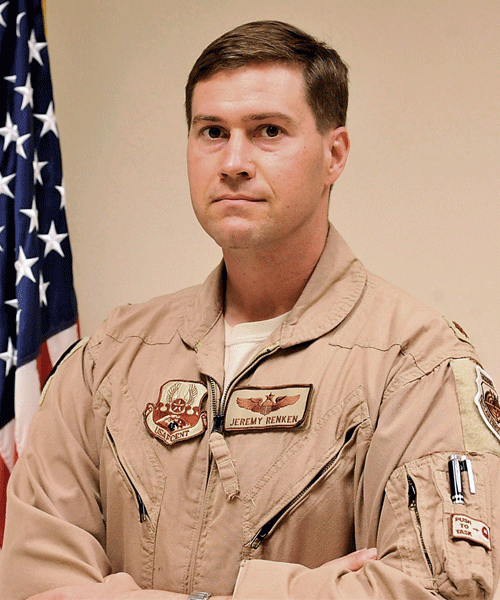
When an American fighter jet was hit over enemy territory, the crew faced an absolute worst-case scenario. Floating down into hostile lands is terrifying on its own. Falling nearly unchecked from the sky with a shredding parachute is something else entirely.
That is exactly what happened to an American airman known by his military call sign, Bravo. After his aircraft took a direct hit from a shoulder-fired missile deep inside Iranian airspace, he suffered a terrifying fall. With a broken back, a fractured arm, a broken shoulder, and a sprained ankle, he did not surrender. Instead, he pushed through unimaginable pain to climb a steep 7,000-foot mountain ridge to stay hidden.
This real-life story of grit, tactical thinking, and a high-stakes search-and-rescue mission has finally come to light. Here is the full breakdown of how one airman cheated death, dodged hundreds of searching enemy troops, and waited for a rescue team that pulled off a miracle.
The Strike Mission That Turned into a Nightmare
The mission started out like many others during the ongoing conflict in the Middle East. Bravo, a seasoned Weapons Systems Officer in the U.S. Air Force, was flying aboard an F-15E Strike Eagle. The two-person jet carried the mission call sign Dude 44. Their goal was to target military and industrial facilities connected to drone and missile production south of Isfahan.
Air superiority did not mean zero danger. Ground forces in the region were heavily equipped with anti-aircraft weapons. While the $30 million F-15E jet was flying high, an enemy shoulder-fired missile costing around $100,000 slammed into the aircraft.
Build Funnels, Email Lists & Sell Online With One Free Tool
Create funnels, send emails, and sell online using Systeme.io without paying for multiple tools.
Create Free AccountFree forever • No credit card • Beginner-friendly
Bravo described the moment of impact as feeling like getting hit by a freight train. The force of the explosion ripped through the jet. The pilot, known as Alpha, realized instantly that the aircraft could not be saved. To save both of their lives, Alpha pulled the ejection handles, shooting both crew members out of the burning jet and into the sky over Iran.
This sudden turn of events highlights the harsh reality of aerial warfare. Even as the gulf conflict escalates and military strikes increase across the region, human lives hang in the balance during every single flight.
Falling Free: A Terrifying Drop to the Earth
Ejecting from a jet at high speeds is violent, but the parachute is supposed to bring airmen down safely. For Alpha, the descent went smoothly. He landed about five miles away from his crewmate and was picked up by rescue teams within hours.
For Bravo, things took a terrifying turn.
The missile blast had shredded his parachute canopy. When Bravo looked up to check his chute, he realized it was not opening properly. He was not drifting gently down to the ground. He was practically free-falling toward the rocky desert below.
Realizing the extreme danger, Bravo prayed for help while desperately trying to pull at the tangled cords and untangle the fabric. Military safety analysts who examined his injuries later estimated that he slammed into the ground at speeds between 70 mph and 100 mph.
Hitting the hard ground at that speed is almost always fatal. Yet, Bravo survived. The impact broke his back, fractured his arm, broke his shoulder, sprained his ankle, and left him bleeding from deep cuts across his head and face. He referred to his survival as a modern-day miracle, crediting divine protection for keeping him alive despite the massive trauma to his body.
Moving Despite the Pain: The 7,000-Foot Ridge Climb
Staying near the crash site meant guaranteed capture. Iranian television had already broadcast images of the wreckage, and local radio stations were offering rewards for the capture of the missing airman. Over 1,500 Iranian soldiers and armed local groups quickly moved into a 10-mile radius around the crash zone to hunt for him.
Bravo knew he had to get moving immediately. Despite having a broken back and a useless arm, he dragged himself away from his landing spot before the search parties arrived.
Why Going Up Was the Only Option
Looking around the terrain, Bravo saw a high desert valley surrounded by tall, rocky cliffs. He knew that searching soldiers would focus on flat ground and low valleys first. If he wanted to stay hidden, he had to go where nobody expected a severely injured person to go: straight up.
He made the decision to scale a craggy, steep ridgeline that towered 7,000 feet above sea level.
Driven by Pure Determination
When asked later how he found the physical energy to pull himself up a mountain with multiple broken bones, Bravo kept it short and direct. He noted that a soldier should never let a lack of motivation put them on enemy television.
Step by agonizing step, using his one working arm and his remaining strength, he crawled and climbed up the sharp rocks. He reached high ground where the terrain gave him natural cover from eyes down below.
Two Days of Survival in the Wilderness
Reaching the high ridge was only half the battle. Now, Bravo had to survive harsh environmental conditions while hiding from enemy search teams.
He was trapped in the cold, windy high-desert climate. He had almost no water, zero food, and no thick cold-weather gear. Every slight movement sent sharp pain through his broken back and shattered shoulder.
Hiding in Plain Sight
For nearly two days, Bravo stayed pinned down in the rocks. Below him, search teams moved through the valley. Military officials later confirmed that Iranian search groups passed within a few hundred meters of his position at one point.
He stayed completely quiet, controlling his breathing and ignoring the freezing night temperatures. His main focus was staying alive long enough for American search and rescue teams to find his precise position.
During major military operations, incidents like this carry enormous political and strategic weight. News of troops lost in enemy territory often leads to intense government debate, similar to when leaders address public questions after conflicting reports emerge about casualties in foreign conflicts.
How the Rescue Unfolded: High-Tech Signals and CIA Tricks
Finding a single person hidden in a vast mountain range deep inside enemy territory is like finding a needle in a haystack. The U.S. military had to launch one of its largest and most complex search-and-rescue missions in recent history.
The rescue effort was a team effort combining military special forces, advanced tracking technology, and clever intelligence tactics.
Tactical Deception on the Ground
To keep Iranian forces from surrounding Bravo, intelligence teams executed a deception campaign. The CIA fed false signals and created distractions in other parts of the region. This trick pulled enemy search teams away from the ridge where Bravo was actually hiding.
Such intelligence moves show how modern conflict relies heavily on technical strategy. You can read more about how intelligence operations shape modern warfare on our technology and AI section, where we cover updates on military technology and smart defense systems.
Pinpointing the Location
Bravo carried a tiny radio beacon, a device weighing under two pounds. This lightweight transmitter allowed rescue teams to lock onto his exact coordinates without alerting local radar systems.
Once the location was confirmed, special operations helicopters flew low through the mountain passes under the cover of darkness. Elite rescue teams landed, secured the area, and reached Bravo.
After 48 hours of intense physical pain and constant fear of capture, Bravo saw the rescue team reach his spot. He later recalled that seeing those American uniforms was one of the single greatest moments of his life.
The Big Picture: Modern Air Combat and Survival Training
Bravo’s story shows why military flight crews undergo intense survival, evasion, resistance, and escape training. While advanced jets carry heavy firepower, human endurance remains the deciding factor when things go wrong in hostile airspace.
The Changing Reality of Regional Conflicts
This shoot-down incident occurred during a period of heavy military activity. With ongoing tension across major waterways like the Strait of Hormuz, both sides remain on high alert. You can get more details on how these air strikes affect global trade and security by reading about how air attacks in the Strait of Hormuz impact regional stability.
Build Funnels, Email Lists & Sell Online With One Free Tool
Create funnels, send emails, and sell online using Systeme.io without paying for multiple tools.
Create Free AccountFree forever • No credit card • Beginner-friendly
Furthermore, diplomatic stances continue to shift as countries adjust their defense strategies. As political leaders enforce stricter economic sanctions and defense policies, military personnel on the front lines face growing risks. For a deeper look at policy changes, check out the latest updates on how the U.S. government handles ongoing economic sanctions and oil blockades.
Advanced Tech in Survival Situations
Technology plays a massive role in modern combat rescue. Small beacons, encrypted radios, and quiet aircraft make it possible to extract personnel from dangerous locations that would have been inaccessible years ago.
Many defense companies are now spending billions to upgrade military hardware and field gear. To see how fast defense innovation is moving, check out our coverage of how a leading defense tech startup recently raised record seed funding to build next-generation safety systems.
Frequently Asked Questions (FAQs)
How did the Air Force officer survive a fall from 70 to 100 mph?
Bravo’s parachute was partially damaged by the missile explosion, which prevented it from opening completely. However, the shredded fabric still provided enough drag to slow his fall just enough to prevent instant fatality. Landing on terrain that absorbed some impact force, along with sheer physical luck and endurance, allowed him to survive with non-fatal fractures.
How long was the downed airman hiding behind enemy lines?
He was on the ground for nearly 48 hours. While his pilot, Alpha, was rescued within hours of ejecting, Bravo remained hidden on the 7,000-foot ridge for almost two full days before special operations teams could safely reach him.
What injuries did the airman suffer during the ejection and landing?
The airman suffered a broken back, a broken arm, a broken shoulder, a sprained ankle, and multiple cuts and bruises across his face and head. Despite these injuries, he was able to crawl and climb up steep rocks to hide.
What jet was shot down, and how was it brought down?
The jet was an F-15E Strike Eagle with the mission call sign Dude 44. It was brought down by an Iranian shoulder-fired missile during a strike mission targeting military manufacturing facilities.
How did rescue teams find the airman in the mountains?
Rescue teams used a combination of lightweight tracking beacons carried by the officer, satellite signals, and a CIA deception campaign that drew searching Iranian soldiers away from the mountain ridge.
Final Thoughts
The story of Colonel Bravo climbing a 7,000-foot mountain ridge with a broken back is a powerful reminder of what human willpower can achieve under extreme pressure. Facing bad odds, harsh weather, and enemy patrols, he relied on his training, smart decision-making, and mental toughness to stay alive.
Military operations will continue to evolve with new technology, but the courage shown by individuals on the ground remains timeless. Stories like this show that even in the toughest situations, staying focused and refusing to give up can turn an impossible situation into a successful rescue.
Want to learn more about our publication and our mission to bring you high-impact stories? Visit our about us page to see what we are building. If you have questions, feedback, or story tips, feel free to reach out directly through our contact page.
You can also check out our specialized guides on modern digital trends like our YouTube automation category to see how creators use online tools to build global audiences.
Do not forget to join our community across social media! Follow us on our Instagram page, connect with us on our Facebook page, and join the conversation on our X (formerly Twitter) page to stay updated on breaking news, tech trends, and trending stories around the world.
