
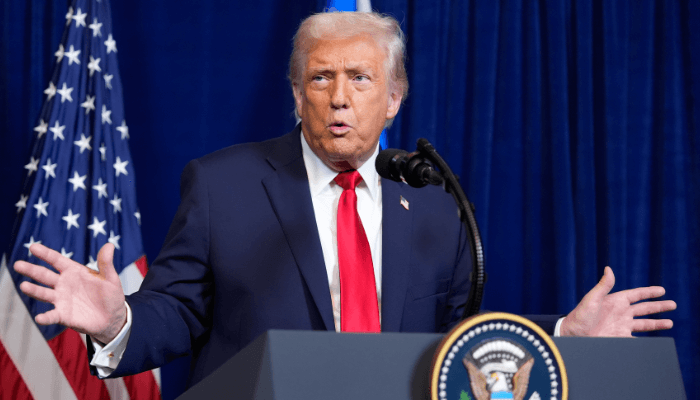
President Donald Trump announced from the Oval Office that all 50 US states, along with Washington, D.C., and Puerto Rico, are officially joining a massive nationwide Medicaid prescription drug pricing initiative. This moves state-level healthcare into a brand new era. Under this expanded agreement, state Medicaid programs will get direct access to lower drug prices that were previously negotiated between the federal government and top pharmaceutical companies.
The goal behind this plan is simple. It aims to cut down the price of expensive prescription drugs for low-income families while saving state governments tens of billions of dollars each year. During the announcement, officials highlighted that this move could slash state healthcare costs by up to 64 billion dollars annually.
For years, high prescription drug bills have put a huge strain on state budgets and family wallets across the country. Governors and health officials have repeatedly called for ways to lower costs without cutting essential medical services. This new arrangement extends lower price models across the whole country, forcing drug makers to align American prices closer to what they charge in other developed nations.
What Is the Most Favored Nation Drug Pricing Model?
To understand why this agreement is making headlines, you have to look at how prescription drug prices work in the United States. For decades, Americans have paid significantly higher prices for brand-name medicines than people living in Europe, Canada, or Asia. Drug manufacturers often charge higher prices in the American market to maximize profit while offering discounts overseas.
The Most Favored Nation model changes that rulebook. The core idea is simple: the United States government insists that pharmaceutical companies sell their medications to American programs at the lowest price they offer to other wealthy nations. If a drug company sells a critical heart medication or diabetes treatment for ten dollars in Europe, the United States wants that same fair deal.
The $0 Secret To Launching Your Entire Online Empire
Why pay hundreds every month for separate software? Build funnels, send emails, and make sales with Systeme.io completely free.
Get Started For $0Free Forever • No Credit Card Needed • Beginner-Friendly
How the Federal Government Negotiated These Deals
The federal administration reached these pricing deals through direct negotiations with major pharmaceutical executives. Over the past year, dozens of pharmaceutical companies agreed to voluntary price caps under the threat of trade tariffs and regulatory changes.
Initially, these discounts applied mainly to federal programs and select direct-to-consumer pharmacy portals. However, extending these lower prices to all state Medicaid programs means the savings now reach local communities directly. According to news coverage from AP News, this rollout brings every state under a single unified pricing umbrella for key medications.
How the Medicaid Program Actually Works and Why States Need Help
Medicaid is a public health insurance program funded jointly by state governments and the federal government. It provides health coverage to more than 70 million low-income adults, children, pregnant women, elderly adults, and people with disabilities. Because each state manages its own Medicaid program, state budgets bear a huge chunk of the total cost.
In recent years, prescription drug expenses have grown faster than almost any other part of state budgets. When life-saving treatments cost thousands of dollars per month, state leaders face difficult choices. They often have to choose between raising taxes, cutting back on healthcare benefits, or reducing funding for public education and infrastructure.
Breaking Down the Financial Relief for States
By allowing every state Medicaid program to buy drugs at these lower negotiated rates, state governments expect immediate financial relief. Instead of every state attempting to bargain with giant drug companies individually, they can leverage nationwide bargaining power.
During the Oval Office meeting, Mississippi Governor Tate Reeves shared that his state alone spends roughly 700 million dollars every year on prescription drugs through Medicaid. With the new price structure, Mississippi and states like it can keep hundreds of millions of dollars in their treasuries. That extra money can be redirected toward improving local clinics, expanding nursing care, or fixing local roads.
Which Drug Companies and Medications Are Included?
A massive agreement like this requires cooperation from the biggest names in the global pharmaceutical industry. Over the past several months, dozens of drug manufacturers have signed on to participate.
Major pharmaceutical brands that have agreed to the framework include:
- Pfizer
- Eli Lilly
- AstraZeneca
- Novo Nordisk
- Bristol Myers Squibb
- AbbVie
- Amgen
- GlaxoSmithKline (GSK)
- Merck
- Novartis
- Sanofi
- Johnson & Johnson
In addition to these household names, several other global companies like Teva Pharmaceuticals, Astellas Pharma, CSL, and UCB have also joined. These companies manufacture essential treatments for condition types that affect millions of patients daily.
Key Medications Targeted for Price Cuts
The list of drugs impacted by this program includes some of the most widely used and most expensive medications on the market today:
- Insulin and diabetes management medications.
- Blood thinners and cardiovascular disease treatments.
- Asthma and chronic lung disease inhalers.
- Autoimmune and rheumatoid arthritis therapies.
- Select oncology and cancer management drugs.
By targeting high-volume drugs and expensive specialty medicines, the program ensures that the price cuts hit the exact areas where patients and states spend the most money.
Political Context and the White House Announcement
The formal announcement took place during a press briefing in the Oval Office, surrounded by key health officials and state governors. Health and Human Services Secretary Robert F. Kennedy Jr. spoke alongside CMS administrator Dr. Mehmet Oz, outlining the administrative steps taken to lock in these prices.
Secretary Kennedy emphasized that high drug costs create a harmful cycle for low-income families. When people cannot afford their monthly medicine, their health worsens, forcing them into expensive emergency room visits. Lowering drug costs breaks that cycle, helping people stay healthier while keeping healthcare systems stable.
Reactions from Governors and Lawmakers
State leaders who attended the event praised the initiative for giving states flexibility and cost protection. Arkansas Governor Sarah Huckabee Sanders noted that her state celebrates the lower prices because it directly improves community health without blowing up the state budget. South Dakota Lieutenant Governor Larry Rhoden also voiced strong support, pointing out that rural healthcare facilities stand to gain significant stability.
At the same time, the announcement arrives during a politically charged period. With healthcare costs remaining a top voter concern ahead of the upcoming midterm elections, both political parties are watching the implementation closely. Critics have questioned whether drug manufacturers will maintain these voluntary discounts over the long term, while supporters argue that the public visibility of the deals makes it nearly impossible for drug companies to back out. Detailed coverage of the political debate can be explored on the Washington Examiner.
Send, Spend & Hold Money Worldwide Without Hidden Fees
Transfer money internationally at the real exchange rate and hold 40+ currencies in one account.
Open a Wise AccountMid-market rate • Fast transfers • 40+ currencies
How This News Impacts Everyday Americans
If you or a family member rely on Medicaid, this announcement has direct consequences for your household budget. Higher drug prices do not just affect governments; they often lead to high copays, restricted access to specialty drugs, or strict monthly limits on prescription refills.
Real Benefits at the Local Pharmacy Counter
Here is what everyday citizens can expect as states roll out these discounted prices:
- Lower out-of-pocket copays for critical brand-name medicines.
- Easier access to modern treatments without needing lengthy insurance approvals.
- Fewer budget cuts to local Medicaid services, keeping clinics and community health centers open.
- Greater stability for seniors and individuals living on fixed monthly incomes.
Even for people who are not enrolled in Medicaid, state-level budget savings benefit the entire public. When state governments save billions on healthcare costs, they avoid raising state sales taxes or cutting funding for public services like education, fire departments, and public transport.
The Role of Modern Technology and Digital Tracking in Healthcare
Implementing a nationwide pricing change across 50 individual state programs is a huge logistical challenge. It requires modern database management, real-time pharmacy tracking systems, and automated verification software to make sure every pharmacy charges the correct discounted rate.
The healthcare sector increasingly relies on cutting-edge technical tools to manage complex state systems. You can read more about how artificial intelligence and modern automation are transforming industries in our dedicated Technology & AI section.
Beyond internal state logistics, how news like this reaches the public is evolving fast. Millions of people get their daily updates, political analysis, and consumer health guides through automated video channels and digital media networks. To learn how modern media creators build high-volume news channels, check out our guide on YouTube Automation.
If you want to know more about our editorial standards, our background, or how we verify trending stories, visit our About Us page. You can also get in touch with our team directly through our Contact Page.
Frequently Asked Questions (FAQs)
What is the Most Favored Nation drug pricing model?
The Most Favored Nation model is a policy approach where the United States requires pharmaceutical companies to sell prescription drugs to domestic programs at the lowest price they charge in other wealthy, developed nations.
Are all 50 states included in this Medicaid drug deal?
Yes. All 50 states, along with Washington, D.C., and Puerto Rico, are participating in the program to receive lower drug pricing for their Medicaid programs.
How much money will this save state governments?
Administration officials estimate that lower prescription prices will save state Medicaid programs approximately 64 billion dollars every year.
The $0 Secret To Launching Your Entire Online Empire
Why pay hundreds every month for separate software? Build funnels, send emails, and make sales with Systeme.io completely free.
Get Started For $0Free Forever • No Credit Card Needed • Beginner-Friendly
Does this mean my local pharmacy will lower drug prices right away?
State Medicaid agencies are integrating the new negotiated prices into their pharmacy payment systems. Patients enrolled in Medicaid should see lower copays and wider drug coverage as these deals take effect across local pharmacies.
Which pharmaceutical companies signed the agreement?
Major drug companies including Pfizer, Eli Lilly, AstraZeneca, Novo Nordisk, Bristol Myers Squibb, AbbVie, GSK, Merck, Novartis, Sanofi, Johnson & Johnson, and Teva have agreed to offer discounted rates under this model.
Final Thoughts on the New Medicaid Drug Pricing Model
This nationwide agreement represents one of the largest shifts in Medicaid drug purchasing policy in recent memory. By uniting all 50 states under a single negotiated pricing structure, state governments stand to save billions of dollars while ensuring low-income Americans get reliable access to essential medicines.
As state agencies finalize their implementation plans over the coming months, millions of families will start feeling the relief directly at the pharmacy counter. Keeping an eye on how these deals unfold will give you a clear picture of where American healthcare is heading next.
Stay connected with us for the latest viral news, political breakdowns, and breaking updates by following our official social media channels on Instagram, Facebook, and X (formerly Twitter).
