
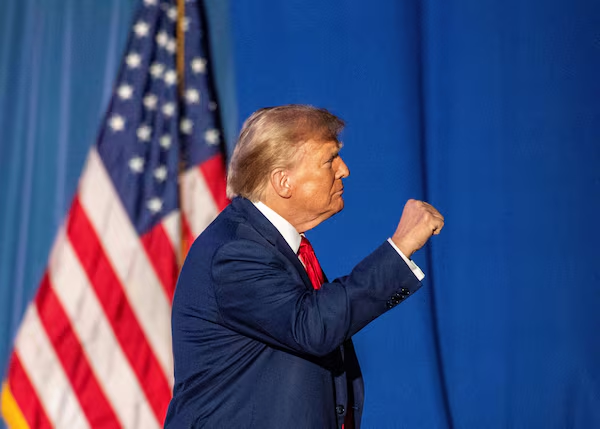
President Donald Trump met with Republican lawmakers at the White House to rally support ahead of the upcoming midterm elections. Speaking directly to congressional representatives and senators who face tough reelection battles, he urged them to lean heavily on his White House record. He insisted that the Republican party possesses a winning message capable of securing victories across the country if candidates explain accomplishments clearly to voters.
The gathering took place during an informal dinner held in the White House Rose Garden. Lawmakers gathered over a casual end-of-summer barbecue featuring cheeseburgers, served alongside menus checkered in yellow gingham. Despite the relaxed setting and cocktails, the primary focus of the evening remained strictly on political strategy, party unity, and retaining control of Congress.
Trump acknowledged that midterm elections present steep challenges for any party holding the executive branch. However, he told lawmakers that they can break traditional political patterns by emphasizing strong domestic economic investments, efforts to lower prescription drug costs, and border security measures. He pledged to launch an intense campaign schedule across key battleground districts in the final month before election day.
Inside the White House Rose Garden Barbecue
The Rose Garden setting provided an informal environment for serious political discussions. Trump brought together lawmakers representing swing districts and competitive states from across the nation. Many of these candidates are working to balance national party agendas with local concerns specific to their home voters.
The atmosphere combined casual social gathering elements with high-stakes political planning. Lawmakers listened quietly as the president outlined his vision for the upcoming campaign push, offering applause when he highlighted key administration accomplishments. The overall objective was to build confidence among candidates facing difficult reelection fights.
The $0 Secret To Launching Your Entire Online Empire
Why pay hundreds every month for separate software? Build funnels, send emails, and make sales with Systeme.io completely free.
Get Started For $0Free Forever • No Credit Card Needed • Beginner-Friendly
Trump pointed out that the White House record offers every candidate a solid foundation on which to stand. He explained that voters need to hear a simple, clear, and continuous story regarding what the current administration has achieved. In his view, communicating these achievements directly is the most effective way to persuade undecided voters in tight races.
He advised lawmakers against pulling back or distancing themselves from the party platform. Instead, he recommended owning administration policy victories in economic growth, domestic investments, and national security. He expressed complete confidence that a bold presentation of these points would resonate with voters across competitive districts.
The Promise of a 30-Day Campaign Travel Blitz
A major highlight of the speech was Trump’s personal pledge to campaign actively on behalf of vulnerable candidates. He announced plans to travel to roughly 35 critical House and Senate battlegrounds during the final 30 days before voters cast their ballots.
This proposed travel blitz mirrors aggressive campaign strategies used in past presidential elections. Trump recalled his intensive travel schedules from previous cycles, suggesting that a similar physical presence in swing regions could tip close races in favor of Republican candidates.
Control of both the House of Representatives and the Senate is expected to come down to a small handful of close contests. By concentrating personal appearances on those 35 targeted areas, Trump aims to energize base voters and boost overall voter turnout in districts where every vote counts.
Candidates in competitive races often welcome high-profile visits that attract local news coverage and rally enthusiasm. A presidential appearance can spur volunteer activity, drive small-dollar fundraising, and create significant public attention in local media markets. Trump made it clear that he intends to exert maximum personal effort to help these lawmakers secure their positions.
According to reports covered by news outlets such as the Associated Press, this planned campaign push represents a concentrated attempt to preserve legislative power in Washington.
Highlighting Key Senate Battles in Alaska and Texas
During his address, Trump pointed to specific Senate races that are critical to determining majority control in Congress. He brought special attention to important contests in Alaska and Texas.
In Alaska, Republican Senator Dan Sullivan is defending his seat against Democratic former Representative Mary Peltola. Alaska has experienced dynamic political shifts in recent years, making this seat an important focus for both national parties as they map out pathways to a Senate majority.
In Texas, Republican Attorney General Ken Paxton is competing in a high-profile Senate contest against Democratic state Representative James Talarico. Texas remains a huge political battleground where both parties invest heavily in campaign advertising and voter mobilization efforts during major election cycles.
Trump spoke directly about the Texas contest, praising Paxton’s background as attorney general while adding lighter remarks about his personal style on camera. He remarked that while some people might comment on Paxton’s television appearances or choice of suits, his legal work and track record for the state matter far more than superficial campaign looks.
These individual spotlights illustrate how closely national political leaders are following specific race dynamics. By mentioning specific candidates, Trump signaled that national party support will be focused heavily on districts where effective turnout strategies can determine final outcomes.
Challenging Historical Midterm Election Trends
Historically, midterm elections present a steep hill for the political party occupying the White House. Voters frequently use midterm ballots to express frustration with current economic pressures or policy direction, which often leads to seat losses for the sitting president’s party.
Trump addressed this historical trend directly during his remarks to lawmakers. He acknowledged that almost every modern administration faces mid-term electoral headwinds, regardless of how popular or successful the president may feel.
However, he rejected the assumption that losses are inevitable in the upcoming vote. He told the audience that Republicans can turn that traditional trend around because there is no fundamental reason why historical losses must repeat if candidates state their case effectively.
Send, Spend & Hold Money Worldwide Without Hidden Fees
Transfer money internationally at the real exchange rate and hold 40+ currencies in one account.
Open a Wise AccountMid-market rate • Fast transfers • 40+ currencies
To help organize campaign efforts across the nation, the party is preparing for an upcoming midterm convention in Dallas. This gathering will bring candidates, campaign managers, and party strategists together to align campaign messages, coordinate advertising initiatives, and refine ground operations before the final push.
By addressing historical patterns directly, Trump aimed to motivate candidates and eliminate defeatist mindsets among vulnerable incumbents heading into the final months of campaigning.
Key Pillars of the Republican Midterm Message
The midterm message outlined during the Rose Garden event focuses on core economic and governance issues. Trump encouraged candidates to concentrate their campaign speeches on concrete achievements that directly impact everyday citizens.
Economic growth and business investment form a major pillar of this strategy. Trump highlighted increased capital investment in domestic manufacturing and job creation efforts, urging candidates to share these economic points with local voters.
Healthcare expenses and prescription drug costs were also highlighted as prominent talking points. Trump urged lawmakers to point to administration policies aimed at lowering prescription drug prices for families, presenting this as a clear victory for consumer pocketbooks.
Border management and public safety formed another major topic during the speech. Reductions in illegal border crossings and stricter enforcement measures were highlighted as evidence of strong administrative action on national security.
While political opponents often challenge specific data points or statistical claims made in political speeches, the core strategy centers on delivering a simple message about economic progress and law enforcement strength.
Addressing Voter Sentiments and Economic Realities
Despite the encouraging message delivered at the White House, candidates on the ground face real challenges regarding voter sentiment. Many everyday Americans continue to express concern over cost-of-living increases, grocery bills, and general economic predictability.
In addition to domestic concerns, broader international tensions and global events can heavily influence voter opinion. When families feel financial pressure or worry about international stability, they often evaluate incumbents with greater scrutiny.
This reality creates a delicate task for candidates running in swing districts. While referencing national White House achievements can help build enthusiasm among core party supporters, candidates must also speak directly to local cost concerns affecting working families.
The $0 Secret To Launching Your Entire Online Empire
Why pay hundreds every month for separate software? Build funnels, send emails, and make sales with Systeme.io completely free.
Get Started For $0Free Forever • No Credit Card Needed • Beginner-Friendly
Successful local campaigns often require connecting national platform successes with practical solutions tailored to local communities. Candidates must demonstrate a real understanding of daily local struggles while showing how federal policies contribute to solving those problems.
As a result, campaign teams are relying heavily on modern digital communication channels to deliver targeted messages regarding jobs, local tax relief, and community safety.
Modern Digital Campaigning and Content Creation
Political campaigns today rely on far more than traditional television ads and physical mailers. Reaching voters effectively requires strong presence across digital video platforms and social networks where people get their daily news.
Understanding how digital platforms work allows creators, journalists, and campaign teams to share news updates with wide audiences efficiently. Those interested in how modern online video distribution works can explore resources on YouTube Automation to see how digital creators build and scale video content.
Advanced software and digital platforms continue to reshape how political commentary, news updates, and campaign messages are produced and shared. To understand how new digital tools are impacting media, take a look at our coverage on Technology & AI.
Staying connected through social channels is another simple way to follow rapid updates in national news and politics. You can follow our posts on Instagram, join discussions on Facebook, or read quick news highlights on X (formerly Twitter).
Digital tools allow candidates and independent news outlets alike to break complex political news down into concise, understandable updates that reach audiences instantly.
Counter-Arguments from Democratic Candidates
While Republicans prepare their campaign strategy around White House achievements, Democratic candidates are preparing their own counter-arguments for voters.
Opposing campaigns plan to focus heavily on consumer prices, housing affordability, and everyday living costs. They argue that federal policies have not done enough to relieve financial pressure on middle-class households and working families.
Democratic strategists also plan to make presidential approval numbers a central topic in competitive congressional districts. By linking vulnerable Republican incumbents to national policy debates, opposition campaigns hope to motivate voters seeking political change.
This creates a sharp contrast in campaign approaches. While Republicans plan to highlight record achievements in domestic investment and border enforcement, Democrats aim to direct attention toward health coverage costs, daily expenses, and legislative oversight.
Both major parties recognize that voter turnout in key swing districts will determine control of Congress, making every major speech, advertisement, and rally vital to the overall result.
The Strategic Potential of Presidential Campaign Visits
A 30-day campaign tour by a sitting president brings both clear advantages and unique strategic considerations for local candidates.
On the positive side, presidential rallies bring huge energy to local volunteer bases. They help raise significant campaign funds for local organizations and inspire volunteers to knock on doors, make phone calls, and assist voters in getting to the polls on election day.
On the other hand, high-profile presidential visits can also motivate political opponents to turn out in equal numbers. Candidates in closely divided or slightly opposition-leaning districts must carefully calculate how a major presidential appearance fits into their local campaign strategy.
For most candidates, the biggest gain from a presidential visit comes in the form of local media coverage. Local television stations and regional newspapers provide extensive coverage of White House events, offering candidates valuable opportunities to present their message directly to voters without extra advertising costs.
Trump’s decision to commit to 35 campaign stops shows strong confidence that his presence will boost voter enthusiasm across contested battlegrounds.
What to Expect at the Dallas Midterm Convention
As election season enters its final phase, attention will focus on Dallas, where Republicans will host a unique midterm convention.
Unlike presidential nominating conventions held every four years, a midterm convention serves as a strategic meeting point ahead of the final weeks of campaigning. It provides a central venue for lawmakers, governors, local candidates, and organizers to align their key talking points and coordinate resource distribution.
The convention schedule will include speeches from key figures, strategic workshops, and planning sessions aimed at maximizing voter turnout in competitive districts. It also gives candidates in close races a national platform to introduce themselves and their key policies to voters across the country.
Organizers view the Dallas convention as an important momentum builder that will launch the planned 30-day travel campaign across swing states.
Key Factors That Will Determine the Midterm Outcome
Several critical factors will decide which party gains control of Congress when voters go to the polls:
- Overall Turnout in Swing DistrictsVoter turnout during non-presidential election years is often the single most deciding factor in close congressional races.
- Everyday Economic ConditionsDaily expenses, including food prices, fuel costs, and utility bills, heavily sway undecided voters in the final weeks before election day.
- International DevelopmentsGlobal events and foreign policy challenges can quickly alter public attention and shape how voters judge administrative leadership.
- Campaign Fundraising and Local AdvertisingThe financial capacity to run effective television, radio, and digital advertisements plays a massive role in shaping candidate messaging.
- Grassroots Ground OperationsDirect contact with voters through phone calls, door-to-door visits, and neighborhood organizing frequently determines outcomes in tightly contested races decided by small vote margins.
Frequently Asked Questions (FAQs)
What did Donald Trump promise Republican candidates during the Rose Garden dinner?
Donald Trump promised to launch an energetic 30-day campaign tour across roughly 35 key battleground districts to help Republican candidates win their House and Senate races.
Which specific Senate races did Trump mention in his speech?
Trump highlighted the Senate contest in Alaska between Republican Senator Dan Sullivan and Democratic challenger Mary Peltola, as well as the Texas Senate race involving Republican Attorney General Ken Paxton and Democratic state Representative James Talarico.
Why are midterm elections usually difficult for the party holding the White House?
Midterm elections are historically challenging because voters often use off-year elections to express frustration with current economic conditions or government policies, leading to seat losses for the sitting president’s party.
What main policy accomplishments did Trump advise candidates to highlight?
Trump advised candidates to focus on domestic economic investment, administration efforts to lower prescription drug prices, and measures taken to enforce border security.
Where was the campaign dinner with lawmakers held?
The event was hosted in the White House Rose Garden as an end-of-summer barbecue featuring cheeseburgers and cocktails.
The Road Ahead for the Midterm Elections
The upcoming midterm elections will decide the balance of power in Washington for the next two years. With control of both the House and Senate on the line, both major parties are dedicating maximum effort and resources toward competitive swing districts.
President Trump’s message to Republican lawmakers centers on active campaigning, unity, and promoting White House policy achievements. By committing to a 30-day travel blitz across key battleground areas, the White House aims to defy historical midterm patterns and maintain legislative momentum.
As candidates finalize their campaign plans and prepare for the upcoming convention in Dallas, voters nationwide will weigh policy results, personal economic conditions, and campaign arguments. Staying informed on national political news helps every citizen understand how legislative decisions impact their daily lives.
To learn more about our publication team and story coverage, visit our About Us page. If you have questions, feedback, or news tips to submit, you can get in touch with our editorial team through our Contact Us page.
