
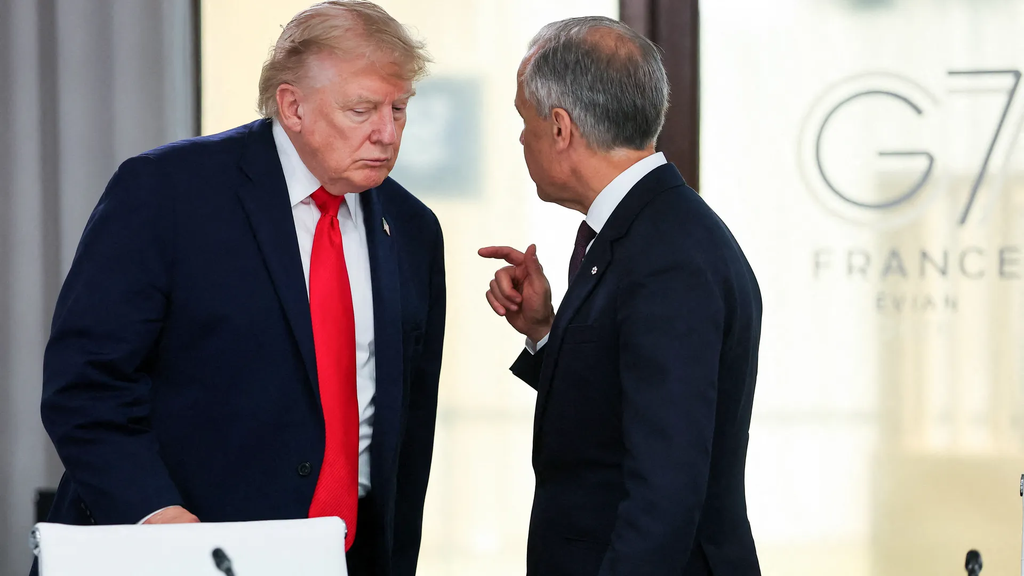
President Donald Trump’s trade conflict with Canadian Prime Minister Mark Carney is sending shockwaves through some of the most competitive political districts in the United States.
According to a report by The Washington Post, Republican candidates running for tight House and Senate seats are walking a fine line. Local industries, farmers, and factory managers in key swing states are bracing for heavy financial losses as trade barriers between the two North American neighbors continue to rise.
The timing of this trade dispute could not be more delicate. With the upcoming midterm elections approaching fast, control of the U.S. Congress hangs in the balance. In states where elections are won or lost by thin margins, trade policies are no longer just national soundbites. They are directly impacting local jobs, business expenses, and everyday consumer prices.
While the White House argues that tariffs protect American manufacturing and put local workers first, lawmakers on the ground face a complicated reality. Many local business owners and agricultural leaders depend heavily on trade with Canada. As a result, candidates are forced to carefully balance their loyalty to the party banner with the immediate concerns of their voters back home.
The Spark Behind the Escalating U.S.-Canada Trade Tension
The current strain between Washington and Ottawa did not happen overnight. Over the past several months, trade negotiations between President Trump and Prime Minister Mark Carney hit a standstill after Canada rejected proposed updates to cross-border commercial terms. In response, Washington introduced new import duties on selected Canadian goods, aiming to pressure Canadian leaders back to the bargaining table.
Build Funnels, Email Lists & Sell Online With One Free Tool
Create funnels, send emails, and sell online using Systeme.io without paying for multiple tools.
Create Free AccountFree forever • No credit card • Beginner-friendly
However, the Canadian government chose not to step down. Instead, Prime Minister Mark Carney rallied public backing at home, with polls showing that Canadians strongly stand behind PM Mark Carney’s decision to reject U.S. trade deal terms. Ottawa responded with targeted retaliatory duties of its own, signaling that Canada prepares for a long trade war with the U.S. that could stretch past the midterms.
The retaliatory measure hit a wide array of American products sent across the northern border. Canadian authorities placed heavy duties ranging from 15 percent to 50 percent on American goods like dairy, paper, plastics, agricultural equipment, and industrial components. You can read the full breakdown of how Canada hits back with new 15 to 50 percent tariffs on U.S. goods explained.
The back-and-forth escalation quickly reached new heights when President Trump ordered retaliatory actions against Canadian imports. Washington announced targeted restrictions on items like Canadian specialty food items, spirits, and vehicles. This escalation was covered in detail when North America trade war escalates as Trump bans Canadian dairy, alcohol, and motorcycles. Trade officials on both sides have engaged in fierce verbal exchanges, including moments where Trump tariff chief calls Canada’s trade war label unhinged.
Canada also targeted specific raw materials and industrial components, including new tariffs on metals and fuel products. Detailed reporting showed how Canada adds 50 percent tariffs on U.S. copper wire and wood charcoal.
To shield domestic industries, Canadian leaders launched long-term economic plans. Prime Minister Carney highlighted new industrial support schemes, such as Canada’s Build Here strategy and how Mark Carney plans to fight back against new U.S. tariffs. At the same time, Canadian officials reassured domestic companies by announcing targeted assistance, as seen when Mark Carney promises government support for Canadians as U.S. trade war deepens.
Why Swing States Are Caught Directly in the Crossfire
While tariffs affect trade across the entire country, the financial pain is not spread evenly. Economic data shows that key swing states in the Midwest and Northeast rely heavily on open trade routes with Canadian markets. States like Maine, Michigan, Iowa, Ohio, Pennsylvania, Wisconsin, and Alaska send a huge portion of their total exports to Canadian buyers. Census statistics show that Canada purchases more than a quarter of all goods exported from six of these critical states.
For workers and business owners in these regions, higher tariffs mean immediate problems. Farmers who export dairy or grain face sudden drops in order volumes. Factory owners who source raw materials like aluminum or timber from across the border must pay significantly higher production costs. Equipment manufacturers find it harder to sell heavy machinery to Canadian customers when extra duties make American products far more expensive than international alternatives.
The human element of these policy decisions is becoming obvious. Workers worry about potential layoffs if orders drop, while small business owners wonder how long they can absorb extra costs without raising prices for local consumers. For a deeper look at the ground-level impact, read about what the U.S.-Canada tariff war will really cost you and explore inside Canada’s fight and how everyday people are bracing for Trump’s trade war.
When local economies feel the pinch, voters naturally look to their elected representatives for answers. In competitive congressional districts, economic frustration can quickly turn into political vulnerability at the ballot box.
The Tightrope Republican Candidates Must Walk
Campaigning in a competitive district requires candidate flexibility, but the current trade climate leaves little room for error. Republican candidates in swing seats find themselves caught between two powerful forces. On one side, they need strong turnout from core conservative voters who strongly support President Trump’s broader economic platform and trade policy. On the other side, they must persuade moderate and independent voters who are worried about job security and rising living costs in their home towns.
This dynamic explains why so many down-ballot candidates are treading carefully. Rather than making big public statements praising or condemning every new tariff line, many candidates are choosing their words with extreme caution. They focus heavily on local issues like district infrastructure, community investments, and regional job creation while trying to avoid getting bogged down in national trade disputes.
This delicate balancing act comes as national party strategists track public sentiment closely. Political observers note why Republicans are panicking about Donald Trump heading into the midterm elections. At the same time, party leaders are pushing hard to keep momentum, highlighting events where Donald Trump promises a full campaign blitz for midterms and insists Republicans have a winning message.
Differing Candidate Strategies Across Districts
Not every Republican candidate is taking the exact same approach. Their public positions often depend on the dominant industry in their specific district.
In heavily industrial districts where steel, aluminum, or domestic manufacturing dominate, some candidates lean into the protectionist argument. They claim that short-term friction is a necessary price to pay for securing fair long-term trade terms and protecting American manufacturing jobs from foreign competition.
In agricultural or export-heavy districts, candidates tend to take a much more cautious tone. Some have quietly urged the administration to grant exemptions or carve-outs for specific local crops and manufactured goods. Others emphasize the need for swift negotiations to resolve disputes before harvest seasons or fiscal quarter ends.
The White House Stance and National Party Messaging
The White House maintains that the administration’s tariff strategy will ultimately deliver strong results for American heartland workers. Administration officials stress that states like Michigan and Iowa have suffered from unfair trade practices for decades and that standing firm will force trading partners to offer better terms.
However, national messaging does not always ease the pressure felt by local campaign teams. When voters ask about rising costs or reduced export demands, local candidates must explain how national policies will help their specific communities in the long run. If voters feel that relief is too far away, local campaigns face a steep uphill battle.
Economic Anxiety and Key Midterm Factors Shaping the Vote
The trade war is unfolding alongside several other major economic and political factors that are shaping voter decisions across the country. Affordability remains a central concern for voters everywhere. High prices for everyday items, interest rate uncertainty, and supply chain disruptions make voters sensitive to any policy that might increase their household expenses.
To address economic concerns, national leaders have introduced bold proposals to capture voter interest. For instance, discussions around direct financial relief have gained attention, such as proposals detailed in Trump promises a $5,000 Trump dividend to Americans if Republicans win midterms. Campaign promises like these aim to offer direct financial support, though voters continue to weigh short-term relief against broader long-term economic stability.
Voting Rules and Election Dynamics
Beyond economic issues, changes to election procedures are also influencing how campaigns prepare for midterm voting day. Recent legal rulings and policy updates regarding voting access are actively reshaping campaign strategies nationwide.
Candidates must adapt to shifting voter turnouts and operational rules. The political landscape is heavily impacted by legal developments, such as the Supreme Court showdown over how new mail-in voting limits could reshape the 2026 midterms. Understanding these procedural shifts is critical for both campaigns trying to mobilize voters and citizens planning how to cast their ballots.
Adapting to Global Economic Realities and Modern Tech Tools
As trade policies shift globally, businesses and workers are constantly seeking ways to build resilience against economic unpredictability. When traditional trade channels experience volatility, many organizations and entrepreneurs look toward technology and digital channels to diversify their income sources.
Modern companies are increasingly turning to advanced digital solutions to streamline operations and find new customer bases beyond physical borders. Staying informed on emerging technological tools can provide valuable insights for navigating uncertain economic times. Readers interested in exploring how digital innovation is reshaping industries can check out our dedicated technology and AI news section for the latest updates.
Similarly, content creators, marketers, and digital entrepreneurs are exploring online video platforms and automated content creation to build scalable online businesses. To discover actionable guides on growing a digital brand through video, explore our specialized YouTube automation guides to learn effective content creation techniques.
Frequently Asked Questions
Why is the U.S.-Canada trade war hitting Republican midterm campaigns so hard?
The trade war is hitting competitive districts hard because key swing states like Maine, Michigan, Iowa, Ohio, Pennsylvania, and Wisconsin rely heavily on exporting goods to Canada. Local farmers, factory owners, and businesses in these states face higher costs and reduced sales due to tariffs. Republican candidates in close races must support national party trade policies while also trying to satisfy local voters affected by these economic pressures.
What products are affected by the U.S.-Canada tariffs?
The tariffs cover a wide variety of goods on both sides of the border. Canada placed retaliatory tariffs between 15 percent and 50 percent on U.S. dairy, paper, plastics, agricultural machinery, copper wire, and wood charcoal. In response, the U.S. announced import restrictions and bans targeting Canadian goods like specialty food items, alcohol, motorcycles, and molasses.
How much do swing states rely on trade with Canada?
Census data shows that Canada purchases more than 25 percent of all goods exported from key states including Maine, Michigan, Ohio, Iowa, Wisconsin, and Pennsylvania. Because cross-border trade makes up such a large portion of local commercial activity in these states, tariff disruptions have an immediate economic impact on regional businesses and job markets.
Build Funnels, Email Lists & Sell Online With One Free Tool
Create funnels, send emails, and sell online using Systeme.io without paying for multiple tools.
Create Free AccountFree forever • No credit card • Beginner-friendly
Are Republican candidates speaking out against President Trump’s tariffs?
Most Republican candidates in tight races are choosing their words carefully rather than openly opposing party leadership. While some candidates in industrial districts actively support tariffs to protect local manufacturing, others in farming or export-heavy districts are quietly advocating for trade carve-outs, local exemptions, or a fast diplomatic resolution.
Where can readers find more details on political news and economic updates?
You can explore comprehensive articles, analysis, and breaking updates on political campaigns and economic developments by visiting our home platform and checking out related stories on trade and policy.
Staying Connected with the Latest Updates
Navigating complex political events and economic shifts requires clear, straightforward information. Understanding how policy decisions impact local jobs, consumer prices, and community growth helps voters make well-informed decisions when election day arrives.
To learn more about our commitment to sharing clear and engaging coverage on global news, lifestyle topics, and business trends, visit our official About WhatsBuzzn page. If you have feedback, news tips, or inquiries for our editorial team, please feel free to reach out through our Contact WhatsBuzzn page.
Stay connected with our growing community across social media for real-time news updates, engaging discussions, and trending stories:
Follow us on Instagram for visual stories and quick highlights. Connect with us on Facebook for community updates and featured articles. Join the conversation on X (formerly Twitter) for breaking news and instant commentary.
