
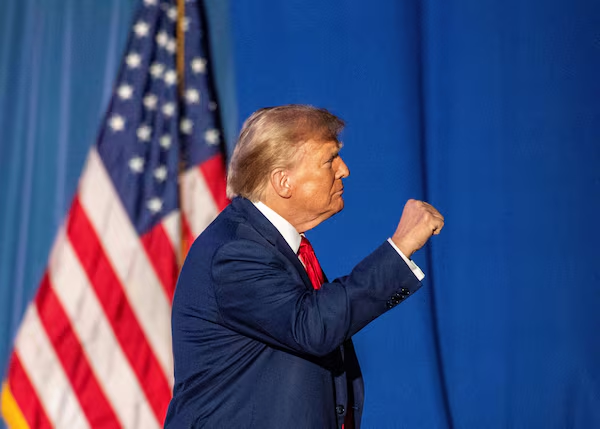
Recent polling data out of Arizona shows a sharp drop in public approval for President Donald Trump, marking his lowest numbers in the state to date. According to the latest Arizona Public Opinion Pulse released by nonpartisan research firm Noble Predictive Insights, the president’s job approval rating has fallen significantly as voters voice strong dissatisfaction with his administration’s handling of economic pressures and military operations in Iran.
The survey reveals that only 39% of registered voters in Arizona currently approve of the president’s overall job performance, while 58% express disapproval. This puts his net approval rating at minus 19 points. That figure drops below his previous record low in the state, which stood at minus 13 points in early 2021.
The sudden shift highlights changing political sentiment in a crucial battleground state where economic stability and clear leadership remain top priorities for residents.
Understanding why these numbers have shifted requires looking closely at the two main drivers behind voter frustration: everyday financial strains and growing concern over international conflict.
Breaking Down the Numbers: What Arizona’s Latest Poll Reveals
The latest poll figures show a notable change compared to earlier months. At the start of the administration’s current term, voter opinion in Arizona was fairly split, with job approval sitting at a slightly positive net score of plus 3 points (50% approving against 47% disapproving). Over recent months, however, public sentiment has moved downward.
The $0 Secret To Launching Your Entire Online Empire
Why pay hundreds every month for separate software? Build funnels, send emails, and make sales with Systeme.io completely free.
Get Started For $0Free Forever • No Credit Card Needed • Beginner-Friendly
The drop of 22 net percentage points over a relatively short period reflects rising dissatisfaction across key demographic groups, including independent voters who often decide close elections.
When breaking down specific policy areas, the numbers show even steeper drops:
- Overall Job Performance: 39% Approve | 58% Disapprove (Net -19)
- Economic Management: Net score of -25 points
- Military Operations in Iran: Net score of -25 points
Political analysts track Arizona closely because it serves as a reliable litmus test for wider national opinions. When voters in a balanced swing state report consistent drops across multiple issues, it signals deeper challenges that extend beyond routine political disagreements.
As reported by major local outlets like KTAR News, this survey polled over 1,000 registered voters across Arizona, providing a representative cross-section of urban, suburban, and rural communities.
Why the Economy Is No Longer Protecting Approval Numbers
For years, strong economic trust served as a solid buffer for President Trump. Even when voters expressed doubts about tone, communication style, or specific foreign policy decisions, a large segment of the public maintained confidence in his ability to manage business, job growth, and national financial systems.
That historical safety net appears to be weakening under current conditions. Mike Noble, chief executive officer of Noble Predictive Insights, noted that during earlier years, many voters would offer a qualification like liking the economic results despite reservations on other topics. Today, that argument is much harder for voters to make as everyday expenses remain high.
Rising Costs at the Grocery Store and Fuel Pump
Voters measure economic performance based on daily experience rather than high-level financial reports. In Arizona, families continue to deal with elevated prices for essential goods. Gas prices, food bills, utility costs, and housing rentals have all placed noticeable strains on household budgets.
When basic costs of living remain elevated, public frustration naturally targets national leadership. Arizona residents are feeling the squeeze every time they fill up their vehicles or purchase weekly supplies, leading many to question current financial policies and trade decisions.
Interest Rates and Housing Stress in the Southwest
Arizona has experienced rapid population growth over recent years, making housing affordability a central topic of discussion. High interest rates have made purchasing a home difficult for first-time buyers while pushing rent prices upward across major cities like Phoenix, Tucson, and Mesa.
When federal interest rate management and national economic policies do not bring fast relief, local voters quickly lose patience. The combined weight of high borrowing costs and steady inflation has created a tough environment for middle-class families trying to manage monthly expenses.
Foreign Policy Strain: Growing Opposition to Operations in Iran
Alongside economic worries, military operations involving Iran have emerged as a primary source of public concern. The net minus-25 approval rating on Iran reflects growing anxiety over international military commitments.
American voters across party lines frequently voice strong caution regarding prolonged military engagements abroad. In Arizona, where military families and veterans make up a significant portion of the population, foreign policy decisions carry deep personal weight.
Fears of Long-Term Foreign Entanglements
Public sentiment suggests voters want federal leaders to focus resources on domestic issues rather than spending energy and capital on overseas conflicts. News coverage surrounding military actions in the Middle East has raised fears of escalation, rising defense spending, and potential supply chain disruptions.
When voters feel international policy takes attention away from fixing local problems—like inflation, public infrastructure, and border management—approval ratings tend to fall quickly.
The Link Between Overseas Conflict and Domestic Energy Prices
Global conflicts rarely stay isolated from local economies. Tensions in Iran directly affect global oil markets, which quickly translates into higher fuel prices for drivers in Arizona and across the nation.
Send, Spend & Hold Money Worldwide Without Hidden Fees
Transfer money internationally at the real exchange rate and hold 40+ currencies in one account.
Open a Wise AccountMid-market rate • Fast transfers • 40+ currencies
Voters understand this connection. When military maneuvers in foreign regions lead directly to higher prices at neighborhood gas stations, public support drops on both foreign policy and economic management simultaneously.
Arizona Voters Express Fatigue Over 2020 Election Debates
Another striking finding from the survey focuses on how voters feel about past political controversies. Nearly seven out of ten Arizona voters (69%) stated they want politicians and public figures to move on from discussions surrounding the 2020 presidential election.
Only 21% of respondents felt there are still unresolved issues from that election that require ongoing political debate.
Bipartisan Agreement on Looking Forward
What makes this finding unique is how strongly voters across different political parties agree:
- Democrats: 74% want to move past 2020 discussions
- Independents: 68% want to move past 2020 discussions
- Republicans: 66% want to move past 2020 discussions
This consensus shows that citizens are tired of reliving past arguments. After years of hearing about election audits, court challenges, and harsh political finger-pointing, residents want elected officials to concentrate entirely on present challenges.
Voters are signaling clearly that their main focus rests on immediate real-world needs: job creation, lower prices, secure community infrastructure, and stable water management.
Local Arizona Issues Shaping Public Opinion
While national issues like inflation and foreign conflicts take center stage, local Arizona challenges also play a major role in shaping voter mood.
Water Security and Infrastructure Management
Water conservation remains one of the most critical topics in the desert Southwest. Recent announcements regarding Colorado River water allocations and regional conservation cuts have kept environmental management high on the public agenda.
Arizona residents want leaders who present clear, long-term plans for securing clean water, building reliable energy grids, and managing suburban growth responsibly. Federal actions that appear detached from these basic survival issues struggle to earn public approval.
Debate Over Heavy Data Center Development
The survey also asked voters about the recent boom in industrial data center construction across Arizona. A solid majority of registered voters—57%—expressed opposition to building more large-scale data centers in the state, citing heavy consumption of local water and electricity.
The $0 Secret To Launching Your Entire Online Empire
Why pay hundreds every month for separate software? Build funnels, send emails, and make sales with Systeme.io completely free.
Get Started For $0Free Forever • No Credit Card Needed • Beginner-Friendly
Only 30% supported expanding these facilities for economic investment. In fact, nearly two-thirds of respondents argued that Arizona should place clear limits on future data center projects. This issue highlights how protective voters feel over their natural resources and local infrastructure during times of economic pressure.
How Shifting News Trends Impact Digital Media and Online Coverage
When major political stories break, public interest surges online as people search for clear, reliable explanations of what is happening. Navigating the modern media space requires understanding how news spreads across different digital platforms.
Understanding how current events get discussed online helps readers separate solid factual analysis from sensational commentary. The way news stories trend gives valuable insight into what communities care about most.
The Growing Demand for Straightforward News
Modern readers prefer news presented without complex jargon or heavy ideological spin. Whether people read political updates, business reports, or cultural stories, they appreciate direct explanations that highlight real-world impacts.
Digital publications that deliver clear, balanced coverage help readers stay informed without feeling overwhelmed by constant political noise.
Following Digital Media and Technology Trends
Keeping up with changing media formats, digital journalism tools, and automation tools is easier when following dedicated industry resources. Those interested in modern tech developments can check out our section on technology and AI to see how emerging platforms are reshaping digital content creation.
Content creators looking to build their own digital presence or automate video platforms can also explore our detailed guide on YouTube automation for step-by-step strategies on publishing modern digital video projects.
Understanding the Polling Methodology
To judge the reliability of any political survey, it helps to understand how the data was gathered.
The Noble Predictive Insights survey was conducted between August 10 and August 13, 2026. The sample included 1,040 registered voters and 923 likely voters across Arizona.
The survey sample was weighted to match Arizona’s actual demographic breakdown in terms of gender, age, geographic region, political party affiliation, race, and education levels. The margin of error was calculated at plus or minus 3.04% for registered voters.
This structured approach ensures the results accurately reflect broader public sentiment throughout the state rather than a small, skewed group.
Comparing Past and Present Political Benchmarks
To put these numbers in perspective, it helps to compare President Trump’s current ratings with historical benchmarks in Arizona politics:
1. President Trump’s Previous Arizona Lows
Prior to this poll, President Trump’s lowest net approval rating in Arizona was minus 13 points, recorded shortly after the events of January 6, 2021. The current minus 19 net rating represents a six-point drop below that previous mark.
2. Former President Joe Biden’s All-Time Lows
While President Trump is experiencing his lowest personal score in Arizona, he has not reached the absolute record low for a sitting president in the state. Former President Joe Biden recorded net approval ratings of minus 24 points during specific periods of his term in July 2022 and April 2023 when inflation reached forty-year highs.
3. The Independent Voter Shift
Independent voters make up roughly one-third of Arizona’s electorate. In past elections, winning independent voters proved decisive for statewide candidates. The recent drop in net approval suggests independent voters are currently expressing dissatisfaction with federal policies on prices and foreign conflicts.
Frequently Asked Questions
What was President Donald Trump’s overall approval rating in the latest Arizona poll?
In the August 2026 Noble Predictive Insights poll, 39% of registered Arizona voters approved of President Trump’s job performance, while 58% disapproved. This gave him a net approval rating of minus 19 points.
Why did President Trump’s approval numbers drop in Arizona?
The drop was largely driven by voter dissatisfaction with economic management and foreign policy handling, specifically ongoing military operations in Iran. Both issues received net approval scores of minus 25 points.
How do Arizona voters feel about discussions regarding the 2020 election?
A strong majority—69% of registered voters—wish that discussions about the 2020 election would end so leaders can focus on current challenges. This view is shared across Democrats (74%), Independents (68%), and Republicans (66%).
What local issues are currently worrying Arizona residents?
Arizona voters are closely focused on household living costs, high interest rates, water security regarding the Colorado River, energy grid capacity, and the expansion of heavy-use data centers.
Who conducted this Arizona public opinion poll?
The survey was conducted by Noble Predictive Insights, a nonpartisan public opinion polling and market research firm based in Phoenix, Arizona.
What Lies Ahead for Arizona’s Political Landscape
These latest polling numbers serve as a clear reminder that voter support requires constant attention to basic daily concerns. While international foreign policy and federal debates often dominate television news cycles, voters ultimately grade their leaders on household financial stability, peace, and local infrastructure.
As the political season continues, federal officials and state leaders will likely adjust their messaging to address widespread economic concerns. Whether public approval rebounds will depend heavily on whether inflation cools down, energy prices stabilize, and military tensions overseas begin to ease.
For voters in Arizona, the demand remains simple: focus on real solutions for today’s living costs and leave past political battles behind.
To learn more about our mission and editorial team, feel free to visit our About Us page or reach out directly through our Contact Us page. You can also stay updated with our latest stories by connecting with us on Instagram, Facebook, and X / Twitter.
