
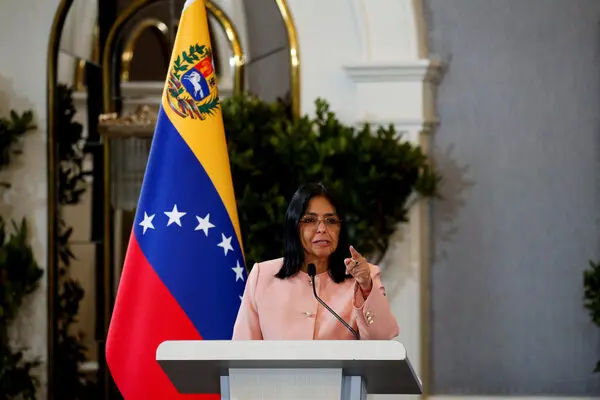
Venezuela and the United States have officially locked in a long-term energy pact that will run for 25 years. Interim President Delcy Rodríguez announced the massive deal during a late-night broadcast on state television, describing it as a historic turning point for the nation’s struggling economy. The accord aims to jumpstart oil production, bring billions of dollars in fresh investment into the country, and help stabilize energy supply lines across the Western Hemisphere.
This announcement comes after months of quiet negotiations between American officials and leadership in Caracas. Under the terms of the agreement, both nations will collaborate to restore Venezuela’s oil infrastructure, which has suffered from severe decline, lack of maintenance, and international sanctions over the past decade. The primary goal of the bilateral project is to push daily crude oil production up to at least 1.5 million barrels per day.
For Venezuela, the agreement represents an urgent effort to generate fresh government revenues and revive a battered financial system. For the United States, the deal secures direct access to some of the world’s largest proven crude oil reserves while creating new operational opportunities for energy firms.
What Is Inside the 25-Year US-Venezuela Energy Pact?
The centerpiece of the agreement is a shared commitment to develop 17 strategic oilfields across Venezuela. In addition to these existing fields, the project outlines plans to open eight greenfield oil blocks. These greenfield sites represent untapped geographic areas with massive potential for brand-new drilling operations and long-term extraction projects.
To make this ambitious project possible, foreign capital and private operators will enter the country to supply advanced technology, heavy machinery, and technical expertise. Estimations suggest that total investments could reach up to $100 billion over the life of the contract. This massive capital injection will be used to replace old hardware, repair electrical systems around drilling sites, and modernize shipping terminals.
The $0 Secret To Launching Your Entire Online Empire
Why pay hundreds every month for separate software? Build funnels, send emails, and make sales with Systeme.io completely free.
Get Started For $0Free Forever • No Credit Card Needed • Beginner-Friendly
From a financial standpoint, the agreement promises substantial payouts for the Venezuelan state treasury. Based on a baseline benchmark crude price of $65 per barrel, the government projects it will collect more than $209 billion in taxes, royalties, and direct revenues over the 25-year duration of the deal.
Specifically, officials stated that roughly $19 out of every barrel produced and sold under this arrangement will go straight into the national treasury. This direct cash flow is intended to help stabilize national currency reserves, fund domestic public services, repair public utilities, and rebuild social safety nets for local communities.
Protecting Venezuelan Sovereignty and Resource Rights
A major topic of discussion surrounding this deal is who ultimately controls Venezuela’s natural resources. Interim President Delcy Rodríguez spent a significant portion of her television address reassuring the public about national ownership, clear constitutional boundaries, and domestic authority over natural assets.
She emphasized that Venezuela retains full ownership and sovereignty over all its oil and gas fields under the national constitution. The deal does not sell off underground oil or transfer public land to foreign governments. Instead, it creates a structured partnership framework that allows foreign companies to invest capital and bring in operational machinery while operating under strict state oversight and legal guidelines.
This distinction is critical for local political stability. On the morning of the announcement, pro-government groups organized rallies in Caracas to express concern over foreign influence and foreign military presence in the region. Rodríguez addressed these fears directly, arguing that the country can protect its independence while simultaneously using international partnerships to save its primary economic engine.
Why the United States Wants Access to Venezuelan Crude
From the Washington perspective, securing a long-term foothold in Venezuelan crude production serves several strategic and economic interests. Venezuela holds the world’s largest proven oil reserves, totaling over 300 billion barrels. However, years of political turmoil and economic collapse have kept much of that oil trapped deep underground.
American energy strategists view this agreement as a vital step toward diversifying energy supplies, stabilizing global fuel markets, and rebuilding strategic petroleum reserves. The United States government, alongside private corporate partners, plans to direct a portion of the crude output directly toward military fuel supplies and federal emergency reserves to bolster national energy security.
Under the multi-tiered setup of the contract, an American-backed enterprise will hold operational rights and an output-sharing stake in key fields. Reports indicate that the United States will have the right to purchase a majority share of effective output at cost, giving it a steady supply of crude for industrial and military requirements.
In the global energy landscape, an operational framework of this size places the joint effort among the top tier of international energy holdings, right alongside major state entities like Saudi Aramco.
Can Venezuela Realistically Reach 1.5 Million Barrels Per Day?
While a target of 1.5 million barrels per day sounds promising on paper, industry experts caution that achieving it will take considerable time, labor, and careful management.
Venezuela’s current oil output sits far below its historical potential. Decades ago, the country comfortably pumped over 2.5 to 3 million barrels of oil every single day, making it one of the most powerful energy exporters in the world. However, years of underinvestment, corruption, severe economic crises, and international sanctions left physical facilities in terrible condition. Pipelines are rusting, refineries need major overhauls, and many skilled engineers left the country during the prolonged economic crisis.
Fixing this broken system requires much more than signing paper contracts. Engineers must clear clogged wells, replace outdated pumps, rebuild power grids near remote oil sites, and clear heavy crude from storage tanks that have sat unused for years.
Energy analysts estimate that it will take several years of continuous physical labor and tens of billions of upfront dollars before production numbers show dramatic growth. While short-term gains are possible through quick fixes, reaching and maintaining 1.5 million barrels per day is a long-term marathon rather than an overnight sprint.
Will This Deal Lower Gas Prices for Everyday Drivers?
Whenever major oil deals make international headlines, drivers immediately wonder if petrol prices at their local station will drop in the coming weeks.
In the short term, drivers should not expect an immediate drop in retail fuel prices. While increased supply generally drives market prices down, Venezuelan oil will not flood the market tomorrow morning. It takes months just to mobilize heavy equipment, hire specialized crews, and begin new drilling operations in remote locations.
Send, Spend & Hold Money Worldwide Without Hidden Fees
Transfer money internationally at the real exchange rate and hold 40+ currencies in one account.
Open a Wise AccountMid-market rate • Fast transfers • 40+ currencies
Furthermore, Venezuelan crude oil is naturally heavy and thick compared to the lighter crude produced in other regions. Extracting and refining heavy crude requires specialized equipment and specific types of refineries, many of which are located along the US Gulf Coast. Processing this heavy oil into usable gasoline for everyday cars takes additional time and processing steps.
Energy market analysts point out that while this 25-year pact provides vital long-term stability and adds future global supply, seasonal price changes, general inflation, transport costs, and geopolitical tension elsewhere will continue to influence pump prices in the immediate future.
How Technology and Modern Industry Play a Role
Rebuilding an entire nation’s energy grid in the modern era relies heavily on cutting-edge technology. The oil sector today looks vastly different than it did twenty years ago.
Modern extraction techniques rely on automated monitoring, advanced seismic scanning, and data-driven management software to safely extract oil from deep underground. Companies operating in Venezuela will need to install modern digital monitoring tools to prevent environmental leaks, track pipeline pressure, and manage operational safety across hundreds of miles of remote terrain.
Understanding how technological advancements reshape complex industries is a major topic across many sectors today. Just as advanced tools transform energy systems, similar technical revolutions are happening in digital media, automation, and software. You can learn more about how technological breakthroughs are changing business models by exploring our Technology and AI guide.
Beyond technical hardware, digital systems also play a massive role in how modern news and business updates are shared with the global public. Content automation platforms and smart distribution strategies help news travel faster than ever before. If you are interested in how modern creators use digital tools to build digital reach, check out our insights on YouTube Automation strategies.
Economic Lifeline or Temporary Solution for Venezuela?
For ordinary Venezuelan citizens, the central question is whether this deal will translate into lower food prices, reliable electricity, better healthcare, and steady employment.
The Venezuelan economy has suffered through hyperinflation, severe currency devaluation, and widespread poverty over the past decade. Millions of citizens left the country in search of better living conditions abroad. The promise of $209 billion in public revenue over 25 years offers a glimmer of hope, provided those funds are managed responsibly and spent on critical public infrastructure.
Local businesses stand to benefit from secondary contracts. Construction companies, transport services, catering teams, and equipment suppliers will all find work supporting foreign crews and oilfield restoration projects. If money flows back into local towns and cities, consumer spending could gradually recover, bringing life back to local markets.
However, critics warn that relying solely on oil exports leaves the nation vulnerable to global price crashes. If world oil prices drop significantly below the $65 benchmark, government revenue will shrink accordingly. True long-term economic stability will require Venezuela to use its oil income wisely to build a more diverse economy over time.
The $0 Secret To Launching Your Entire Online Empire
Why pay hundreds every month for separate software? Build funnels, send emails, and make sales with Systeme.io completely free.
Get Started For $0Free Forever • No Credit Card Needed • Beginner-Friendly
Global Market Impact and Geopolitical Shifts
Beyond the immediate financial terms, this 25-year agreement sends ripples across the global geopolitical landscape. For years, international energy markets have had to adapt to shifts in supply from major oil-producing coalitions like OPEC+.
By bringing Venezuelan crude back into international market channels under American partnership, global energy buyers gain access to a major alternative supply source. This extra supply can help protect global energy security against sudden political shocks or trade disruptions in other regions.
At the same time, this deal reflects a broader international trend toward economic pragmatism. Both nations face pressing internal challenges that require long-term solutions. By focusing on mutual economic interests, the agreement creates a structured framework for long-term cooperation that could influence how energy deals are structured between Western nations and resource-rich developing countries in the future.
Frequently Asked Questions
What is the main goal of the 25-year energy agreement?
The main goal of the agreement is to rebuild Venezuela’s oil infrastructure, increase daily oil production to at least 1.5 million barrels per day, bring $100 billion in private investment into the country, and generate over $209 billion in government revenue.
Will this agreement lower gasoline prices immediately?
No. Because Venezuelan oil fields require extensive repairs and new infrastructure, it will take several years to significantly increase crude output. Drivers will not see an instant drop in prices at the pump in the short term.
Who owns the oil fields under this new deal?
Venezuela retains full ownership and constitutional sovereignty over its land, oil, and natural resources. Foreign companies and American partners provide capital, technology, and operational services in exchange for production rights and oil purchases, but they do not own the land or the underlying reserves.
How much money will Venezuela make from each barrel of oil?
Based on a baseline calculation of $65 per barrel, Venezuela expects to collect approximately $19 per barrel in direct taxes and government royalties. This money is slated to go directly into state revenue funds.
Why does Venezuela need American partners to produce oil?
Years of economic hardship, lack of investment, and sanctions left Venezuela without the heavy machinery, modern tech, and financial capital needed to fix its decaying energy infrastructure. American and international partners bring the necessary funds and technical skill to restart large-scale operations.
How long will this energy project last?
The bilateral agreement is officially set to remain in force for 25 years, establishing a long-term strategic relationship between the two nations in the energy sector.
Final Thoughts on the US-Venezuela Energy Agreement
This 25-year energy deal marks a major shift in relations between Washington and Caracas. After years of diplomatic standoff and economic isolation, both sides have chosen a path of economic cooperation focused on energy production and financial recovery.
While reaching the production goal of 1.5 million barrels a day will require massive effort, heavy funding, and years of physical labor, the potential rewards for both nations are substantial. Venezuela gains a direct path toward economic recovery and regular state revenue, while the United States secures long-term access to major crude oil reserves.
As work begins across Venezuela’s 17 strategic oilfields, the world will be watching closely to see if this ambitious plan delivers on its promises over the coming years.
If you want to learn more about our publication and our mission to cover key world events, visit our About Us page. Have thoughts or questions about this story? Feel free to reach out directly through our Contact page.
You can also stay updated with all our latest stories and discussion by following us on social media:
- Connect with us on Instagram
- Follow our page on Facebook
- Join the conversation on X (formerly Twitter)
