
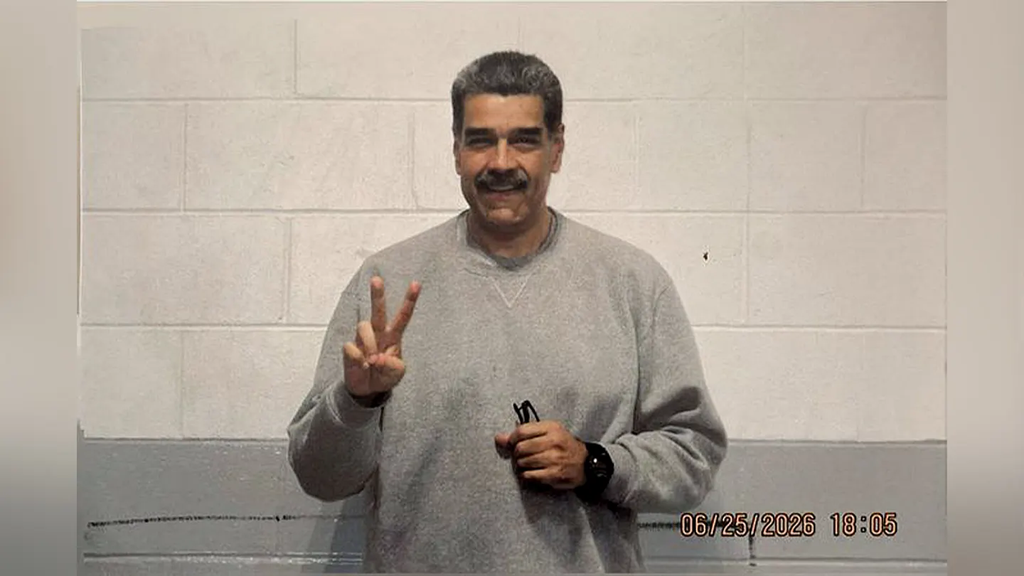
Former Venezuelan president Nicolás Maduro and his wife, Cilia Flores, have formally asked a United States court to throw out federal drug-trafficking charges against them. Their legal team submitted a motion in a Manhattan federal court claiming that Maduro is protected by sovereign immunity as a head of state.
This filing represents the biggest legal fight in a historic international court case. Maduro and his wife have been held in a federal jail in Brooklyn since early January, following a midnight raid by American forces in Caracas that brought them directly to New York.
The legal team representing Maduro argues that no American court has the authority to put a foreign head of state on trial. They argue that international law protects leaders from being prosecuted by foreign nations. However, the United States government has maintained for years that Maduro was not a legitimate president. This dispute sets up a huge legal showdown over global law, national sovereignty, and the limits of power.
Understanding the Legal Filing in Manhattan
The legal documents were submitted to U.S. District Judge Alvin Hellerstein in Manhattan by Maduro’s lead attorney, Barry Pollack. In the paperwork, the defense team states clearly that the court lacks jurisdiction to try the case. They contend that the criminal charges violate long-standing rules that shield foreign leaders from prosecution in external courts.
According to the defense filing, heads of state have traditionally enjoyed complete protection from foreign courts. The lawyers wrote that this rule is older than common law itself. They emphasized that no court in the United States has ever held a criminal trial for a foreign leader who was recognized by their home country as the head of state at the time charges were filed.
The $0 Secret To Launching Your Entire Online Empire
Why pay hundreds every month for separate software? Build funnels, send emails, and make sales with Systeme.io completely free.
Get Started For $0Free Forever • No Credit Card Needed • Beginner-Friendly
The defense also argues that even if Maduro were not granted head-of-state immunity, he would still be protected by conduct-based immunity. This concept means that official actions taken by a government official on behalf of their country cannot be treated as ordinary crimes by another nation’s court system.
Maduro has strongly denied all allegations against him. His lawyers wrote that he is falsely accused and that if the case moves forward to a full trial, it will show that the claims made by prosecutors are completely unfounded.
How Nicolás Maduro Ended Up in a New York Federal Jail
To understand why this legal filing is happening now, it is helpful to look back at the events of January. In a sudden middle-of-the-night raid, American forces entered Caracas, seized Maduro and his wife from their home, and flew them directly to New York.
The operation sparked intense reactions around the world. The American government defended the action as a necessary law enforcement operation aimed at capturing an indicted suspect. Maduro and his supporters described the raid as an illegal kidnapping and referred to him as a prisoner of war.
Since arriving in New York, both Maduro and Flores have been held at the Metropolitan Detention Center in Brooklyn. They both entered pleas of not guilty to all counts during their preliminary court appearances.
The federal indictment accuses Maduro of participating in a long-running conspiracy to move massive quantities of cocaine into the United States. Prosecutors claim he worked directly with drug cartels and high-ranking officials to facilitate shipments. If convicted on these charges, both Maduro and Flores could face life sentences in federal prison.
For readers interested in how global headlines spread quickly online, you can read our guide on YouTube automation to see how modern creators build platforms around breaking news.
What Is Head of State Immunity?
Head-of-state immunity is a fundamental rule in international law. The main idea behind it is simple: countries need to talk to each other and conduct business without fearing that their leaders will be arrested whenever they travel or make political decisions.
Under traditional legal principles, a sitting president, prime minister, or monarch cannot be prosecuted by a court in another country. This rule exists to respect national sovereignty. It prevents one country from using its court system to arrest or punish the leader of another country.
However, applying this rule in American courts is complicated. In the United States, federal courts usually look to the executive branch—specifically the White House and the Department of State—to decide who counts as a recognized foreign leader.
When a dispute arises over whether someone is a legitimate leader, American courts generally defer to the president of the United States. This makes Maduro’s claim a tough legal fight, because Washington officially withdrew its recognition of Maduro as Venezuela’s legitimate president back in 2019.
The Specific Arguments Made by Maduro’s Defense Team
The defense motion submitted by Barry Pollack focuses heavily on what he calls an unprecedented situation. He argues that the key detail is not whether Washington likes Maduro, but whether Venezuela itself recognizes him as its leader.
The main points raised in Maduro’s court filing include:
- The court lacks jurisdiction because Venezuela recognizes Maduro as its rightful head of state.
- A foreign government cannot strip a sitting leader of immunity simply by labeling their leadership illegitimate.
- The acts described in the indictment relate to official actions taken while governing, making them exempt from foreign criminal jurisdiction.
- The primary narco-terrorism charges fail to show that the alleged actions were specifically intended to harm the United States.
Pollack pointed out that allowing the case to move forward would set a dangerous precedent. He argued that if the executive branch can ignore a leader’s legal protections simply by declaring them illegitimate, then sovereign immunity loses all meaning under international law.
Cilia Flores Files Her Own Request for Dismissal
Cilia Flores, Maduro’s wife, filed a separate request asking the judge to dismiss the charges against her as well. Her legal team argued that as the First Lady of Venezuela, she is also protected under sovereign immunity rules.
Send, Spend & Hold Money Worldwide Without Hidden Fees
Transfer money internationally at the real exchange rate and hold 40+ currencies in one account.
Open a Wise AccountMid-market rate • Fast transfers • 40+ currencies
Her attorneys stated in their filing that immunity belongs to the nation of Venezuela, not just the individuals. Therefore, only Venezuela has the power to give up that immunity. Since Venezuela has never waived immunity for Flores or Maduro, her defense team argues that the court has no authority to try her.
Flores faces similar charges related to drug trafficking and money laundering. She has maintained her innocence since her arrest and remains in federal custody alongside her husband in Brooklyn.
Why the US Government Says Immunity Does Not Apply
Federal prosecutors in Manhattan have a very different view of the situation. While the Department of Justice has not yet filed its official response, the government’s position has been clear for years.
The United States government stopped recognizing Maduro as president of Venezuela in 2019 following an election that Washington and dozens of other nations declared fraudulent. When Maduro claimed victory again in the 2024 election, foreign observers and American officials once again rejected the official results.
Because the U.S. government does not recognize Maduro as Venezuela’s legitimate president, prosecutors argue that he does not qualify for head-of-state immunity in American courts.
Furthermore, prosecutors maintain that drug trafficking and narco-terrorism are not official acts of state. They argue that conspiring with criminal networks to ship tons of cocaine into another country is ordinary criminal conduct, not legitimate governance. As a result, conduct-based immunity should not protect anyone accused of such crimes.
To stay informed about how modern digital tools and artificial intelligence are changing global tracking and news reporting, check out our technology and AI articles.
Legal Precedents: The Manuel Noriega Case
This is not the first time an American court has dealt with charges against a foreign leader. Legal experts frequently point to the case of Manuel Noriega, the former military ruler of Panama.
In 1989, American military forces entered Panama and captured Noriega, bringing him to Miami to face drug trafficking charges. Noriega attempted to claim head-of-state immunity to get the charges thrown out. However, the federal judge rejected his argument. The court noted that Noriega had never officially held the title of president and that the United States government did not recognize him as Panama’s legitimate leader.
Maduro’s lawyers argue that his situation is completely different from Noriega’s. They point out that unlike Noriega, Maduro served as the official elected president of Venezuela, and the U.S. executive branch does not dispute that he held that office. They argue that arguing over his legitimacy after 2019 does not change the fact that he was the recognized head of state in his home country.
The $0 Secret To Launching Your Entire Online Empire
Why pay hundreds every month for separate software? Build funnels, send emails, and make sales with Systeme.io completely free.
Get Started For $0Free Forever • No Credit Card Needed • Beginner-Friendly
Despite those arguments, legal scholars say Maduro faces a steep legal climb. American judges rarely overrule the executive branch on questions of diplomatic recognition.
Current Situation in Venezuela
While Maduro sits in a New York jail cell, the political situation in Venezuela has changed rapidly. Following Maduro’s capture in January, Vice President Delcy Rodríguez took control of the government in Caracas.
Initial statements from Rodríguez’s administration condemned the U.S. operation and called Maduro the rightful leader. Over time, however, public statements from Caracas regarding Maduro’s legal fight have quieted down.
The new leadership under Rodríguez has engaged in diplomatic talks with Washington. The two countries recently reached an agreement that allows the United States to manage a significant portion of Venezuela’s vast oil reserves. Meanwhile, local reports in Caracas indicate that murals featuring Maduro’s image are gradually being painted over across the capital city.
Maduro’s legal team has pointed out this contradiction in court filings. They note that Washington is negotiating directly with Rodríguez, an official appointed by Maduro himself, while simultaneously claiming that Maduro had no legitimate authority to govern.
What Comes Next in the Court Case?
The court process for Maduro and Flores will follow a set timeline over the coming months:
- Prosecutors from the Manhattan U.S. Attorney’s office must submit their formal response to the dismissal motion by October 2.
- Judge Alvin Hellerstein has scheduled oral arguments for November 17, where lawyers for both sides will present their arguments in court.
- If Judge Hellerstein denies the motion to dismiss, the case will proceed toward a full trial, which is currently scheduled to begin on June 1, 2027.
The judge’s ruling on this motion will be a major legal decision. If he grants the motion, it could lead to the release of Maduro and Flores, though an appeal by the government would be certain. If he denies it, the trial will move forward into one of the most high-profile legal proceedings in recent history.
Frequently Asked Questions (FAQs)
What is Nicolás Maduro being charged with in the US?
Maduro faces charges related to narco-terrorism, drug trafficking, and money laundering. Federal prosecutors claim he led a conspiracy that worked with cartels to move tons of cocaine into the United States.
What is sovereign immunity?
Sovereign immunity is a rule in international law that protects sitting foreign heads of state and sovereign governments from being sued or criminally prosecuted in foreign courts.
Why does the US say Maduro is not immune?
The U.S. government argues that Maduro lost his legitimate status as president after elections in 2018 and 2024 that Washington declared fraudulent. Because the U.S. does not recognize him as head of state, prosecutors argue he does not qualify for immunity.
Is Maduro’s wife also charged?
Yes, Cilia Flores faces related federal charges. Her legal team has also submitted a motion asking for the charges against her to be dropped based on sovereign immunity grounds.
Where are Maduro and his wife being held?
Both Maduro and Flores are being held without bail at the Metropolitan Detention Center in Brooklyn, New York.
When will the judge decide on the motion to dismiss?
Judge Alvin Hellerstein will hear oral arguments from both sides on November 17. A decision will follow after that hearing.
Final Thoughts on This Historic Legal Battle
This legal battle represents a critical test of international law and national sovereignty. The outcome will set a clear example for how foreign leaders are treated in foreign courtrooms moving forward. Whether Judge Hellerstein agrees with Maduro’s defense or sides with federal prosecutors, this case will be studied by legal scholars for decades to come.
We will continue to bring you clear, straightforward updates on major world events as they develop. To learn more about our team, read our about page. If you have questions, feedback, or story ideas, visit our contact page to reach out.
You can also join our online community and follow us on social media for continuous updates:
