
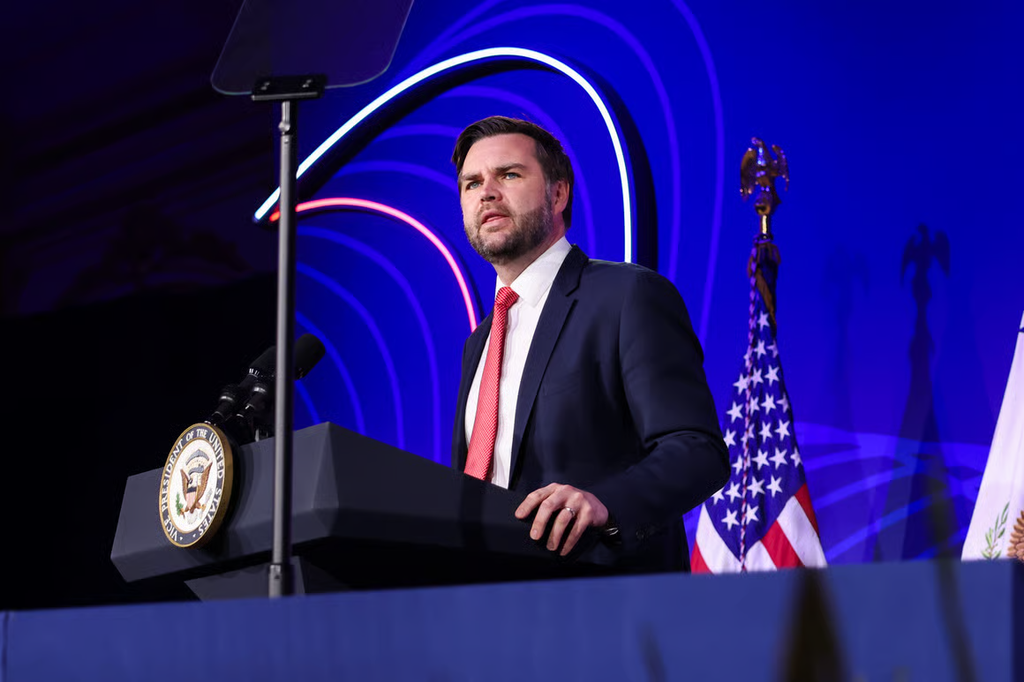
The crowd inside the American Airlines Center in Dallas was already loud, but when Vice President JD Vance took the microphone, the energy hit a whole new level. Delegates and supporters began chanting a single number across the arena floor: “48.”
In American political shorthand, that number carries massive weight. Donald Trump is the 47th President of the United States. By chanting 48, the crowd was sending a crystal-clear message to the political world: they view JD Vance as the man to lead the Make America Great Again movement into the 2028 presidential election.
While President Trump remains the undisputed centerpiece of conservative politics, the United States Constitution limits him from seeking a third term. That single reality has opened up an quiet yet intense race for the future of the Republican Party. Vance’s keynote address at the midterm convention in Texas felt like a formal audition to prove he has what it takes to carry the mantle when Trump steps down.
Understanding what happened on stage in Dallas gives us a clear look at how the next chapter of American politics is taking shape. It also reveals how Vance plans to turn his role as Vice President into a launchpad for the highest office in the land.
The Big Speech in Dallas: What JD Vance Actually Said
Keynote speeches at major party conventions are rarely just about the immediate election. They are designed to test national themes, gauge crowd reactions, and lay down a long-term political philosophy. Vance used his time on stage to blend personal storytelling with sharp populist rhetoric.
Build Funnels, Email Lists & Sell Online With One Free Tool
Create funnels, send emails, and sell online using Systeme.io without paying for multiple tools.
Create Free AccountFree forever • No credit card • Beginner-friendly
Instead of sticking strictly to policy bullet points, the Vice President built his argument around personal conviction and culture. He framed the political battle between Republicans and Democrats as a fight over the fundamental rights of working-class families.
A Focus on “American Birthright” and Family
A primary theme running through Vance’s speech was the idea of an “American birthright.” He spoke openly about his personal life, pointing out the recent birth of his fourth child, Alec Neel Vance, who was born in July. Vance used that family milestone to ground his vision for the country’s economic and cultural direction.
He argued that every child born in the country deserves safety, financial opportunity, and respect for traditional values. In a direct shot at political opponents, Vance claimed that Democratic policies have eroded those foundational promises over the years. By tying big political ideas directly to raising children, Vance made his message feel intimate and deeply personal for the thousands of supporters sitting in the audience.
He also directly addressed the economic anxieties facing ordinary families. With voters feeling squeezed by everyday living expenses, Vance leaned into populist economic ideas that aim to put American workers first.
Honoring Charlie Kirk and Rallying the Grassroots Base
The speech also contained emotional moments meant to connect with grassroots activists. Vance paid tribute to his friend and conservative organizer Charlie Kirk, reflecting on his impact on youth engagement across college campuses. The tribute resonated strongly with the crowd, touching on ongoing debates surrounding free speech and campus culture. You can read more about how communities are handling these complex debates on campuses by reviewing this detailed look at Utah campus remembrance events.
Vance urged attendees not to abandon the broader movement over minor policy disagreements. He argued that internal debate is normal, but staying unified against political rivals is essential for long-term success.
The performance showcased a polished political communicator. Vance showed he can deliver high-energy red meat to party faithful while maintaining the steady composure expected of a sitting Vice President.
Why 2028 Conversations Are Happening So Early
Talking about a presidential election two years in advance might seem premature, especially with the 2026 midterm elections right around the corner. However, in presidential politics, four years pass in the blink of an eye. Potential candidates must build donor networks, secure key endorsements, and establish national recognition long before formal announcements are made.
Several distinct factors explain why the debate over who will inherit the MAGA movement is happening right now.
The 2026 Midterm Elections Are the Immediate Priority
Before anyone can seriously campaign for 2028, the party must navigate the midterm elections. Controlling the House of Representatives and the Senate determines how much of the White House agenda gets passed over the next two years.
Trump has publicly called for a unified effort to win congressional seats across the country. You can check out how the White House is positioning its message for voters by reading about Donald Trump’s full campaign blitz for the midterms.
At the same time, midterms can be unpredictable for any party holding the White House. High living costs, global tensions, and swing-voter fatigue often make midterm cycles difficult for incumbent administrations. For a deeper breakdown of the strategic challenges facing the party, explore why Republicans are closely monitoring turnout ahead of the midterm elections.
Economic Realities and Pocketbook Issues
Voters ultimately decide elections based on their pocketbooks. Whether it is the price of gas, groceries, or housing, the administration in power gets held accountable for economic conditions.
To keep voters engaged, political leaders have put forward big proposals aimed at providing immediate relief. For instance, discussions around economic stimulus and direct citizen returns have sparked major national conversations. To see how these proposals operate, take a look at the breakdown of the proposed $5,000 dividend plan offered during midterm discussions.
Overall employment trends also play a massive role in shaping how voters view the national outlook. Understanding underlying metrics helps explain consumer confidence, which you can read more about in this analysis of recent US job growth trends and unemployment rates.
Can JD Vance Keep the MAGA Base United?
Inheriting a major political movement is never simple. Donald Trump built a coalition that brought millions of working-class voters into the party, many of whom previously felt ignored by traditional political figures.
Vance occupies a unique position to bridge the gap between working-class populism and policy formulation.
From Rust Belt Roots to National Leadership
Vance first gained national attention as the author of Hillbilly Elegy, a bestselling memoir detailing his upbringing in the Rust Belt and the struggles facing working-class communities in Ohio. That background gives him genuine credibility when speaking to voters in key Midwestern swing states.
When he ran for the United States Senate in Ohio, he leaned heavily into America First policies, emphasizing manufacturing jobs, border security, and skeptical foreign policy. As Vice President, he has expanded that footprint by leading major administration initiatives, including domestic policy drives and anti-fraud efforts.
His ability to articulate complex economic theories in basic, everyday language makes him a formidable communicator. He can talk to industrial workers in Kansas City and donors in Dallas without changing his core message.
Managing Local and Regional Party Fractures
Holding a national coalition together requires addressing local concerns that do not always align cleanly with national talking points. Different states face distinct economic and environmental pressure points that political leaders must handle carefully.
For example, rapid technological growth has led to massive infrastructure development across several states. In places like Texas, local communities and conservative lawmakers have engaged in heated discussions over power grid usage and industrial growth. You can learn more about these localized policy debates by reading about why Texas Republicans are raising concerns over massive tech data centers.
Navigating these state-level tensions while maintaining national unity is one of the primary tests Vance will face as he builds his leadership credentials.
Utilizing Digital Media and Tech Platforms
Modern political campaigns are no longer fought solely on traditional television networks. Reaching voters today requires a multi-faceted digital strategy that spans independent streaming, social platforms, and digital video creation.
Conservative figures have increasingly turned to digital platforms to build direct connections with their audiences. Candidates rely on algorithms, video production, and social channels to bypass traditional media gatekeepers.
Understanding how digital content spreads is vital for anyone following modern political strategy. To understand how automated video strategy works in the modern creator space, check out the dedicated insights available under YouTube Automation guides and resources. Additionally, keeping up with how software and algorithms influence public reach is essential, which is covered extensively across Technology and AI analysis.
Who Else Might Challenge Vance for the 2028 Nomination?
While Vance is currently viewed as the early favorite inside the administration, he will not have a clear, uncontested path to the nomination. The Republican primary process is famously competitive, and several high-profile leaders are quietly building their own national profiles.
Build Funnels, Email Lists & Sell Online With One Free Tool
Create funnels, send emails, and sell online using Systeme.io without paying for multiple tools.
Create Free AccountFree forever • No credit card • Beginner-friendly
Primary contests are healthy for political parties because they force candidates to sharpen their arguments and demonstrate broad voter appeal across different regions.
Marco Rubio and the Foreign Policy Wing
Secretary of State Marco Rubio is widely considered another top contender for 2028. Rubio brings deep foreign policy expertise and strong support among traditional national security conservatives.
Foreign policy has taken center stage in recent years, with the administration deeply involved in diplomatic maneuvers across volatile regions. High-stakes negotiations in Eastern Europe and firm diplomatic stances in the Middle East have highlighted foreign policy as a primary talking point.
To explore how these diplomatic negotiations unfold on the international stage, read about Trump administration envoys holding high-stakes peace talks in Kyiv. Similarly, ongoing tensions and strategic realignments remain critical, as seen in this report on evolving US diplomatic strategies and conflict policies in the Middle East.
Rubio’s extensive experience handling complex international relations gives him a unique platform. If foreign policy becomes the dominant issue for voters in 2028, Rubio could offer a compelling alternative for primary voters looking for experienced international leadership.
Ted Cruz and Constitutional Conservatives
Texas Senator Ted Cruz remains a powerful voice among constitutional conservatives and grassroots activists. Cruz has a proven track record of national campaigning and retains strong backing among evangelical voters and fiscal conservatives.
During his speech in Dallas, Cruz warned voters about emerging political coalitions on the left, urging conservatives to stay focused on fundamental constitutional principles. His ability to rally grassroots volunteers means he cannot be counted out of any future primary contest.
Other governors and national leaders are also keeping their options open. A lot will depend on how the economic and political landscape looks after the midterm elections conclude.
What This Shift Means for Everyday Voters
It can be easy to view political succession as a game played inside party leadership circles, but who leads a political movement directly shapes everyday public policy.
When political parties choose their leaders, they determine which issues receive priority in government. Here is how these succession discussions impact everyday life:
- Trade and Job Policies: A populist-led party prioritizes domestic manufacturing, tariffs, and protecting local employment from overseas competition.
- Energy and Cost of Living: Policy choices around domestic oil production, renewable energy, and grid infrastructure directly affect fuel prices and monthly utility bills.
- Taxation and Family Benefits: Discussions surrounding child tax credits, direct dividends, and income tax rates shape household budgets for working families.
- Foreign Engagement: Decisions on international alliances influence national security spending and determine how the country handles global conflicts.
As Vance continues to travel the country campaigning for midterm candidates, voters will get plenty of opportunities to judge his leadership style, policy ideas, and national vision.
Frequently Asked Questions (FAQs)
Can Donald Trump run for president again in 2028?
No, Donald Trump cannot run for president in 2028. The 22nd Amendment to the United States Constitution limits an individual to serving two terms as president, whether those terms are served consecutively or non-consecutively.
Why are audience members chanting “48” for JD Vance?
Chanting “48” refers to the position of the next President of the United States. Since Donald Trump is the 47th President, supporters chanting “48” are signaling their desire for JD Vance to become the 48th President in the 2028 election.
Who are the main potential rivals to JD Vance for the 2028 Republican nomination?
While official declarations are years away, prominent figures frequently mentioned alongside Vance include Secretary of State Marco Rubio, Texas Senator Ted Cruz, and several high-profile conservative state governors.
How do the 2026 midterm elections affect the 2028 presidential race?
The midterm elections act as a major test for the sitting administration. Strong midterm performance solidifies the standing of current party leaders like Vance. Conversely, disappointing results can spark deeper party debates and encourage primary challengers to jump into the race.
What is JD Vance’s current focus as Vice President?
Alongside his constitutional duties presiding over the Senate, Vance focuses heavily on domestic manufacturing, economic policy, border security, and overseeing major federal administrative initiatives.
Watching the political horizon unfold gives us a front-row seat to history in the making. As the country moves through the midterm election season and looks toward 2028, Vice President JD Vance has clearly positioned himself at the center of the debate over who will lead the conservative movement into the future.
Whether you follow political strategy closely or simply want to stay informed on policies that impact your community, keeping up with these shifts helps you make sense of the news. To learn more about our team and what drives our daily reporting, check out our About Us page or reach out directly through our Contact page.
You can also join the conversation and follow our real-time political and news updates across social media:
- Connect with us on Instagram
- Join our community on Facebook
- Follow the latest updates on X (formerly Twitter)
