
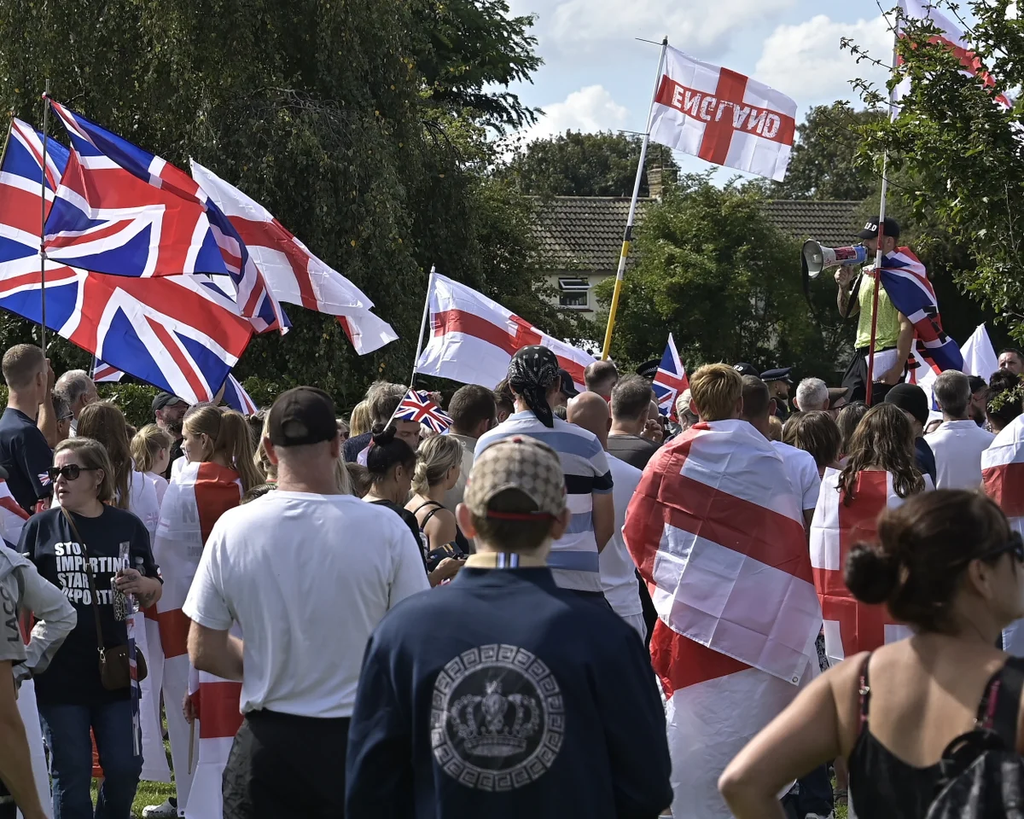
Massive disruptions at key maritime hubs across the UK have sparked serious concern in Whitehall. Dressed in black and hiding behind balaclavas, groups of far-right activists brought traffic to a complete standstill at the Port of Dover before turning their attention to Portsmouth harbor. The coordinated demonstrations blocked main access roads and directly targeted life-saving rescue crews operating along the coast.
In the aftermath of these chaotic events, government ministers and law enforcement oversight bodies are demanding answers. Whitehall officials have instructed police chiefs to immediately overhaul their intelligence-gathering networks. Questions are rising over how hundreds of masked demonstrators managed to organize, travel across the country, and blockade critical infrastructure without triggering an early security response.
Police forces in Kent and Hampshire initially described the gatherings as spontaneous occurrences. However, local representatives and anti-extremism watchdog groups point out that warning signs were visible across social media and local venues hours before roads were shut down. With public order laws already in place to handle masked gatherings, authorities are now under intense pressure to explain why those tools were not used to prevent the chaos.
What Happened at the Ports of Dover and Portsmouth?
The disturbances began over the weekend when large groups of individuals dressed in matching black clothing arrived at key coastal locations. The scale and timing of the actions caught local authorities off guard, creating immediate bottlenecks for transport networks and maritime operations. Reports covered by The Guardian highlighted how quickly these demonstrations disrupted everyday travel and port activities.
The Dover Highway Blockade
At the Port of Dover, which serves as Britain’s main cross-Channel ferry portal, around five hundred masked activists formed human chains across the primary A20 route. Linking arms and shouting slogans, the group blocked commercial hauliers, local commuters, and international travelers for hours.
Build Funnels, Email Lists & Sell Online With One Free Tool
Create funnels, send emails, and sell online using Systeme.io without paying for multiple tools.
Create Free AccountFree forever • No credit card • Beginner-friendly
The strategic placement of the blockade caused severe traffic delays throughout Kent. Port authorities designated the disruption as a major public order incident while police officers attempted to negotiate with the crowd. By the time the road was cleared around midday, no arrests had been made, leaving local business leaders and residents questioning the lack of immediate enforcement.
Confrontation at Portsmouth Harbor
The situation escalated further when activists shifted their focus to Portsmouth. Unlike Dover, where traffic was the main target, demonstrators in Portsmouth actively attempted to interfere with emergency rescue efforts. Videos shared across social media showed individuals wading into the water to block RNLI (Royal National Lifeboat Institution) lifeboats from bringing ashore 140 migrants who had been picked up in the Channel.
Activists harassed volunteer crew members, taking photographs of their faces and publishing their personal details online alongside abusive labels. The RNLI responded firmly, stating that its volunteers give up their personal time to save lives at sea and should never be subjected to threats or intimidation. The migrants were eventually brought to safety in the early hours of the morning, but the confrontation highlighted a worrying shift in how far-right groups target maritime rescue operations.
Who Organized the Blockades?
The coordinated nature of the actions points directly toward organized online networks rather than an unplanned gathering of angry citizens. The primary group claiming responsibility for the disruption is Patriot Platform, an organization formed by merging several smaller anti-immigration factions.
The Role of Social Media Influencers
The founder of Patriot Platform, Daniel Thomas, played a central role in mobilizing participants. Thomas, a well-known social media figure who previously worked alongside high-profile activists like Tommy Robinson, used public online channels to call supporters to action. In the days leading up to the Dover incident, videos were posted on platforms like Instagram calling on followers to assemble at the coast.
The organizers relied heavily on digital tools to coordinate movement, share meeting points, and distribute instructions on how to dress and behave during the protest. This digital strategy made it easy for hundreds of individuals to arrive at exact locations at the exact same time. Media coverage on platforms like BBC News noted how social platforms enabled rapid crowd gathering.
How Modern Media Distribution Drives Viral Mobilization
Understanding how these groups rally hundreds of people so quickly requires looking at modern digital communications. Social media algorithms are designed to reward high-engagement, controversial content. Organizers take advantage of these systems to build large audiences, stream live events, and generate viral reach across video platforms.
For those curious about how content spreads so fast online, reading up on modern digital communication and automated video distribution offers valuable insight into these mechanics. You can explore our guide on YouTube automation strategy to see how digital creators build massive online reach. Similarly, checking our section on technology and AI updates helps explain how automated algorithms amplify trending messages across the web.
Why Police Intelligence Missed the Warning Signs
The key question facing law enforcement is why an operation involving hundreds of people traveling across county lines went undetected until roads were already blocked. Experts and politicians argue that the information was sitting in plain sight.
Overlooked Pub Tip-Offs and Online Warnings
Reports indicate that Kent Police received specific tip-offs prior to the Dover blockade. Local residents in surrounding towns reported hearing individuals in local pubs discussing plans to travel to Dover and cause disruption. Furthermore, anti-racism research group Hope Not Hate stated that they had been tracking the group’s online activity and warning authorities about potential actions.
Despite these indicators, police presence at the Port of Dover was sparse when the demonstrators arrived. Former senior police officers have publicly labeled the event a significant intelligence failure, noting that tracking public social media accounts should have provided ample time to deploy public order units. Additional detailed analysis in the Financial Times pointed out how operational gaps left key areas unprotected.
Critical Infrastructure Vulnerability
Local leaders, including Mike Tapp, the Member of Parliament for Dover and Deal, emphasized that key travel hubs must receive higher security priority. The Port of Dover is not a standard street corner; it is vital national infrastructure that keeps trade and travel moving.
When critical trade corridors are blocked, the economic impact cascades beyond the immediate area. Law enforcement forces are now reviewing their internal communication networks to ensure that regional intelligence teams share real-time threat assessments faster with frontline officers.
Legal Questions: Why Were Mask Laws Not Enforced?
One of the main points of frustration for ministers and the public is the widespread use of face coverings during the protests. Dozens of demonstrators wore heavy balaclavas and neck gaiters to hide their identities while blocking roads and harassing volunteers.
Existing Powers Under Public Order Legislation
UK law provides police officers with specific powers to handle masked crowds. Under public order legislation, senior officers can issue designations in specific areas that require individuals to remove face coverings if they believe the masks are being worn to disguise identity during criminal offenses or public disorder.
Additionally, obstructing a public highway is a criminal offense. Despite these rules, officers on the ground in Dover chose to monitor the crowd until they dispersed naturally rather than making immediate arrests or ordering masks to be removed.
Government Demands for Accountability
Whitehall officials are now asking senior police leaders to explain their tactical decisions. Government representatives stressed that while the right to peaceful protest is a fundamental pillar of democracy, that right does not extend to breaking public order laws, blocking vital trade arteries, or intimidating emergency service volunteers.
Ministers want assurance that future incidents will be met with firm legal enforcement, including the immediate use of mask removal orders and swift arrests for those who intentionally disrupt national infrastructure.
Political Reactions Across the Spectrum
The port blockades have provoked strong responses from political leaders across party lines, highlighting a broad consensus on public safety even amidst ongoing debates about national border policy.
Government and Opposition Statements
Government spokespeople issued clear statements condemning the protests as intimidating and thuggish. Ministers emphasized that while citizens are free to hold strong opinions on immigration policy, taking the law into one’s own hands and disrupting public life crosses a clear legal line.
Local council leaders in Kent echoed these concerns, warning that communities cannot be left vulnerable to sudden blockades. Lawmakers from various parties noted that allowing groups to shut down major transit hubs sets a dangerous precedent for overall public order.
Debates Over Public Protest Boundaries
Even figures within right-leaning political parties expressed disapproval of the tactics used by the demonstrators. Representatives noted that wearing balaclavas and blocking working-class commuters from getting to work does nothing to address border security issues in a constructive manner.
However, some independent commentators argued that the protests reflect growing public frustration over illegal border crossings. This contrast highlights the ongoing debate between addressing legitimate policy concerns and maintaining strictly lawful public order on British streets.
How Law Enforcement Plans to Fix Intelligence Gathering
To prevent a repeat of the Dover and Portsmouth blockades, police forces across the UK are reviewing their intelligence structures. Improving how information is gathered, analyzed, and shared across regional boundaries is now a top priority for national policing bodies.
Strengthening National Intelligence Sharing
Protest groups often operate across multiple police force boundaries, organizing in one region and acting in another. This cross-border movement can create blind spots if local police departments do not pool their information effectively.
To fix this, police chiefs are working more closely with national coordination centers. By centralizing social media monitoring and sharing real-time updates across forces like Kent, Hampshire, and the Metropolitan Police, authorities hope to spot patterns and mobilization efforts long before activists reach their destination.
Balancing Public Safety and Civil Liberties
Improving intelligence gathering brings its own set of challenges. Law enforcement must carefully balance monitoring potential public order threats with protecting the civil liberties of peaceful citizens.
Build Funnels, Email Lists & Sell Online With One Free Tool
Create funnels, send emails, and sell online using Systeme.io without paying for multiple tools.
Create Free AccountFree forever • No credit card • Beginner-friendly
Policing oversight bodies are emphasizing that intelligence work must focus strictly on identifying planned illegal activity, infrastructure sabotage, and violence. The goal is not to stop lawful, peaceful protests, but to ensure that groups intending to cause unlawful chaos cannot catch communities off guard again.
Frequently Asked Questions (FAQs)
What caused the recent far-right protests at UK ports?
Demonstrators gathered at Dover and Portsmouth to protest against small boat crossings and current national immigration policies. Organized under the banner of groups like Patriot Platform, participants aimed to block key travel routes and disrupt port operations to draw national attention to their message.
Why are the police facing criticism over these demonstrations?
Law enforcement agencies, particularly Kent Police and Hampshire Police, are being criticized for an intelligence failure. Despite warning signs on social media platforms and local tip-offs, officers were unprepared for the scale of the blockades, resulting in major travel disruptions and harassment of rescue teams without immediate arrests.
What group was responsible for organizing the blockades?
The primary group behind the actions was Patriot Platform, led by social media activist Daniel Thomas. The group mobilized supporters through online video updates, public social media channels, and encrypted messaging platforms.
Are face masks legal at public protests in the UK?
While wearing a face covering is not inherently illegal, police have legal powers under public order laws to order the removal of masks in designated areas if they suspect individuals are hiding their identities to commit offenses or cause disorder. Whitehall officials are questioning why these powers were not applied during the port protests.
What steps are being taken to prevent future port blockades?
Government ministers have instructed police forces to improve their intelligence gathering and cross-border information sharing. Law enforcement is updating its risk assessment procedures and working closely with national coordination bodies to monitor online mobilization efforts and protect critical infrastructure.
Keeping up with complex news stories, social trends, and national developments requires clear and straightforward coverage. To learn more about our mission to bring you accessible, reliable news, visit our about page. If you have thoughts on this story or want to share feedback with our editorial team, please reach out directly through our contact us page. You can also join the conversation and share your opinions on our active social media channels on Instagram, Facebook, and X / Twitter.
