
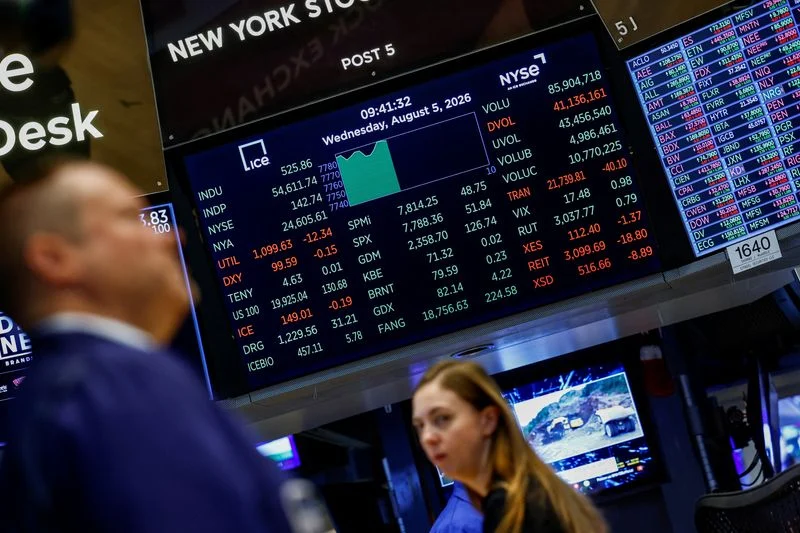
The Nasdaq Composite just wiped out all of its gains for the year, and the timing caught millions of everyday investors off guard. After months of climbing on excitement around artificial intelligence, the tech-heavy stock index tumbled back to where it started in January.
The drop happened right after Anthropic, one of the biggest names in artificial intelligence and the maker of the Claude assistant, finally went public. Wall Street had hoped this major stock market debut would prove that AI companies can turn massive hype into steady, long-term profits.
Instead, the opposite happened. Rather than calming investor fears, the Anthropic initial public offering sparked fresh doubts about whether tech stocks have become way too expensive.
Traders quickly began selling shares across the tech sector, pulling down chipmakers, cloud providers, and major software companies in a single wave. For anyone watching their retirement fund or trading app this week, the message from Wall Street was loud and clear: the easy ride for AI stocks has hit a serious speed bump.
What Actually Happened to the Nasdaq and Anthropic Stock?
When financial news outlets say the Nasdaq wiped out its gains for the year, it means every bit of upward progress the index made over the past several months has vanished. Imagine climbing a hill for ten months only to slide all the way back to the bottom in a matter of days.
The $0 Secret To Launching Your Entire Online Empire
Why pay hundreds every month for separate software? Build funnels, send emails, and make sales with Systeme.io completely free.
Get Started For $0Free Forever • No Credit Card Needed • Beginner-Friendly
Because the Nasdaq is packed with technology companies, its daily ups and downs act like a mood ring for how confident investors feel about the future of tech. For much of 2026, buyers poured money into anything connected to artificial intelligence, pushing share prices higher and higher.
That confidence rested heavily on the idea that leading AI labs would eventually become massive money-making machines. When Anthropic prepared to list its shares on the public market, traders treated the event like a report card for the entire AI industry.
An initial public offering, or IPO, is the moment a private company sells shares to the general public for the first time. Before an IPO, only wealthy venture capitalists, big institutions, and company insiders can buy in, often based on rosy promises about future growth.
Once a company goes public, however, it must open its financial books to the world through filings with the U.S. Securities and Exchange Commission. Everyday investors and big fund managers finally get to look closely at how much money the business actually brings in versus how much it spends.
When Anthropic shares began trading, early excitement faded faster than many analysts expected. Instead of sparking a fresh rally across Silicon Valley, the lukewarm reception made investors pause and question the sky-high price tags attached to the whole AI sector.
Why Was Everyone Watching the Anthropic IPO So Closely?
Anthropic was not just another tech startup testing the waters. Founded by former researchers from OpenAI, the company raised billions of dollars from major backers and built a reputation for creating powerful, safety-focused AI models used by businesses around the world.
Because OpenAI remained private, Anthropic became the clearest way for public stock investors to bet directly on a top-tier AI lab. Financial commentators spent months calling the listing a make-or-break moment for tech valuations.
Investors wanted proof that a pure-play AI company could thrive under the bright spotlight of Wall Street. If Anthropic soared out of the gate, it would send a signal that the AI boom still had plenty of room to run.
When trading turned choppy and cautious instead, that narrative cracked. Big funds realized that even the best-known names in artificial intelligence face tough questions once their numbers are laid bare on a public exchange.
How Did One Company’s Debut Drag Down the Whole Tech Market?
You might wonder how a single company’s stock debut could pull down an entire market index worth trillions of dollars. On Wall Street, big tech stocks are deeply connected like dominoes standing in a tight line.
Giant companies like Microsoft, Amazon, Alphabet, Meta, and Nvidia have spent tens of billions of dollars building massive data centers to power AI tools. Investors bought shares in those giants because they assumed AI labs like Anthropic would keep renting cloud space and buying computer chips at a furious pace.
When Anthropic’s public debut failed to ignite fresh buying enthusiasm, traders began connecting the dots. If investors are hesitant to pay top dollar for one of the companies leading the AI revolution, they might also be paying too much for the chipmakers and cloud giants supporting it.
Within hours, selling spread from newly listed shares to established tech leaders. Even profitable companies with strong cash flow saw their stock prices slip as portfolio managers rushed to lock in profits from earlier in the year.
Why Are Investors Suddenly So Nervous About Artificial Intelligence?
To understand why nerves are frayed on Wall Street right now, it helps to step back from the daily tickers and look at the basic math behind artificial intelligence. For the past couple of years, excitement around what AI can do has moved much faster than the profits it actually generates.
People love using chatbots to write emails, summarize long documents, or brainstorm ideas. Yet turning a helpful tool into a wildly profitable business is much harder than simply building smart software.
Send, Spend & Hold Money Worldwide Without Hidden Fees
Transfer money internationally at the real exchange rate and hold 40+ currencies in one account.
Open a Wise AccountMid-market rate • Fast transfers • 40+ currencies
Investors are no longer satisfied with flashy demos or bold predictions about how AI will change the world five years from now. They want to see clear, simple proof that the money going into AI today will come back as real profit soon.
Are AI Companies Spending Too Much Money Before Making Real Profits?
Building and running advanced artificial intelligence is one of the most expensive businesses ever created. Unlike a traditional smartphone app that costs very little to run once it is built, every single question a user asks an AI model requires heavy computing power.
That computing power depends on specialized chips, massive warehouses full of servers, and staggering amounts of electricity. Leading AI companies spend billions of dollars just to train a single new model, only to start spending billions more a few months later on the next version.
At the same time, competition among AI providers has pushed prices down for customers. Companies are practically giving away basic AI features for free while charging modest monthly subscriptions for premium versions.
Wall Street is starting to worry about that gap between massive upfront spending and slow, gradual revenue. When a company spends dollars today to collect pennies tomorrow, investors eventually lose patience and demand a clearer path to breaking even.
Is the AI Boom Starting to Look Like the Dot-Com Bubble?
Whenever tech stocks take a sudden tumble, people naturally bring up the dot-com crash of 2000. During the late 1990s, investors threw money at almost any company with a website, driving stock prices to absurd levels before the bubble burst.
Comparing today’s AI wave to the dot-com era is not completely fair, because today’s biggest tech companies are genuinely profitable businesses. Apple sells millions of phones, Alphabet makes billions from digital ads, and Microsoft powers offices across the globe.
Still, there is one uncomfortable similarity that has Wall Street on edge. In both eras, investors assumed new technology would bring instant riches, pushing stock prices far ahead of what the businesses could realistically earn in the near term.
When expectations climb too high, even good news can disappoint the market. A company can grow fast and still see its stock drop if traders were priced for perfection.
Why Are Everyday Businesses Slow to Pay for Expensive AI Tools?
Another reason for the growing anxiety comes from regular companies outside Silicon Valley. Over the past year, software companies added AI assistants to almost everything, from spreadsheets to customer service platforms, often raising prices to cover the cost.
The $0 Secret To Launching Your Entire Online Empire
Why pay hundreds every month for separate software? Build funnels, send emails, and make sales with Systeme.io completely free.
Get Started For $0Free Forever • No Credit Card Needed • Beginner-Friendly
In the real world, however, company bosses watch every dollar they spend. Many business owners tested expensive AI add-ons for their teams and discovered that while the tools save a little time, they do not always replace entire roles or immediately boost sales.
As a result, many businesses are buying AI licenses for only a small group of workers instead of the whole staff. Others are waiting for cheaper options before signing big multi-year contracts.
When everyday corporate buyers tap the brakes on spending, that slowdown travels straight back up the chain to the AI labs and hardware makers. Investors following market reports on sites like Reuters have started noticing those cautious corporate budgets, adding even more fuel to the recent sell-off.
What Does This Tech Sell-Off Mean for Your Money and Savings?
Reading headlines about wiped-out market gains can feel stressful, especially if you are working hard to grow your savings. You do not need to be a Wall Street trader to feel the ripple effects when the Nasdaq drops.
Because major tech companies have grown so large over the past decade, they make up a huge slice of the broader stock market. When they sneeze, almost everyone’s portfolio catches a cold.
The key is not to let scary headlines push you into making rushed choices with your money. Understanding where you actually stand makes it much easier to stay calm during rough weeks.
Could Your Retirement Account or Index Fund Be Affected?
Many people assume they are safe from tech swings because they never bought shares in an AI startup or traded on a flashy stock app. In reality, if you own a standard retirement plan or a broad index fund, you almost certainly own pieces of the biggest tech companies.
Popular funds that track the overall stock market put more money into the largest companies by value. That means giants like Nvidia, Microsoft, Apple, and Alphabet often account for a massive chunk of a typical retirement account.
When the Nasdaq gives up its gains for the year, your account balance will likely dip right alongside it. Seeing a smaller number on your monthly statement is frustrating, even when you know the market moves in cycles.
Remember that a drop on your screen is only a paper loss until you actually sell your shares. As long as you stay invested, you still own the exact same number of shares you had before the sell-off started.
Should You Panic Sell Your Tech Stocks Right Now?
When red numbers flash across financial news channels, the urge to hit the sell button and move everything into cash can feel overwhelming. Nobody likes watching their hard-earned savings shrink day after day.
Yet history shows that panic selling during a market drop is one of the fastest ways to hurt your long-term wealth. By the time bad news hits the front page, big institutional traders have already done most of their selling, meaning everyday investors often end up selling right near the bottom.
Worse still, people who sell out of fear rarely know when to get back in. Some of the strongest rebound days in stock market history happen right after scary sell-offs, and missing just a handful of those recovery days can cut your long-term returns in half.
If you bought quality investments for goals that are five, ten, or twenty years away, a rough week in November is just a bump in a much longer road. Stepping away from the daily price charts is often the smartest move you can make.
How Can You Protect Yourself When the Stock Market Gets Rocky?
While you cannot control what happens on Wall Street, you can control how prepared you are when markets turn bumpy. A few simple habits can keep a tech sell-off from turning into a personal financial crisis.
First, avoid putting all your eggs in one basket. If your entire portfolio is packed with high-flying tech stocks and new IPOs, every dip in the Nasdaq will feel like an earthquake. Spreading your money across different industries like healthcare, banking, energy, and consumer goods helps smooth out the ride.
Second, keep a solid emergency fund in a safe, easy-to-access savings account. When you have three to six months of living expenses set aside in cash, you will never be forced to sell stocks at a bad price just to pay rent or cover an unexpected car repair.
Third, treat brand-new IPOs with extra caution. Newly public stocks are notoriously wild during their first few months of trading, and waiting for the dust to settle gives you a much clearer picture before risking your cash.
What Needs to Happen Before Wall Street Trusts AI Stocks Again?
Market moods do not stay gloomy forever, and artificial intelligence is still one of the most important technologies of our generation. Even after a painful reset, millions of people and businesses use AI tools every single day to work faster and solve real problems.
For the Nasdaq to find its footing and climb steadily again, the conversation around AI needs to grow up. Wall Street is moving out of its honeymoon phase and into a show-me phase where real results matter more than exciting promises.
Will Quarterly Earnings Reports Matter More Than Big Tech Promises?
Over the next several months, quarterly earnings reports will become the biggest tests for tech stocks. During earnings season, public companies report exactly how much money they earned over the past three months and share what they expect next.
Investors will be looking closely at whether cloud divisions and AI software products are actually boosting profit margins. If companies can show that customers are renewing their AI subscriptions and spending more over time, confidence will slowly return.
On the other hand, companies that announce huge new spending plans without showing matching revenue growth will likely get punished by traders. Clear, honest financial progress is the only medicine that truly cures AI nerves.
Could Lower Costs Make AI Companies More Profitable?
Another bright spot could come from engineering breakthroughs that make AI cheaper to run. Right now, running massive AI models eats up enormous amounts of energy and expensive hardware.
Researchers across the industry are working hard on smaller, smarter models that deliver great answers using a fraction of the computing power. If companies can bring down the cost of running AI tools, their profit margins will look much healthier even without raising prices on customers.
Lower costs would also make AI tools more affordable for small businesses and everyday consumers around the world. When technology gets cheaper and easier to adopt, real long-term growth usually follows.
What Are the Most Frequently Asked Questions About the Nasdaq Drop and Anthropic IPO?
What does it mean when the Nasdaq wipes out its gains for the year?
It means the overall value of the Nasdaq Composite index has fallen back to where it stood at the start of the calendar year. Any upward growth the index built up over the previous months has been erased by recent stock price drops, leaving investors flat for the year so far.
Why did Anthropic decide to go public in the first place?
Going public allows a fast-growing company to raise large amounts of cash from public investors to fund research, pay for computing infrastructure, and compete with massive tech rivals. It also gives early employees and private investors a way to sell their shares on an open stock exchange.
Does this mean artificial intelligence is going away?
Not at all. A drop in stock prices reflects how investors value companies right now, not whether the technology itself is useful. Just as the internet continued to grow and reshape daily life long after the dot-com bubble burst, artificial intelligence will keep evolving and becoming part of everyday tools.
Is it safe to buy stock right after a big IPO drops?
Buying a stock right after its initial public offering carries high risk because prices can swing wildly as early investors cash out and Wall Street tries to figure out what the company is truly worth. Many experienced investors prefer to wait at least one or two quarterly earnings reports before deciding whether to buy.
Where can I follow reliable updates on tech stocks and market news?
You can check official market data directly on the Nasdaq website, read company filings on the U.S. Securities and Exchange Commission database, and follow daily financial reporting from trusted outlets like Reuters. Keeping up with clear, plain-English breakdowns helps you separate real trends from short-term market panic.
Where Do Tech Investors and Everyday Readers Go From Here?
Watching the Nasdaq erase an entire year of gains in the wake of Anthropic’s IPO is a sobering reminder that no market rally goes up in a straight line forever. Even transformative technologies go through messy growing pains as investors figure out who will actually make money and who is just burning cash.
For everyday readers and investors, this moment is less of a disaster and more of a healthy reality check. Hype can push stock prices up fast, but real businesses are built on steady customers, sensible spending, and patience over many years.
