
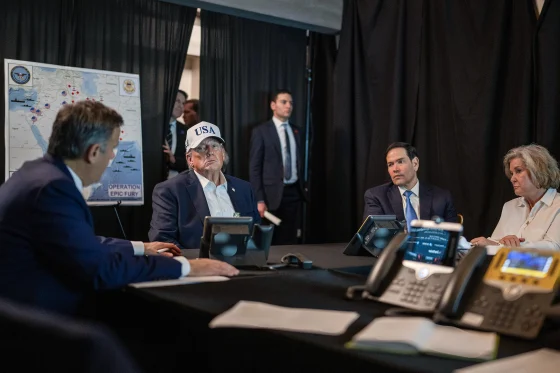
Six months after military operations began in Iran, President Donald Trump declared from the White House that the Iranian government is under severe strain and running out of money. Speaking to reporters in the Oval Office, Trump stated that economic sanctions and naval blockades have pushed Tehran to the brink.
Trump pointed out that the Iranian leadership is struggling to keep up with basic expenses. He noted that military personnel and government workers are not getting paid as financial pressure continues to build across the country.
When military strikes first launched on February 28, the official expectation was that operations would wrap up within four to six weeks. Half a year later, the situation has turned into a long conflict with major economic effects around the globe.
Both sides remain locked in a tense standoff. The United States is focusing on economic pressure and maritime blockades, while Iran continues to push back using asymmetric military tactics and shipping disruptions.
The Six-Month Mark: How the Conflict Has Evolved
From a Short Timeline to a Long Standoff
The initial goal of the military campaign was to dismantle Iran’s missile infrastructure and eliminate its nuclear capacity. In the opening weeks, joint U.S. and Israeli air strikes targeted major military command centers, air defense networks, and weapons production facilities. High-ranking leaders, including Supreme Leader Ali Khamenei, were killed during those early air raids.
The $0 Secret To Launching Your Entire Online Empire
Why pay hundreds every month for separate software? Build funnels, send emails, and make sales with Systeme.io completely free.
Get Started For $0Free Forever • No Credit Card Needed • Beginner-Friendly
Despite heavy destruction to its formal military facilities, the Iranian regime did not collapse. Instead, local military forces shifted tactics. They began relying heavily on low-cost mobile drones, sea mines, and hidden coastal missile launchers to fight back.
This shift transformed what was planned as a quick military strike into a six-month campaign. While major air battles have slowed down, daily military patrols and economic blockades have taken their place.
Current Military Operations at Sea and in the Air
The conflict is now focused primarily around critical maritime trade corridors. U.S. Central Command (CENTCOM) maintains constant aerial refueling flights and warship patrols across the Middle East to secure international waters.
Aerial footage released by defense authorities shows tanker planes refueling fighter jets in mid-air to support round-the-clock surveillance. U.S. forces are actively searching for hidden launch sites and monitoring vessel traffic to prevent unauthorized shipments.
Although direct ground troop invasions were avoided, naval and air forces remain fully deployed. The ongoing operations require significant logistical support and continuous monitoring of regional airspace.
Operation Economic Outcast: Pressure on Tehran’s Economy
The Treasury Department Steps Up Sanctions
To weaken Tehran without deploying massive ground forces, the U.S. government launched a campaign called Operation Economic Outcast. Treasury Secretary Scott Bessent announced that the initiative is designed to block every remaining avenue of revenue for the Iranian government and the Islamic Revolutionary Guard Corps.
Under this framework, federal agencies are tracking financial transactions, shipping registries, and foreign trade partners tied to Iranian businesses. The goal is to enforce a zero-leakage policy, ensuring that no money gets through to fund military operations or rebuild damaged infrastructure.
Washington has also warned third-party countries and foreign banks that doing business with Tehran will lead to severe penalty sanctions. This move aims to isolate the Iranian economy completely from international financial networks.
Financial Damage Inside Iran
The economic toll inside Iran has grown severe over the past six months. Official reports from Iranian representatives and international market experts estimate direct and indirect damages to the nation’s economy at more than 270 billion dollars.
Major industries have ground to a halt due to missing raw materials and blocked export channels. Inflation has skyrocketed, making everyday goods expensive for ordinary citizens. Local commercial banks are operating under severe capital shortages.
President Trump highlighted these internal financial struggles during his Oval Office comments. He noted that when a government cannot pay its armed forces or civil servants, internal stability becomes very difficult to maintain.
Tehran’s Official Response to Economic Pressure
Iran’s Foreign Ministry strongly rejected the new financial measures, calling them illegal economic terrorism. Iranian officials released statements calling on the international community to ignore U.S. directives and maintain normal trade relations.
Iranian Foreign Minister Seyed Abbas Araghchi stated publicly that economic pressure will not force his country to surrender. He emphasized that if the U.S. wants to resume diplomatic discussions, it must change its approach.
According to Araghchi, real progress requires mutual respect, an end to coercive tactics, and honoring past international agreements. For now, Tehran maintains that its military and civilian population are prepared to withstand prolonged economic sanctions.
The Strait of Hormuz and Global Energy Markets
A Vital Corridor for International Trade
The Strait of Hormuz is one of the most critical commercial waterways on Earth. Located between Iran and Oman, this narrow channel connects major Gulf oil producers to international shipping routes in the Indian Ocean.
Send, Spend & Hold Money Worldwide Without Hidden Fees
Transfer money internationally at the real exchange rate and hold 40+ currencies in one account.
Open a Wise AccountMid-market rate • Fast transfers • 40+ currencies
Before the outbreak of war in February 2026, around 130 commercial vessels passed through the strait every single day. Together, those ships carried more than 20 percent of the world’s daily petroleum supply, alongside massive shipments of liquefied natural gas.
When hostilities began, risk levels for commercial shipping spiked immediately. Insurance companies canceled coverage for vessels operating in the area, and major maritime shipping lines halted their regular transit schedules.
Ship Redirections and Blockade Operations
Naval forces have taken control of key sea lanes to enforce the blockade against Iranian ports. CENTCOM reported that military forces have redirected 75 commercial ships attempting to enter or exit Iranian waters.
In addition to redirecting traffic, naval teams have boarded non-compliant vessels and disabled ships attempting to run the blockade. President Trump stated that U.S. forces have complete control over port entries, ensuring that Iranian oil shipments cannot reach buyers.
While the U.S. government maintains that the general waterway is open for non-Iranian traffic, daily ship transits remain far below normal pre-war numbers. Most international shipping companies are avoiding the region due to safety concerns.
Rising Costs and Modern Industry Impacts
The reduction in crude oil shipments through the strait has triggered price increases across world energy markets. Higher fuel prices mean elevated transportation costs for raw materials, agricultural products, and manufactured goods worldwide.
Modern tech infrastructure relies heavily on stable energy supplies and smooth international trade logistics. Data centers, hardware production networks, and digital platforms face increased operational costs as energy prices fluctuate. You can explore more on how evolving tech sectors navigate global changes by visiting our technology and AI section.
As energy prices remain volatile, businesses across every sector are adjusting their operating budgets to cope with higher fuel bills and supply delays.
Domestic Impact: Rising Costs and Political Pressure in the U.S.
Challenges for American Farmers
The economic ripple effects of the six-month conflict are hitting rural communities across the United States. Grain producers and livestock farmers in the Corn Belt are facing their toughest financial environment in decades.
Because fuel and fertilizer costs are tied directly to global energy prices, farm expenses have surged dramatically since March. The price of agricultural diesel has risen alongside chemical fertilizers, eroding profit margins for corn, soybean, and wheat growers.
The $0 Secret To Launching Your Entire Online Empire
Why pay hundreds every month for separate software? Build funnels, send emails, and make sales with Systeme.io completely free.
Get Started For $0Free Forever • No Credit Card Needed • Beginner-Friendly
Industry associations report that many agricultural operations risk losing money over the next two years if energy costs stay high. Federal emergency funding programs have provided temporary relief, but agricultural leaders warn that long-term fixes require stable energy markets.
Strain on Military Stockpiles and Public Support
Beyond economic concerns, six months of sustained operations have drawn attention to military resource management. Defense officials noted that high usage of air defense missiles in the Middle East has reduced interceptor stocks in other regions.
Advanced systems, such as Patriot missile interceptors, were redeployed from European bases to protect regional assets and naval forces in the Gulf. Defense analysts are evaluating how to ramp up manufacturing to replenish depleted defense inventories.
Public sentiment regarding the conflict is also shifting. While many citizens support national security goals, lingering inflation and high gas prices at the pump have created domestic political debate as upcoming congressional elections approach.
Geopolitical Shifts and Regional Diplomacy
How Nearby Countries Are Adapting
The six-month conflict has altered political dynamics across the Middle East. Neighboring Gulf nations have found themselves balancing security partnerships while trying to keep commercial trade routes safe.
The threat of regional escalation has pushed several nations to strengthen localized defense setups and seek additional diplomatic channels. Neighboring economies depend on peaceful waters to export their own oil products, making a quiet resolution a top priority for regional leaders.
At the same time, long-term diplomatic discussions between regional powers have slowed down as governments focus on immediate security concerns created by the blockade.
Mediation Efforts by Third-Party Nations
Diplomats from mediator countries like Qatar and Oman are actively working to build a diplomatic off-ramp. High-level diplomatic visits to Tehran have focused on establishing safety protocols for commercial shipping in the Strait of Hormuz.
Proposed agreements aim to separate commercial traffic from ongoing political disputes, allowing neutral cargo ships to travel freely without fear of attack or military interception.
However, translating regional diplomatic talks into a binding peace agreement remains difficult. Washington continues to demand complete compliance with nuclear restrictions and missile limits, while Tehran insists on immediate sanction relief before signing any terms.
How Digital Media and Automation Shape War Coverage
Real-Time Updates in the News Space
During fast-moving international events, the public relies on digital outlets for instant news updates. Online news outlets, social platforms, and specialized analysis channels break down official briefings into easy-to-understand reports within minutes.
Independent creators and journalists use modern video production tools to cover press briefings, naval movements, and economic updates as they happen. This keeps audiences informed without waiting for scheduled television broadcasts.
The rapid flow of news allows readers around the world to trace how decisions made in Washington or Tehran directly influence market prices in their home towns.
Modern Automation in Online Video Production
The growth of automated tools has changed how media channels organize, edit, and distribute news content online. Automated systems help creators format video clips, generate accurate captions, and publish updates across multiple platforms efficiently.
Channels covering global affairs rely on these workflows to manage heavy news cycles during major events. If you want to understand how modern creators build and manage efficient automated video channels, check out our guide on YouTube automation.
By using smart production strategies, independent digital media outlets continue to provide accurate news coverage to millions of readers every day.
Join Our Community and Stay Connected
Staying informed on fast-moving global events is essential for understanding where the world is heading. We invite you to learn more about our mission and team by visiting our about page.
If you have news tips, questions, or feedback regarding our coverage, feel free to reach out to us through our contact page.
You can also follow our official social media channels to get real-time updates and connect with our growing online community:
- Follow us on Instagram for daily news updates.
- Connect with us on Facebook to join public discussions.
- Follow our official updates on X (formerly Twitter) for breaking news alerts.
Frequently Asked Questions (FAQs)
Why did President Trump say Iran is in deep trouble?
President Trump stated that Iran is in deep trouble because economic sanctions and naval blockades have severely damaged its economy. He noted that government revenues have dropped significantly, leaving the Iranian government struggling to pay its military forces and civil servants.
How long was the military conflict expected to last?
When military strikes began on February 28, official estimates suggested the operations would last between four and six weeks. However, due to ongoing drone attacks, shipping disruptions, and naval blockades, the conflict has reached its six-month mark.
What is the Strait of Hormuz and why is it important?
The Strait of Hormuz is a narrow maritime passage in the Middle East that connects major crude oil producers to international oceans. It normally handles over 20 percent of the world’s daily petroleum supply, making it essential for global fuel prices and energy stability.
How is the conflict affecting consumer prices?
Shipping disruptions and reduced crude oil exports have increased global energy costs. Higher fuel prices raise transport costs for goods, fuel, and agricultural supplies like fertilizer, which leads to higher prices for consumers at grocery stores and gas stations.
Are there active peace negotiations taking place?
Third-party mediators from Qatar and Oman are conducting diplomatic talks with officials in Washington and Tehran. While efforts are underway to restore safe commercial shipping, formal peace negotiations remain stalled over terms regarding sanction relief and military restrictions.
What Comes Next as the Standoff Continues
The war with Iran reaching its six-month mark marks a critical transition point in international relations. What began as targeted military strikes has evolved into an economic and maritime test of endurance.
The U.S. administration is betting that maximum economic pressure through Operation Economic Outcast will force Tehran to make major concessions. Meanwhile, Iran is attempting to show that it can withstand financial pressure while maintaining leverage over international shipping routes.
As fuel prices fluctuate and global supply chains adapt, political leaders and citizens around the world are watching closely. Whether the coming months bring a diplomatic breakthrough through regional mediators or a continued economic blockade will shape the Middle East’s economic and security landscape for years to come.
