
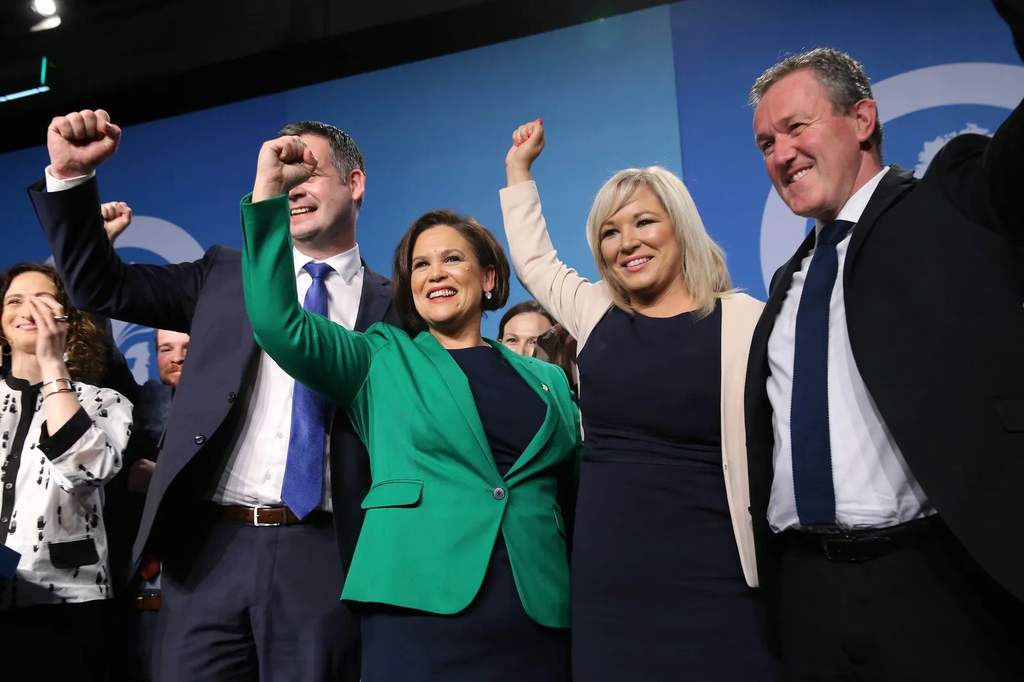
Political tensions across the United Kingdom reached a boiling point after UK Prime Minister Andy Burnham declared that a referendum on Irish reunification was off the table. That single statement sparked an immediate and sharp response from Sinn Féin, the leading Irish nationalist party. Party leaders argued that no British Prime Minister has the authority to block a constitutional vote guaranteed by international peace treaties.
The dispute quickly expanded beyond Belfast. Leaders from Scotland, Wales, and Northern Ireland joined forces to push back against London, claiming that the era of Westminster rule is rapidly drawing to a close. The argument raises major questions about the long-term future of the UK and whether central authorities in London can hold the union together.
The Sparks Fly in Belfast: How the Dispute Started
The disagreement began during Prime Minister Andy Burnham’s official visit to Belfast. Speaking to reporters about budget pressures and local governance, Burnham attempted to quiet ongoing debates regarding a border poll. He stated clearly that his administration would focus on economic stability, public services, and cost-of-living challenges rather than constitutional referendums.
Burnham pointed to past votes, such as the 2014 Scottish independence referendum and the 2016 Brexit decision, as examples of political events that left deep public divisions. He argued that another major constitutional vote would create fresh conflict at a time when citizens need economic relief.
Sinn Féin leaders rejected that reasoning almost instantly. Party president Mary Lou McDonald accused the Prime Minister of burying his head in the sand. She asserted that the right to decide Ireland’s constitutional path rests entirely with the people living on the island of Ireland, not with politicians sitting in London.
Build Funnels, Email Lists & Sell Online With One Free Tool
Create funnels, send emails, and sell online using Systeme.io without paying for multiple tools.
Create Free AccountFree forever • No credit card • Beginner-friendly
Northern Ireland’s First Minister Michelle O’Neill echoed those sentiments during a direct meeting with Burnham. She told reporters that the Prime Minister’s remarks were anti-democratic and directly contradicted the framework set out in modern peace accords.
Sinn Féin’s Argument and the Good Friday Agreement
To understand why this issue is so heated, it helps to examine the legal rules established decades ago. The foundation of modern peace in Northern Ireland is the 1998 Good Friday Agreement. That historic treaty helped end thirty years of violent conflict by creating a shared power-governing structure and establishing a clear pathway for future constitutional changes.
What the 1998 Accord Actually Says About a Unity Vote
The Good Friday Agreement explicitly states that Northern Ireland remains part of the UK unless a majority of its people vote otherwise. It gives the UK Secretary of State for Northern Ireland the specific legal duty to call a referendum—often called a border poll—if it appears likely that a majority would vote for a united Ireland.
Because of this clause, Sinn Féin maintains that deciding whether to hold a referendum is a legal obligation based on public opinion, not a political choice for the Prime Minister to make. Party officials argue that by taking a referendum off the table, Downing Street is ignoring international law and breaking faith with the peace treaty.
Unionist leaders in Northern Ireland, including the Democratic Unionist Party, welcomed Burnham’s remarks. They argue that public support for leaving the UK has not reached a majority threshold, meaning there is no legal requirement for a vote at this time. However, nationalist groups contend that growing demographic changes and shifting election results mean a poll must remain an active option.
Standard reporting from major outlets like The Guardian highlights how sensitive this legal debate remains for both London and Belfast. The core of the argument is simple: nationalist parties view self-determination as an untouchable right, while Downing Street prefers to avoid votes that could lead to separation.
The Cardiff Summit: A United Front Across Scotland, Wales, and Northern Ireland
The debate over Irish unity quickly linked up with similar independence movements across Great Britain. Leaders from Scotland, Wales, and Northern Ireland organized a historic meeting in Cardiff to form a coordinated political block.
Scottish First Minister John Swinney of the Scottish National Party, Welsh First Minister Rhun ap Iorwerth of Plaid Cymru, and Sinn Féin President Mary Lou McDonald gathered to sign a joint memorandum of understanding. The landmark agreement stated directly that Westminster’s dominance is coming to an end and that the UK government must prepare for fundamental constitutional shifts.
Three Nations, One Clear Message to Westminster
For the first time in modern history, administration figures in Scotland, Wales, and Northern Ireland are led by parties that favor either total independence or major constitutional restructuring away from London.
During the summit in Wales, John Swinney declared that the current setup is no longer sustainable. He pointed out that Andy Burnham faces a growing wave of self-determination claims that cannot be brushed aside with simple denials. Swinney warned that any British leader who refuses to engage with these movements risks going down in history as the final Prime Minister of a unified state.
Rhun ap Iorwerth expressed similar views regarding Wales. He emphasized that even Burnham has acknowledged in the past that the political system in London fails to serve communities outside central England. The Welsh leader called for a fundamental redesign of relationships across the islands, where nations work together as equal partners rather than subjects of a central government.
This multi-nation summit marked a major strategic shift. Instead of fighting separate battles in Edinburgh, Cardiff, and Belfast, regional leaders are now pooling their influence to put maximum pressure on Downing Street.
Why the Pressure on Downing Street Is Building Now
The clash between regional leaders and the central government is not happening in a vacuum. A combination of economic stress, international comments, and political shifts has pushed constitutional questions back into public discussion.
International Reactions and Changing Public Moods
Global attention has added more weight to the issue. During a recent trip to Dublin, former US President Donald Trump commented publicly on the topic, stating that he would love to see a united Ireland and describing reunification as a positive potential outcome. While foreign leaders do not set UK policy, statements like these show how global figures view the ongoing debates over the UK’s long-term stability.
Domestically, economic challenges continue to strain relations between London and the devolved regions. Public services across the UK face strict budget limits, leading regional politicians to argue that local governance allows for better decision-making than central management from Westminster.
Prime Minister Burnham’s office maintains that working together on shared goals is the best way forward. Official statements from Downing Street emphasize that the UK functions best when nations unite around problem-solving rather than spending energy on constitutional arguments. Despite those statements, nationalist leaders argue that public opinion across all three devolved regions is shifting steadily toward greater autonomy.
Details on the official framework of British political institutions and treaty commitments can be reviewed through the official UK Government Treaty Archive.
How Modern Media and AI Track Political Headlines Worldwide
Political events of this scale move fast, spreading across digital platforms within minutes. Staying informed requires clear reporting that cuts through political spin and complex legal language.
Following Global Shifts Through Digital Platforms
As political breaking news hits the web, digital creation tools and algorithms play a massive role in shaping how news is shared. Modern content creators use artificial intelligence to analyze complex political speeches, track public sentiment, and publish real-time summaries. You can explore how these tools work in practice by reading through dedicated technology and AI updates.
At the same time, independent media channels and commentary outlets rely heavily on streamlined publishing setups to cover fast-moving global events. Video creators often utilize specialized YouTube automation guides to maintain consistent news feeds, ensuring that viewers around the world get timely updates as political stories unfold.
Whether tracking constitutional debates in the UK or economic shifts in other parts of the world, digital publishing tools help ensure that important news remains accessible to readers everywhere.
Frequently Asked Questions (FAQs)
Can a British Prime Minister legally block an Irish unity referendum?
Under the terms of the 1998 Good Friday Agreement, the UK Northern Ireland Secretary is required to call a referendum if evidence shows a majority of voters in Northern Ireland would likely support joining the Republic of Ireland. While a Prime Minister can state political preferences, the treaty sets clear legal guidelines for when a vote must occur.
What was the purpose of the Cardiff Summit between regional leaders?
The Cardiff Summit brought together the leaders of Scotland (SNP), Wales (Plaid Cymru), and Northern Ireland (Sinn Féin). The goal was to sign a joint statement declaring that Westminster rule is fading and to coordinate efforts toward self-determination and constitutional change.
Why did Andy Burnham say a border poll was off the table?
Prime Minister Andy Burnham stated that the UK government needs to focus on public services, economic security, and household finances rather than constitutional referendums. He pointed to past referendums as sources of political division that the country should avoid while dealing with economic challenges.
How did Sinn Féin respond to the Prime Minister’s statement?
Sinn Féin leaders Mary Lou McDonald and Michelle O’Neill strongly criticized the remarks. They stated that Burnham has no right to deny the Irish people their right to self-determination and insisted that the provisions of the Good Friday Agreement must be honored.
Looking Ahead at the Future of the Union
The standoff between Downing Street and regional leaders shows no signs of cooling down. As Sinn Féin, the SNP, and Plaid Cymru continue to coordinate their efforts, central authorities in London face growing pressure to address questions about regional autonomy and constitutional reform. Whether the UK can maintain its current structure or will be forced to redesign its political ties remains one of the most vital questions in modern British politics.
To learn more about our commitment to bringing you straightforward reporting on global events, visit our About WhatsBuzzn page. If you have questions, comments, or topics you want covered, reach out directly through our Contact Us page.
Build Funnels, Email Lists & Sell Online With One Free Tool
Create funnels, send emails, and sell online using Systeme.io without paying for multiple tools.
Create Free AccountFree forever • No credit card • Beginner-friendly
Stay connected with our community across social media for daily updates and trending news stories. Follow us on Instagram, join the conversation on Facebook, and check out our latest posts on X (formerly Twitter).
