
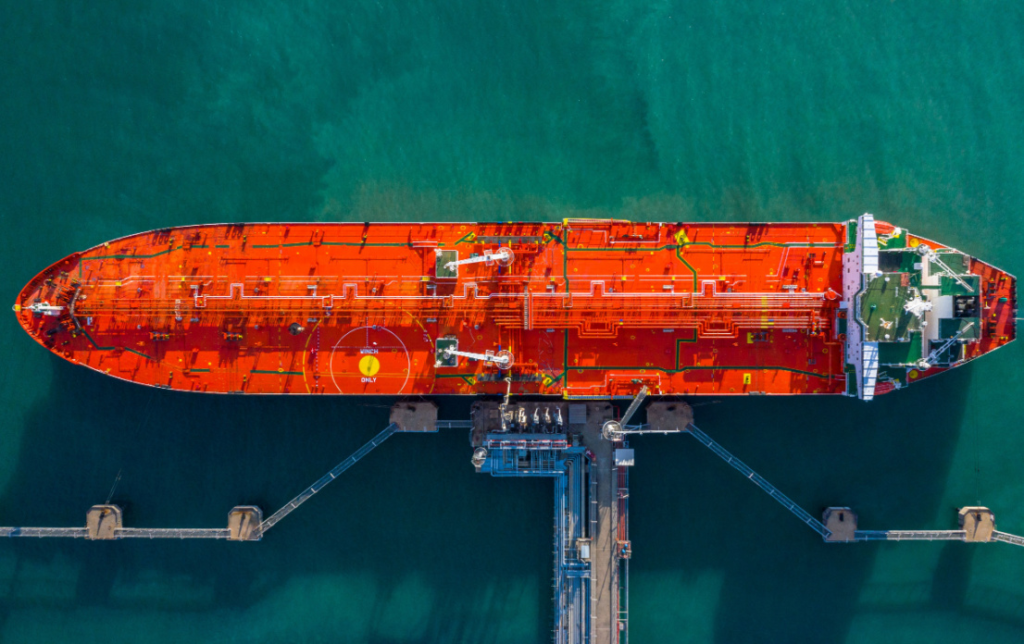
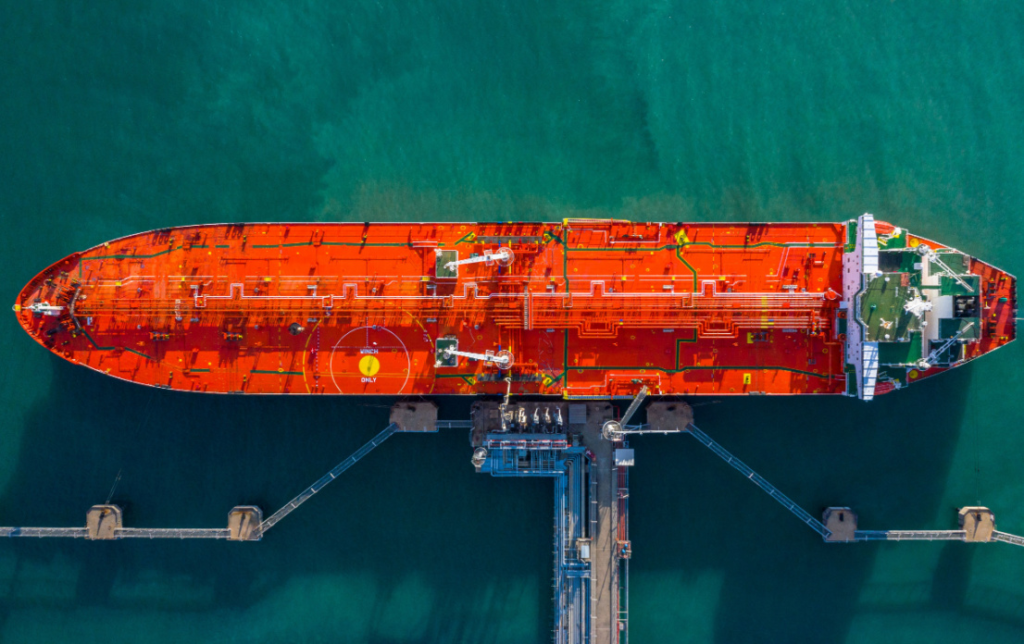
Nigeria’s crude oil production dropped by four percent in July 2026, breaking a multi-month trend of steady growth. Data released by the Nigerian Upstream Petroleum Regulatory Commission (NUPRC) shows that total oil and condensate production fell to an average of 1.67 million barrels per day (mbpd). This comes after production reached a high of 1.735 mbpd in June 2026.
At the exact same time, major global shipping routes are facing severe blockages. Ship traffic passing through the Strait of Hormuz in the Middle East has dropped significantly. Heightened security risks and geopolitical tension between the United States and Iran have slowed down oil tanker movement in one of the most vital water channels on Earth.
These two events are deeply connected through the global market. When a major passage like Hormuz tightens, global supply gets nervous, and buyers look toward African producers like Nigeria to fill the gap. However, internal production hiccups limit how much extra oil Nigeria can export during these moments.
Understanding what happened behind the numbers helps explain where domestic fuel prices and national energy revenues are headed. Here is a complete breakdown of why oil output dipped, what is happening in Middle Eastern waters, and how it impacts everyday life.
A Detailed Look at Nigeria’s July 2026 Oil Production Numbers
According to official figures from the Nigerian Upstream Petroleum Regulatory Commission (NUPRC), Nigeria produced an average of 1.505 million barrels per day of crude oil in July. The country also produced about 0.17 million barrels per day of condensate, bringing the total combined daily output to 1.67 mbpd.
The $0 Secret To Launching Your Entire Online Empire
Why pay hundreds every month for separate software? Build funnels, send emails, and make sales with Systeme.io completely free.
Get Started For $0Free Forever • No Credit Card Needed • Beginner-Friendly
During July, daily production numbers fluctuated quite a bit. On the best days, combined crude and condensate output peaked at 1.78 mbpd. On the lowest days, production sank to 1.57 mbpd.
Even with the monthly decrease of roughly 65,000 barrels per day, there was still good news for the country’s quota targets. Nigeria successfully met and exceeded its official Organisation of the Petroleum Exporting Countries (OPEC) quota of 1.5 million barrels per day for the third month in a row.
Before July, national production had experienced a steady upward climb all year. Output started at 1.459 mbpd in January 2026, rose to 1.483 mbpd in February, climbed to 1.564 mbpd in March, and continued growing through May and June. The July dip represents the first real setback in production growth this year.
Why Did Production Fall? Operational Problems at Key Fields
The main reason for the four percent drop in July was not pipeline vandalism or oil theft, which have historically plagued the sector. Instead, the NUPRC confirmed that technical disruptions and operational constraints at two major deepwater offshore fields caused the drop.
The affected locations were the Erha and Akpo fields. These fields rely on complex floating production, storage, and offloading (FPSO) vessels. When equipment issues or routine maintenance force these facilities to slow down, hundreds of thousands of barrels go unproduced very quickly.
The NUPRC stated that disruptions at Erha and Akpo directly reduced national crude oil volumes. However, operations across most other assets in the country remained stable. Engineers and asset operators worked to minimize the damage, but the loss was large enough to pull down the national average.
Performance Across Major Export Terminals
Different export terminals performed at varying levels throughout July. Standard data provided by the regulator highlights how much crude flowed through the largest export points:
- Forcados Terminal: Kept its place as the top producer, averaging 322,340 barrels per day.
- Bonny Terminal: Followed closely behind, processing an average of 303,720 barrels per day.
- Qua Iboe Terminal: Came in third, recording an average daily volume of 158,020 barrels.
- Escravos Terminal: Handled an average output of 131,410 barrels per day.
- Bonga Terminal: Rounded out the top five, producing an average of 100,230 barrels per day.
What Is Happening at the Strait of Hormuz?
While Nigeria managed its field repairs, global oil logistics faced major trouble thousands of miles away. The Strait of Hormuz is a narrow stretch of water located between Oman and Iran. It connects the Persian Gulf to the Gulf of Oman and the Arabian Sea.
Under normal conditions, about 20 million barrels of crude oil pass through this narrow water channel every day. That accounts for roughly 20 percent of the world’s total petroleum supply. Gulf producers like Saudi Arabia, Iraq, Kuwait, Qatar, and the United Arab Emirates depend heavily on this pathway to send oil to international markets.
Ship traffic through the Strait dropped sharply. Commodity data from Kpler reported by Reuters revealed that daily vessel traffic dropped to just eight ships on certain days. That was the lowest level recorded in weeks, falling far below the regular average.
The slowdown happened because vessel owners and shipping lines actively avoided the area. Heightened security threats, ongoing warfare in the region, and tough negotiations between Washington and Tehran made insurance costs skyrocket. Iranian officials stated the passage would remain restricted unless specific war conditions were met, while U.S. leaders claimed operational control over maritime security. This standoff left dozens of massive crude tankers stranded or rerouted.
How Middle East Shipping Delays Impact African Oil Demand
Global energy markets operate like a giant balance scale. When supply routes in one region are blocked, buyers instantly search for oil elsewhere.
The traffic bottleneck at the Strait of Hormuz created an immediate shift in international buying patterns. Major consuming countries that rely on Middle Eastern crude had to look for safer alternatives. India, which is the third-largest oil consumer in the world, was hit particularly hard.
Indian refiners quickly reduced their dependence on Persian Gulf routes and turned toward West Africa and South America. According to trade data, Indian purchases of Nigerian, Angolan, Brazilian, and Venezuelan crude rose notably during the shipping slowdown.
Nigerian crude grades like Forcados, Bonny Light, and Qua Iboe are known as light, sweet crude. They contain low sulfur levels, making them easy and cheap to refine into gasoline, diesel, and jet fuel. Because West African ships sail across the Atlantic and Indian Oceans without passing through Middle Eastern choke points, Nigerian oil became very attractive to global refiners trying to avoid war zones.
Send, Spend & Hold Money Worldwide Without Hidden Fees
Transfer money internationally at the real exchange rate and hold 40+ currencies in one account.
Open a Wise AccountMid-market rate • Fast transfers • 40+ currencies
The Local Economic Impact: Winners and Losers
When international oil markets face supply anxiety, raw crude prices go up on global exchanges like Brent Crude. Higher global oil prices create a mixed economic situation for Nigeria.
The Benefits for Government Revenue
For the Nigerian government, higher crude prices mean more foreign currency coming into state coffers. Oil sales are the country’s primary source of foreign exchange reserves. When global crude prices trade at a premium, the Central Bank gets better dollar inflows, which helps stabilize the Naira and fund public infrastructure projects.
The Drawbacks for Consumers
The average citizen feels a different impact. When crude oil prices rise globally, the cost of refined products like gasoline, diesel, and aviation fuel also increases. Even though domestic refining operations are expanding, fuel pricing remains linked to global benchmarks.
Higher fuel prices mean higher transportation costs. Commercial drivers pass those costs down to passengers, and market traders raise the prices of foodstuffs to cover trucking fees. Therefore, a crisis in the Strait of Hormuz can subtly drive up food prices in local Nigerian markets weeks later.
Modern Technology and Tracking Global Energy Markets
Understanding global energy trends no longer relies solely on government press statements. Modern technology, artificial intelligence, and automated data processing have completely changed how supply chains are tracked.
Advanced satellite tracking systems continuously monitor tanker movements across oceans in real-time. Automated algorithms analyze ship speeds, location signals, and draft depths to estimate how much crude is currently in transit worldwide. This data allows analysts to spot a blockade in the Middle East or a delay at a Nigerian port hours before it hits official news channels.
Energy companies and media platforms use these digital tools to bring accurate updates to the public. To see how tech trends are shaping digital content creation and real-time news monitoring, check out our insights on Technology and AI.
Many digital content creators and news outlets also use automated tools to break down complex economic news into simple video formats. To explore how content automation works behind the scenes, read our guide on YouTube Automation.
If you want to view our entire directory of articles covering technology, energy, business, and entertainment news, explore the full WhatsBuzzn sitemap.
What Nigeria Must Do to Keep Oil Recovery on Track
The July production decline serves as an important reminder that Nigeria’s oil recovery remains fragile. While beating OPEC quotas three months in a row is positive, technical field glitches can quickly wipe out gains.
The $0 Secret To Launching Your Entire Online Empire
Why pay hundreds every month for separate software? Build funnels, send emails, and make sales with Systeme.io completely free.
Get Started For $0Free Forever • No Credit Card Needed • Beginner-Friendly
To maintain momentum and profit from global market opportunities, several action steps are necessary:
- Speed Up Offshore Maintenance: Operators at deepwater assets like Erha and Akpo must shorten downtime during maintenance and upgrade aging offshore hardware.
- Protect Inland Pipelines: Continued security along land-based pipeline networks is essential to ensure terminal delivery remains consistent.
- Expand Domestic Refining Capacity: Accelerating local crude processing at domestic facilities reduces the need to re-import finished gasoline at high global rates.
- Attract New Upstream Investments: Encouraging major energy companies to drill new wells will build a safety margin so that a single field failure does not drop national output below target.
Frequently Asked Questions (FAQs)
Why did Nigeria’s crude oil output fall in July 2026?
Nigeria’s oil production fell by four percent in July 2026 mainly due to technical and operational disruptions at the Erha and Akpo offshore oil fields. These operational challenges temporarily reduced national output by about 65,000 barrels per day compared to June.
Did Nigeria miss its OPEC production quota in July?
No, Nigeria met and exceeded its official OPEC quota of 1.5 million barrels per day for the third month in a row. In July, crude oil production averaged 1.505 million barrels per day, excluding 0.17 million barrels per day of condensates.
What is the Strait of Hormuz and why is it important?
The Strait of Hormuz is a narrow ocean passage connecting the Persian Gulf to the Gulf of Oman. It is one of the world’s most critical oil transit routes, handling about 20 million barrels of crude oil daily. Any disruption there impacts global oil supplies and prices.
Why are ship numbers dropping in the Strait of Hormuz?
Vessel traffic dropped because ship owners avoided the area due to escalating military tensions and security risks between the United States and Iran. Higher maritime insurance costs and safety fears forced many tankers to pause or reroute.
How does a Middle East shipping blockade affect Nigerian crude exports?
When shipping routes in the Middle East are restricted, Asian and European refiners look for safer oil sources. Countries like India buy more light, sweet crude from Nigeria and other West African producers, boosting international demand for Nigerian oil.
Final Thoughts
The four percent dip in Nigeria’s July oil production shows how delicate national recovery efforts can be. While field issues at Erha and Akpo slowed down momentum, Nigeria remains in a solid position by keeping overall production above its OPEC threshold.
At the same time, tight shipping passage through the Strait of Hormuz highlights how quickly global energy markets can shift. As international refiners look for reliable suppliers outside conflict zones, Nigeria has a valuable window of opportunity to maximize export earnings. Resolving field-level technical issues quickly will be key to keeping the country’s economic growth on firm ground.
To learn more about our publication and our mission to make news accessible, visit our About WhatsBuzzn page. If you have questions, feedback, or story tips, feel free to reach out directly through our Contact Us page.
Stay connected with us for daily news updates, market insights, and viral stories across our official social channels:
- Follow us on Instagram
- Like our page on Facebook
- Join the conversation on X (formerly Twitter)
