
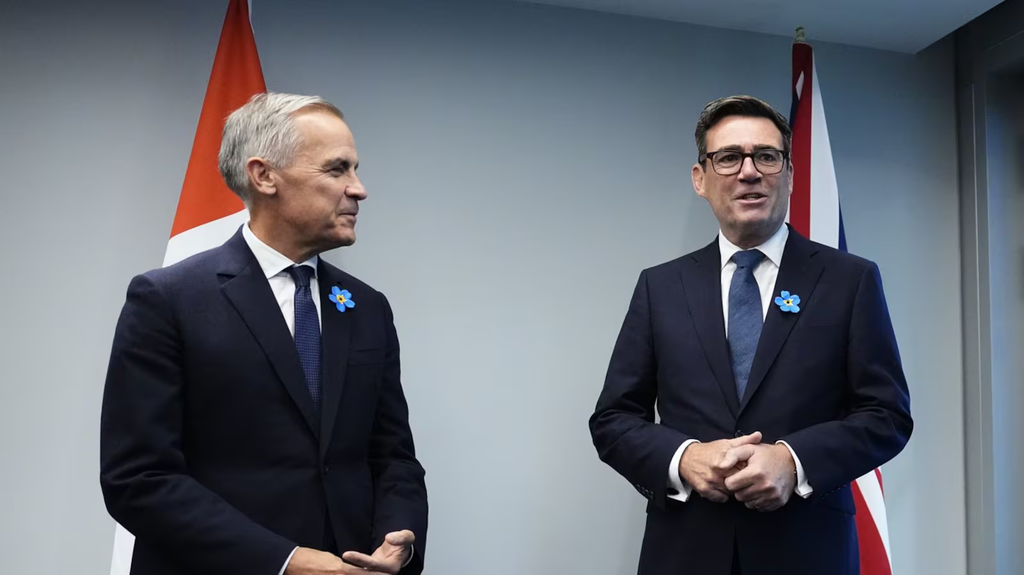
The global trade map is undergoing a dramatic shift, and Canada is placing a massive bet on Europe. The president of the European Investment Bank (EIB), Nadia Calviño, publicly announced that the institution is actively looking for opportunities to fund major Canadian projects. Her statement came during an exclusive interview with CBC News, where she declared that “the time is ripe” for the European Union’s chief financial arm to back Canadian infrastructure, energy, and critical mineral developments.
This announcement coincides with Canadian Prime Minister Mark Carney’s high-profile address to the European Parliament in Strasbourg. Carney outlined a vision for unprecedented economic integration between Canada and the 27-nation European bloc. With escalating trade tensions between Ottawa and Washington, Canada is taking concrete steps to diversify its global economic partnerships.
Europe’s Money Is Coming to Canada: What the EIB Deal Means
The European Investment Bank serves as the primary lending institution of the European Union. Historically, the bank has concentrated its resources within EU member states and developing economies across Africa and Asia. Active involvement in a developed, non-EU nation like Canada represents a significant departure from its traditional operational scope.
Nadia Calviño visited Ottawa to hold direct talks with senior Canadian federal ministers. She noted that while the bank has not historically maintained a heavy footprint in Canada, the current global climate makes joint investment a top priority. She stressed that the EIB does not simply issue policy statements; it deploys capital, funds physical infrastructure, and executes projects on the ground.
The primary focus of these investment talks centers on critical minerals. Modern technology, renewable energy storage, and electric vehicles require massive supplies of raw materials such as lithium, nickel, cobalt, and copper. Canada possesses some of the largest undeveloped mineral deposits in the Western world, while Europe requires a secure, stable supply chain.
The $0 Secret To Launching Your Entire Online Empire
Why pay hundreds every month for separate software? Build funnels, send emails, and make sales with Systeme.io completely free.
Get Started For $0Free Forever • No Credit Card Needed • Beginner-Friendly
To make these investments official, Canada and the EIB are working toward a formal framework agreement. This legal structure will allow European capital to flow directly into Canadian mining, refining, and clean technology projects. Calviño noted that when it comes to the scale of future collaboration between Canada and the EIB, “the sky’s the limit.”
Mark Carney’s Bold Proposal to the European Parliament
Mark Carney presented a comprehensive plan to European lawmakers aimed at creating a seamless economic bridge across the Atlantic. His speech called for establishing a “seamless, digital” trade environment for non-agricultural goods and services, eliminating bureaucratic friction for exporters on both sides.
A central element of Carney’s plan is the integration of financial services. By allowing financial institutions to operate with greater flexibility across both jurisdictions, Canadian and European consumers could gain access to broader banking choices and reduced financial fees.
Carney also proposed joint efforts on supercomputing power and artificial intelligence governance. As global competition over advanced computing hardware intensifies, Canada and the EU intend to align their technical standards and safety protocols.
This proposal builds directly on recent developments where Canadian leadership actively explored formal ties with Brussels. For deeper context on how this situation developed, review our breakdown on why Canada is turning to Europe after US trade talks collapse. Furthermore, the option of becoming an associate member was highlighted in our report on the push for EU associate status.
Why Canada and Europe Are Fast-Tracking This Strategic Marriage
The sudden acceleration of Canada-EU relations stems directly from severe economic friction with the United States. Trade tariffs, import restrictions, and political hostility from Washington have forced Canadian leaders to reconsider their traditional reliance on North American commerce.
For decades, over 70 percent of Canadian exports moved directly south into the American market. Recent policy shifts in Washington, including aggressive trade penalties on Canadian lumber, steel, and agricultural products, have exposed the vulnerability of depending on a single primary trading partner.
Canadian policymakers are actively countering these pressures through domestic economic strategies and overseas partnerships. Read our detailed breakdown of how Mark Carney plans to fight back against new U.S. tariffs to understand the domestic policy shift. Canadian leadership has also promised extensive support for local industries, as covered in our article on government support for Canadians as the trade war deepens.
Public opinion inside Canada has adjusted rapidly to these geopolitics. Millions of Canadians now support building permanent trade and security bonds with European allies. Discover why in our analysis of why Canadians are ready to tie the knot with the EU.
Mining, Energy, and Green Tech: The Real Heavyweights of the Alliance
European leaders recognize that achieving energy independence and meeting zero-emission targets requires vast industrial resources. Canada holds immense reserves of critical minerals, hydro energy, and natural gas. However, building modern extraction and processing infrastructure requires billions of dollars in capital.
This is precisely where European Investment Bank financing creates a major mutual benefit:
- Resource Security: Europe secures a reliable source of critical minerals outside of non-democratic supply chains.
- Capital Access: Canadian projects gain access to low-interest European development loans and long-term investment capital.
- Fast-Track Approvals: Canadian federal initiatives are accelerating regulatory processes to build infrastructure faster.
To support this industrial expansion, Ottawa recently overhauled its national energy rules. Learn more in our coverage on why Canada is fast-tracking major energy projects.
These efforts were showcased during Canada’s massive international investment forum, detailed in our breakdown of the Canada Investment Summit 2026.
The Digital and Tech Frontier: AI, Computing, and Innovation
The alliance extends far beyond physical commodities like minerals and oil. A major component of the discussions focuses on technology cooperation, artificial intelligence, and digital commerce.
Both Canada and the European Union favor strong regulatory guardrails around AI deployment, personal data privacy, and digital market competition. By unifying their technical standards, Canadian tech companies will be able to sell software and digital services across European markets without facing duplicate regulatory hurdles.
Send, Spend & Hold Money Worldwide Without Hidden Fees
Transfer money internationally at the real exchange rate and hold 40+ currencies in one account.
Open a Wise AccountMid-market rate • Fast transfers • 40+ currencies
This alignment stands in sharp contrast to tech regulation in other global markets. For example, European regulators have repeatedly cracked down on unchecked monopoly power in digital platforms, as detailed in our guide on what the Google EU fine means for the future of big tech. To explore wider trends in software, computing, and automated digital tools, browse our collection of technology and AI news.
In addition, as business operations shift toward online models, understanding modern media and workflow systems is critical. Content creators and online entrepreneurs can learn how automated publishing works through our guide on YouTube automation.
What “Associate Member” Status Means for Everyday People and Businesses
When European Commission President Ursula von der Leyen raised the concept of “associate membership” for Canada, it sparked widespread debate. Many wondered whether Canadians would soon be subject to EU laws or if Canada would have to adopt the Euro.
Canadian diplomats and economic advisors have clarified what this alliance actually entails:
- No Direct EU Budget Contributions: Canada will not pay taxes directly into the central European budget, nor will it join the Schengen border-free travel zone.
- No Adoption of the Euro: Canada retains full control of its national currency, central bank policy, and domestic tax codes.
- Streamlined Financial Services: Canadian consumers and businesses will gain easier access to European investment options, lower international transaction fees, and competitive banking rates.
- Enhanced Professional Mobility: Engineers, scientists, researchers, and tech specialists will find it easier to secure working credentials across participating European nations.
Challenges and Roadblocks Standing in the Way
While the political rhetoric from both Ottawa and Brussels is optimistic, building a deep trans-Atlantic economic bloc presents real challenges.
First, full implementation requires agreement from all 27 EU member states. Historically, individual European parliaments have taken years to ratify international trade deals due to local agricultural protections and regional political disputes. Ten EU countries have yet to fully ratify existing Canada-EU trade agreements.
Second, political figures in Washington view Canada’s pivot toward Europe with suspicion. Some American lawmakers argue that Canadian integration with European supply chains could weaken traditional North American trade agreements.
Finally, domestic politics in Canada could create delays. Opposition parties have raised questions regarding the exact cost of fast-tracked infrastructure projects and how new regulatory exemptions will affect local communities.
Frequently Asked Questions
Is Canada officially joining the European Union?
No. Canada is not applying for full political membership in the European Union. The proposed “associate status” focuses strictly on trade, financial integration, joint technology safety, and strategic resource investment.
What is the European Investment Bank?
The European Investment Bank (EIB) is the official lending arm of the European Union. Owned jointly by EU member states, it finances large-scale infrastructure, green energy, and technology projects worldwide.
The $0 Secret To Launching Your Entire Online Empire
Why pay hundreds every month for separate software? Build funnels, send emails, and make sales with Systeme.io completely free.
Get Started For $0Free Forever • No Credit Card Needed • Beginner-Friendly
How will this EIB partnership affect Canadian workers?
EIB funding can help unlock billions of dollars for Canadian infrastructure, mining, and green technology projects. This injection of capital is expected to create high-skilled jobs in engineering, construction, natural resources, and software development.
Why is Canada focusing on critical minerals for Europe?
Europe needs a steady, ethical supply of lithium, nickel, cobalt, and copper to power its transition to green energy and electric vehicles. Canada possesses large natural reserves of these materials and can provide Europe with a secure alternative to non-democratic supply chains.
Will Canadians be able to travel to Europe without a passport?
No. Associate status does not alter passport requirements or citizen immigration laws. Canada remains an independent sovereign nation outside of the European Schengen travel zone.
How does this deal affect Canada’s relationship with the United States?
While the U.S. remains Canada’s closest geographic neighbor, this alliance allows Canada to reduce its economic vulnerability by building strong secondary trade and investment pipelines with European nations.
The collaboration between Canada and the European Investment Bank marks a historic shift in global commerce. As Prime Minister Mark Carney advances a vision of transatlantic trade, technology sharing, and capital alignment, Canada is demonstrating its ability to forge new paths when traditional alliances become unpredictable.
With Nadia Calviño confirming that European capital is ready to support Canadian infrastructure, the strategic bond between Ottawa and Brussels is set to grow stronger over the coming years.
For more updates on global market shifts and international news, visit our about page to learn more about our publication, or reach out directly through our contact page. Stay connected with our community on social media via Instagram, Facebook, and X (formerly Twitter).
