
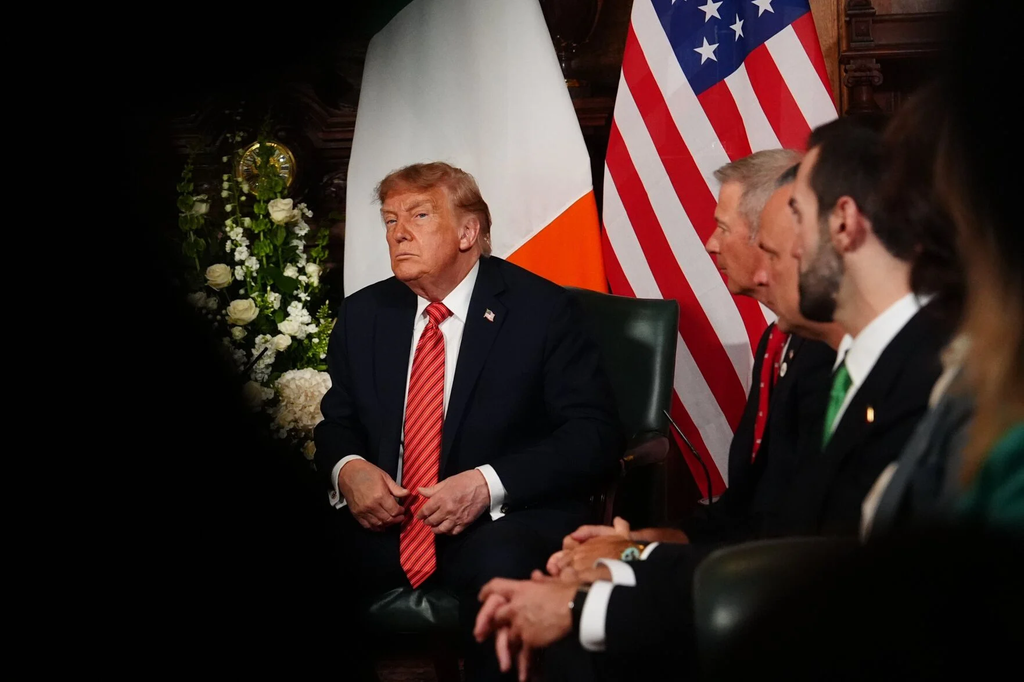
U.S. President Donald Trump made international headlines during his weekend visit to Ireland after claiming that Canada wants to reach a trade agreement “very badly,” comparing Ottawa’s position to ongoing diplomatic tensions with Iran.
Speaking to reporters and diplomats during a trip that combined official state meetings with a visit to his Doonbeg golf resort, Trump projected strong confidence about upcoming international deals. His comments came at a delicate moment for trans-Atlantic relations, as ongoing tariff disputes continue to strain trade between the United States and its northern neighbor. As reported by the Toronto Star, the president expressed belief that a resolution could be reached fairly soon, even as official negotiators remain far apart on key economic terms.
The statement instantly drew widespread attention across North America and Europe. It highlighted not only the aggressive negotiation tactics defining current U.S. foreign policy, but also the complicated web of international trade, energy security, and regional politics that world leaders are navigating right now.
What Trump Said About Canada, Trade, and Iran
During his stops in Dublin and County Clare, President Trump repeatedly touched on international trade disputes and global conflicts. When asked directly about U.S.-Canada negotiations, he asserted that Canadian officials are eager to settle the trade dispute and sign a new deal. He paired that statement with a direct comparison to Iran, claiming both nations are under intense pressure to reach terms with Washington.
This comparison comes after months of sharp economic rhetoric and escalating import duties between the two neighboring countries. Over the past year, trade relations between Washington and Ottawa have experienced major friction points. Previous executive decisions led to severe import restrictions, including cases where Trump bans Canadian dairy, alcohol, and motorcycles. These moves triggered quick responses from Canadian lawmakers, who argued that tariff policies were harming consumers and supply chains on both sides of the border.
Build Funnels, Email Lists & Sell Online With One Free Tool
Create funnels, send emails, and sell online using Systeme.io without paying for multiple tools.
Create Free AccountFree forever • No credit card • Beginner-friendly
Despite Trump’s claims that Canada is desperate for a quick resolution, officials in Ottawa maintain that any agreement must protect national interests and local workers. Economic analysts point out that while trade disruptions create real challenges for businesses, Canada has not shown signs of accepting terms that compromise its economic independence.
For everyday citizens and business owners trying to understand the fallout, looking closely at what the U.S. Canada tariff war will really cost you reveals how price hikes on raw materials, consumer goods, and agriculture affect daily expenses across North American households.
The Dynamics Behind the Negotiation Claims
When political leaders speak during informal media availability, their words often serve a dual purpose. On one hand, stating that another nation is eager to negotiate can be a public pressure tactic aimed at gaining leverage. On the other hand, it can signal to domestic voters that national trade policy is yielding positive results.
In this instance, linking Canada and Iran in a single statement shocked diplomats because the two situations involve completely different geopolitical circumstances. Canada is one of America’s largest trading partners and a key continental security ally. Iran, by contrast, involves heavy military standoff issues, oil supply sanctions, and regional security disputes. Lumping them together underlines Trump’s transactional view of global affairs, where every international relationship comes down to leverage and deal-making.
How Canada and Prime Minister Mark Carney Are Responding
In Canada, the political response to Washington’s strong-arm tactics has been firm and deliberate. Prime Minister Mark Carney has consistently emphasized that Canada will not be pressured into signing an unbalanced trade deal. Rather than backing down under public declarations, the Canadian government has rolled out clear economic defense plans to protect local industries.
Part of this response includes direct financial buffers for domestic sectors impacted by U.S. tariffs. As the economic standoff dragged on, Mark Carney promises government support for Canadians as U.S. trade war deepens, assuring farmers, manufacturers, and workers that Ottawa will help offset losses caused by trade barriers.
Public opinion inside Canada also appears strongly aligned with this firm stance. Recent national surveys indicate that citizens support the government’s refusal to yield to unilateral demands. In fact, Canadians strongly stand behind PM Mark Carney’s decision to reject U.S. trade deal, showing that political pressure from Washington has largely united Canadian voters across different political parties.
Canada’s Long-Term Strategy to Protect its Economy
To reduce long-term dependency on U.S. supply chains, Ottawa has launched structural economic initiatives. A prime example is Canada’s Build Here strategy: How Mark Carney plans to fight back against new U.S. tariffs. This program focuses on strengthening domestic manufacturing, boosting internal trade between provinces, and expanding trade partnerships with the European Union and Asian markets.
At the same time, Canadian business leaders are working to diversify their investment portfolios and economic alliances. Events like the Canada Investment Summit 2026 highlight how major infrastructure projects and green energy initiatives are attracting international capital outside of traditional U.S. channels.
Meanwhile, representatives from the U.S. trade office have pushed back against Ottawa’s characterization of the conflict. In public statements, top American officials dismissed Canadian complaints, creating a tense back-and-forth where a Trump tariff chief calls Canada’s trade war label unhinged. This exchange shows just how deeply divided the two neighboring governments remain on core trade policy.
Regular citizens are feeling the weight of these decisions in their daily lives. From grocery store prices to small business operations, many families are finding ways to adjust. You can read more about these personal stories in our deep breakdown on inside Canada’s fight: how everyday people are bracing for Trump’s trade war.
The Middle East Connection: Iran and Energy Markets
Lumping Canada and Iran into the same conversation surprised many foreign policy experts, but it reflects Trump’s broad view of global negotiations. While trade negotiations with Canada center on tariffs, cross-border shipping, and industrial goods, U.S. policy toward Iran involves high-stakes military tensions, economic sanctions, and energy supply lines.
Over recent months, security events in the Middle East have directly impacted global economic stability, particularly energy prices and shipping routes through the Strait of Hormuz. In public remarks during his trip, President Trump expressed confidence that tensions in the region would settle quickly, suggesting that energy prices would tumble once stability is restored.
However, diplomatic talks between Washington and Tehran have repeatedly hit major obstacles. The administration’s stance has alternated between seeking diplomatic resolutions and taking aggressive military enforcement actions. For instance, when earlier discussions broke down, Trump revives calls for Iran regime change as diplomatic talks collapse.
These shifting signals create real volatility in global commodity markets. Business owners and energy traders monitor these developments closely because international oil prices directly impact transportation costs, shipping surcharges, manufacturing expenses, and overall consumer inflation around the world.
Unification Talk and the Irish Reaction
Beyond trade and Middle East politics, Trump’s trip to Ireland created massive local waves due to unexpected remarks on Irish domestic issues. During a meeting with Irish Prime Minister Micheál Martin in Dublin, Trump openly offered his views on Northern Ireland and Irish reunification.
Trump stated that he would “love to see” a unified Ireland, calling the idea “fantastic” and suggesting that “it may as well happen now.” While his comments were delivered casually, they touched on a deeply sensitive political topic governed by the historic 1998 Good Friday Agreement.
Reactions were swift across the Irish Sea. Political leaders in London and unionist representatives in Northern Ireland quickly pushed back, clarifying that any decision on Northern Ireland’s future rests solely with the people of Northern Ireland through established constitutional processes. U.K. Prime Minister Andy Burnham’s office reaffirmed that London remains 100% committed to the Good Friday Agreement.
During the presidential visit, Irish President Catherine Connolly took a principled approach in her discussions with Trump. She emphasized Ireland’s strong commitment to global peace, human rights, and the rejection of war and violence.
Golf, Protests, and Public Atmosphere in Ireland
The backdrop of this high-stakes political visit was the Irish Open golf tournament held at Trump International Golf Links in Doonbeg, County Clare. Thousands of sports fans gathered as top golf stars like Shane Lowry and Rory McIlroy competed on the coastal course. Shane Lowry put on a remarkable performance, exciting local crowds throughout the weekend.
While local business owners in Doonbeg welcomed the economic boost brought by the resort and event, public reactions across Ireland were mixed. Protests took place in Dublin from civil society groups voicing strong disagreement with U.S. foreign policies, trade tariffs, and diplomatic statements.
Surprising Comments on the Falkland Islands
As if trade disputes and Irish unification were not enough for a single weekend trip, President Trump also brought up the long-standing geopolitical issue of the Falkland Islands.
During conversations with journalists, Trump expressed skepticism about Britain’s ability to defend or retake the Falklands in the event of a renewed dispute with Argentina. His remarks aligned closely with recent statements from Argentine leadership asserting claims over the territory.
By raising this topic, Trump signaled potential shifts in long-standing diplomatic positions that have remained stable for decades. For a full breakdown on how this topic emerged and what it means for international relations, read about how Donald Trump signals possible shift in U.S. policy on the Falkland Islands.
These comments further highlighted how casual statements made during international visits can create ripples across multiple continents simultaneously.
Navigating Global Noise and Staying Ahead in a Changing World
Events like these illustrate how rapidly global news, trade decisions, and political statements can change the economic landscape. A single tariff policy or geopolitical statement can alter product pricing, international travel costs, and business supply chains overnight.
For individuals, entrepreneurs, and digital creators, staying informed is no longer optional—it is essential for adapting to fast economic shifts. When traditional job markets or global trade channels experience volatility, building diverse skill sets and exploring modern digital business models becomes a smart way to secure your financial resilience.
Build Funnels, Email Lists & Sell Online With One Free Tool
Create funnels, send emails, and sell online using Systeme.io without paying for multiple tools.
Create Free AccountFree forever • No credit card • Beginner-friendly
Many people are building flexible online streams of income to stay prepared during uncertain economic times. For example, learning how automated content creation works through our practical guide on YouTube Automation offers clear strategies for building scalable digital channels.
Similarly, keeping up with rapid shifts in artificial intelligence, software tools, and digital technology is critical. Understanding modern tech trends through our coverage of Technology & AI can help you leverage new tools to streamline your daily work and stay competitive.
Staying connected with trusted information hubs allows you to cut through complex political chatter and extract real value for your daily life. You can learn more about our mission on the About Whatsbuzzn page, or reach out to our team directly through our Contact Us page.
To stay updated on breaking news, viral insights, and practical guides, join our growing online community across social media platforms. Connect with us on Instagram, follow our updates on Facebook, and join the ongoing conversation on X (formerly Twitter).
Frequently Asked Questions
What did Trump say about Canada during his Ireland trip?
President Trump claimed that Canada wants to make a trade deal “very badly,” comparing Canada’s negotiation stance to that of Iran. He expressed confidence that a deal between the U.S. and Canada could happen relatively soon.
How has Canada responded to the trade claims?
Canadian Prime Minister Mark Carney and Canadian officials have maintained that Canada will not accept a trade deal that harms Canadian workers or businesses. Canada has implemented domestic support measures and launched new economic strategies to reduce reliance on U.S. imports.
Why was Trump visiting Ireland?
Trump visited Ireland for a combination of diplomatic meetings and personal business. He met with Irish leaders including Prime Minister Micheál Martin and President Catherine Connolly in Dublin, and visited his golf resort in Doonbeg, which was hosting the Irish Open golf tournament.
What did Trump say about Irish unification?
Trump said he would “love to see” a unified Ireland, calling it “fantastic” and suggesting it might as well happen now. His comments drew immediate responses from British and Northern Irish leaders who emphasized that Northern Ireland’s future is governed strictly by the Good Friday Agreement.
How do global trade wars affect regular consumers?
Trade wars and tariffs increase the cost of imported goods, raw materials, and energy. This often leads to higher prices for everyday items, inflation, and economic uncertainty for small businesses and households.
Understanding international events and how leaders negotiate helps clarify where global markets are heading. As trade negotiations between the U.S., Canada, and other international partners unfold, staying informed through reliable analysis allows you to make smart, proactive decisions for your business, career, and daily life.
