
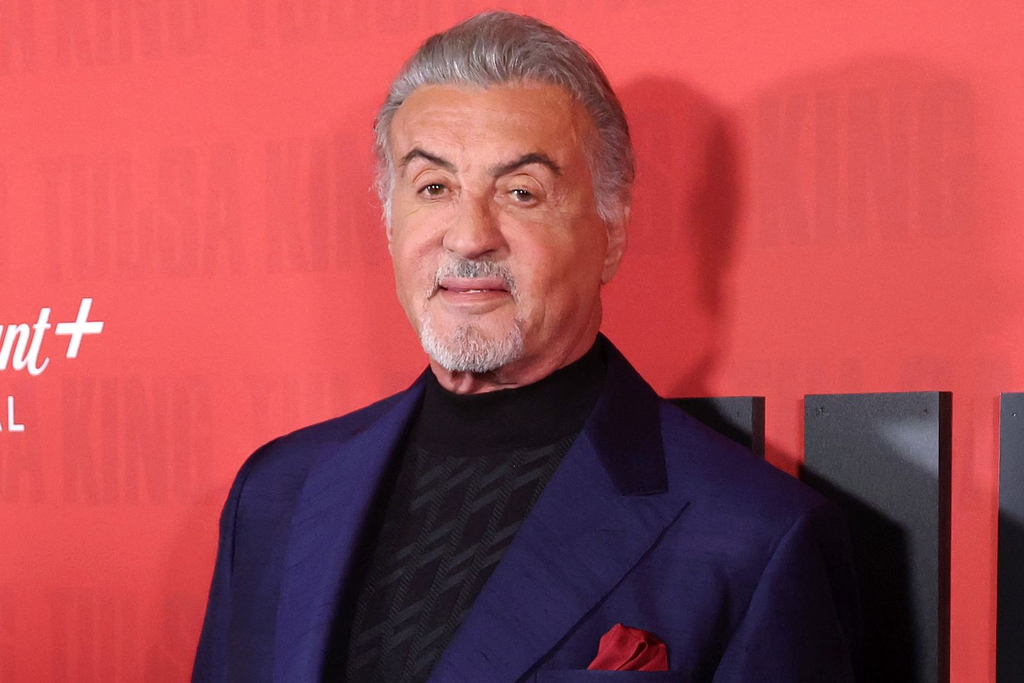
Imagine telling someone you cannot take a job, walking away thinking the conversation is over, and then relaxing on your couch a few days later only to see your name announced for that exact role on national news.
That is the exact situation legendary actor Sylvester Stallone found himself in when Donald Trump publicly named him a Special Ambassador to Hollywood.
The Rocky and Rambo star recently shared the story behind what really happened when he was offered a special advisor position by the United States president. While the public assumed Stallone had eagerly accepted the high-profile gig alongside fellow actors Mel Gibson and Jon Voight, the real story is much more surprising.
Stallone had already turned the job down. He explicitly told Trump that the idea would not work and politely passed on the offer. Yet, despite his rejection, he tuned into the news one evening only to discover that he had been officially assigned the job anyway.
Here is the full breakdown of how a private refusal turned into a viral public announcement, why Stallone believes fixing Hollywood from Washington is an impossible mission, and where his relationship with Trump stands after the bizarre mix-up.
The $0 Secret To Launching Your Entire Online Empire
Why pay hundreds every month for separate software? Build funnels, send emails, and make sales with Systeme.io completely free.
Get Started For $0Free Forever • No Credit Card Needed • Beginner-Friendly
The Announcement That Caught Everyone Off Guard
The story begins in early January 2025, during the transition period before Donald Trump officially took office for his second term. Trump posted a statement on Truth Social that quickly made headlines around the world.
In his post, Trump declared that he was appointing three major movie icons—Sylvester Stallone, Mel Gibson, and Jon Voight—as Special Ambassadors to Hollywood, California. He described the film capital as a great but deeply troubled place that was losing massive business to foreign countries.
Trump explained that the three stars would serve as his personal envoys, acting as his eyes and ears in the entertainment industry. Their main goal would be to help bring film and television production back to the United States and usher in a new golden age for American cinema.
To the outside world, it looked like a major team-up between Washington and three of the biggest action legends in cinema history. Major news networks immediately picked up the story, and political commentators began debating whether celebrity envoys could actually save the film industry.
There was only one tiny problem. Nobody had bothered to check if Sylvester Stallone had actually agreed to the plan before broadcasting it to millions of viewers worldwide.
Sitting on the Couch: How Stallone Found Out He Was an Ambassador
Speaking in an interview with the Sunday Times magazine, Stallone opened up about the exact moment he realized he had been given a new job without his consent.
He recalled sitting at home watching television when a news program suddenly displayed his face on screen. The news anchors announced that Stallone, Gibson, and Voight had been officially named as Trump’s special envoys to Hollywood.
Stallone was completely stunned. He remembered staring at the screen in disbelief, saying to himself, “What? Excuse me? Really?”
The reason for his utter shock was simple: he had already turned the offer down to Trump’s face. According to Stallone, when the idea was first presented to him in private, he did not hesitate to point out why he thought the concept was flawed.
He explained that he told Trump directly that the assignment was completely unworkable. In his own words, Stallone recalled telling the president, “Thank you and ciao, because it is impossible.”
When you tell someone “ciao” after rejecting a job, you generally expect that to be the end of the conversation. Finding out on live television that your polite refusal was completely ignored is something straight out of a Hollywood comedy script.
“Thank You and Ciao”: Why Stallone Said the Job Was Impossible
Why was Stallone so quick to reject the offer in the first place? It was not out of anger or disrespect. Instead, Stallone based his decision on decades of practical experience working inside the movie business.
Stallone pointed out that Hollywood does not operate like a single company or a government department where one leader can simply issue orders. He described Hollywood as a collection of feudal states, where every major studio operates like its own independent kingdom.
Each studio has its own executive leadership, board members, financial backers, and shareholders. You cannot simply walk into six different major studios and tell them how to run their business or where to spend their production budgets.
Stallone emphasized that movie studios care primarily about bottom-line finances and corporate strategy. They make decisions based on tax credits, labor costs, and overall profit margins.
Send, Spend & Hold Money Worldwide Without Hidden Fees
Transfer money internationally at the real exchange rate and hold 40+ currencies in one account.
Open a Wise AccountMid-market rate • Fast transfers • 40+ currencies
As Stallone put it, corporate executives running multi-billion-dollar media conglomerates are not going to sit around listening to an action movie star give them financial advice.
Furthermore, Stallone noted the strong personalities of the three men named to the role. He pointed out that himself, Mel Gibson, and Jon Voight are all independent-minded creators who prefer to do their own thing rather than act as corporate or political committee members. Putting them together to negotiate with stubborn studio executives was never going to work in practice.
How Mel Gibson and Jon Voight Reacted to the News
Sylvester Stallone was not the only star surprised by the sudden presidential announcement. Mel Gibson also admitted that he found out about his new ambassador role at the exact same time as the general public.
When news outlets reached out to Gibson shortly after the social media post, he revealed that he received the news via public posts like everyone else. However, Gibson took a slightly different approach in his public response, stating that while he was surprised, he considered it his duty as a citizen to offer whatever advice or insight he could.
Jon Voight, on the other hand, fully embraced the opportunity. Voight has long been one of Donald Trump’s most outspoken supporters in the entertainment world and regularly defends his political agenda.
Following the initial announcement, Voight actually worked alongside film producers to craft policy proposals aimed at helping the American film industry. Voight proposed creating a brand-new federal production incentive—a national tax credit designed to keep movie crews working inside the United States instead of packing up for cheaper locations abroad.
Trump later praised Voight publicly on Truth Social, calling him a fantastic man who genuinely cares about saving the motion picture business from economic decline.
So while Voight tried to run with the initiative and Gibson expressed willingness to help out where possible, Stallone stayed firm on his original stance: the job was simply not realistic, and he had no interest in pretending otherwise.
Inside Stallone and Trump’s Longtime Relationship
Despite turning down the job and expressing his frustration over the TV surprise, Stallone made it clear that he holds no personal grudges against Donald Trump. In fact, the two men share a long and friendly relationship that stretches back many years.
Stallone is a frequent guest at Trump’s Mar-a-Lago resort in Florida, and the two have often been seen together at high-profile social events. Shortly after the 2024 election, Stallone spoke at a major gala hosted at Mar-a-Lago, where he introduced Trump to the crowd in grand fashion.
The $0 Secret To Launching Your Entire Online Empire
Why pay hundreds every month for separate software? Build funnels, send emails, and make sales with Systeme.io completely free.
Get Started For $0Free Forever • No Credit Card Needed • Beginner-Friendly
During that speech, Stallone famously compared Trump to George Washington, praising his ability to overcome incredible political obstacles and describing him as a truly mythical figure. Stallone expressed genuine awe at Trump’s political comeback and stated that few people in the world could have pulled off what he accomplished.
This long-standing friendship explains why Stallone felt comfortable being so direct with Trump when the topic of the Hollywood envoy role first came up. Stallone respects Trump as a leader and a public figure, but he also knows his own boundaries when it comes to formal political assignments.
For Stallone, maintaining a personal friendship is one thing, but taking on an official political title in an industry he knows inside out is an entirely different matter.
Why Hollywood Is Moving Production Away from America
To understand why Trump wanted special ambassadors in the first place, it helps to look at the broader financial crisis facing the American film industry.
Over the past decade, major film and television productions have increasingly moved away from Los Angeles and California. Foreign countries like Canada, the United Kingdom, Australia, and New Zealand offer massive tax rebates and financial incentives that make filming far cheaper than doing so in the United States.
In addition, US states like Georgia and New Mexico have created their own aggressive tax incentive programs, drawing hundreds of productions away from traditional Hollywood soundstages.
When you factor in rising labor costs, expensive permits, high living costs, and recent industry strikes, filming in Southern California has become financially difficult for many mid-sized and large studio projects. Overall production in the US dropped significantly in recent years, leaving thousands of crew members, set builders, technicians, and local businesses struggling to find consistent work.
Trump’s idea was to use high-profile industry figures to pressure studios into staying home and to create federal policies that encourage domestic filming. However, as Stallone rightly pointed out, reversing these massive economic trends requires complex legislative changes and financial incentives, not just verbal persuasion from famous actors.
The Technological Shift Reshaping the Entertainment Industry
While politicians and studio executives debate tax credits and location incentives, the entertainment industry is undergoing an even bigger transformation behind the scenes. Technology is fundamentally changing how content is created, distributed, and monetized.
Traditional film studios are no longer just competing against each other; they are competing against digital platforms, creator economy innovations, and automated production pipelines. For instance, many independent creators and digital entrepreneurs are turning to automated video systems to build massive online audiences without relying on traditional Hollywood studio budgets. You can explore how creators are building automated content businesses in our detailed guide on YouTube Automation tools and strategies.
At the same time, artificial intelligence is revolutionizing pre-production, special effects, script analysis, and post-production workflows. While AI tools offer incredible efficiency, they also raise complex questions about industry jobs and creative ownership. To stay updated on how artificial intelligence is disrupting entertainment and modern business, check out our comprehensive coverage in our Technology & AI section.
These technological shifts prove Stallone’s point even further. The film industry is evolving rapidly due to market forces and technological innovation. Government envoys simply cannot control or dictate how an entire global industry adapts to modern digital reality.
The History of Celebrity Political Envoys
Sylvester Stallone’s refusal highlights a long history of politicians trying to enlist Hollywood celebrities for official or semi-official government roles.
Ever since the early days of cinema, American presidents have sought the endorsement and cooperation of famous actors. Stars like Arnold Schwarzenegger successfully transitioned from blockbuster action movies to full-time political careers, serving two terms as the Governor of California. Others, like Ronald Reagan, went all the way from the silver screen to the White House.
However, accepting a temporary advisory role or an ambassador title is often a tricky proposition for working actors. Remaining active in Hollywood requires maintaining broad appeal across all political spectrums. Aligning too closely with a specific political administration can alienate fanbases, complicate studio deals, and draw unwanted public controversy.
For Stallone, who built his career playing beloved, universally popular characters like Rocky Balboa, stepping into a divisive political role in a deeply polarized town like Hollywood carried far more risk than reward. Saying “thank you and ciao” was not just a practical choice—it was a smart business decision to protect his brand and independence.
Lessons from Stallone’s Bold “Ciao” Response
There is a valuable lesson in how Sylvester Stallone handled this entire situation. Even when facing immense pressure from powerful figures or flattering public offers, knowing your limits and staying true to your expertise is crucial.
Stallone understood that he is an actor, writer, director, and producer—not a government policy director or a corporate financier. Rather than accepting a title just for the status or prestige, he had the self-awareness to recognize that he could not deliver real results in that role.
He communicated his boundaries clearly and honestly. And even when the announcement went out anyway, he maintained his sense of humor, kept his personal relationships intact, and politely set the record straight without engaging in public mudslinging or drama.
In an industry where many people say “yes” to power just to stay in favor, Stallone’s honest refusal stands out as a refreshing example of straight talk and authenticity.
Frequently Asked Questions (FAQs)
Did Sylvester Stallone ever accept the Hollywood Ambassador position?
No, Sylvester Stallone never accepted the position. Although Donald Trump announced Stallone as a Special Ambassador on social media in January 2025, Stallone had already turned down the offer in private, calling the role unworkable.
Who else was named as a Special Ambassador to Hollywood?
Donald Trump named actors Mel Gibson and Jon Voight alongside Sylvester Stallone. While Gibson expressed surprise at the announcement, Voight accepted the spirit of the role and actively submitted policy suggestions for federal film tax credits.
Why did Sylvester Stallone think the role was impossible?
Stallone explained that Hollywood is divided into independent studios that operate like feudal states. He noted that corporate executives make decisions based on finance and board approval, meaning they would not follow orders or advice from action movie stars regarding business operations.
Are Sylvester Stallone and Donald Trump still friends?
Yes, Stallone and Trump remain on friendly terms. Stallone has frequently visited Trump’s Mar-a-Lago resort and praised him publicly as a mythical figure, explaining that his refusal was strictly about the practicality of the job, not personal animosity.
How did Stallone find out he was appointed as an ambassador?
Stallone found out while watching television at home. He saw a news broadcast announcing his appointment alongside Mel Gibson and Jon Voight, leaving him completely shocked since he had already declined the offer directly to Trump.
Where can I learn more or get in touch with the team?
You can discover more about our publication and mission by visiting our official About Us page. If you have questions, feedback, or news tips, feel free to reach out directly through our Contact Page.
Keeping Up with the Latest Pop Culture and Political News
Sylvester Stallone’s unexpected ambassador saga is just one example of how wild and unpredictable the intersection of Hollywood and politics can be. From sudden television announcements to behind-the-scenes power dynamics, the entertainment world never fails to keep us guessing.
Knowing when to step up and when to say “thank you and ciao” is an art form, and Stallone showed once again why he remains one of the sharpest veterans in show business. He stayed true to his experience, protected his peace of mind, and handled a bizarre media moment with humor and grace.
To make sure you never miss out on major breaking stories, viral pop culture moments, or exclusive political insights, connect with us on social media. Join our community on Facebook, follow our visual updates on Instagram, and join the live conversation with us on X (formerly Twitter). We love hearing your thoughts, so let us know what you think about Stallone’s bold decision!
