
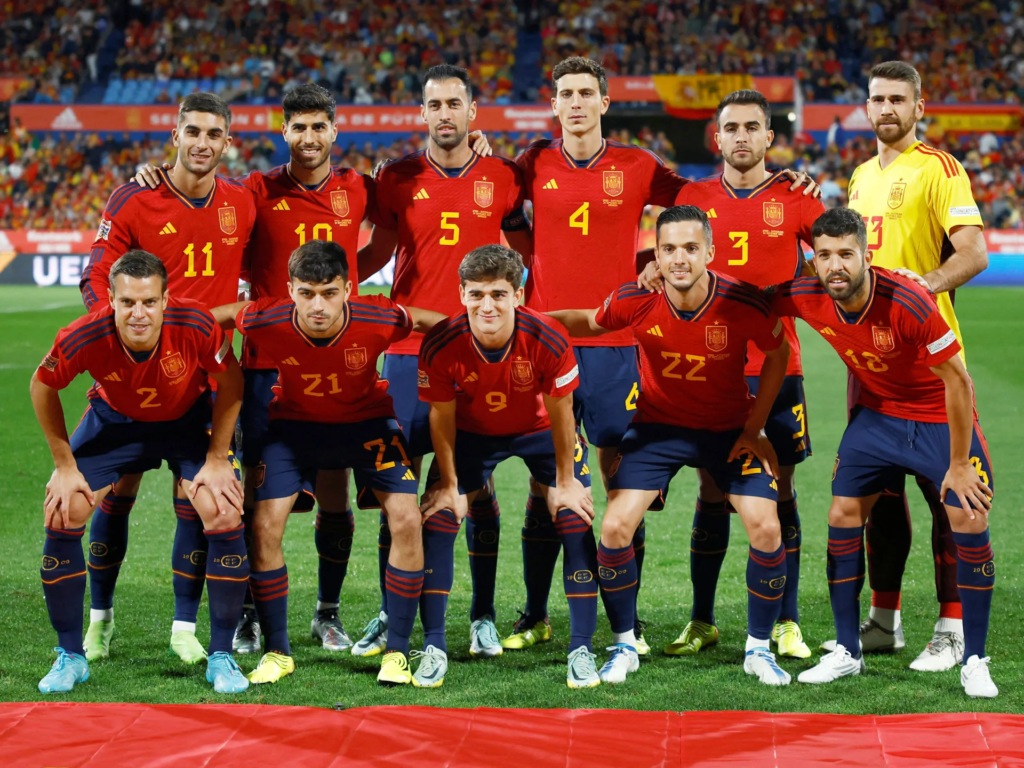
Winning the FIFA World Cup is the ultimate dream for any nation. After weeks of intense drama, electric atmospheres, and unforgettable goals on North American soil, Spain lifted the iconic trophy after defeating Argentina 1-0 in extra time. The victory crowned them as champions of the world, bringing pure joy to millions of fans.
Along with the famous gold trophy, the victory comes with a massive financial reward. FIFA set aside a record total prize pool of $871 million for the tournament, with $50 million reserved specifically for the grand champion. That money is meant to celebrate the hard work of the players, coaches, and support staff who made history on the field.
However, the celebration has run into a very complicated and costly roadblock off the pitch. United States federal tax laws could take a giant bite out of that championship payout. Reports indicate that the Internal Revenue Service, commonly known as the IRS, could collect up to 30% of Spain’s prize money.
That means Spain could lose as much as $15 million before the money ever leaves the country. It is a eye-opening situation that has caught players, fans, and politicians off guard. The financial world is now watching closely as global sports law collides with American tax policy.
How the $50 Million World Cup Prize Pool Actually Works
To understand why this is happening, it helps to look at where all this money comes from. FIFA generates billions of dollars in revenue through sponsorship deals, broadcasting rights, ticket sales, and merchandise. For this expanded tournament, FIFA created an enormous $871 million total pot.
Build Funnels, Email Lists & Sell Online With One Free Tool
Create funnels, send emails, and sell online using Systeme.io without paying for multiple tools.
Create Free AccountFree forever • No credit card • Beginner-friendly
Out of that massive sum, $655 million was allocated directly for performance-based bonuses. Every team that qualified received a guaranteed payout just for turning up and participating in the group stage. As teams advanced through the knockout rounds, their prize money grew bigger with every single win.
Spain reached the top of that mountain, earning the full $50 million champion’s reward. Normally, this cash is transferred from FIFA directly to the winning national football association. In this case, that is the Royal Spanish Football Federation.
From there, the national federation pays out pre-agreed bonus packages to individual players like Lamine Yamal and Rodri, as well as the head coach and technical team. The remaining funds are usually reinvested into local grassroots football programs, youth academies, training centers, and staff salaries back home in Spain.
When $15 million suddenly vanishes from that equation, it affects much more than just a few wealthy star players. It reduces funding for the entire football development system in the country for years to come.
The US Tax Law Behind the 30% Withholding Rule
You might be asking yourself why the US tax authority gets a say in money won in an international tournament. The answer lies in how American tax legislation handles foreign entities and non-resident workers.
Under long-standing US tax regulations, any income earned from services or activities performed physically on American soil is considered taxable income. It does not matter if you are an American citizen or a visiting foreigner. If you earn money while physically located inside the United States, the IRS considers that income subject to federal rules.
For non-resident foreign athletes, artists, and performers, federal law sets a mandatory 30% withholding tax rate on gross earnings generated within the country. This standard withholding rule ensures the government collects its share before foreign entities take their earnings back overseas.
FIFA anticipated these issues years ago and worked hard to secure tax exemptions. They lobbied Congress and successfully received tax-exempt status under section 501(c) of the US tax code. This special status protects FIFA as an organization, along with the individual national federations themselves.
However, legal experts point out a critical detail: that exemption stops at the federation level. It does not automatically extend to the individual players, coaches, or staff members receiving bonus money earned on American soil. Because players performed their labor in stadiums across America, the default 30% withholding tax remains a very real threat to their personal bonus checks.
State ‘Jock Taxes’ Could Make the Financial Hit Even Worse
If you think a 30% federal tax sounds high, the situation gets even more expensive when you consider local state taxes. In the United States, individual states have the authority to levy their own state income taxes on top of federal taxes.
In American sports, this is commonly referred to as the “jock tax.” It was created decades ago so states could collect income tax from visiting professional athletes based on how many days they spent practicing or playing matches in that specific state.
During the tournament, Spain played matches across multiple venues in different states. Each of those states wants its own fair piece of the financial pie:
- New Jersey: The site of the World Cup final charges a state income tax rate of up to 10.75%. New Jersey is notably strict because it does not recognize foreign international tax treaties, meaning foreign athletes cannot use international agreements to escape state-level filings.
- California: Hosted several key matches and charges top earners a state income tax rate of up to 13.3%.
- Other Host States: Several other states where teams trained and competed carry their own varying individual income tax rates.
When you combine federal IRS withholding with state-level jock taxes, the total effective tax rate for foreign athletes playing in high-tax states could rise as high as 40%. Out of a $50 million payout, almost $20 million could potentially end up in state and federal tax accounts before the remaining money ever makes its way to Europe.
At Whatsbuzzn, our mission is to break down these big, complex global stories into simple, straightforward explanations so you can easily understand what is really happening behind the headlines.
American Lawmakers are Divided Over the Tax Grab
This potential cash grab has sparked intense debate inside the halls of the US government. Politicians from both major political parties have publicly voiced strong opinions about whether taxing visiting international stars is fair or foolish.
Tennessee Republican Representative Tim Burchett expressed deep frustration over the potential tax burden. He openly labeled the heavy tax deduction as a total “rip-off” and argued that America should be welcoming global stars rather than penalizing them. He noted that forcing foreign visitors to pay massive chunks of their prize money sends a bad message when the nation is trying to host major global events.
Illinois Democratic Representative Jonathan Jackson agreed that taking 30% from the tournament’s hard-working laborers and athletes was wrong. He argued that the current tax system places too heavy a burden on individual workers while allowing giant corporations to take advantage of broad tax loopholes. In his view, everyday working people and athletes shouldn’t bear the brunt of heavy tax bills.
Utah Republican Representative Burgess Owens, a former professional NFL player himself, acknowledged that a 30% tax burden is simply “too much” for athletes to digest. He shared how hosting the World Cup gave him a deep new appreciation for soccer, but admitted that America’s complex tax code remains a tough reality for visitors to deal with.
When lawmakers from across the political spectrum agree that a tax rate is excessive, it shows just how controversial the IRS rules have become on the international stage.
Will Spain Actually Have to Pay the Full 30%?
Despite all the drama, it is not yet certain that Spain will end up surrendering the entire 30% to the US government. International tax law is filled with treaties, exemptions, and special accounting mechanisms designed to protect taxpayers.
The United States and Spain have a long-standing bilateral double-taxation treaty. This agreement is specifically designed to stop individuals and businesses from paying full taxes twice on the exact same dollar earned overseas.
Here is how the process usually balances out:
- Initial Withholding: The US government may temporarily hold onto the standard 30% fee when the prize money is distributed.
- Foreign Tax Credits: When Spanish players file their annual tax returns back home in Spain, they can claim credit for the foreign taxes already paid in the US.
- Expense Deductions: Spain’s federation can deduct legitimate tournament expenses—such as flight costs, hotel stays, security detail, equipment, and medical support—reducing the net income that is actually subject to tax.
- Final Settlement: Tax lawyers from FIFA, the Spanish Football Federation, and the IRS are currently negotiating behind closed doors to figure out the exact final amount owed.
Because official calculations are still underway, no final checks have been handed over to the IRS just yet. The exact percentage lost will depend heavily on how smart the team’s tax advisors are in structuring these bonus payments.
If you enjoy reading simple explanations of complex real-world topics like this, feel free to check out our technology and AI category for more informative articles on how modern trends are shaping our world.
What This Means for Future Global Sporting Events
This tax debate carries huge consequences for the future of international sports. The United States is set to host several more massive global sporting events over the coming decade, including the 2028 Summer Olympic Games in Los Angeles.
If international athletes face huge tax deductions every time they travel to America to compete, it could lead to friction. Some athletes might think twice about where they choose to compete or demand higher appearance fees to offset local tax hits.
Many sports experts and organizers are now pushing for global host cities to establish clear tax exemptions before major tournaments begin. They argue that international sports federations should negotiate standard rules so athletes know exactly what they will take home before stepping onto the field.
Build Funnels, Email Lists & Sell Online With One Free Tool
Create funnels, send emails, and sell online using Systeme.io without paying for multiple tools.
Create Free AccountFree forever • No credit card • Beginner-friendly
Without clear rules, winning the biggest prize in world football can quickly turn into an expensive legal headache.
Connecting Sports, Media, and Modern Business
Stories like this highlight how closely sports, finance, law, and media are linked together today. A team wins on the pitch, but the financial outcome is decided in boardroom meetings between accountants and tax authorities.
Understanding these connections is essential for anyone following modern trends. Online creators and digital publishers cover these exact topics to keep audiences around the world informed and entertained.
If you want to learn how modern media channels automate content production and build audiences around trending global news, dive into our helpful guides on YouTube automation insights to see how modern creators build successful digital channels.
If you ever have questions, feedback, or suggestions for topics you would like us to cover next, please feel free to reach out through our contact page. We always love hearing directly from our readers.
Frequently Asked Questions (FAQs)
Why is the US government taxing Spain’s World Cup prize money?
Under US federal tax laws, any income earned from services or work performed inside the United States is subject to income tax. Because Spain played their matches on American soil, the IRS considers their prize money and performance bonuses taxable income generated within the country.
How much money could Spain actually lose to taxes?
The standard federal withholding rate for foreign non-residents is 30%, which equals $15 million on a $50 million payout. When you add state-level “jock taxes” in high-tax host states like California or New Jersey, the overall tax rate could reach up to 40%.
Does FIFA pay taxes on its tournament profits in the US?
FIFA lobbied the US government and obtained tax-exempt status under section 501(c) of the tax code. This shields FIFA as an organization and protects national federations from direct federal income tax. However, that exemption does not protect individual players, coaches, or contractors receiving bonus payouts.
What is a state ‘jock tax’?
A “jock tax” is a local state income tax imposed on visiting professional athletes and sports staff based on the number of days they spend working or playing matches in that specific state.
Will Spanish players be taxed twice on the same income?
No, players should not be fully taxed twice. The United States and Spain have a bilateral tax treaty that allows players to claim foreign tax credits back home in Spain for any taxes paid to the IRS, preventing double taxation on the same earnings.
Has the IRS made a final decision on Spain’s payout?
No official final statement has been released by the IRS, FIFA, or the Spanish Football Federation regarding the exact final tax bill. Lawyers and tax specialists are currently calculating net taxable income after deducting allowable tournament expenses.
Conclusion
Spain’s incredible World Cup victory was a magnificent sporting accomplishment that will be remembered for decades. However, the reality of American tax law has added an unexpected layer of financial drama to their championship celebration.
While a potential 30% cut sounds painful, international tax treaties and legal expense deductions will likely cushion the final blow. As tax authorities and football officials work out the final numbers, this situation serves as a clear reminder that modern sports extend far beyond ninety minutes on the field.
What are your thoughts on taxing foreign athletes when they compete in major international tournaments? Share your views and join the conversation with us across our official social media channels:
- Follow us on our Facebook page for breaking stories.
- Check out our latest posts on our Instagram page.
- Catch fast updates and live discussions on our X (formerly Twitter) feed.
