
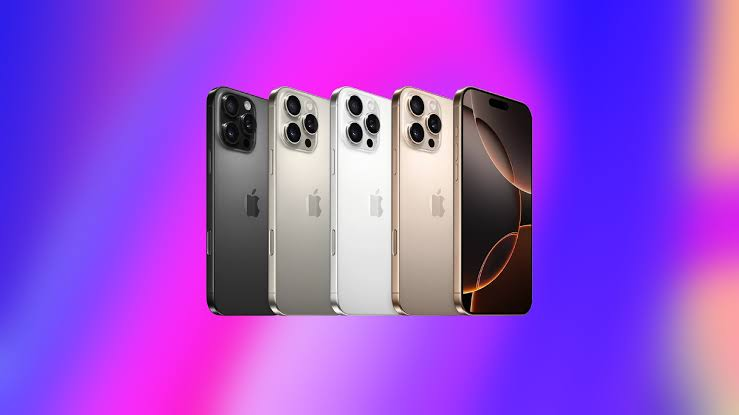
Fresh supply chain reports reveal that Apple is preparing a radical overhaul for its flagship smartphone to mark the 20th anniversary of the original iPhone. Timed for release in 2027, two full decades after Steve Jobs pulled the first iPhone from his pocket, this upcoming device is expected to shake up the entire smartphone market. Industry insiders suggest Apple may even skip regular naming numbers to call the device the iPhone 20.
Early reports from display manufacturers in Asia, corroborated by reporting from Bloomberg and tech outlets like 9to5Mac, describe a phone that looks unlike anything Apple sells today. We are looking at a continuous, all-glass design, a four-sided curved display that makes bezels disappear, and serious internal hardware upgrades.
If you have felt that smartphone updates have become boring in recent years, Apple seems ready to prove that big design leaps are not a thing of the past.
Why Apple Is Treating 2027 as a Major Reset
Every few years, Apple hits a moment where small yearly tweaks are no longer enough to satisfy buyers. Ten years ago, the company faced a similar crossroad. In 2017, Apple celebrated the tenth anniversary of its phone by releasing the iPhone X. That single device killed off the iconic home button, introduced edge-to-edge OLED screens, and brought Face ID into our daily lives. As Apple officially declares the iPhone X obsolete, tech historians still look back at that phone as the blueprint for an entire decade of mobile hardware.
Now, history is set to repeat itself. Reaching twenty years in the fast-moving tech world is a rare milestone. Industry analysts note that Apple wants its 2027 launch to carry that same cultural weight.
The $0 Secret To Launching Your Entire Online Empire
Why pay hundreds every month for separate software? Build funnels, send emails, and make sales with Systeme.io completely free.
Get Started For $0Free Forever • No Credit Card Needed • Beginner-Friendly
Instead of rolling out another minor camera tweak or slightly rounded corners, engineers in Cupertino are reportedly aiming to set the design standard for the next ten years. The project internally represents the biggest visual shift since 2017, aiming to silence critics who claim modern phones have hit an innovation ceiling.
The Big Visual Shakeup: An All-Glass Body and Quad-Curved Screen
The headline feature of the 20th-anniversary redesign is the physical exterior. According to leaks originating from display industry publication ETNews, Apple is developing a quad-curved panel. This means the front glass curves gently across all four edges: top, bottom, left, and right.
The Illusion of a Bezel-Free Screen
Most curved phones of the past only bent along the sides, which often caused annoying accidental palm touches. Apple’s approach is reportedly focused on a subtle contour that blends smoothly into a solid glass chassis. The visual result is a display that looks like a single, seamless pool of water resting in your hand.
When you look straight at the screen, the borders practically vanish. This design language aligns with Apple’s recent push toward fluid, refractive aesthetics across its newer software interfaces, creating an experience where hardware and software appear to blend into one uninterrupted surface.
Display Sizes Are Getting Even Bigger
Display leaks indicate that Apple is expanding the physical viewable area without drastically blowing up the physical footprint of the phone itself.
Recent supply-line tracking confirms that Apple is testing a nearly 7-inch display for the largest 20th-anniversary model. The standard Pro model is expected to sit at roughly 6.41 inches, while the Pro Max could push display boundaries out to 6.96 inches. Because the bezels are shrinking down to hairline proportions, users will get significantly more screen space without carrying an unmanageable brick.
The Dynamic Island Dilemma: Why the Screen Cutout Is Staying
For years, smartphone fans have dreamed of a completely uninterrupted glass slate with no punch-holes, notches, or cutouts. Early rumors suggested the 20th-anniversary iPhone would finally hide the selfie camera and Face ID hardware underneath the glass.
However, recent reports from well-known mobile tipster Digital Chat Station suggest buyers should keep their expectations realistic. Apple is still planning to keep a display cutout, which means the Dynamic Island is sticking around.
Why Under-Display Face ID Is So Hard to Perfect
The challenge comes down to basic physics and security standards. Face ID relies on an infrared dot projector and flood illuminator to map the unique geometry of your face in three dimensions.
When you place those complex optical sensors behind active display pixels:
- The light gets scattered and distorted by the OLED sub-pixel grid.
- Security accuracy drops, increasing the risk of false rejections or security bypasses.
- The front-facing selfie camera loses light transmission, resulting in muddy photos and soft video.
Apple refuses to compromise Face ID reliability or front camera clarity just to boast about a cutout-free screen. As a result, the Dynamic Island will remain on the 20th-anniversary device, although engineers are working to shrink its overall footprint to give you more usable screen area.
Massive Internal Power: 2-Nanometer Chips and In-House Modems
A radical exterior redesign requires brand-new internals to match. The 20th-anniversary device will not just look different; it will run on an entirely new architecture.
The TSMC 2-Nanometer Leap
The processor powering the 2027 anniversary lineup is slated to be built on TSMC’s cutting-edge 2-nanometer process. In simple terms, shrinking the transistors down to this microscopic size lets Apple pack billions more transistors into the exact same physical space.
This brings two massive advantages:
- Unmatched Power Efficiency: The processor uses noticeably less power to carry out daily tasks, directly translating into longer real-world battery life.
- Sustained On-Device Intelligence: Advanced local artificial intelligence processing requires massive computational muscle. The upcoming chip generation will run complex machine learning models directly on your hardware without making the phone overheat.
In-House Wireless Modems
The anniversary redesign will also mark a major milestone in Apple’s quest for component independence. Apple has spent billions of dollars developing its own cellular modems to replace third-party parts. By tightly integrating the cellular modem with the primary processor and battery management units, the phone can optimize network handshakes, reduce battery drain during 5G connections, and improve download speeds in crowded locations.
Send, Spend & Hold Money Worldwide Without Hidden Fees
Transfer money internationally at the real exchange rate and hold 40+ currencies in one account.
Open a Wise AccountMid-market rate • Fast transfers • 40+ currencies
Reshaping the Launch Calendar: Will Apple Skip the iPhone 19?
Industry insiders are closely watching how Apple handles its naming and launch schedule leading up to 2027. We have already seen reports that Apple is changing how it launches iPhones, staggering base models and high-end flagships to optimize supply lines and maximize consumer attention.
Between standard iterative models, the performance improvements reviewed in the Apple iPhone 18 Pro review, and the recent emergence of foldable hardware with the Apple iPhone Duo, the release calendar has become packed.
Much like Apple jumped straight from the iPhone 7 and iPhone 8 directly to the iPhone X in 2017 skipping the iPhone 9 entirely, analysts expect Apple to leapfrog the iPhone 19 name. Marketing a landmark 20-year anniversary device as the “iPhone 19” lacks emotional punch. Jumping directly to “iPhone 20” or an equivalent milestone branding gives Apple a clear narrative to capture global media attention.
Durability and Repairability: The Challenge of an All-Glass Phone
While a quad-curved, all-glass phone looks stunning in promotional videos, everyday users immediately wonder about one practical question: what happens when it drops on the sidewalk?
A phone covered on all sides with glass naturally raises durability concerns. To counter this, Apple’s material science teams are working on next-generation ceramic glass composites. The goal is to provide substantially higher scratch and shatter resistance than current glass backs.
Even with stronger glass, repairability will remain an important talking point. All-glass unibody designs can be difficult to open without specialized equipment. If you tend to drop your devices, pairing a future quad-curved phone with a solid case or keeping up with replacement coverage will likely be a necessity.
Expected Pricing: How Much Will the 20th Anniversary iPhone Cost?
Cutting-edge manufacturing techniques never come cheap. Curved glass panels, microscopic 2-nanometer chip fabrication, and advanced camera arrays all carry steep component bills.
When the iPhone X launched in 2017, it made headlines by breaking the $1,000 baseline price barrier. For the 2027 anniversary model, industry watchers expect Apple to position the device at the very top of its pricing tier:
- The standard 20th-anniversary Pro model could easily start at $1,199 to $1,299.
- The larger Pro Max model, packing that expansive near-7-inch screen and top-tier storage, could easily push beyond $1,499.
For buyers who swap phones every year or two, understanding how the iPhone Upgrade Program works will become increasingly useful as flagship price tags climb higher. Spreading hardware costs across monthly installments or using trade-in credits will be the primary way most people justify the jump.
Frequently Asked Questions
When will the 20th anniversary iPhone be released?
Apple is expected to announce the 20th-anniversary iPhone in September 2027, with retail availability following later that month. This timing matches Apple’s standard fall release cycle and marks exactly twenty years since the original iPhone launched in 2007.
The $0 Secret To Launching Your Entire Online Empire
Why pay hundreds every month for separate software? Build funnels, send emails, and make sales with Systeme.io completely free.
Get Started For $0Free Forever • No Credit Card Needed • Beginner-Friendly
What will Apple call the 20th anniversary iPhone?
While Apple has not officially confirmed the branding, supply chain analysts and tech insiders widely refer to it as the iPhone 20, iPhone 20 Pro, or potentially iPhone XX. Just as Apple skipped the iPhone 9 to launch the iPhone X for its tenth anniversary, skipping the iPhone 19 is considered very likely.
Will the 20th anniversary iPhone have a notch or cutout?
Yes. Despite rumors of under-display cameras, recent leaks from reliable sources like Digital Chat Station confirm that the 20th-anniversary iPhone will still feature a display cutout for the Dynamic Island. The sensors required for Face ID still need unhindered optical clarity that under-screen tech cannot reliably deliver yet.
What is a quad-curved display on a smartphone?
A quad-curved display features glass that curves smoothly along all four edges: the top, bottom, left, and right sides. This design softens the borders around the screen and minimizes visible bezels, creating the visual impression that the display floats on top of the phone frame.
Will the anniversary iPhone feature a new processor?
Yes. The 20th-anniversary iPhone is slated to run on Apple’s next-generation silicon built on TSMC’s 2-nanometer process node. This transition provides substantial boosts in energy efficiency, sustained processing power, and on-device machine learning capabilities.
Stay connected with our community across social media to catch every breaking tech update, leak, and gadget breakdown as it happens:
- Join our conversations on X (formerly Twitter)
- Follow our visual updates on Instagram
- Connect with our community on Facebook
- Have a tip, question, or story pitch? Reach out directly via our Contact Page
Apple’s plans for 2027 prove that the company still views its iconic phone as a canvas for bold hardware experiments. While the wait for the 20th-anniversary redesign will take patience, the prospect of a quad-curved, all-glass powerhouse suggests that the next decade of smartphone design will look remarkably different from the last. Keep an eye on supply chain movements over the coming months as testing ramps up and prototypes begin moving closer to reality.
