
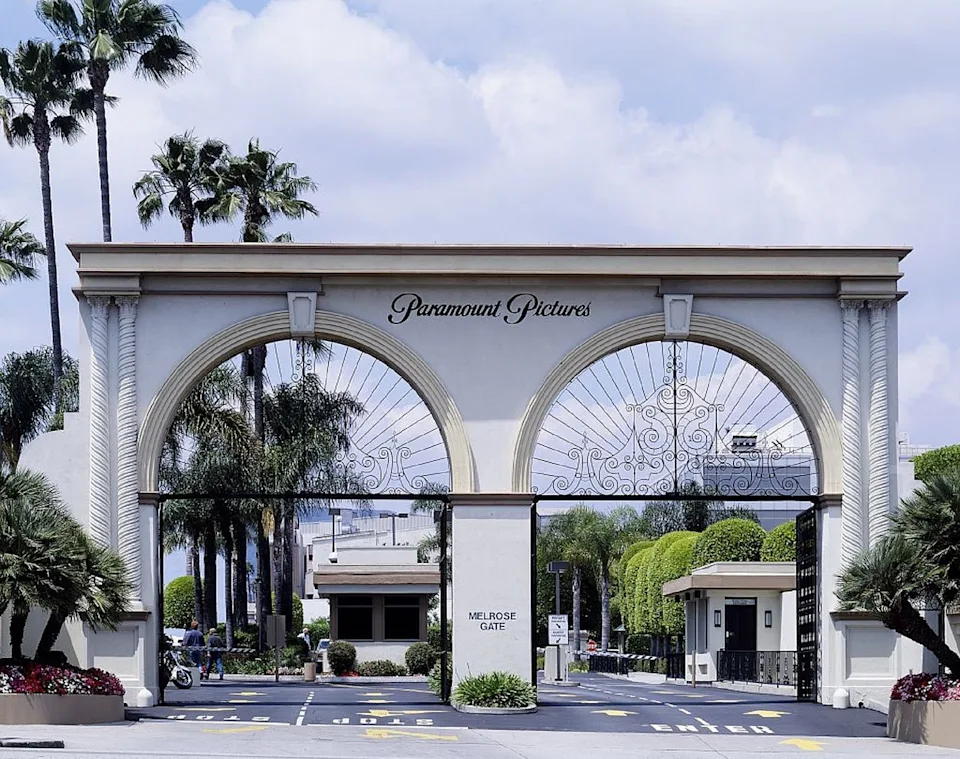
Hollywood legal battles are usually fought behind closed doors, but the massive feud between Paramount Skydance and the State of California just spilled out into public view in the wildest way possible. In a legal move that caught courtroom observers off guard, Paramount is using California’s own top attorney’s television appearances to turn the tables in a $1.88 billion courtroom brawl.
At the center of this clash is Paramount Skydance’s attempt to buy Warner Bros. Discovery in an eye-popping $110 billion merger. California Attorney General Rob Bonta joined forces with 11 other states and the Writers Guild of America to block the deal, claiming it would destroy competition in the entertainment industry. But as the legal timeline drags on toward a trial, Paramount claims it is losing millions of dollars every single day the deal sits on ice.
To protect itself from these runaway expenses, Paramount filed a bold motion demanding that California and its legal partners put up $1.88 billion as a security deposit while they fight in court. When the state argued that Paramount paused the deal voluntarily, Paramount’s legal team pulled out video clips of Bonta boasting on television that he had halted the deal. That single contradiction has turned a standard legal fight into one of the most explosive media battles of the year.
The Massive $110 Billion Hollywood Battle Unfolds
To understand why this court fight is so intense, you have to look at the massive size of the deal itself. Paramount Skydance, listed on the stock market as PSKY, wants to combine forces with Warner Bros. Discovery, known as WBD. If this deal goes through, it will create one of the largest media giants in human history.
We are talking about bringing two legendary movie studios under one roof. It would join streaming heavyweights like Paramount+ and Max, alongside famous television channels like CBS, HBO, CNN, MTV, and Comedy Central. Regulators across 68 different countries and the federal government have already reviewed and cleared the transaction. However, state-level officials in the United States decided to step in and put on the brakes.
The $0 Secret To Launching Your Entire Online Empire
Why pay hundreds every month for separate software? Build funnels, send emails, and make sales with Systeme.io completely free.
Get Started For $0Free Forever • No Credit Card Needed • Beginner-Friendly
In July, California Attorney General Rob Bonta led a group of 12 state attorneys general in filing a landmark antitrust lawsuit in federal court in Oakland, California. Their main argument is simple: combining these two media titans gives one single company way too much control over movie theaters, television broadcasting, and creative talent. They claim that less competition will mean higher prices for consumers, fewer big-screen movie releases, and lower wages for industry workers.
The Writers Guild of America West, which represents thousands of Hollywood screenwriters, filed its own separate lawsuit to stop the deal. Together, these opponents managed to pause the momentum of what was supposed to be a smooth corporate takeover. But as the clock ticks, keeping two multi-billion-dollar companies in legal limbo comes with a staggering price tag.
Why California and 11 Other States Are Fighting the Merger
The group of state attorneys general fighting this merger claims they are standing up for everyday consumers and creative workers. They argue that when two massive entertainment companies combine, the entertainment choices for regular viewers get smaller while prices go up.
California officials are especially concerned about how the merger could change the theatrical movie business. In recent years, studio executives have shortened the amount of time movies play in theaters before moving them to online streaming platforms. State officials fear that a merged Paramount-Warner Bros entity could force movie theater chains to accept unfair terms or release fewer films in theaters each year.
There is also a political and news side to this fight. The merger would place legacy news networks like CBS News and CNN under the same corporate umbrella. State regulators have raised concerns that combining these newsrooms could reduce the variety of independent news sources available to the public.
For the Writers Guild of America, the main worry is job security and fair pay. When major studios merge, they almost always look for ways to cut costs by eliminating duplicate positions and reducing budgets. Hollywood writers worry that having fewer major studios competing for scripts will lower pay rates and make it much harder for writers to earn a living.
The $1.88 Billion Bond Demand: What Is It and Why Does Paramount Want It?
Because the legal fight is moving toward a trial scheduled for March 2027, Paramount decided to hit back with a massive legal demand of its own. Paramount filed a formal motion asking U.S. District Judge Araceli Martinez-Olguin to require California, the 11 other states, and the Writers Guild of America to post a $1.88 billion court bond.
In simple terms, a court bond acts like a giant security deposit or collateral. When a party sues to block a business deal, courts sometimes force them to put up money. If the court later decides the lawsuit was unjustified and dismisses it, that bond money is handed over to the company to pay for the financial damage caused by the delay. You can read the official court details surrounding this legal maneuver on Law Commentary.
Why is the bond demand so massive? The answer comes down to something called “ticking fees.” Under the terms of the acquisition agreement between Paramount and Warner Bros. Discovery, Paramount must pay cash directly to Warner Bros. shareholders if the merger is delayed past October 1.
These ticking fees equal roughly $650 million every single quarter. That breaks down to a mind-boggling $7 million every single day the deal is delayed! If the antitrust trial lasts until March 2027, Paramount will owe Warner Bros. shareholders over $1.3 billion in ticking fees alone. Add in another $190 million in financing costs, legal fees, and administrative expenses, and Paramount’s total losses quickly climb toward $1.88 billion.
Caught on Tape: Paramount Uses Rob Bonta’s Words to Trap the State
The heart of the dispute over the $1.88 billion bond comes down to one single question: did Paramount pause the deal voluntarily, or did the state force them to stop?
California argued in court filings that no bond should be required because Paramount chose on its own to pause the deal while the lawsuit plays out. According to the state’s lawyers, if Paramount agreed to a voluntary pause, it cannot blame California for its delay costs or demand a security deposit.
That is where Paramount’s legal team laid out a clever trap. Paramount filed court papers showing that California Attorney General Rob Bonta appeared on televised news broadcasts taking credit for halting the merger. In those media interviews, Bonta publicly described the agreement to pause the deal as the functional equivalent of a court-ordered injunction.
Paramount pointed out the obvious contradiction to the judge. The Attorney General cannot tell millions of television viewers that his legal team successfully blocked the merger, and then turn around in court and pretend the pause was just a friendly, voluntary decision by Paramount.
Paramount argued that if Bonta wants to claim the public credit for stopping a $110 billion merger on television, his office should have to accept the legal responsibility that comes with it. If the state is effectively blocking the deal like an injunction would, it must post the $1.88 billion bond to protect Paramount if the state loses at trial.
Send, Spend & Hold Money Worldwide Without Hidden Fees
Transfer money internationally at the real exchange rate and hold 40+ currencies in one account.
Open a Wise AccountMid-market rate • Fast transfers • 40+ currencies
David Ellison’s Threat to Leave California and the Political Fallout
While the legal battle rages in court, a high-stakes political drama is unfolding behind the scenes. Paramount Skydance CEO David Ellison made it clear that he is growing frustrated with California’s aggressive push to block the deal. Ellison has signaled that if California continues to obstruct the acquisition, Paramount may begin moving its headquarters and historic studio operations out of Los Angeles.
Losing an iconic studio like Paramount would be a crushing blow to California’s economy and its reputation as the global capital of filmmaking. Los Angeles Mayor Karen Bass expressed deep concern about the situation, noting that uncertainty around the merger has already delayed studio productions and caused local job losses.
Governor Gavin Newsom, who is looking toward the end of his term, also voiced strong concerns about the feud. Newsom publicly emphasized that he takes Paramount’s threat to leave the state very seriously and wants to ensure Hollywood remains a thriving industry.
This political pressure put California Attorney General Rob Bonta in a tight spot. While he wants to maintain a tough stance against massive corporate mergers, state leaders are worried that pushing too hard could cost California thousands of entertainment jobs and billions in tax revenue.
Settlement Talks and What the Future Holds for Hollywood Media
Recognizing that a long, drawn-out legal battle helps nobody, the federal court ordered Paramount and California officials to sit down for a formal settlement conference on October 14 and 15. The goal of these meetings is to see if both sides can reach an agreement without going through a full trial in March.
Reports of these advanced settlement talks immediately sent shockwaves through Wall Street. Shares of both Warner Bros. Discovery and Paramount Skydance spiked in after-hours trading as investors cheered the prospect of an end to the legal standoff. You can check out how the market reacted on Seeking Alpha and see the stock momentum updates on TradingView.
To resolve the lawsuit, both sides are discussing potential structural and behavioral compromises. Paramount has offered to give legal guarantees that it will release at least 30 major movies in theaters each year, keeping them in theaters for at least 45 days before moving them to streaming services.
Another option being discussed is having Paramount and Warner Bros. operate their movie studios as independent entities for a set period of time. If a settlement is reached during the October meetings, Paramount can avoid paying over a billion dollars in ticking fees and move forward with building its new media empire.
Navigating Modern Media Trends and Entertainment Innovations
This wild legal showdown highlights how fast the entertainment world is changing. As traditional TV cable packages shrink and streaming competition heats up, legacy media companies feel forced to grow bigger just to survive.
At the same time, new technologies are completely transforming how content is created, edited, and distributed. From automated video production techniques to cutting-edge artificial intelligence, media companies are constantly adapting to stay profitable in a digital-first economy.
The $0 Secret To Launching Your Entire Online Empire
Why pay hundreds every month for separate software? Build funnels, send emails, and make sales with Systeme.io completely free.
Get Started For $0Free Forever • No Credit Card Needed • Beginner-Friendly
If you want to discover how modern digital platforms are reshaping online video creation, check out our guide to YouTube Automation. For insights on how new software tools are altering media production, read our latest updates on Technology and AI.
Understanding these media trends helps everyday creators and consumers navigate where the industry is heading next. Whether it is a multi-billion-dollar studio merger or the rise of independent online channels, keeping up with media news keeps you ahead of the curve.
Frequently Asked Questions (FAQs)
What is a court bond, and why is Paramount asking for $1.88 billion?
A court bond is financial security deposited with the court during a lawsuit. If someone sues to stop a business deal and loses, the bond money covers the financial damages caused by the legal delay. Paramount wants $1.88 billion because keeping the merger paused costs them millions of dollars in fees every month.
Why did California’s Attorney General sue to block the Paramount-Warner Bros merger?
California Attorney General Rob Bonta claims that combining Paramount and Warner Bros. Discovery creates a media monopoly. He argues the merger will reduce competition, lower wages for Hollywood workers, limit the number of movies shown in theaters, and lead to higher subscription prices for consumers.
What are ticking fees, and why are they so expensive?
Ticking fees are penalty payments built into merger contracts. If the acquiring company fails to finish the deal by an agreed deadline, it must pay cash to the target company’s shareholders for every day of delay. Paramount owes Warner Bros. shareholders roughly $7 million per day starting October 1 if the deal is not closed.
Is Paramount really going to leave California over this lawsuit?
Paramount CEO David Ellison warned state leaders that the company could move its headquarters and main production offices out of California if the state continues to block the acquisition. While moving a historic studio is difficult, the threat has created major political pressure on state officials to reach a settlement.
How does this court fight affect regular movie fans and streaming subscribers?
If Paramount and Warner Bros. settle the lawsuit, viewers could see guarantees for more theatrical movie releases with longer playtimes in theaters. However, combining major streaming services like Paramount+ and Max could also lead to changes in monthly subscription costs and content libraries over time.
Staying informed about corporate shakeups, entertainment news, and legal battles helps you understand where the media landscape is headed. To learn more about our team and our mission to bring you engaging global stories, visit our About Page. If you have feedback, news tips, or questions about our articles, feel free to reach out directly through our Contact Page.
You can also join our growing online community by following us on social media! Connect with us on Instagram, check out our latest posts on Facebook, and follow our real-time commentary on X (formerly Twitter) to stay connected with everything buzzing around the world!
California AG Cancels Paramount Settlement Talks
This video covers California Attorney General Rob Bonta canceling earlier settlement talks with Paramount after accusing the company of leaking confidential details.
