
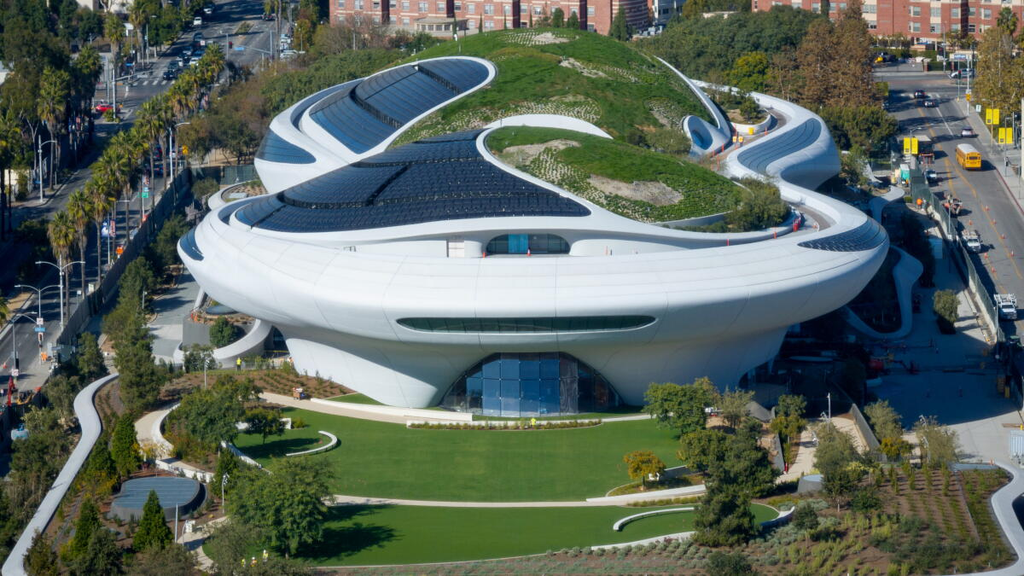
A giant futuristic building that looks like a landing alien spaceship has officially opened its doors next to the University of Southern California campus in Los Angeles. Movie director George Lucas and his wife, business executive Mellody Hobson, built this massive project for a reported $1 billion. Known as the Lucas Museum of Narrative Art, the structure covers 300,000 square feet and sits on 13 acres of green park space.
When people hear the name George Lucas, they usually think of Jedi knights, lightsabers, and space battles. However, walking inside this building reveals something far bigger than a movie memorabilia collection. Floating right beside classic film props are priceless oil paintings, historical comic book sketches, and legendary artwork from different eras of human culture.
You can stand in one hallway and look at a famous 1940 self-portrait by Mexican painter Frida Kahlo, then glance across the corridor and see the actual Batman costume worn in the film The Dark Knight. This unexpected mix of classic fine art and popular culture makes the building one of the most talked-about new culture spots in the world.
It brings together famous gallery art with comic strips, fantasy book covers, and sci-fi film props. The main goal of the museum is to show that creators from all eras are doing the exact same thing: telling a story through visual images.
What Is Narrative Art and Why Did George Lucas Build This?
Narrative art means any artwork that tells a story in a single image. It does not matter if the image was painted on a cave wall thousands of years ago, printed on a 1950s comic book cover, or created using digital graphics. If the picture makes you instantly understand a story or feel an emotion, it counts as narrative art.
Build Funnels, Email Lists & Sell Online With One Free Tool
Create funnels, send emails, and sell online using Systeme.io without paying for multiple tools.
Create Free AccountFree forever • No credit card • Beginner-friendly
George Lucas spent decades collecting these kinds of pictures. During a press event at the opening, Lucas explained that artists who illustrate stories deserve just as much respect as classical gallery painters. He pointed out that most popular stories are myths. The drawings and paintings are what make those imaginary myths feel real to everyday people.
Interestingly, only about 7 percent of the entire museum is filled with actual Star Wars props and archives. Lucas intentionally kept his own movie creations as a small part of the overall display. He wanted the space to celebrate artists from around the globe rather than just serving as a monument to his own career.
He believes that the illustrators who create art for books, magazines, and movies shape our everyday lives. Giving these artists a permanent $1 billion home gives their work the recognition it has lacked in traditional museum spaces.
The museum shows how storytelling evolved from early drawings to modern visual media. That same desire to tell clear stories is why many digital creators today study visual communication. If you are interested in modern digital storytelling and online content strategies, you can read our guide on YouTube automation to see how modern creators build audiences.
High Art Meets Pop Culture: The Unique Mix Inside
Walking through the galleries feels like flipping through a massive history book where every page surprises you. High art and low art hang side by side on the walls without any snobbery.
Famous Masterpieces Beside Comic Legends
In one section, you will see an early painting by Vincent van Gogh and a quick pencil sketch by Pablo Picasso. Right around the corner, you will find original hand-drawn Peanuts comic strips by Charles Schulz.
You will also find the famous Dogs Playing Poker painting by Cassius Marcellus Coolidge hanging proudly. There is even a whole gallery dedicated to Frank Frazetta. Frazetta was an artist who painted wild fantasy book covers for paperback novels decades ago. Seeing his paperback artwork displayed like royalty proves how much Lucas values popular visual storytelling.
Another main feature is the Norman Rockwell gallery. Rockwell was an American painter who made weekly magazine covers for decades. The exhibition shows his full step-by-step process, starting from simple line drawings and ending as detailed oil paintings. It gives visitors a clear look at how a master storyteller builds an image from scratch.
According to coverage from The Independent, these galleries show how simple pictures can spark big ideas in the mind of the viewer.
Star Wars Archives and Movie Magic
Even though Star Wars takes up a small percentage of the building, movie fans still have plenty to enjoy. The opening exhibition, titled Star Wars in Motion, gives visitors an up-close look at real props that shaped film history.
Visitors can stand right next to Luke Skywalker’s original Landspeeder and Anakin’s Podracer vehicle. Being able to see the scuffs, paint details, and custom parts on these props shows how much craftsmanship went into making those fictional worlds feel real.
Outside the main building, the 13-acre park contains several custom sculptures. One sculpture features the character Yoda overlooking a quiet water fountain. Another bronze statue shows Princess Leia battling Jabba the Hutt. These sculptures are tucked into the landscape so visitors can discover them while taking a casual walk through the gardens.
Museum leaders explained that the movie props inside will rotate over time. Because Lucas has thousands of historical film items in storage, future exhibits will highlight work from other famous filmmakers and visual effect artists.
The way movies mix art, design, and new tools shows how storytelling keeps changing. To explore more articles about how new tools and tech are changing creative fields, head over to our technology and AI section.
The Futuristic Architecture: A Spaceship Landing in LA
The building itself is just as dramatic as the art inside. Designed by famous Chinese architect Ma Yansong, the 300,000-square-foot structure features smooth, sweeping lines made of concrete and glass.
Taxi drivers and locals in Los Angeles often point out that the building looks like a giant alien spaceship hovering above the ground. Architect Ma Yansong explained that his design was actually inspired by watching clouds float above the city, though he admitted he loves sci-fi movies too. He worked on an earlier museum in China that took inspiration from a starship landing in a desert, which initially caught George Lucas’s attention.
Ma Yansong wanted the futuristic building to feel welcoming rather than cold. He designed the central curved belly of the structure to create a shaded outdoor plaza where visitors can sit and relax. He believes the future should feel warm, human, and comfortable, rather than like an abandoned factory.
The surrounding park adds trees, paths, and open grass to what used to be a plain asphalt parking lot. This turns the space into a public park for university students and neighborhood residents, even if they choose not to buy a museum ticket.
The 17-Year Battle to Get the Museum Built
Getting this museum built was not an easy process. It took nearly 17 years from the first idea to the official opening day, with construction itself taking about eight years.
Lucas originally wanted to build the museum in San Francisco. When local city groups raised objections over the proposed location near the Golden Gate Bridge, he moved the plan to Chicago. However, environmental groups in Chicago fought the proposed lakefront site in court.
Rather than changing his vision or shrinking the project, Lucas pulled out of Chicago and brought the idea to Los Angeles. City leaders in Los Angeles welcomed the project, giving it a home right across the street from USC. This site holds deep personal meaning for Lucas, who studied filmmaking at USC as a young student back in the 1960s.
During the opening ceremonies, Lucas admitted that the long struggle almost made him give up. He said he enjoys doing things people claim cannot be done, but fighting city boards and legal delays for almost two decades tested his patience. His persistence ensured that the building opened exactly the way he imagined it.
Why Critics Are Divided and What Visitors Get
As with any major project, not everyone agrees on the result. Some art critics have expressed doubts about the museum. They argue that “narrative art” is a broad, loosely defined term rather than an official art category. Other critics feel that the galleries should provide more detailed wall labels to explain the history behind each piece.
Museum CEO Tracey Bates explained that keeping wall explanations brief was a deliberate choice. Lucas wanted visitors to look directly at the artwork rather than spending all their time reading text on the walls. He believes a good picture explains itself. When you see a great drawing, you should feel the story right away without needing a textbook explanation.
The team hopes this direct setup will inspire young people who visit. Instead of feeling bored by long historical essays, kids and teenagers can look at comic books, movie props, and fine art, realizing that anyone can become a storyteller.
If you want to know more about our editorial vision and how we cover global cultural news, check out our about page. If you have thoughts on the museum or ideas for stories we should cover next, visit our contact page to reach out directly.
Frequently Asked Questions
Where is the Lucas Museum of Narrative Art located?
The museum is located in Los Angeles, California, right next to the University of Southern California campus. It sits inside Exposition Park on a 13-acre site surrounded by public gardens.
Build Funnels, Email Lists & Sell Online With One Free Tool
Create funnels, send emails, and sell online using Systeme.io without paying for multiple tools.
Create Free AccountFree forever • No credit card • Beginner-friendly
Is the museum only for Star Wars fans?
No. Only about 7 percent of the museum display is dedicated to Star Wars props and archives. The rest of the galleries feature oil paintings, classic comic strips, illustrations, and fine art pieces from artists like Frida Kahlo, Vincent van Gogh, and Norman Rockwell.
How much did it cost to build the museum?
The project cost approximately $1 billion, funded entirely by George Lucas and his wife Mellody Hobson.
What famous artworks are on display inside?
Visitors can see Frida Kahlo’s 1940 self-portrait, Norman Rockwell oil paintings, original Peanuts comic strips by Charles Schulz, sketches by Pablo Picasso, and fantasy artwork by Frank Frazetta. It also houses movie costumes, including a Batsuit from The Dark Knight.
Who designed the building?
The building was designed by Chinese architect Ma Yansong. The 300,000-square-foot structure features a smooth, futuristic design made of polymer-clad concrete and glass.
The Lucas Museum of Narrative Art bridges the gap between classic fine art and popular entertainment. By placing comic strips and movie props on the same level as historical oil paintings, George Lucas has built a space that celebrates human imagination in all its forms. It stands as a reminder that a great story told through a single picture can stay with us forever, no matter what surface it was drawn on.
What do you think about mixing pop culture props with classic museum art? Connect with us on social media to join the discussion on Instagram, Facebook, and X (formerly Twitter).
