
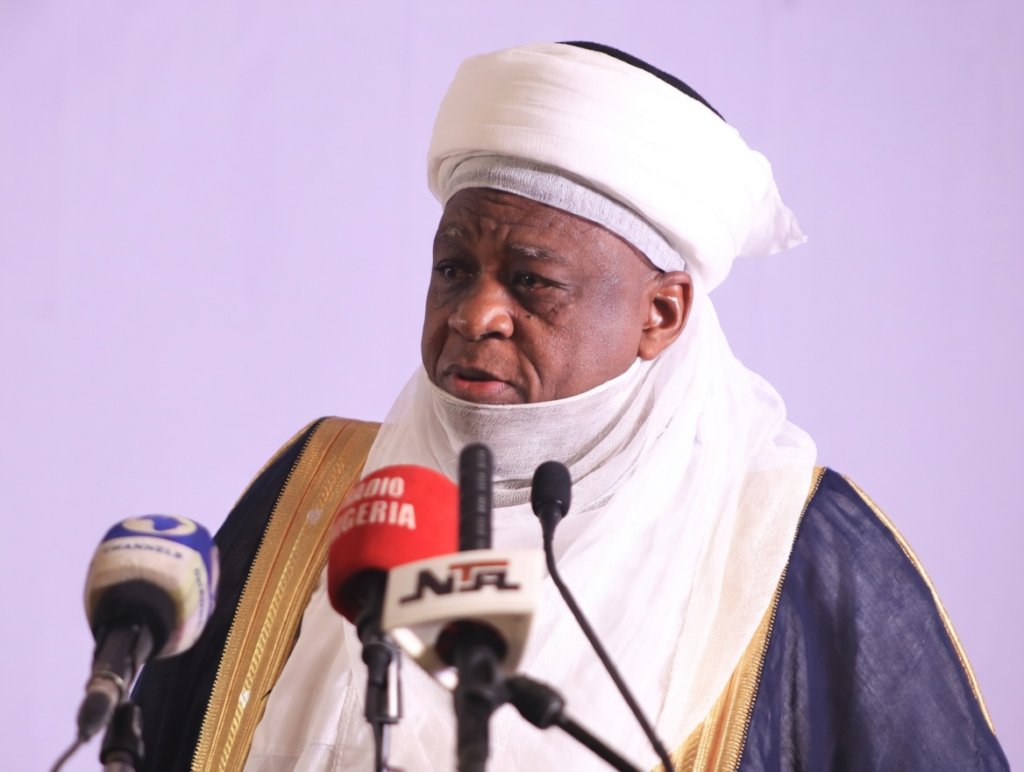
Political rumors move fast, especially when elections are on the horizon. Recently, a wave of social media posts claimed that the Sultan of Sokoto, Alhaji Muhammadu Sa’ad Abubakar III, had thrown his full support behind President Bola Ahmed Tinubu for the 2027 presidential election. Within hours, graphics were shared, group chats buzzed with debate, and political commentators began dissecting what this supposed endorsement meant for the country.
The Sultanate Council stepped forward to set the record completely straight. The Sultan issued a clear denial through official channels: he has not endorsed President Tinubu, nor does he have any preferred candidate for the 2027 presidential race.
As a traditional ruler and spiritual leader, his position is to remain neutral, pray for the peace of the nation, and act as a father to every Nigerian regardless of political affiliation.
At WhatsBuzzn, our mission is to break down trending global and local stories so you get the facts without the noise. Let us examine how this story started, what the Sultanate Council actually said, and why royal neutrality is so critical in Nigerian democracy.
How the Endorsement Rumors Started Online
In modern political culture, a simple courtesy visit or a polite public comment can quickly turn into a massive headline. The rumors surrounding the Sultan and President Tinubu appear to have grown out of recent high-level meetings and public gatherings where traditional rulers interacted with government officials.
The $0 Secret To Launching Your Entire Online Empire
Why pay hundreds every month for separate software? Build funnels, send emails, and make sales with Systeme.io completely free.
Get Started For $0Free Forever • No Credit Card Needed • Beginner-Friendly
Politicians frequently visit traditional rulers to pay their respects, seek royal blessings, or discuss community issues. In Nigeria, these visits are standard protocol. However, political bloggers and online commentators often take photos from these meetings out of context. A simple handshake or a general message of goodwill can be spun into a political endorsement by supporters looking to boost their candidate’s popularity.
When a graphic with a bold headline claims a major religious or cultural leader has picked a side, it spreads rapidly across messaging apps and social platforms. Most people share these posts without checking whether an official statement was ever released. Before long, a routine meeting becomes a full-blown political narrative.
The Official Statement: Why the Sultan Remains Neutral
The Sultanate Council made its stance explicit to put an end to the speculation. The Sultan of Sokoto is not just a traditional ruler; he is also the President-General of the Nigerian Supreme Council for Islamic Affairs (NSCIA) and the co-chairman of the Nigeria Inter-Religious Council (NIREC). Because of these major roles, taking a side in partisan politics would hurt his ability to unite people across different regions and faiths.
In his official response, the Sultan emphasized that his doors are open to politicians from every political party. Whether someone belongs to the ruling party or an opposition group, they are welcome to visit his palace, discuss national issues, and ask for prayers. However, receiving a guest in the palace does not mean approving their political ambitions or telling citizens how to vote.
The council pointed out that the Sultan’s primary focus is on the welfare of everyday citizens. Rather than playing political games for elections that are years away, he continues to advocate for economic relief, improved security, and better living conditions for ordinary people. His message to political leaders has always been consistent: focus on good governance today rather than campaigning for tomorrow.
The Role of Traditional Rulers in Nigerian Politics
To understand why this denial was necessary, it helps to look at the unique position traditional rulers hold in Nigeria. Although the Nigerian constitution does not give traditional rulers formal political power, they carry enormous moral weight and cultural authority in their communities.
People look up to traditional leaders for guidance on social issues, conflict resolution, and community development. When a traditional ruler remains neutral, they can act as a trusted mediator during times of national tension or political disagreement. If a royal father openly endorses a specific candidate, it can create division among their people, who naturally hold different political views.
Throughout history, respected traditional leaders have avoided formal party politics precisely to preserve their role as peacebuilders. They offer wisdom and feedback to whoever holds public office, but they leave the actual voting choices to the citizens. By publicly denying the 2027 endorsement claims, the Sultan reinforced this longstanding tradition of royal neutrality.
Why the 2027 Election Conversation is Starting Early
It might seem surprising to hear discussions about the 2027 presidential election so far in advance, but early political maneuvering is common in Nigeria. As political parties evaluate their strategies, public interest naturally shifts toward who might run and who will support them.
Early political talk usually builds around a few key factors:
- Strategic Alignments: Political groups start building coalitions early to secure support across different regions.
- Public Attention: Highlighting future elections keeps political figures in the daily news cycle.
- Social Media Gossip: Independent creators and commentary channels post predictions to generate online engagement.
While politicians and strategists are constantly thinking about the next election cycle, average citizens are usually more focused on immediate daily concerns like food prices, transportation costs, and security. That is why public figures like the Sultan frequently remind politicians to address current governance challenges before getting wrapped up in future campaign seasons.
How Digital Tech and Viral Media Fuel Political Gossip
The speed at which the Sultan’s endorsement rumor spread highlights how digital communication shapes public opinion today. Social media algorithms are designed to promote content that gets strong emotional reactions, and political claims are among the fastest ways to generate clicks, shares, and heated comment sections.
Modern content creators use smart digital strategies to build massive audiences quickly. On platforms where creators focus on topics like YouTube automation, automated channels often produce fast voiceover videos on trending news topics. While many channels maintain high journalistic standards, others rely on clickbait headlines and unverified claims just to get views.
At the same time, developments in technology and AI make it easier than ever for anyone to generate realistic graphics, fake quote cards, and edited media clips in seconds. When fake news is formatted to look like a professional broadcast, everyday readers can easily mistake a fabricated quote for an official announcement.
Practical Ways to Spot Political Misinformation
Navigating online news requires a healthy level of skepticism. Before sharing a sensational story about a public figure, keep these practical steps in mind to verify what you are reading:
Send, Spend & Hold Money Worldwide Without Hidden Fees
Transfer money internationally at the real exchange rate and hold 40+ currencies in one account.
Open a Wise AccountMid-market rate • Fast transfers • 40+ currencies
- Look for the Official Statement: Major traditional and religious leaders issue statements through signed letters, official spokespersons, or verified media briefings. If a massive announcement only exists as an unverified social media graphic, treat it with caution.
- Cross-Check with Established Outlets: Check whether reputable national newspapers like Vanguard News or Premium Times have reported the story. Major newsrooms verify quotes directly with palace officials before publishing.
- Trace the Source: Ask yourself where the post came from. Was it published by a recognized news platform or an anonymous social media page trying to gain followers?
- Read Past the Headline: Clickbait titles often make bold claims that are not supported by the actual text of the article. Always read the full story to see if real evidence is provided.
Frequently Asked Questions (FAQs)
Did the Sultan of Sokoto endorse President Tinubu for 2027?
No. The Sultanate Council officially denied these claims, confirming that the Sultan has not endorsed President Bola Ahmed Tinubu or any other candidate for the 2027 presidential election.
What is the role of the Sultan of Sokoto in Nigerian society?
The Sultan of Sokoto is a major traditional ruler and the spiritual leader of Nigerian Muslims. He serves as the head of the Nigerian Supreme Council for Islamic Affairs (NSCIA) and works to promote peace, religious harmony, and social welfare across the country.
Are traditional rulers in Nigeria allowed to join political parties?
Traditional rulers are expected to remain non-partisan. While they can interact with politicians from all parties to discuss community development and national progress, they generally avoid endorsing specific candidates to maintain neutrality among their people.
Why do political endorsement rumors spread so fast online?
Misinformation spreads quickly because sensational political headlines generate high engagement on social media. Many users share catchy graphics or short clips without verifying whether the claims come from official sources.
Where can I get verified political news in Nigeria?
You can stay updated by following established national newspapers, verified news broadcasts, and trusted commentary platforms like WhatsBuzzn that break down trending stories with clarity.
Staying informed in a fast-moving digital world requires careful reading and reliable sources. The Sultan of Sokoto’s clear denial serves as a great reminder that not every viral headline tells the full story. As political conversations continue to evolve leading up to 2027, taking a moment to fact-check rumors helps keep public discussions grounded in truth.
If you enjoy staying up to date on trending cultural stories, political breakdowns, and digital news, explore our latest articles on WhatsBuzzn. If you have questions, feedback, or a story you would like us to cover, feel free to reach out directly through our contact page.
Do not forget to join our growing community on social media. Follow us on Facebook, connect with us on Instagram, and join the conversation on X (formerly Twitter) to make sure you never miss a beat on what is trending next.
