
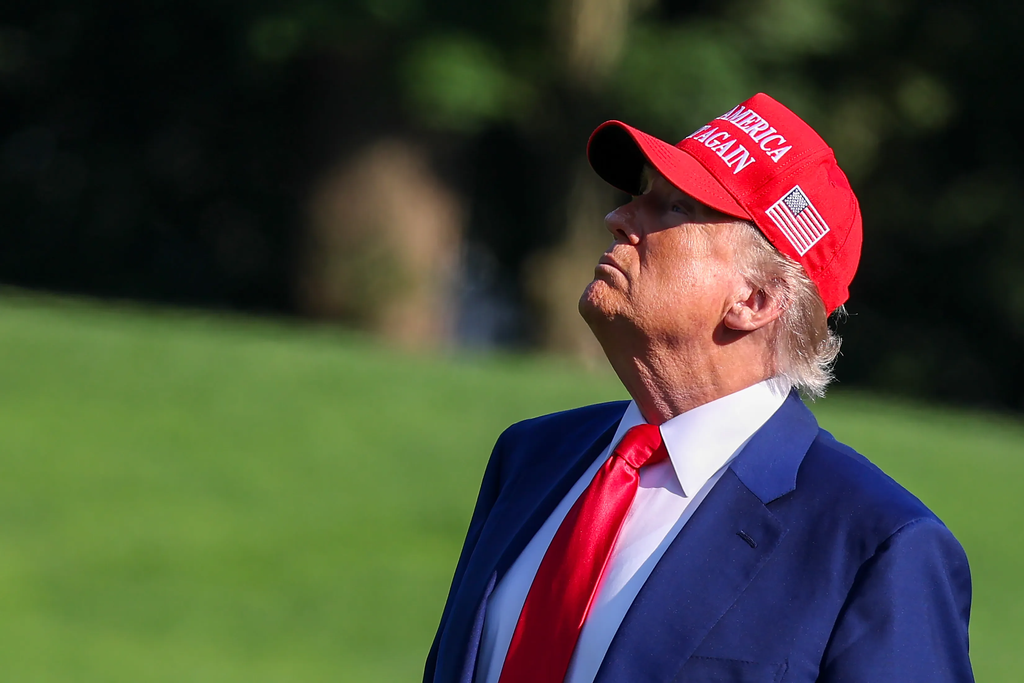
Donald Trump took the stage at the United Nations General Assembly in New York and delivered a shocker that caught world leaders off guard. He announced that the United States government is officially dropping the term “Artificial Intelligence”. From now on, all official federal documents will refer to the technology as “Super Intelligence”.
He told delegates that the word “artificial” makes the tech sound fake or weak. In his view, “Super Intelligence” is far more accurate and reflects the true scale of what is being built.
The announcement was not just about changing letters on paper. It came with a bold refusal to participate in international efforts to regulate AI. Trump declared that America rejects any global rules meant to control the technology, calling them part of a globalist scheme.
Here is a full breakdown of what happened, why the name change matters, and how it could reshape the global tech industry.
What Happened at the UN General Assembly?
Speaking at the 81st UN General Assembly, Trump used his address to redefine how the United States approaches advanced software. He argued that the phrase “artificial intelligence” undersells what computers can do today.
The $0 Secret To Launching Your Entire Online Empire
Why pay hundreds every month for separate software? Build funnels, send emails, and make sales with Systeme.io completely free.
Get Started For $0Free Forever • No Credit Card Needed • Beginner-Friendly
He stated that the US government will lead by example by updating its vocabulary across all agency documents. He expressed hope that the rest of the world would drop the old phrase and adopt the new name as well.
Beyond the name change, the speech sent a clear signal to international regulators. Trump made it clear that the US views AI development as a high-stakes competition—specifically against China. He insisted that the nation that wins the super intelligence race will dominate the future economy.
Because of that competition, the US administration believes that putting strict limits on domestic companies would be a massive mistake.
Why Trump Wants to Ditch the Word “Artificial”
Words carry power, especially in politics and business. Trump argued that calling technology “artificial” gives people the wrong impression. In everyday English, “artificial” often means fake, cheap, or imitation—like artificial butter or artificial flowers.
Trump suggested that software that processes massive amounts of data, writes code, and automates entire industries is anything but fake. He believes the word “Super” conveys strength, capability, and dominance.
This rebrand fits a broader pattern of Trump using language to shape public perception. In the past, his administration pushed to rename geographical features and administrative programs to match specific nationalistic or political goals.
By rebranding AI as Super Intelligence, the administration is attempting to change how everyday citizens, investors, and foreign powers view American technology.
Tech Definitions vs. Political Rebranding
Inside Silicon Valley and academic research labs, “Superintelligence”—often abbreviated as ASI (Artificial Superintelligence)—has a very specific meaning. It refers to a theoretical future machine that surpasses human brainpower across every single domain, including creative thinking, emotional awareness, and scientific reasoning.
Most computer scientists agree that today’s tools are not true superintelligence. Current systems are powerful pattern recognition engines. They can generate text, create realistic art, and automate business processes, but they still make simple mistakes, hallucinate facts, and lack genuine comprehension.
Trump’s rebrand collapses that technical distinction. By applying the term to all existing software, the government is treating current tools as if they have already achieved super-human status.
If you follow our coverage in the technology and AI section, you know that tech terminology evolves quickly. However, jumping straight to calling everyday software “super intelligence” creates an interesting divide between how politicians talk about tools and how software engineers build them.
Rejection of Global Oversight and Rules
The most consequential part of Trump’s speech was his firm stance against international AI safety frameworks. Over the last few years, international groups like the United Nations and European Union have tried to set up global rules. They want to address risks like deepfakes, autonomous weaponry, privacy violations, and job displacement.
Trump rejected those efforts completely. He told the delegates that the United States will not sign onto any international agreement that limits how American companies build or deploy technology.
He compared warnings about technological risks to climate change warnings, dismissing fears that machines will turn against humanity. He reassured the audience that standard law enforcement, such as the Department of Justice, can handle actual crimes committed using computers without needing new restrictive global laws.
This means American tech companies will likely operate under far fewer federal restrictions compared to their competitors in Europe and other heavily regulated markets.
Send, Spend & Hold Money Worldwide Without Hidden Fees
Transfer money internationally at the real exchange rate and hold 40+ currencies in one account.
Open a Wise AccountMid-market rate • Fast transfers • 40+ currencies
What This Means for Silicon Valley and Content Creators
For tech executives, investors, and digital entrepreneurs, this political shift carries big implications.
First, it signals a massive green light for rapid development. Without fear of federal slowdowns or international restrictions, American tech firms will double down on building larger models, opening massive data centers, and pushing software into every sector of the economy.
Second, it will influence how companies market their products. We may soon see software platforms, marketing tools, and automation systems drop the “AI” label in favor of “Super Intelligence” or “SI” to align with official government language and market hype.
For digital creators and online workers, fast-moving software development opens up major opportunities. In fields like YouTube automation, automated video editing, script creation, and thumbnail generation are already transforming how media is produced. As research accelerates without regulatory hurdles, these tools will become even faster and more accessible for solo creators.
The Reaction from International Leaders and Experts
The response to Trump’s UN announcement was swift across global political and tech circles.
European officials expressed concern that the US is walking away from shared safety guardrails. The European Union has already passed strict regulatory frameworks designed to force tech companies to disclose training data and limit high-risk applications. With the US taking the opposite path, global tech standards are splitting in two.
AI safety researchers also voiced frustration. Many researchers believe that calling every basic algorithm “super intelligence” makes it harder to have serious conversations about real risks. They argue that hype masks practical problems like algorithmic bias, data privacy, and intellectual property theft.
On the other side, free-market advocates and venture capitalists praised the speech. They believe that excessive regulation slows down innovation and gives competing nations an unfair advantage. From their perspective, letting American companies run fast is the only way to maintain tech leadership.
How Executive Orders and Government Language Work
Can a President simply decide to change a word across government agencies? The short answer is yes—within the executive branch.
When a President issues an executive direction or changes administrative guidelines, federal departments like the Department of Defense, Department of Commerce, and Department of Energy must update their official reports, procurement docs, and public communications.
The $0 Secret To Launching Your Entire Online Empire
Why pay hundreds every month for separate software? Build funnels, send emails, and make sales with Systeme.io completely free.
Get Started For $0Free Forever • No Credit Card Needed • Beginner-Friendly
However, this does not legally bind private citizens, news organizations, or private companies to change how they speak. News outlets, academic journals, and software firms can continue using “Artificial Intelligence” if they prefer.
Even so, history shows that when the US government changes its official terminology, government contractors, corporate lobbyists, and tech vendors usually follow suit to win federal contracts and stay aligned with official policy.
The Broader Impact on the Global Economy
The announcement highlights a growing trend: technology is no longer just about software—it is central to geopolitics.
By framing super intelligence as a win-or-lose race against global rivals, the US administration is treating tech development as a matter of national security. That means we can expect:
- Increased Government Spending: More federal funds pouring into data center infrastructure, domestic microchip manufacturing, and energy projects.
- Streamlined Licensing: Faster approvals for high-tech expansion and energy infrastructure needed to power massive server farms.
- Trade Friction: Potential trade disputes with allies in Europe who try to enforce tech regulations on American firms operating abroad.
- Faster Tool Rollouts: Consumers will see quicker releases of automated tools across finance, healthcare, media, and customer service.
Frequently Asked Questions
Is AI officially renamed everywhere now?
No. The name change applies directly to official United States government documents and executive branch communications. Private businesses, foreign governments, and everyday people can still use the term Artificial Intelligence.
Does current software actually count as real superintelligence?
According to most computer scientists, no. In the tech world, superintelligence refers to a theoretical system that outperforms humans at everything. Today’s systems are advanced, but they still operate on statistical patterns rather than true human-level awareness.
Why did Donald Trump announce this at the United Nations?
Trump used the UN General Assembly to make a major statement on foreign policy. He wanted to send a message to international leaders that the US will not accept global regulations or international oversight on its technology sector.
Will tech companies like Google, OpenAI, and Meta adopt the new term?
Some companies may adopt the phrase “Super Intelligence” or “SI” in their pitch decks and federal proposals to stay aligned with government funding and policies. However, many tech firms will likely continue using AI in consumer marketing.
What does this mean for safety and regulations?
It means the US government plans to encourage rapid growth rather than imposing preemptive restrictions. Existing criminal laws will be enforced by federal agencies like the Department of Justice, but new regulatory hurdles will be minimized.
Trump’s UN address marks a significant shift in how the US government talks about and manages modern technology. By dropping “artificial” in favor of “super intelligence,” the administration is doubling down on national dominance, rapid expansion, and freedom from global rules.
Whether the rest of the world follows this naming trend remains to be seen, but one thing is clear: the global competition over advanced technology is moving faster than ever.
To stay updated on viral news, tech breakdowns, and global events, check out our about page to learn more about what we do. Have thoughts or questions on this rebrand? Reach out directly through our contact page.
You can also follow the conversation on our social channels on Instagram, Facebook, and X (formerly Twitter).
