
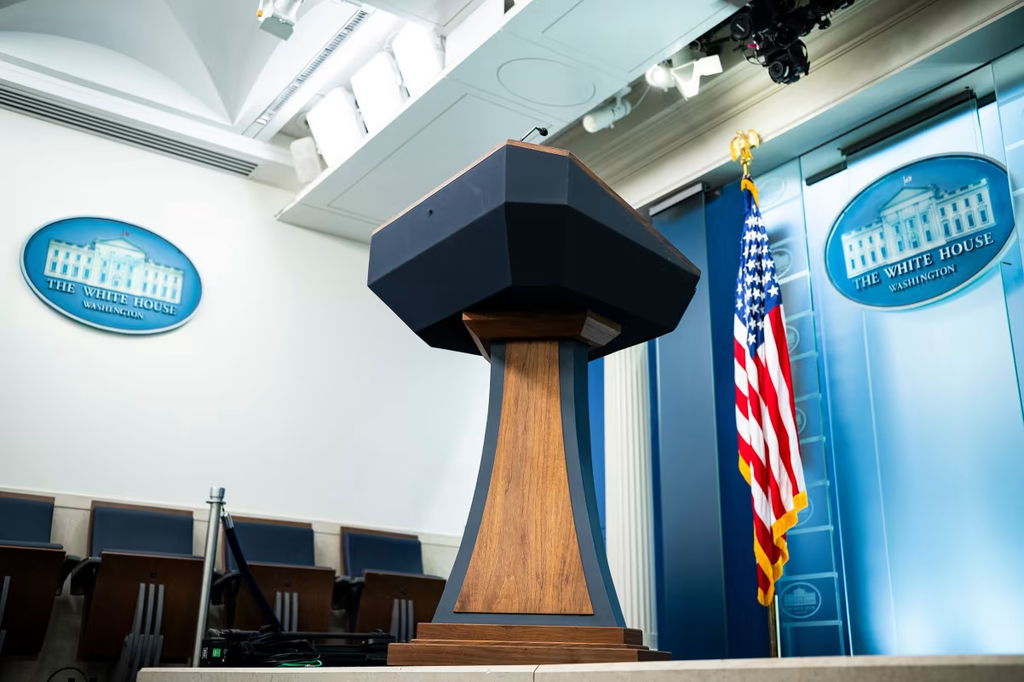
A federal judge issued a court order demanding that the Trump administration immediately give back White House press passes to journalists from CNN, MS NOW, and Politico. US District Judge Timothy Kelly ruled that the administration’s sudden decision to kick these major news outlets off White House grounds was very likely unconstitutional.
This emergency court decision came just days after the White House blocked reporters from these three news organizations. The unexpected ban triggered an urgent legal battle over press freedom and constitutional rights in Washington.
The judge made it clear that government officials cannot strip away press credentials without following proper rules. By stepping in so quickly, the court stopped the administration from enforcing the ban while the broader legal challenge continues.
The ruling sends a strong message about how the US government must treat the press. It establishes that even the highest office in the country must respect established legal procedures before revoking a journalist’s credentials.
The Big Announcement: What Triggered the White House Ban?
The trouble started when President Donald Trump announced that journalists from CNN, MS NOW, and Politico would no longer be allowed on White House premises. The decision came directly from the administration on September 18.
The $0 Secret To Launching Your Entire Online Empire
Why pay hundreds every month for separate software? Build funnels, send emails, and make sales with Systeme.io completely free.
Get Started For $0Free Forever • No Credit Card Needed • Beginner-Friendly
The president publicly criticized the three news outlets on social media. He claimed they should not be allowed to report what he described as fake stories and lies. Shortly after these statements, White House security stopped granting entry to reporters and producers working for those specific organizations.
In court, lawyers representing the Justice Department tried to justify the decision. They argued that the president and his team have the authority to decide who enters White House grounds. They also brought up national security reasons to support keeping the banned outlets out.
However, news organizations saw things differently. They argued that the ban was not about security at all. Instead, they stated it was a clear punishment for critical news coverage. The sudden loss of access meant reporters could no longer attend press briefings, cover live announcements, or travel with official presidential press pools.
This action created an immediate roadblock for full news coverage. When major news outlets are barred from presidential briefings, the public loses direct reporting on government decisions. The abrupt ban left newsrooms scrambling for answers and forced an emergency legal response.
Why CNN, MS NOW, and Politico Took the White House to Court
Faced with an abrupt lock-out, CNN, MS NOW, and Politico joined forces to file a joint lawsuit in a Washington, D.C., federal court. They asked the court for an emergency order to restore their credentials right away.
The media companies built their case around two main constitutional protections:
- First Amendment Protections: The lawsuit stated that banning specific outlets because the administration dislikes their reporting violates free speech and freedom of the press. Government officials cannot pick and choose news organizations based on whether their coverage is positive or negative.
- Fifth Amendment Protections: The outlets argued that the administration violated due process rights. Under US law, stripping someone of an official privilege like a White House hard pass requires fair notice and an opportunity to appeal before the decision takes effect.
Lawyers for the news outlets pointed to established legal history. Past court decisions have consistently held that once the government opens a venue like the White House press room to reporters, it cannot arbitrarily kick individual journalists out without a clear, fair reason and a chance to respond.
报道 highlighting the case, such as detailed reports from The Guardian and analysis from Forbes, showed how quickly the legal community rallied around these arguments. The media outlets argued that allowing the ban to stand even for a few weeks would cause permanent harm to independent journalism.
Without access, reporters cannot ask direct questions to public officials. They cannot check facts in real-time during live briefings. That lack of access harms not just the news companies, but every citizen who relies on those outlets for daily news updates.
Inside the Courtroom: How Judge Timothy Kelly Reached His Decision
The case was assigned to US District Judge Timothy Kelly. Judge Kelly was originally appointed to the federal bench by Donald Trump during his first presidential term. Despite his appointment by the administration, Judge Kelly delivered a decisive ruling against the White House ban.
During court proceedings, Judge Kelly closely examined past legal rulings regarding press passes. He noted that established legal principles require a clear, structured process before a reporter’s White House hard pass can be suspended or cancelled.
Judge Kelly explained that journalists are legally entitled to standard safeguards:
- Advance Notice: The government must inform a news outlet or reporter in advance if there is an issue or infraction.
- Detailed Reasons: The administration must provide specific, factual reasons for taking away entry credentials.
- Fair Opportunity to Respond: The affected journalists must be given a chance to present their defense before any final ban is put in place.
In this instance, the Trump administration did not follow any of those procedural steps. Journalists simply arrived at work or received word that their entry passes were no longer valid.
Because the proper steps were skipped, Judge Kelly concluded that the ban was likely unconstitutional. He granted a temporary restraining order. This type of order requires the government to instantly undo the ban while the broader constitutional lawsuit proceeds through the court system.
How the Public and Media World Are Reacting
The judge’s ruling sparked immediate reactions across the political and media spectrum. Press freedom advocacy groups cheered the decision, calling it an essential victory for accountability and democracy.
Send, Spend & Hold Money Worldwide Without Hidden Fees
Transfer money internationally at the real exchange rate and hold 40+ currencies in one account.
Open a Wise AccountMid-market rate • Fast transfers • 40+ currencies
Journalism associations noted that allowing political leaders to ban reporters sets a dangerous example. If one presidential administration can ban reporters for critical coverage, future administrations could do the exact same thing to different outlets.
Public discussions erupted instantly across social channels. You can see people sharing their views on platforms like Facebook, following updates on X, and checking out visual breakdowns on Instagram. Opinions remain divided:
- Press Freedom Supporters: Many emphasize that an independent press must be allowed to question public officials without fear of retaliation or losing access.
- Administration Supporters: Others argue that the White House should have full authority over who gets private access to presidential offices and events.
Despite political disagreements, legal scholars broadly agree that Judge Kelly’s order aligns with decades of US media law. The ruling reinforces the principle that press access to government spaces cannot be handed out or taken away based on personal preference.
The Bigger Picture: Media, Free Speech, and Modern News Reporting
This legal showdown highlights how much news gathering and media distribution have evolved. Today, news travels fast across digital platforms, streaming networks, and automated content feeds.
When official access is blocked, it affects the entire digital media ecosystem. Many online platforms rely on primary reporting from press briefings to create original analysis, video breakdowns, and educational updates.
For example, digital creators who utilize strategies found in YouTube automation trends rely heavily on primary news sources to fuel their channels. When major outlets lose access, the flow of verified information slows down for thousands of smaller digital creators who depend on official news reporting.
At the same time, developments in technology and AI publishing are changing how fast breaking news spreads to global audiences. Fast digital publishing makes real-time White House access even more critical than it was decades ago. When news happens, millions of readers expect instant, accurate updates straight from official press rooms.
Ensuring that journalists from diverse outlets remain in the briefing room helps keep news coverage balanced and honest. It prevents any single narrative from dominating the public conversation without verification.
What Happens Next for the White House Press Corps?
With the judge’s order now active, reporters from CNN, MS NOW, and Politico are returning to their regular duties at the White House. They can once again attend daily press briefings, ask questions during presidential appearances, and participate in pool coverage.
However, the legal story is not entirely over. Here is what could happen in the coming weeks:
The $0 Secret To Launching Your Entire Online Empire
Why pay hundreds every month for separate software? Build funnels, send emails, and make sales with Systeme.io completely free.
Get Started For $0Free Forever • No Credit Card Needed • Beginner-Friendly
- Government Appeal: The Justice Department may choose to appeal Judge Kelly’s temporary restraining order to a higher federal court.
- Full Trial: The federal court will eventually hold full hearings to decide whether a permanent injunction should be issued against such media bans.
- Updated Rules: The White House press office might publish formal, written rules regarding press conduct to establish clear procedures for future credential decisions.
For now, the temporary order keeps the White House doors open to journalists from all three outlets. It serves as a reminder that constitutional protections remain a strong check on executive power.
Frequently Asked Questions (FAQs)
Why were CNN, MS NOW, and Politico banned from the White House?
The administration banned them after President Donald Trump accused the outlets of publishing false reports and fake news. Government lawyers also cited national security authority regarding access to White House grounds.
Which judge ordered the White House to bring back the journalists?
US District Judge Timothy Kelly issued the order. He was appointed to the federal court by Donald Trump during his first term as president.
What constitutional rights were mentioned in the lawsuit?
The lawsuit focused on First Amendment rights regarding freedom of the press and Fifth Amendment rights regarding due process and fair procedure before losing access privileges.
Can the White House appeal this court decision?
Yes, the Justice Department can appeal Judge Kelly’s order to a higher federal appeals court. However, until a higher court changes the decision, the order to restore access remains in full effect.
What is a White House hard pass?
A White House hard pass is an official security credential issued to regular reporters. It allows journalists to quickly enter the White House complex every day to attend briefings and cover official news events.
This ruling marks a pivotal moment for political journalism, press freedom, and constitutional law in the United States. Restoring access ensures that journalists from different perspectives can continue asking tough questions on behalf of the public.
To discover more about our publication and values, visit our About page. If you have questions, feedback, or story tips to share, feel free to reach us directly on our Contact page. Stay connected with our latest updates by following us on X, joining our community on Facebook, and engaging with our visual content on Instagram.
