
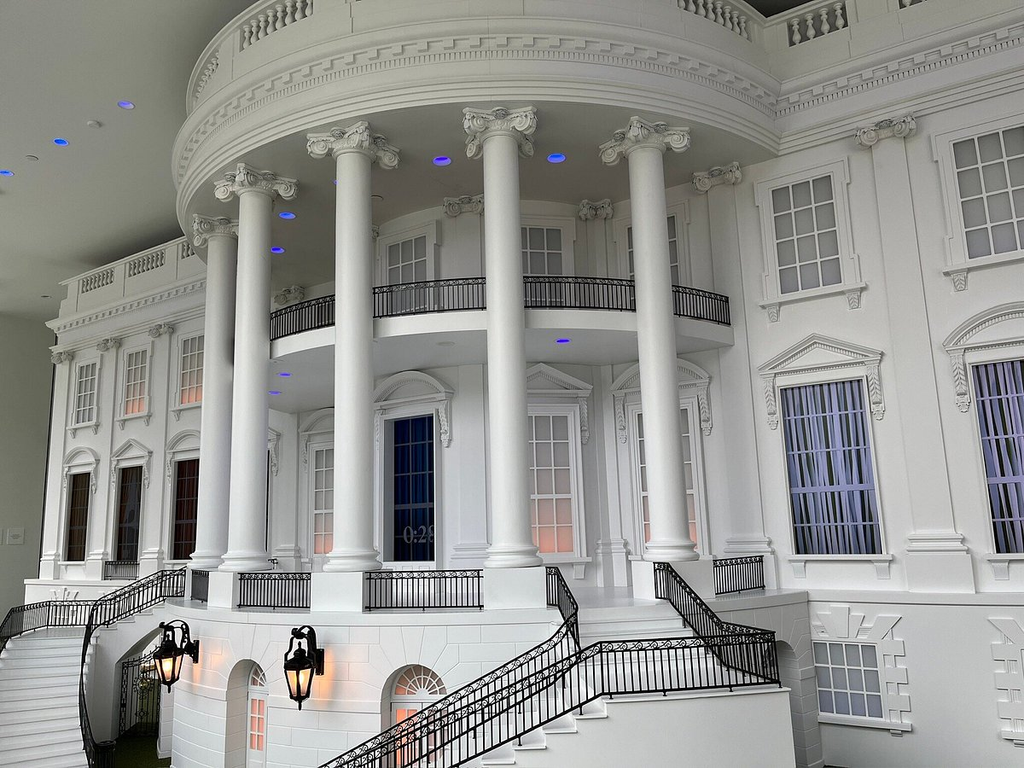
The United States Supreme Court has cleared the way for construction to continue on a massive $400 million White House ballroom project. In a 5-4 ruling, the high court overturned a lower court order that had temporarily paused above-ground building work. As reported by news outlets including Al Jazeera, this decision marks a major legal victory for President Donald Trump as his administration pushes forward with dramatic changes to the historic White House complex.
The legal battle over the project has drawn intense national attention. Opponents argue that the massive building changes the historic look of the nation’s most famous residence without proper approval from Congress. However, the Supreme Court’s majority ruled that the primary group suing to stop the project lacks the legal standing required to bring the case forward. With this green light from the nation’s highest court, construction crews are working around the clock to keep the project on schedule.
Understanding the $400 Million White House Ballroom Project
The controversial project involves building a huge new facility on the White House grounds. Construction crews have already demolished the traditional East Wing to make room for a modern 90,000-square-foot structure. The primary feature above ground is an ornate ballroom designed to host large official events, state dinners, and major presidential gatherings.
For decades, presidents hosted large gatherings in temporary tents set up on the South Lawn. The administration argues that erecting temporary structures for every major state visit is expensive, inefficient, and presents security challenges. A permanent ballroom allows the White House to host thousands of guests indoors under top-tier security conditions.
Beyond the luxurious ballroom visible above ground, the project includes extensive underground work. Deep beneath the surface, workers are building updated military command spaces, advanced medical facilities, and enhanced security operations units. According to court filings, these underground facilities are meant to modernize the White House’s defense infrastructure for future decades.
The $0 Secret To Launching Your Entire Online Empire
Why pay hundreds every month for separate software? Build funnels, send emails, and make sales with Systeme.io completely free.
Get Started For $0Free Forever • No Credit Card Needed • Beginner-Friendly
Crews have been working up to 20 hours a day to complete the foundation and heavy framing. Official construction plans indicate that workers aim to complete the structural steel framework within months, aiming for full project completion by mid-2028.
Inside the Supreme Court’s 5-4 Decision
The Supreme Court ruling was far from unanimous. The justices split 5-4 on the decision to let construction proceed while lower court litigation continues. The five conservative justices formed the majority opinion, while Chief Justice John Roberts joined the court’s three liberal justices in dissent.
The majority opinion focused heavily on procedure rather than deciding whether the building itself is completely legal. In an unsigned opinion, the five justices stated that the government is very likely to win the overall legal battle because the group suing does not have legal standing to stop the work.
Legal standing is a fundamental legal rule in American law. To sue the government or another party in federal court, a plaintiff must prove they suffered a direct, concrete injury. The majority ruled that simply being upset about changes to a public or historic building does not automatically give a private organization the right to freeze federal construction.
Furthermore, the majority agreed with government lawyers that stopping construction would cause irreparable harm to national security operations. Because the underground military complex is integrated into the above-ground build, pausing the upper structure while continuing the lower structure was deemed impractical and risky.
The Legal Standing Debate Explained Simply
To better understand why the Supreme Court ruled this way, it helps to look closely at legal standing. The lawsuit was originally brought by the National Trust for Historic Preservation, a well-known preservation organization. The group argued that destroying the historic East Wing and replacing it with a massive modern ballroom damages the historical integrity of President’s Park.
The Trust pointed to its members, including architectural historians who regularly visit the area, arguing that their personal enjoyment of the capital’s historic aesthetics was directly harmed.
However, the five Supreme Court justices rejected that reasoning. They noted that federal courts have never recognized aesthetic disappointment as a sufficient legal injury to halt major executive construction projects. Without legal standing, the lawsuit cannot legally block the bulldozers, even if the case remains open in lower courts.
The National Security Argument from the Government
Throughout the legal battle, government lawyers repeatedly emphasized the critical nature of the underground facilities. The Solicitor General argued that delaying the project placed national security at risk by leaving vital command centers unfinished.
Initial public announcements about the ballroom emphasized celebration spaces and private funding. But inside the courtroom, the legal defense shifted heavily to defense and intelligence capabilities.
Government filings made clear that the ballroom and the underground military complex are structurally linked. Construction experts advised the court that building the underground command center while leaving the above-ground site open would expose sensitive infrastructure to weather and security risks. This argument played a central role in convincing the high court majority to issue an emergency stay.
Constitutional Questions: Power of the Purse vs. Executive Authority
While the majority focused on standing, the dissenting justices raised deep constitutional concerns about executive power. Chief Justice John Roberts wrote a powerful dissenting opinion, joined by Justices Sonia Sotomayor, Elena Kagan, and Ketanji Brown Jackson.
In his dissent, Roberts argued that the president cannot unilaterally build major new structures on federal land without explicit permission and funding approval from Congress. Under the United States Constitution, Congress holds the power of the purse, meaning it controls federal spending and government property regulations.
Roberts noted that President’s Park is federal public land governed by laws passed by lawmakers. He cautioned that allowing the executive branch to bypass congressional authorization sets a dangerous precedent for future administrations.
The dissent pointed out that allowing construction to continue practically guarantees the building will be finished before courts ever reach a final decision on whether the president had the legal authority to build it in the first place. By the time lower courts finish hearing arguments, the new structure will already be standing.
Send, Spend & Hold Money Worldwide Without Hidden Fees
Transfer money internationally at the real exchange rate and hold 40+ currencies in one account.
Open a Wise AccountMid-market rate • Fast transfers • 40+ currencies
The History of White House Changes and Renovations
Major changes to the White House are not entirely new, though they rarely happen without debate. The executive mansion has undergone several massive updates since it was first built in the late eighteenth century.
The original East Wing was built during World War II under President Franklin D. Roosevelt to cover an underground emergency shelter. Over the decades, it housed offices for the First Lady and her staff, as well as a small movie theater.
President Harry Truman completely gutted and rebuilt the interior of the White House between 1948 and 1952 after structural engineers found the residence was in danger of collapsing. Truman also added the famous Truman Balcony on the South Portico, which created significant public debate at the time.
However, the current $400 million ballroom project represents one of the largest physical expansions in White House history. Removing a historic wing of the main building and adding a 90,000-square-foot ballroom fundamentally changes the architectural footprint of the executive mansion.
Timeline of the White House Ballroom Lawsuit
To trace how this legal battle reached the Supreme Court, it helps to look at the timeline of events over recent months:
- Early 2026: Demolition crews begin clearing the East Wing after the administration announces plans for a 90,000-square-foot ballroom and underground facility.
- Spring 2026: The National Trust for Historic Preservation files a federal lawsuit, claiming the administration violated federal preservation laws and bypassed congressional authorization.
- Early August 2026: A federal appeals court issues an injunction temporarily halting above-ground construction work on the project.
- Mid-August 2026: Chief Justice John Roberts issues a temporary stay allowing work to continue while the full Supreme Court considers the government’s emergency appeal.
- August 31, 2026: The Supreme Court issues a 5-4 ruling granting the administration’s request to keep construction moving forward while litigation proceeds.
With the Supreme Court’s ruling now in place, construction teams are pushing ahead at full speed. Heavy machinery and work crews remain active on the White House grounds day and night.
Modern Construction Technology and Engineering Innovation
Building a massive, multi-level facility in the heart of Washington D.C. requires advanced engineering and specialized construction management tools. Modern building projects of this scale rely heavily on advanced tech to manage complex schedules, secure supply chains, and ensure precise architectural alignment.
From building information modeling to automated structural monitoring, engineers use cutting-edge systems to manage heavy construction around sensitive historic grounds. You can explore more insights on how high-tech tools are reshaping modern industries by visiting our technology and AI section.
Furthermore, digital media coverage and independent reporting play a massive role in how major news stories unfold across the web. Content creators, digital publishers, and media analysts closely track developments like this to keep the public informed through modern digital platforms. If you are interested in how digital content platforms operate behind the scenes, check out our guide on YouTube automation.
What Happens Next in the Legal Battle?
Even though the Supreme Court allowed construction to proceed, the legal lawsuit itself is not completely dead. The case now returns to lower federal courts for further arguments on the merits of the lawsuit.
The $0 Secret To Launching Your Entire Online Empire
Why pay hundreds every month for separate software? Build funnels, send emails, and make sales with Systeme.io completely free.
Get Started For $0Free Forever • No Credit Card Needed • Beginner-Friendly
However, legal experts widely agree that the Supreme Court’s decision makes it extremely difficult for opponents to stop the project. With crews working 20 hours a day, much of the structural framework will be completed before lower courts reach a final verdict.
If lower courts eventually rule that the project violated federal law, it remains unclear what remedies would exist. It is highly unlikely that any court would order a newly built $400 million federal structure to be torn down once completed.
Public interest in the project remains extremely high. Supporters view the new ballroom as a long-overdue upgrade that brings the White House into line with modern security and state dinner needs. Critics continue to express concern over executive power and the preservation of historic government sites.
Frequently Asked Questions (FAQs)
What did the Supreme Court decide regarding the White House ballroom?
The Supreme Court ruled 5-4 to allow construction on the $400 million White House ballroom project to continue while lower court legal challenges play out. The court held that the group suing likely lacks the legal standing to halt the project.
Why is the White House ballroom project so expensive?
The project costs approximately $400 million because it involves far more than just a ballroom. It includes demolishing the old East Wing, building a 90,000-square-foot facility, and constructing deep underground military command centers, medical facilities, and secure operational space.
Who filed the lawsuit against the White House construction?
The lawsuit was filed by the National Trust for Historic Preservation. The group argued that the executive branch demolished historic structures and began major construction without receiving proper authorization or spending approval from Congress.
What was Chief Justice John Roberts’ stance on the ruling?
Chief Justice John Roberts dissented from the majority, joining the court’s three liberal justices. Roberts argued that continuing construction without congressional authorization undermines the constitutional separation of powers and Congress’ control over federal property.
When is the new White House ballroom expected to be completed?
Construction crews are working up to 20 hours a day on the project. According to court filings, basic structural framing is expected within months, with full project completion targeted for the summer of 2028.
Staying Connected with Major Developments
The ruling on the White House ballroom project highlights the constant balance between historical preservation, executive authority, and national security needs. As construction moves forward in Washington, legal scholars and citizens alike will keep watching how lower courts handle the remaining legal arguments.
To learn more about our publication and our mission to cover key world events, visit our about page. If you have feedback, questions, or news tips to share with our editorial team, please reach out through our contact page.
You can also follow along and join the conversation on social media. Connect with us on Instagram, join our community on Facebook, and follow our real-time updates on X (formerly Twitter).
