
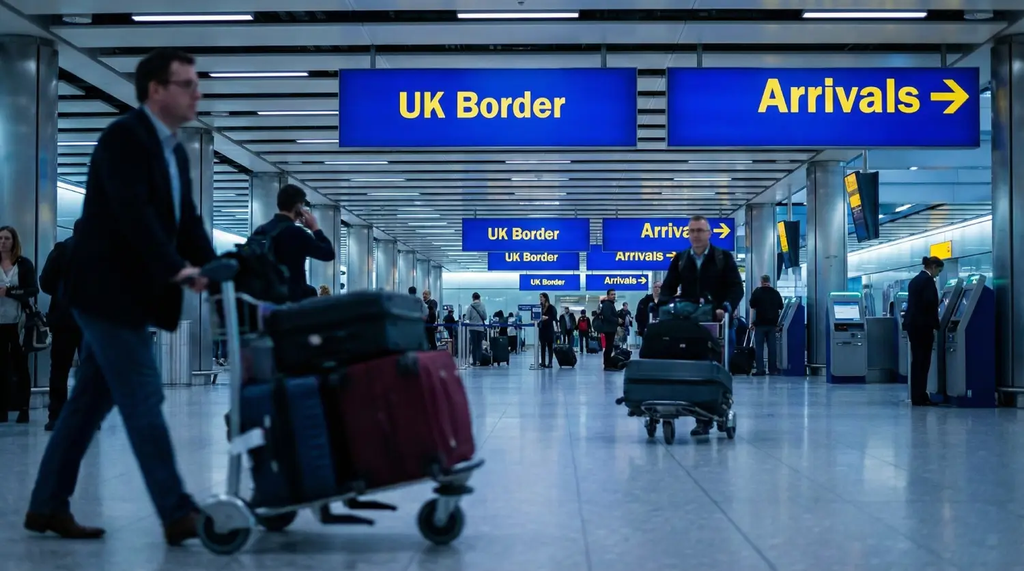
Thousands of travelers across the United Kingdom found themselves stranded in crowded airport terminals or stuck on stationary planes after a major technical failure hit the national air traffic control system. The software glitch knocked out the automated flight processing system used by National Air Traffic Services (NATS), forcing controllers to manually handle flight data and slow down air traffic to a trickle.
The outage resulted in hundreds of flight cancellations and extensive delays across every major UK hub. London Heathrow, Gatwick, Stansted, Manchester, Birmingham, and Edinburgh all reported severe operational backlogs as planes lined up on taxiways waiting for clearance. Although NATS engineers managed to implement a system fix later in the day, aviation experts warn that the knock-on effects will take several days to clear completely.
If you are planning to travel through a British airport over the coming days, here is a complete breakdown of what caused this massive disruption, which airlines and airports are most affected, what your legal rights are, and how you can manage your travel plans during the mess.
What Caused the Major UK Air Traffic Control Disruption?
The chaos started when an issue developed inside the flight processing system operated by National Air Traffic Services (NATS). NATS is the primary air navigation service provider in the UK, responsible for managing the safe movement of aircraft through British airspace and at major airports.
Under normal operations, the NATS system automatically receives, processes, and distributes flight plans submitted by airlines around the world. These flight plans include critical information like flight paths, fuel levels, aircraft types, and planned speeds. When the system functions smoothly, controllers can monitor thousands of flights moving through the sky simultaneously without manually entering flight details.
Build Funnels, Email Lists & Sell Online With One Free Tool
Create funnels, send emails, and sell online using Systeme.io without paying for multiple tools.
Create Free AccountFree forever • No credit card • Beginner-friendly
When the flight processing system failed, it stopped processing incoming flight data automatically. To maintain absolute safety in the sky, air traffic controllers had to switch to manual input methods. Processing flight plans manually takes significantly more time, which meant controllers had to limit the total number of aircraft entering and leaving British airspace.
Even though NATS announced later in the afternoon that engineers identified the issue and applied a software fix, the damage to airline schedules had already been done. When an air traffic network slows down for even a couple of hours, the resulting backlog builds up rapidly across airports worldwide.
Which Airports and Airlines Are Most Affected?
The impact of the technical outage spread across the entire country, hitting Britain’s busiest travel hubs. Because London airspace is among the most congested in the world, airports in the capital felt the sharpest blow.
At London Heathrow, the UK’s largest airport, around 100 flights were cancelled outright, and more than 360 flights suffered severe delays. Ground crews at Heathrow also had to deal with an earlier, unrelated runway issue caused by a bird strike, which added to the mounting frustration before the full air traffic failure struck.
At London Gatwick, more than 30 percent of all scheduled flights were delayed, leaving thousands of holidaymakers waiting in packed terminal halls. London Stansted, London Luton, London City, Manchester, Birmingham, Edinburgh, Glasgow, and Aberdeen also reported significant schedule disruptions and delayed departures. The disruption even crossed the Irish Sea, causing secondary delays at Dublin Airport for flights arriving from or heading to the UK.
Airlines operating in the region have been forced to make tough operational choices:
- British Airways pulled its entire short-haul schedule for the remainder of the evening to avoid stranding even more aircraft at the wrong airfields.
- easyJet cancelled nearly 100 flights and warned customers across Europe to prepare for ongoing delays.
- Ryanair, Wizz Air, Lufthansa, and KLM reported widespread delays across their European flight routes as aircraft returning from the UK were held on the ground.
Several inbound international flights heading for London were diverted mid-air to alternative airports across mainland Europe, including Brussels, Amsterdam, Paris, and Düsseldorf. This left planes, flight crews, and passengers hundreds of miles away from their intended destinations.
Why a Technical Outage Takes Days to Resolve
A common question passengers ask during travel disruptions is why flights remain cancelled or delayed long after engineers fix the core technical issue. The answer comes down to the complicated logistics of commercial aviation.
When an air traffic control system goes down, planes cannot take off on time. This creates a immediate domino effect across the entire aviation network:
- Planes in the wrong locations: When flights get diverted to cities like Brussels or Paris, those aircraft are not where they need to be for their next scheduled flights. A plane stuck in Germany cannot pick up passengers waiting in London.
- Crew duty time limits: Aviation law strictly limits the number of consecutive hours pilots and flight attendants can work. Once a crew reaches their maximum legal duty hours while waiting on a taxiway, they cannot fly until they complete mandatory rest periods. Finding replacement crews on short notice is extremely difficult.
- Airport gate congestion: When departing flights cannot take off, they remain parked at terminal gates. Arriving flights that manage to land have nowhere to park, forcing them to wait on active taxiways and clogging up airport ground traffic.
- Night flight curfews: Many major UK airports have strict local noise limits that restrict landings and takeoffs late at night. Delayed evening flights often miss their operational window entirely and must be pushed to the following day.
Because of these compounding factors, airline schedules will remain disrupted for several days as carriers work to reposition planes, rest reset crew members, and clear the backlog of stranded passengers.
A Familiar Problem: Looking at Past System Outages
This latest event adds to growing frustration among airline executives and travel industry representatives regarding the reliability of the UK’s aviation infrastructure. This is not the first time a technical glitch at NATS has grounded hundreds of flights across the nation.
In August 2023, an unusually formatted flight plan submitted by an international airline caused both the primary and backup NATS processing systems to enter a automatic fail-safe mode. That single incident resulted in more than 1,600 flight cancellations, leaving over 700,000 passengers stranded during one of the busiest travel weekends of the summer.
Following an independent inquiry into the 2023 meltdown, the Civil Aviation Authority (CAA) instructed NATS to review its contingency plans and overhaul its flight plan processing infrastructure. Airline bosses estimated that the 2023 outage cost carriers upwards of 100 million pounds in refunds, hotels, and compensation.
A separate radar technical issue in July 2025 also caused multi-hour ground stops at London airports. The repeated nature of these system failures has led airline leaders to voice intense criticism. Chief executives at major budget airlines have openly questioned the leadership and management of NATS, demanding structural reform and assurances that critical travel infrastructure receives necessary technical upgrades.
You can read more about how modern tech systems and software upgrades impact large industries in our coverage on technology and AI.
What Are Your Passenger Rights When Flights Are Cancelled?
When severe flight disruptions happen, knowing your legal rights helps you stay calm and make smart decisions. Under UK air passenger protection laws (commonly known as UK261 regulations, which mirror EU consumer laws), passengers have clear rights when their flights are delayed or cancelled.
The Right to Care and Support
If your flight is delayed by two hours or more (depending on the length of the flight), your airline is legally required to provide you with basic assistance:
- Free food and drink vouchers reasonable to the waiting time.
- Access to phone calls or email facilities.
- Free hotel accommodation if your flight is delayed overnight.
- Free transport between the airport and the hotel.
If the airline staff at the terminal are too overwhelmed to issue hotel vouchers directly, you are allowed to arrange your own reasonable accommodation and transportation, then submit the receipts for reimbursement later. Keep your expenses reasonable—booking a standard three-star hotel room is easy to defend, but booking a luxury penthouse suit will likely be rejected.
Refunds Versus Alternative Travel
If your flight is officially cancelled, the airline must offer you a choice between two options:
- A full refund: You can request a complete refund of your unused ticket, paid within seven days via your original payment method.
- Re-routing to your destination: The airline must rebook you on the earliest available flight to your destination at no extra cost. Importantly, if your original airline has no open seats for days, they must rebook you on a competing airline or alternative mode of transport (such as a train) if that gets you there faster.
Cash Compensation
Under UK rules, airlines must pay standard cash compensation for long delays or cancellations unless the disruption was caused by “extraordinary circumstances” beyond their control.
Air traffic control system failures are generally classified by legal authorities as extraordinary circumstances, meaning airlines themselves are usually exempt from paying flat-rate cash compensation for the delay itself. However, the airline’s duty of care (providing hotels, food, and alternative transportation) remains strictly mandatory regardless of what caused the outage.
Step-by-Step Guide for Stranded Travelers
If you are stuck at an airport right now or scheduled to fly in the coming days, taking proactive steps will save you hours of waiting in line.
1. Check Your Flight Status Before Leaving Home
Do not head to the airport assuming your flight is operating normally. Check your flight number on live flight tracking platforms like Flightradar24 or directly on your airline’s official app. If your flight shows as cancelled or severely delayed, stay home or at your hotel where you are comfortable.
2. Use the Airline App Instead of Waiting in Line
When a flight is cancelled, hundreds of passengers rush to the airport customer service desk. Instead of standing in a line that moves slowly, open your airline’s smartphone app. Most major carriers allow you to select new flights or request refunds directly inside the app with a few taps. You can also call the airline’s phone line while waiting, or try contacting their customer service channels on social media platforms.
3. Keep Every Single Receipt
If you have to buy your own meals, drinks, taxi rides, or hotel room due to an overnight delay, keep every itemized receipt. Digital photos of physical receipts are helpful in case paper slips get lost. You will need these documents when submitting a reimbursement claim through the airline website.
4. Know Your Options for Alternative Travel
If you need to reach your destination urgently and your airline cannot rebook you within a reasonable timeframe, look for alternative transport yourself. Check regional train routes or flights from nearby alternative airports. Keep records of your attempts to contact your original airline so you can prove you gave them a chance to rebook you first.
How Air Traffic Technology Must Evolve
Events like this air traffic shutdown highlight how dependent global travel has become on automated software systems. While automation makes modern flight management faster and safer, software glitches can ground an entire country’s travel system in minutes.
Build Funnels, Email Lists & Sell Online With One Free Tool
Create funnels, send emails, and sell online using Systeme.io without paying for multiple tools.
Create Free AccountFree forever • No credit card • Beginner-friendly
As technology advances, flight management providers are looking at cloud-based backups, improved automated fail-safes, and smarter data validation checks to prevent single corrupted flight plans from disrupting entire server networks. Understanding how digital workflows and modern automation function is essential across many industries today. If you want to see how automation tools are transforming creative and business processes, check out our guide on YouTube automation.
Frequently Asked Questions (FAQs)
Can I get a full refund if my flight is cancelled due to air traffic control issues?
Yes. If your flight is cancelled and you choose not to travel on a rebooked flight, the airline must give you a 100 percent refund of your unused ticket cost within seven days.
Will the airline pay for my hotel if I am stranded overnight?
Yes. Under UK261 rules, airlines must provide free hotel accommodation and transport to and from the hotel if your delayed or rebooked flight requires an overnight stay.
Am I entitled to extra compensation for an air traffic control delay?
Usually no. Air traffic control technical failures are classified as extraordinary circumstances, which excuses airlines from paying flat-rate cash compensation. However, you are still entitled to free food, hotel accommodation, and rebooked travel.
How long will it take for flight schedules to return to normal?
Even after air traffic control software is fixed, schedule recovery typically takes two to three days. Airlines must move diverted planes and rested flight crews back into their correct starting positions.
What should I do if my flight was diverted to another city or country?
The airline is responsible for getting you to your original final destination. They must arrange onward transport, such as a replacement flight, bus, or train, and provide food and lodging while you wait.
Where can I check official updates on UK airspace status?
You can monitor official updates directly through the National Air Traffic Services (NATS) website, the Civil Aviation Authority (CAA), or through your specific airline’s official news updates.
Staying Updated on Travel News
Navigating sudden travel disruptions is exhausting, but knowing your passenger rights and acting quickly gives you the best chance of minimizing delays. As engineers work to clear the air traffic backlog and airlines restore their daily timetables, make sure to verify your flight status with your carrier before heading to the airport.
For more detailed guides, clear explanations on major global news, and practical tips for daily life, feel free to explore our about page. If you have questions, feedback, or news tips, you can reach out directly through our contact team page.
You can also join our growing community online and stay connected with our latest updates across social media:
- Follow us on Instagram
- Connect with us on Facebook
- Stay updated on X (Twitter)
