
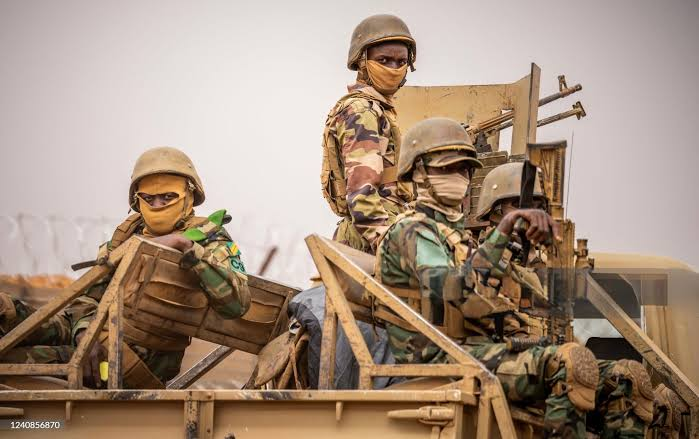
United States military personnel and Nigerian troops have officially joined forces at Operating Location Bauchi for a new round of intensive tactical training.
This operational exercise represents a major step forward in security cooperation between the two countries. Rather than running a standard classroom routine, troops are working together directly in the field to share real-world skills, improve response capabilities, and build mutual trust on the ground.
The training program comes at a crucial time as regional defense forces continue to tackle complex security challenges across West Africa. By bringing together specialized tools and field tactics, both nations aim to make local operations more effective, safer, and better prepared for any operational scenario.
Inside Operating Location Bauchi: What Is Happening on the Ground?
Operating Location Bauchi has quickly turned into a center of action for practical skill-sharing between American and Nigerian soldiers. The overall objective is to build long-term capacity while tackling real operational needs that troops face during daily missions.
Instead of imposing a fixed military curriculum, the program relies on a collaborative approach. American units offer a clear menu of tactical courses, and Nigerian military leaders pick the specific areas that match their immediate field requirements. This customized model guarantees that every hour spent training delivers practical value to the troops who need it most.
The $0 Secret To Launching Your Entire Online Empire
Why pay hundreds every month for separate software? Build funnels, send emails, and make sales with Systeme.io completely free.
Get Started For $0Free Forever • No Credit Card Needed • Beginner-Friendly
– Unmanned Aircraft Systems (UAS) operation and real-time aerial reconnaissance – Tactical Combat Casualty Care (TCCC) and Combat Lifesaver techniques – Explosive Ordnance Disposal (EOD) and bomb safety measures – Small-unit field tactics and tactical movement – Advanced camouflage and target hiding methods – Field water testing, purification, and sanitation procedures – Marksmanship and specialized weapons familiarization
High-Tech Focus: Training on Unmanned Aircraft Systems
One of the most popular parts of the entire Bauchi program involves Unmanned Aircraft Systems (UAS), commonly known as drones. Modern defense relies heavily on aerial technology to spot hazards, map terrain, and track movements without placing soldiers directly in harm’s way.
Sgt. Mark Murphy, an experienced intelligence analyst with the US Army’s 13th Combat Sustainment Support Battalion, led hands-on drone sessions for members of the Nigerian Air Force Special Forces Regiment. The sessions started with roughly forty-five minutes of basic theory before moving directly into live equipment handling.
Nigerian personnel got to launch, steer, and land the unmanned aircraft while learning how to convert raw aerial footage into actionable intelligence. According to instructors on site, the Nigerian special forces team picked up the controls quickly and expressed strong interest in taking advanced flight operations courses down the road.
Combat Medicine: Keeping Troops Alive on the Front Lines
Beyond aerial surveillance, combat lifesaving skills sit at the top of the priority list. When soldiers operate in remote environments, immediate medical care can mean the difference between life and death.
The Tactical Combat Casualty Care (TCCC) module teaches soldiers how to treat severe injuries under direct fire, stop massive bleeding, clear blocked airways, and stabilize wounded teammates before evacuation. This training builds confidence because every soldier knows that their squad mate has the knowledge required to perform emergency care in high-pressure situations.
Why Custom Security Cooperation Is Working in Bauchi
The Bauchi initiative stands out because it avoids generic, one-size-fits-all military exercises. Captain Gabriel Feingold, a logistics officer with the US Army Southern European Task Force, Africa, serves as the operations officer at Operating Location Bauchi. He emphasized that listening to local commanders is the secret to success.
When instructors present options, Nigerian officers select the exact modules that solve their current operational issues. For example, if a specific unit prepares to patrol densely covered terrain, they might choose small-unit tactics combined with advanced camouflage. If they are moving through areas known for unexploded items, they prioritize explosive ordnance disposal.
This dynamic choice model builds mutual respect. American service members bring specific technical capabilities, while Nigerian service members share invaluable knowledge about local geography, terrain, and operational challenges.
Core Modules Selected by Nigerian Forces
- Field Sanitation and Water Security: Ensuring troops have clean drinking water using quick field testing kits and purification tablets. Punch Newspapers
- Small Unit Tactics: Master basic squad movement, cover, fire control, and clearing dangerous points. Punch Newspapers
- Weapons Handling: Practicing proper maintenance, tactical reloads, and safety protocols across multiple firearm types. Punch Newspapers
- Surveillance Analytics: Learning how to process drone video feeds to spot hidden hazards before units enter an area. TVC News
Modern Military Tech and the Changing Landscape of Security
The emphasis on drone technology in Bauchi underscores how quickly modern defense tactics are changing around the world. Modern operations no longer depend solely on heavy gear; smart devices, accurate data collection, and rapid communications drive success on the battlefield.
Using small unmanned aircraft allows ground commanders to inspect risky paths, verify perimeter safety, and guide search missions with clarity. This move toward high-tech problem solving mirrors broader global shifts, where digital tools and smart systems transform how organizations solve complex problems. Those interested in how modern automation and digital tools reshape industries can explore our latest breakdowns on technology and AI updates.
By mastering drone mechanics and flight controls, Nigerian soldiers gain tools that reduce human risk and increase mission accuracy. As technology becomes simpler to operate, integrating intelligent systems into field routines ensures that security personnel remain one step ahead.
Life Off the Drill Field: Building Strong Bonds Between Troops
Military partnerships are about more than just equipment and tactical drills; human connection forms the real foundation of long-term cooperation. At Operating Location Bauchi, American and Nigerian forces spend time together outside of formal instruction hours.
Whenever weather conditions and duty schedules permit, service members head to the sports courts for friendly matches of basketball and volleyball. These casual games break down language and cultural barriers quickly. Playing together allows junior officers and lower-ranking soldiers to build genuine friendships based on teamwork and fair play.
Captain Feingold pointed out that these informal activities build trust that directly improves military communication. When soldiers trust each other off the field, they communicate faster, share feedback more openly, and solve problems together with far greater confidence during mission exercises.
Send, Spend & Hold Money Worldwide Without Hidden Fees
Transfer money internationally at the real exchange rate and hold 40+ currencies in one account.
Open a Wise AccountMid-market rate • Fast transfers • 40+ currencies
Strategic Importance: US Africa Command and Regional Stability
The Bauchi exercise forms part of a larger ongoing strategy by the United States Africa Command (AFRICOM) to promote stability and counter violent organizations across West Africa.
Earlier updates from defense officials noted that while major task groups adjusted their foot positions in West Africa, core security partnerships focused on intelligence sharing, tactical training, and operational support remain active. The current efforts in Bauchi highlight this ongoing commitment.
– Strengthening bilateral relations between the US and Nigerian defense leadership – Elevating local military autonomy through high-quality training of local instructors – Boosting intelligence sharing to quickly identify regional threats – Developing reliable emergency response routines across combined command units
As operational demands grow, finding efficient ways to automate routine processes and manage resources becomes critical for any large organization. Readers interested in learning how workflow optimization and automated operational systems work in non-military settings can check out our section on YouTube automation and system management.
The Road Ahead: Future Training and Expansion in Bauchi
Both US and Nigerian military authorities confirm that the current exercise in Bauchi is only one step in a wider planned roadmap. Teams are already busy designing follow-up courses that build on the baseline skills established during this round.
Plans are underway to expand drone instruction to include night operations, advanced terrain mapping, and multi-drone coordination. Medical instructors also plan to run scenarios simulating complex mass-casualty events to keep field medics sharp.
By continually reviewing operational outcome data, military planners can adjust each training block to match emerging security challenges. This practical, adaptive model creates lasting benefits for security forces and the communities they protect.
Frequently Asked Questions (FAQs)
Where is the current US-Nigeria joint military training taking place?
The training activities take place at Operating Location Bauchi, situated in Bauchi State, Nigeria. The site provides tactical instruction facilities for both American trainers and Nigerian troops.
TVC News
What specific skills are Nigerian soldiers learning in Bauchi?
Nigerian forces are receiving training in Unmanned Aircraft Systems (drones), Tactical Combat Casualty Care, explosive ordnance disposal, small-unit tactics, camouflage techniques, field water sanitation, and weapons handling.
The $0 Secret To Launching Your Entire Online Empire
Why pay hundreds every month for separate software? Build funnels, send emails, and make sales with Systeme.io completely free.
Get Started For $0Free Forever • No Credit Card Needed • Beginner-Friendly
Who selects the training topics for the Bauchi exercises?
Training topics are chosen collaboratively. US forces present a list of specialized courses they can teach, and Nigerian military commanders select the topics that best meet their immediate operational requirements.
How do drones help troops during counter-terrorism operations?
Drones allow troops to inspect dangerous routes, monitor base perimeters, and locate hazards from the air. This real-time intelligence keeps ground units informed without exposing soldiers to unnecessary risks.
Are US and Nigerian forces doing anything together outside of tactical drills?
Yes, service members regularly organize informal basketball and volleyball games during off-duty hours. These recreational events help build mutual trust, improve communication, and strengthen bonds between soldiers at every rank.
Staying updated on international news, security developments, and technological progress helps everyone understand how world events impact local communities. To find out more about our team and mission, check out our about page. If you have questions, comments, or story ideas you want to submit, reach out directly through our contact page.
You can also join our growing online community across major social platforms. Follow our official pages on Instagram, Facebook, and X (formerly Twitter) to catch real-time updates, participate in community discussions, and never miss a story.
