
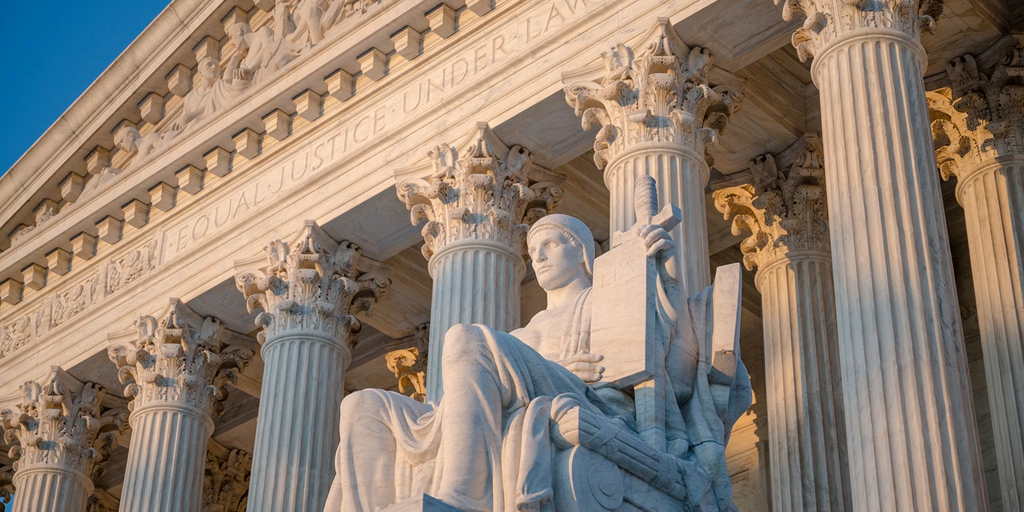
The United States House of Representatives voted down a proposed constitutional amendment that aimed to permanently lock the number of Supreme Court justices at nine.
The proposed resolution, known as House Joint Resolution 1, was introduced by House Republicans to prevent any future attempt to expand the bench. When the final tally was recorded on the House floor, 212 lawmakers voted in favor of the measure, while 206 voted against it.
Although the vote won a simple majority, it fell far short of the legal threshold required to change the United States Constitution. Amending the nation’s founding document is one of the most difficult hurdles in American politics. Because of this defeat, the size of the nation’s highest court remains open to future debate and potential legislation.
Here is a full breakdown of what happened in Congress, why the proposal failed, the long history behind the size of the Supreme Court, and what this decision means for the future of the judiciary.
Breaking Down the Vote: What Happened on the House Floor
The vote in the House of Representatives was largely split down party lines. Almost all Republicans supported the resolution, arguing that locking in nine justices is essential for protecting the independence of the court. Most Democrats voted against it, viewing the measure as a political maneuver designed to lock in the current conservative majority.
The $0 Secret To Launching Your Entire Online Empire
Why pay hundreds every month for separate software? Build funnels, send emails, and make sales with Systeme.io completely free.
Get Started For $0Free Forever • No Credit Card Needed • Beginner-Friendly
Only two representatives broke ranks with their respective parties during the vote. Representative Don Davis, a Democrat from North Carolina, voted in favor of the amendment. Meanwhile, Representative Kevin Kiley, an Independent from California who caucuses with Republicans, voted against it.
Because constitutional amendments require a two-thirds supermajority in both chambers of Congress, supporters needed at least 290 votes in the House. Finishing with 212 votes meant the resolution was officially rejected.
Following the vote, House Speaker Mike Johnson voiced his disappointment on social media. He criticized lawmakers who voted against the measure, stating that defending the traditional structure of the court should be a bipartisan issue. Opponents of the bill argued that capping the court size via a constitutional amendment would take away the constitutional flexibility given to lawmakers by the founding fathers.
For detailed news coverage on the congressional vote, you can read more from reports by Al Jazeera and CBS News.
Does the US Constitution Specify Nine Justices?
A common misconception among the public is that the US Constitution requires nine judges to sit on the Supreme Court. In reality, Article III of the US Constitution creates the Supreme Court, but it leaves the details—including how many justices should sit on the bench—entirely up to Congress.
Because the Constitution does not set a fixed number, Congress has the authority to change the size of the Supreme Court by passing standard legislation.
A Brief History of Supreme Court Changes
The size of the Supreme Court has actually changed multiple times since the founding of the nation:
- 1789: The Judiciary Act of 1789 created the first Supreme Court with just six justices.
- 1801: Congress reduced the number of justices to five under President John Adams.
- 1807: Congress expanded the court to seven seats to keep up with the expansion of federal judicial circuits.
- 1837: The court grew to nine justices as the country continued expanding westward.
- 1863: During the Civil War, Congress increased the court size to ten justices.
- 1866: Congress reduced the number back down to seven to prevent President Andrew Johnson from appointing new justices.
- 1869: Congress passed the Judiciary Act of 1869, setting the number at nine justices.
The size of the Supreme Court has remained at nine justices ever since 1869. However, because that number was created by a regular act of Congress rather than a constitutional amendment, any future Congress could theoretically change it with a simple majority vote.
What Is “Court Packing” and Why Is It a Big Deal?
The term “court packing” refers to the practice of increasing the number of seats on a supreme court to give a specific political party a favorable majority.
The concept became famous in 1937 under President Franklin D. Roosevelt. After the Supreme Court struck down several key pieces of his New Deal legislation, Roosevelt proposed the Judicial Procedures Reform Bill. His plan aimed to add one new justice for every current justice over the age of 70, up to a maximum of six additional seats. The proposal was widely criticized by both parties as an overreach of executive power, and Congress ultimately rejected it.
In recent years, the debate surrounding court packing has returned to the forefront of American politics. After three conservative justices were appointed during Donald Trump’s presidential term, the court shifted to a 6-3 conservative majority. Following major rulings on high-profile legal issues, several prominent leaders began advocating for structural reforms.
In 2021, a group of congressional lawmakers introduced a bill attempting to expand the Supreme Court from nine to 13 justices. More recently, political figures such as Senator Jim Clyburn and former Vice President Kamala Harris suggested that lawmakers should consider open discussions about expanding the court.
These proposals have sparked intense debates across national news networks, online forums, and digital news platforms. Today, conversations about constitutional laws and political news spread faster than ever thanks to advancements in modern technology and AI, allowing public reactions to unfold in real time.
Arguments for Capping the Supreme Court at Nine
Supporters of H.J. Res. 1 and the “Keep Nine” amendment argue that fixing the court’s size in the Constitution is necessary to safeguard the American judicial system.
Protecting Judicial Independence
Advocates argue that if politicians can add seats whenever they control Congress and the White House, the Supreme Court will lose its independence. Instead of acting as a neutral check on executive and legislative power, the court could become an extension of political parties.
Send, Spend & Hold Money Worldwide Without Hidden Fees
Transfer money internationally at the real exchange rate and hold 40+ currencies in one account.
Open a Wise AccountMid-market rate • Fast transfers • 40+ currencies
Preventing an Endless Cycle
If one party expands the court to 13 seats to gain a majority, the opposing party will likely expand it to 15 or 17 seats as soon as they regain power. Proponents of the amendment argue that cementing the number at nine stops a endless cycle of retaliation that could permanently ruin the court’s credibility.
Preserving 150 Years of Precedent
Nine justices have served on the court since 1869. Supporters argue that this 150-year standard has provided legal stability for generations and should be protected permanently. Statements released by the Republican Study Committee highlight these concerns, emphasizing that locking in nine seats protects the court from sudden political shifts.
Arguments Against the Constitutional Amendment
Opponents of the amendment offer a very different view on why the court’s size should remain flexible.
Capping an Imbalanced Court
Critics argue that locking the court at nine seats right now would permanently lock in a conservative majority created by political maneuvering. They contend that former judicial appointments broke long-standing Senate norms, and an amendment would eliminate any chance to rebalance the bench.
Restricting Future Generations
Opponents point out that the country’s founders deliberately left the court’s size out of the Constitution so future generations could adapt as the nation grew. Adding a rigid numerical cap could prevent future congresses from making necessary structural adjustments.
Focusing on Alternative Reforms
Many lawmakers who voted against the amendment argue that Congress should focus on other reform proposals instead of locking the court’s size. Ideas such as mandatory ethics codes, term limits for justices, and new recusal guidelines are viewed by many as more pressing solutions to restore public trust.
Why Changing the US Constitution Is So Hard
The rejection of H.J. Res. 1 illustrates how difficult it is to amend the US Constitution. The founders intentionally designed the amendment process under Article V to require broad consensus across the country.
To successfully pass a constitutional amendment, two major hurdles must be cleared:
- Congressional Proposal: The amendment must pass with a two-thirds supermajority vote in both the House of Representatives and the Senate. Alternatively, two-thirds of state legislatures can petition Congress to call a constitutional convention.
- State Ratification: Once approved by Congress, the amendment must be ratified by three-fourths of the states (38 out of 50 state legislatures) within a set timeframe.
Out of thousands of amendments proposed since 1789, only 27 have ever been successfully ratified. Given how divided modern politics can be, achieving a two-thirds majority in Congress on controversial topics is rare.
The Role of Media and Digital Creator Commentary
Political events like the Supreme Court size vote generate massive engagement across digital media platforms. Millions of people get their daily news, commentary, and legal breakdowns from online video channels and social networks rather than traditional television broadcasts.
The $0 Secret To Launching Your Entire Online Empire
Why pay hundreds every month for separate software? Build funnels, send emails, and make sales with Systeme.io completely free.
Get Started For $0Free Forever • No Credit Card Needed • Beginner-Friendly
Independent creators and journalists frequently break down complex government bills into simple, easy-to-understand video essays. Many media producers use strategies like YouTube automation to keep up with fast-breaking news stories, allowing them to produce timely explainers whenever major votes take place in Congress.
As public interest in judicial politics grows, digital channels play a critical role in informing citizens about how government decisions impact their daily lives.
What Happens Next for the Supreme Court?
Now that Congress has rejected the constitutional amendment, the legal framework surrounding the Supreme Court remains unchanged.
The court will continue operating with nine justices. However, because the size is governed by standard federal statute, any future Congress with sufficient majority support could theoretically introduce legislation to alter the number of seats.
In the near term, court expansion remains unlikely without a significant political shift. Expanding the court through regular legislation would require controlling the House, holding a Senate majority willing to eliminate or bypass the filibuster, and securing presidential approval.
In the meantime, public debate will likely continue focusing on alternative judiciary proposals, including term limits and judicial codes of conduct.
Frequently Asked Questions (FAQs)
Why did the amendment fail if a majority of House members voted for it?
Constitutional amendments do not follow standard lawmaking rules. While regular bills require a simple majority to pass, Article V of the US Constitution requires a two-thirds supermajority (290 votes in the House). Because the vote ended 212 to 206, it failed to reach the required threshold.
How many justices are currently on the Supreme Court?
There are currently nine justices on the US Supreme Court: one Chief Justice and eight Associate Justices.
Has the Supreme Court always had nine justices?
No. The Supreme Court started with six justices in 1789 and shifted between five, seven, nine, and ten members over the 18th and 19th centuries before settling at nine in 1869.
Can Congress change the size of the Supreme Court without amending the Constitution?
Yes. Because the Constitution does not set the number of justices, Congress can change the court’s size by passing a standard federal law.
What is the “Keep Nine” amendment?
The “Keep Nine” amendment is a proposed constitutional amendment designed to set the number of Supreme Court justices permanently at nine, preventing future congresses from adding or removing seats.
Final Thoughts
The decision by Congress to reject the proposed constitutional amendment keeps a long-standing legal debate alive. While the Supreme Court continues to sit at nine members, the rejection shows how difficult it is to build bipartisan consensus on constitutional changes in modern government.
Staying informed on political events, legislative votes, and national news helps everyday citizens understand how government actions affect their rights and communities.
If you want to learn more about our publication, visit our about page to see how we bring clear, accessible stories to our readers. Have questions or feedback on this story? Feel free to reach out directly through our contact page.
You can also join our growing online community and follow our official social profiles on Instagram, Facebook, and X (formerly Twitter) for the latest updates on trending news and popular culture.
