
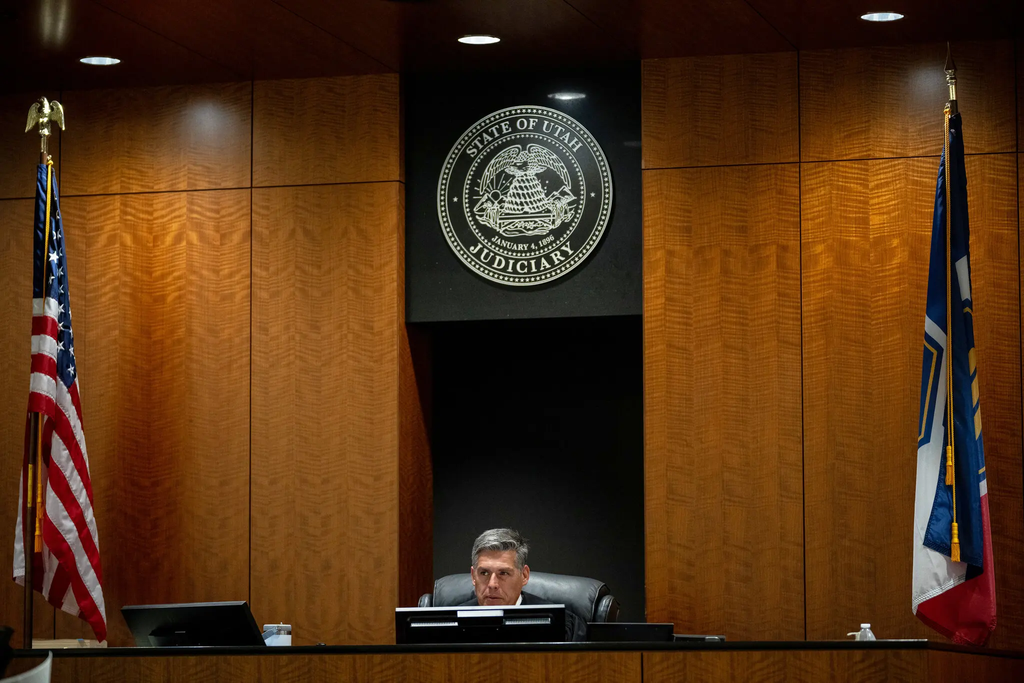
A federal judge in Maryland has officially blocked President Donald Trump’s latest executive order aimed at limiting birthright citizenship in the United States. U.S. District Judge Deborah L. Boardman issued a preliminary injunction stopping federal agencies from enforcing the order while a nationwide lawsuit continues.
The presidential order, signed in August 2026, sought to restrict automatic citizenship for children born on American soil to noncitizen parents under specific conditions. The White House claimed the policy was designed to target birth tourism and prevent noncitizens from taking advantage of the legal system. However, Judge Boardman ruled that the policy violates long-standing constitutional law and directly contradicts binding rulings from the United States Supreme Court.
This ruling marks another major legal defeat for the administration’s efforts to alter how citizenship is granted at birth in the United States. It brings immediate relief to thousands of families across the country who faced deep uncertainty about their children’s legal rights and status.
Breakdown of the Latest Executive Order
To understand why the court stepped in, it helps to look at what the administration tried to do with its August executive order. This was the White House’s second attempt to reshape birthright citizenship rules. The initial executive order signed earlier in the president’s term was previously struck down by the Supreme Court.
In response to that Supreme Court decision, the administration created a new, narrower order. Officials claimed this second order was designed to fit within narrow exceptions left open by higher courts.
The $0 Secret To Launching Your Entire Online Empire
Why pay hundreds every month for separate software? Build funnels, send emails, and make sales with Systeme.io completely free.
Get Started For $0Free Forever • No Credit Card Needed • Beginner-Friendly
What Was Target in the Order?
The August order targeted specific groups of noncitizens and introduced strict new criteria. It specifically aimed to deny automatic U.S. citizenship to children born to:
- Parents who entered the United States on temporary nonimmigrant visas for the primary purpose of giving birth on American soil.
- Parents who engaged in what the order termed a commercial transaction to access birthright citizenship.
- Parents affiliated with foreign embassies, foreign organizations, or individuals designated by the executive branch as alien enemies.
- Parents residing in the country without legal status or on short-term temporary visas.
What Is Birth Tourism?
The administration focused heavily on the concept of birth tourism in its public statements. Birth tourism refers to the practice where an expectant mother travels to a foreign country on a tourist visa specifically to give birth so her baby gains automatic citizenship in that country.
Existing federal immigration laws already classify birth tourism as a form of visa fraud. Consular officers can deny visitor visas if they believe an applicant is traveling solely to give birth. However, Trump’s executive order took things a step further. It attempted to penalize the child directly by withholding citizenship documents, regardless of whether the parents were ever formally charged with fraud.
Broad Definitions and Alien Enemy Language
One major concern raised in court was how the executive order defined who qualified as an alien enemy or foreign threat. Immigrant advocacy groups pointed out that the language was far too broad and vague.
Under the order’s framework, government agencies could potentially label individuals based on loose speculation or unverified information. Some families reported fearing that their newborn children would be denied passports simply because a distant relative in their home country was suspected of gang involvement, even if the parents had clean records. Others worried that buying a regular plane ticket while pregnant could be misinterpreted as a commercial transaction to buy citizenship.
Why the Federal Judge Stopped the Policy
Judge Deborah L. Boardman, who serves on the U.S. District Court for the District of Maryland, rejected the Department of Justice’s legal defense of the order. In her 35-page decision, she noted that executive branch officials cannot bypass constitutional law or ignore high court precedents.
The Core Finding: The Supreme Court Has Spoken
In her ruling, Judge Boardman quoted directly from earlier binding court decisions. She pointed out that the Supreme Court made its position on the certified class of immigrant families entirely clear.
She wrote: “The Supreme Court has spoken: Children in the certified class are ‘citizens at birth’.” She added that the highest court’s ruling remains the law of the land, and the president is required to follow it. She described the administration’s claim that the new order followed Supreme Court guidance as a distorted interpretation of the law.
Rejection of Government Excuses
Attorneys representing the Department of Justice argued that blocking the executive order was premature. They claimed federal agencies had not yet issued final administrative guidance on how the order would be enforced on the ground.
Judge Boardman firmly dismissed that line of reasoning. She noted that regardless of what future guidance might say, the executive order explicitly commanded federal agencies to withhold citizenship records from broad categories of children. Allowing the policy to take effect even for a short period would cause immediate and permanent harm to affected families.
The Advocacy Groups Behind the Lawsuit
The legal action challenging the executive order was filed by several immigrant rights and legal defense organizations. Key groups involved include:
- We Are CASA: A prominent advocacy group supporting immigrant working families in Maryland, Virginia, and surrounding regions.
- Asylum Seeker Advocacy Project (ASAP): A national membership organization representing asylum seekers across the United States.
- Institute for Constitutional Advocacy and Protection: A legal team based at Georgetown University Law Center that defends constitutional rights in federal court.
Shana Khader, legal director at We Are CASA, publicly welcomed the judge’s ruling. She stated that the administration has repeatedly lost in court on this issue and emphasized that no president can place a political agenda above the Constitution.
History of Birthright Citizenship in the United States
To fully grasp why this legal battle is so significant, it helps to understand where birthright citizenship comes from and how it works under American law.
The 14th Amendment’s Citizenship Clause
Birthright citizenship is established under the Citizenship Clause of the 14th Amendment to the U.S. Constitution. Ratified in 1868 following the American Civil War, the amendment was created to ensure that formerly enslaved Black Americans were granted full legal citizenship and equal protection under the law.
The exact wording of the Citizenship Clause is straightforward:
Send, Spend & Hold Money Worldwide Without Hidden Fees
Transfer money internationally at the real exchange rate and hold 40+ currencies in one account.
Open a Wise AccountMid-market rate • Fast transfers • 40+ currencies
“All persons born or naturalized in the United States, and subject to the jurisdiction thereof, are citizens of the United States and of the State wherein they reside.”
Over the past 150 years, legal scholars, federal judges, and the Supreme Court have consistently interpreted this text to mean that almost every child born on U.S. soil is automatically an American citizen. The only long-standing legal exceptions apply to children born to foreign diplomats who hold diplomatic immunity and children born to foreign invading forces on U.S. territory.
Landmark Supreme Court Precedents
The foundational legal precedent for birthright citizenship was set in the 1898 Supreme Court case United States v. Wong Kim Ark. In that historic case, the court ruled that a child born in California to parents of Chinese origin—who were noncitizens living legally in the U.S.—was an American citizen at birth under the 14th Amendment.
For decades, this precedent has protected children born in the U.S. regardless of their parents’ origin, nationality, or legal status. According to news reports from major outlets like AP News, lower courts have repeatedly blocked executive attempts to redefine these constitutional guarantees.
The Broader Political Debate
President Trump and many leading conservatives have argued against birthright citizenship for years. Their main arguments include:
- Claims that automatic citizenship acts as an incentive for undocumented immigration.
- Suggestions that noncitizens take advantage of social benefits intended for citizens.
- Arguments that the phrase “subject to the jurisdiction thereof” in the 14th Amendment was never meant to cover parents living in the country without permission.
On the other side of the debate, legal scholars, civil rights advocates, and constitutional experts argue that:
- The text of the 14th Amendment is clear and applies universally to anyone physically present in the country.
- Eliminating birthright citizenship would create a permanent underclass of stateless children born in America.
- Executive orders cannot overrule or alter the Constitution, which requires a two-thirds majority in Congress and ratification by 38 states to amend.
How the Ruling Impacts Immigrant Families
The court’s preliminary injunction brings immediate, practical relief to hundreds of thousands of families living across the United States.
Relief from Confusion and Fear
When the August executive order was first announced, it created widespread anxiety. Parents who were expecting babies worried whether their newborns would be granted birth certificates, Social Security numbers, or passports. Medical providers and social services agencies were left unsure about how to process documentation for newborn infants.
By granting a preliminary injunction, Judge Boardman paused the enforcement of the policy nationwide. This means that federal agencies, such as the Department of State and the Social Security Administration, must continue issuing standard citizenship documents to eligible children born on U.S. soil.
Concerns Over Proposed Passport Rule Changes
Despite the judge’s ruling, families and immigration attorneys remain cautious. Just hours before Judge Boardman issued her injunction, reports emerged that federal authorities were proposing new rules for passport applications.
The $0 Secret To Launching Your Entire Online Empire
Why pay hundreds every month for separate software? Build funnels, send emails, and make sales with Systeme.io completely free.
Get Started For $0Free Forever • No Credit Card Needed • Beginner-Friendly
Under these proposed rules, parents and legal guardians applying for a child’s first U.S. passport would be required to present proof of their own citizenship or immigration status. Legal experts warn that these proposed administrative changes are another subtle attempt to restrict access to citizenship documents for infants born to noncitizen parents. Advocacy groups are monitoring these proposed administrative rules closely and plan to challenge them in court if they are implemented.
How News and Legal Policy Updates Spread Online
In today’s fast-moving media landscape, stories about major court rulings, federal policies, and political debates reach global audiences faster than ever before. Modern digital creators and independent journalists use advanced tools to report, break down, and analyze complex legal topics for everyday readers.
If you are a content creator or digital publisher looking to build automated channels that explain news events and legal updates efficiently, check out our guide on YouTube Automation setup and strategies. Modern creators rely heavily on smart digital systems to produce educational content, summarize breaking news, and keep audiences informed in real time.
Furthermore, artificial intelligence tools are changing how journalists analyze court documents, parse through legal filings, and draft scannable summaries. To learn more about how technological tools are transforming digital publishing, read our latest insights in our Technology & AI news section.
Stay Connected with Our Editorial Team
Keeping track of legal changes, federal policy updates, and major national headlines can feel overwhelming. Having clear, factual, and easy-to-understand explanations helps you stay ahead of the curve.
To learn more about our mission, editorial standards, and dedicated team of writers, visit our About Us page. If you have questions, story tips, or feedback regarding our coverage of major news stories, feel free to reach out directly through our Contact page.
You can also join our growing online community across social media platforms to stay updated whenever a major story breaks:
- Connect with us on Instagram for daily news highlights and visual updates.
- Follow our official page on Facebook to participate in community discussions.
- Follow us on X (formerly Twitter) for instant breaking news alerts.
Frequently Asked Questions (FAQs)
What is birthright citizenship?
Birthright citizenship is a legal principle guaranteed by the 14th Amendment to the United States Constitution. It guarantees that almost any child born on U.S. soil is automatically an American citizen at birth, regardless of the nationality, immigration status, or visa condition of the parents.
Who is Judge Deborah L. Boardman?
Judge Deborah L. Boardman is a federal judge serving on the U.S. District Court for the District of Maryland. She was appointed to the federal bench by President Joe Biden and issued the September 2026 preliminary injunction blocking Trump’s latest executive order on birthright citizenship.
Why did the court block President Trump’s executive order?
The judge blocked the executive order because it violates the 14th Amendment and contradicts established Supreme Court precedent. Judge Boardman noted that the Supreme Court already affirmed that children born in the U.S. to noncitizen parents covered by the lawsuit are citizens at birth under the law.
What is birth tourism and is it legal?
Birth tourism refers to traveling to a country on a short-term visitor visa with the main goal of giving birth there so the newborn receives citizenship. Under existing U.S. immigration laws, applying for a tourist visa specifically for birth tourism is considered visa fraud and can lead to visa denials. However, the court ruled that the government cannot strip citizenship from a newborn child as a punishment for the parents’ actions.
What happens next in this legal fight?
The preliminary injunction pauses the enforcement of the executive order nationwide while the full class-action lawsuit moves forward. The Department of Justice, led by Attorney General Todd Blanche, has indicated that the administration intends to appeal the decision and may take the issue back to the U.S. Supreme Court if necessary.
The preliminary injunction issued by Judge Boardman represents a firm reaffirmed boundary on executive power. While the Trump administration continues to push for strict immigration controls, federal courts remain a powerful check against efforts to reshape constitutional rights through executive orders. As the case makes its way through potential appeals, birthright citizenship remains protected across all 50 states
