
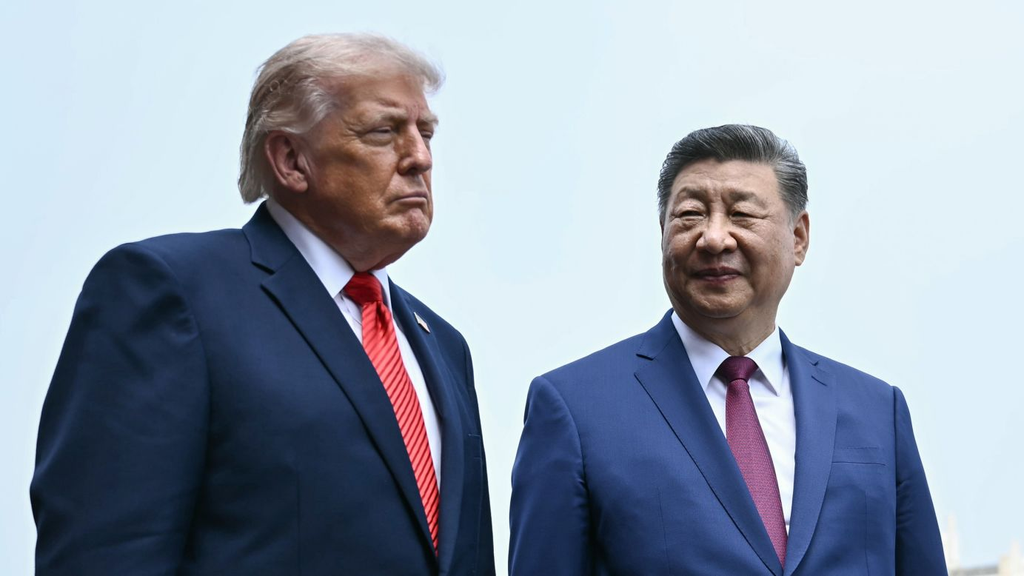
President Donald Trump rolled out a massive 100-foot red carpet on the tarmac at Joint Base Andrews as Chinese President Xi Jinping landed in Washington. Instead of waiting inside the White House, Trump personally walked up to the aircraft steps to greet the Chinese leader in person. This tarmac welcome marks the start of a historic three-day state visit, setting a dramatic tone for economic and political relations between the two nations.
The sudden airport meeting was not the only surprise of the day. Just as Xi’s plane touched down, senior officials announced that the United States and China have officially extended their ongoing trade truce. This agreement pauses new tariffs and trade restrictions, giving both global powers more room to negotiate.
Here is a full breakdown of what happened on the tarmac, why this visit matters so much for world markets, and what it means for everyday people.
A Rare Tarmac Welcome at Joint Base Andrews
High-profile foreign leaders usually arrive at Joint Base Andrews in Maryland, get into a motorcade, and drive directly to the White House or Blair House for formal greetings. Having a sitting American president travel out to the runway to meet a foreign leader at their plane is a very rare honor in diplomatic history.
Trump and First Lady Melania Trump stood beside a long red carpet stretched out at the bottom of the plane’s staircase. As President Xi Jinping and his wife, Peng Liyuan, stepped off the aircraft, Trump removed one of his gloves to shake Xi’s hand. Trump smiled, chatted with the Chinese leader, and even gave him a warm pat on the back before the two walked together past assembled military units.
The $0 Secret To Launching Your Entire Online Empire
Why pay hundreds every month for separate software? Build funnels, send emails, and make sales with Systeme.io completely free.
Get Started For $0Free Forever • No Credit Card Needed • Beginner-Friendly
Red Carpets, B-1 Bombers, and Military Bands
The White House went out of its way to build a huge ceremonial show right on the airfield. The reception featured a 21-person military honor guard lined up alongside the carpet, full platoons representing each branch of the United States Armed Forces, and a military band playing the national anthems of both countries.
To top off the display, two massive B-1 bomber jets performed a flyover above the base as the leaders stood together. The grand spectacle was designed to match the elaborate reception Trump received when he visited Beijing earlier in the year. At that time, Chinese officials greeted Trump with red carpets, military bands, and hundreds of students waving American and Chinese flags.
Why This Planeside Meeting Shook Up Washington
The decision to greet Xi on the runway surprised many political observers in Washington. Melania Trump noted earlier in the day that her husband chose to go to the airport personally because the two leaders share a strong personal relationship. Trump himself has repeatedly referred to Xi as a great leader and a personal friend.
However, diplomatic analysts point out that airport welcomes carry huge symbolic weight. Giving a foreign leader such a lavish welcome on American soil sends a clear message that the United States views China as an equal global power. For Beijing, images of Trump meeting Xi on the tarmac serve as a major domestic and international win, demonstrating China’s rising status on the global stage.
The Massive Trade Truce Extension
While the military bands were playing on the tarmac, financial markets received a big piece of news. United States Treasury Secretary Scott Bessent announced during a television interview that the two countries agreed to extend their existing trade truce until January 10.
The original trade truce was scheduled to expire on November 10. Without an extension, both countries would have faced automatic increases in tariffs and potential new trade bans. The decision to extend the pause keeps current trade rules stable through the end of the year and into early next year.
According to reports from major news outlets like the Associated Press, negotiators from both sides worked behind closed doors for weeks to secure this temporary peace.
What the January 10 Extension Really Means for Consumers
Trade truces directly impact the prices everyday consumers pay for goods. When tariffs go up, companies pass those extra costs onto shoppers. By pushing the deadline back to January 10, both nations are ensuring that the busy holiday shopping season remains free from sudden price spikes on imported electronics, clothing, and housewares.
Treasury Secretary Bessent explained that extending the truce gives both leaders time to talk through complex economic issues during upcoming international summits. President Trump and President Xi are scheduled to attend global leadership meetings in China this November and in Florida this December. The extra time allows top negotiators to work on a longer-lasting commercial agreement.
Critical Minerals, Farming, and Tech Supplies
The trade truce focuses heavily on two main areas: raw materials and agriculture. Under the agreement, China promises to keep exporting essential critical minerals, such as lithium and rare earth elements. These minerals are vital for building electric vehicle batteries, smartphones, computer chips, and defense equipment.
In return, the United States relies on China to continue buying large quantities of American farm products, including soybeans, corn, and pork. American farmers depend heavily on Chinese purchases to keep their operations profitable. Holding the truce in place protects agricultural income across America while keeping factories supplied with critical high-tech ingredients.
Big Tech, State Dinners, and High-Stakes Diplomacy
The airport ceremony was just the opening act of a packed three-day schedule. The main diplomatic conversations are taking place inside the White House, where top government officials and global corporate executives are gathering for meetings and formal meals.
On Thursday, the White House hosts a formal black-tie state dinner in honor of President Xi and his delegation. State dinners are among the most exclusive events in Washington, used by American presidents to build goodwill with strategic partners.
Elon Musk, Jensen Huang, and the AI Conversation
The guest list for Thursday night’s state dinner includes some of the biggest names in technology and business. Tesla and SpaceX chief executive Elon Musk and Nvidia chief executive Jensen Huang were invited to attend.
Their presence highlights how central artificial intelligence and microchip manufacturing have become to international politics. Nvidia makes the powerful graphic processing chips that drive advanced artificial intelligence software worldwide, while Tesla operates massive electric vehicle factories in both the United States and Shanghai.
Send, Spend & Hold Money Worldwide Without Hidden Fees
Transfer money internationally at the real exchange rate and hold 40+ currencies in one account.
Open a Wise AccountMid-market rate • Fast transfers • 40+ currencies
To learn more about how technological advances and machine learning tools are reshaping modern industries, explore our technology and AI section for clear explanations and industry news.
The Political Backlash Inside Washington
Not everyone in Washington is happy about the red carpet treatment. Several members of Congress criticized the decision to host a lavish state visit for China’s leader.
Mississippi Senator Roger Wicker, who serves as chairman of the Senate Armed Services Committee, spoke out strongly on the Senate floor. He argued that the White House should not offer such honors to Beijing given ongoing disputes over China’s military expansion, trade policies, and stance on Taiwan. Wicker suggested that American leaders should maintain a firm stance rather than focusing on ceremonial grandeur.
In contrast, Secretary of State Marco Rubio defended the summit. Rubio noted that because the United States and China represent the world’s two largest economies and military forces, top-level leaders must talk directly to prevent miscalculations and keep regional stability.
What This Means for Global Markets and Business Operations
When major economies agree to lower trade friction, the benefits ripple across the global economy. Small businesses, online entrepreneurs, and digital creators all rely on stable international supply chains and steady economic conditions to run their operations smoothly.
Uncertainty over tariffs can hurt small companies that order inventory from overseas or sell products to international customers. A stable trade environment gives business owners the confidence to invest in new inventory, launch marketing campaigns, and expand their digital reach without worrying about sudden cost hikes.
Navigating Economic Shifts with Smarter Digital Tools
With global supply chains facing ongoing adjustments, many business owners are turning to online business models that do not rely on physical shipping or raw material supply bottlenecks. Digital content creation, automated media platforms, and online marketing allow creators to build sustainable revenue streams from anywhere.
For instance, building automated media channels has become a popular way to generate income online without dealing with physical inventory or overseas shipping delays. If you want practical guidance on setting up automated online video channels and growing a digital audience, read our detailed YouTube automation guide to get started.
How Global News Hits Everyday Businesses
International news stories might seem far removed from daily life, but global policy changes affect everything from the cost of your next laptop to the interest rates on personal loans. Staying informed about top political and financial developments helps you make smarter decisions for your personal finances and your business.
To read more articles covering breaking economic news, pop culture trends, and viral stories, feel free to read our about page to see how our editorial team brings you the facts. If you ever have thoughts, feedback, or news tips to share with us, you can easily reach out through our contact page.
The $0 Secret To Launching Your Entire Online Empire
Why pay hundreds every month for separate software? Build funnels, send emails, and make sales with Systeme.io completely free.
Get Started For $0Free Forever • No Credit Card Needed • Beginner-Friendly
You can also join our growing community on social media to get quick news updates, engaging discussions, and daily content directly in your feed. Follow our official updates on our Instagram profile, connect with us on our Facebook page, and join the conversation on our X account.
Frequently Asked Questions (FAQs)
Why did Donald Trump greet Xi Jinping at the airport instead of the White House?
President Trump chose to meet President Xi Jinping on the tarmac at Joint Base Andrews to show personal respect and reciprocate the grand ceremonial greeting he received during his own visit to Beijing earlier in the year. The White House stated that the two leaders have built a strong personal relationship over time.
What is the US-China trade truce extension?
The trade truce extension is a temporary agreement between the United States and China to hold off on adding new tariffs or enforcing new trade bans against each other. It allows both countries to continue trading key goods, such as American farm products and Chinese critical minerals, while official diplomatic talks continue.
How long will the new trade truce last?
The new trade truce extends the current pause until January 10. This gives officials additional time to negotiate during global leadership summits scheduled in China this November and in Florida this December.
Which business leaders are attending the state visit?
Prominent tech executives attending the state visit events include SpaceX and Tesla chief executive Elon Musk, along with Nvidia chief executive Jensen Huang. Their participation highlights the growing importance of artificial intelligence, semiconductor chips, and clean energy in international relations.
Why are some politicians criticizing the planeside ceremony?
Critics, including Senate Armed Services Committee Chairman Roger Wicker, argue that providing a red carpet airport greeting and lavish state dinner gives Beijing a major propaganda victory. They believe the United States should take a tougher ceremonial stance due to ongoing concerns about military expansion, foreign policy disputes, and human rights.
Conclusion
The dramatic airport greeting at Joint Base Andrews shows that diplomacy between the world’s top two superpowers is entering a visually stunning and highly strategic phase. By rolling out the red carpet and extending the trade truce to January 10, both Washington and Beijing have signaled a clear desire to keep economic relations steady for the immediate future.
While big political and strategic differences remain unresolved between the two nations, keeping lines of communication open helps protect businesses, consumers, and global markets from sudden economic shocks. As President Xi’s state visit continues with meetings, dinners, and historic document viewings at the National Archives, the world will be watching closely to see whether this temporary trade pause can turn into a lasting peace.
