
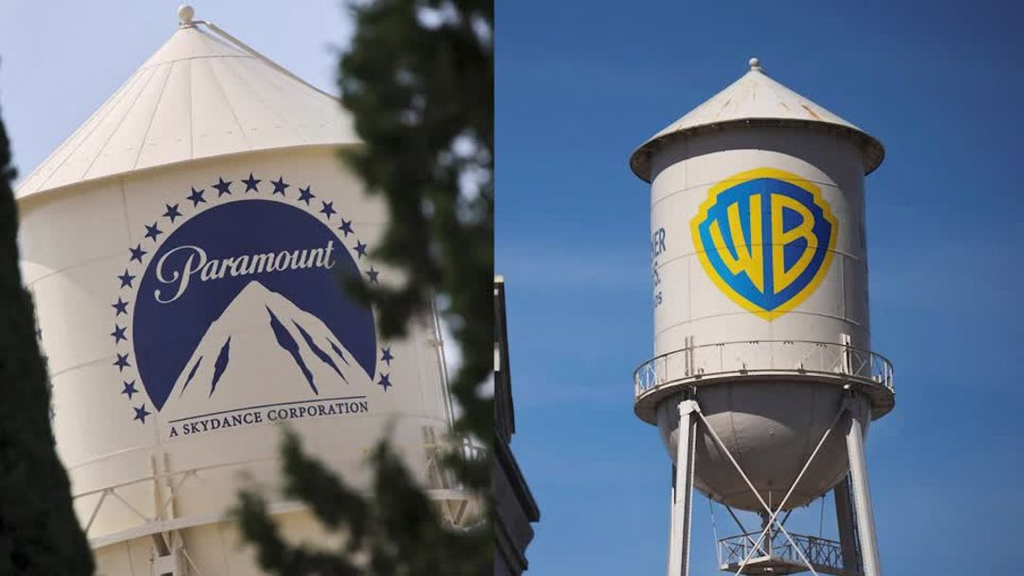
The massive legal war that held up one of the biggest media deals in history is finally over. Paramount Skydance and Warner Bros. Discovery have reached a historic settlement with state prosecutors and Hollywood unions, removing the final obstacle to an $110 billion merger.
The court fight was led by twelve state attorneys general and the Writers Guild of America, who wanted to block the merger over concerns about monopoly power and job losses. But with this new agreement, the two movie and television giants have cleared all regulatory and legal hurdles. The deal is set to close in a matter of weeks, creating an entertainment powerhouse that will completely change what you watch in theaters, on cable, and across streaming services.
Here is a clear look at how the settlement happened, what Paramount had to give up to get it done, and how this historic deal affects everyday moviegoers and streaming subscribers.
The Legal War Is Over: How Paramount Cleared Its Final Hurdle
For months, the proposed takeover of Warner Bros. Discovery by Paramount Skydance hung in the balance. While federal regulators in Washington and international agencies across Europe and Asia had already cleared the transaction, a group of states decided to fight back. Led by California Attorney General Rob Bonta, twelve states filed a major antitrust lawsuit in July to stop the merger from moving forward. They argued that putting two of Hollywood’s oldest and biggest studios under one roof would destroy competition and raise costs for consumers.
The Writers Guild of America filed its own separate lawsuit, fearing that a giant consolidated studio would cut writer jobs, lower pay, and shrink working opportunities across the industry. Both cases were set to go to a full trial in March.
The $0 Secret To Launching Your Entire Online Empire
Why pay hundreds every month for separate software? Build funnels, send emails, and make sales with Systeme.io completely free.
Get Started For $0Free Forever • No Credit Card Needed • Beginner-Friendly
However, the threat of a long trial created huge financial risks. Paramount faced expensive delay fees and growing pressure from investors to get the deal across the finish line. Rather than fighting in court for years, Paramount went to the negotiating table and agreed to strict conditions.
With the settlement officially signed by all twelve states and the union, Paramount CEO David Ellison informed employees in an internal memo that the company expects to close the merger within two weeks. According to official reports from news outlets like The Washington Post and the Associated Press, this agreement resolves the last remaining legal barrier.
Why States and Writers Sued in the First Place
To understand why this settlement is such a huge deal, it helps to look at what state leaders and union reps were worried about in the beginning.
When two major players in an industry combine, they gain enormous power. Paramount and Warner Bros. Discovery are not just movie studios; they own some of the biggest TV channels, streaming platforms, and production lots in North America. State officials were worried about several key issues:
First, they feared movie theater ticket prices would soar. If one giant company controls a huge chunk of all new movie releases, theater owners have very little bargaining power when negotiating ticket sales and screening terms.
Second, they worried about cable TV bills. The combined company would control major networks like CBS, CNN, MTV, Nickelodeon, TBS, TNT, HGTV, and Discovery. If Paramount threatened to pull all those channels at once during price disputes with cable providers, local cable bills could skyrocket.
Third, they feared mass job cuts in California. As media companies combine, executive teams usually look for cost savings by cutting jobs. Paramount had hinted that it might move production out of California or close historic studio lots to save money.
Finally, lawmakers were deeply concerned about news independence. Owning both CBS News and CNN puts two of the nation’s biggest news organizations under a single corporate leadership team, raising fears about political influence and editorial interference.
The Settlement Breakdown: What Paramount Agreed to Pay and Do
To get state officials and union leaders to drop their lawsuits, Paramount had to sign a court-enforceable agreement that lasts up to five years. Paramount agreed to make major investments in local jobs, movie production, worker health funds, and editorial protections.
Mandatory Movie Production and High Local Spending
Paramount promised to spend at least $300 million more per year on domestic U.S. film production over the next five years. That is a total commitment of $1.5 billion aimed directly at keeping film crews, set builders, technicians, and local businesses employed.
The company also agreed to strict film output quotas:
- Paramount must produce at least 30 movies per year for the first two years after the deal closes.
- Paramount must produce at least 32 movies per year for the following three years.
- Out of those films, at least 4 movies every year must be independent productions to support creative variety.
- At least 20 percent of the lineup must consist of major blockbuster releases. If Paramount fails to meet the blockbuster requirement, it must pay $30 million per missed movie into worker relief funds.
Additionally, Paramount agreed never to sell or close the historic Paramount studio lot in Hollywood or the iconic Warner Bros. lot in Burbank. This guarantees that two of California’s most famous filmmaking landmarks will remain active working studios.
News Independence Safeguards
To address concerns about journalism, Paramount agreed to set up an independent news editorial board. This board will monitor CBS News and CNN to make sure corporate managers cannot interfere with news reporting or push political agendas.
On top of that, Paramount agreed to a five-year ban on laying off writers at CBS News Broadcast. This gives newsroom staff rare job security in a time of widespread media layoffs.
Financial Support for Workers and Independent Filmmakers
The settlement includes several direct cash payments and ongoing funds:
Send, Spend & Hold Money Worldwide Without Hidden Fees
Transfer money internationally at the real exchange rate and hold 40+ currencies in one account.
Open a Wise AccountMid-market rate • Fast transfers • 40+ currencies
- WGA Health Fund: Paramount is paying $17.5 million directly into the Writers Guild health fund, along with covering legal fees from the lawsuit.
- Workforce Training: Paramount will pay $9.5 million every year for five years toward job training programs for TV production workers and local community arts groups.
- Independent Film Fund: Paramount will contribute $5 million annually to a specialized fund designed to acquire and distribute independent movies.
Protections for Movie Theaters and Cable Subscribers
To prevent immediate price hikes for moviegoers, Paramount agreed not to raise the fees it charges movie theater owners for at least three years.
For cable television viewers, the settlement requires Paramount and Warner Bros. Discovery to negotiate their cable packages separately for five years. Paramount cannot force cable companies to buy MTV or Nickelodeon as a package deal with TNT or Food Network. Keeping these negotiations separate helps keep cable prices from jumping up overnight.
What This Means for Movie Fans and Streaming Subscribers
Now that the deal is moving forward, everyday entertainment consumers are asking a simple question: How does this change what I watch on my TV or at the theater?
The answer comes down to three main areas: streaming apps, massive film franchises, and cable TV channels.
The Streaming Shakeup: Paramount+ and Max
Currently, millions of households pay separate monthly bills for Paramount+ and Max (formerly HBO Max). Combining these two studios means their streaming services will eventually align.
While the company has not yet announced an immediate shutdown of either app, industry experts expect them to offer a combined super-bundle or merge into a single giant streaming platform in the near future.
Imagine logging into one single app and getting access to HBO prestige dramas, DC superhero films, Paramount blockbuster movies, live CBS sports, and Discovery reality shows. While having all that content in one place is convenient, it could also mean higher subscription tier prices once the two services are bundled together.
Legendary Franchises Under One Roof
This merger brings together two of the most iconic film libraries in history. Moving forward, a single corporate parent will control:
- Warner Bros. Franchises: The Wizarding World of Harry Potter, the DC Universe (Batman, Superman, Wonder Woman), The Lord of the Rings, The Matrix, Dune, and Game of Thrones.
- Paramount Franchises: Top Gun, Mission: Impossible, Star Trek, Transformers, Yellowstone, and Teenage Mutant Ninja Turtles.
This concentration of famous characters and worlds under one studio gives Paramount unprecedented power in greenlighting sequels, spin-offs, and crossover projects.
A Mass Cable Network Network
If you still watch traditional cable TV, the combined company will dominate your channel guide. The merger combines Paramount’s Viacom lineup with Warner Bros. Discovery’s massive network collection:
The $0 Secret To Launching Your Entire Online Empire
Why pay hundreds every month for separate software? Build funnels, send emails, and make sales with Systeme.io completely free.
Get Started For $0Free Forever • No Credit Card Needed • Beginner-Friendly
- Broadcast and News: CBS and CNN.
- Entertainment and Drama: TBS, TNT, MTV, VH1, and Comedy Central.
- Family and Kids: Nickelodeon and Cartoon Network.
- Unscripted and Lifestyle: HGTV, Food Network, TLC, and Discovery Channel.
AI, Technology, and the Future of Digital Content
Beyond traditional movies and cable television, this mega-merger takes place at a time when technology and artificial intelligence are transforming media production. As major studios consolidate, they are investing heavily in automated workflows, advanced digital editing tools, and machine learning to optimize recommendation algorithms.
For creators and media enthusiasts tracking how technology is reshaping storytelling, understanding new tools is essential. You can discover more about these developments in our detailed guides on Technology & AI.
At the same time, the rise of streaming platforms and online video distribution has changed how audiences consume content every day. Digital creators and automated video channels are competing for user attention alongside major Hollywood studios. To see how modern content creators are building digital platforms and leveraging automated video channels, explore our resources on YouTube Automation.
Critical Reaction: Victory for Jobs or a Dangerous Monopoly?
Reactions to the settlement have been mixed across political and industry lines.
California Attorney General Rob Bonta, who led the state coalition, emphasized that the agreement was about protecting workers and local economic stability. During a news conference in Los Angeles, Bonta stated that the settlement was not necessarily an endorsement of corporate consolidation, but rather a pragmatic solution to protect jobs and guarantee movie production in California.
California Governor Gavin Newsom praised the settlement, pointing out that years of court litigation would have put thousands of California production jobs at risk.
On the other hand, consumer advocacy groups and opposing organizations—grouped under the Block the Merger Coalition—criticized the agreement as a “sweetheart deal”. They argued that the behavioral concessions and spending promises do not go far enough to prevent long-term price increases and market dominance.
Some government officials expressed disappointment as well. Connecticut Attorney General William Tong voiced regret that the settlement did not force Paramount to completely sell off CNN or CBS, arguing that full separation was necessary to protect independent journalism.
The Writers Guild of America acknowledged the reality of the situation in an official statement. The union noted that once state prosecutors decided to settle, a non-profit union could not afford to spend millions of dollars pursuing a massive antitrust lawsuit alone in federal court. Taking the $17.5 million health fund contribution and job protection guarantees was the most practical choice for their members.
Frequently Asked Questions (FAQs)
When will the Paramount and Warner Bros. Discovery merger actually close?
With the legal settlement officially signed, Paramount executives expect the acquisition to close within approximately two weeks, pending final formal sign-off by the presiding judge.
Will Paramount+ and HBO Max merge into a single app right away?
Not immediately. While both services are now owned by the same parent company, running separate apps will continue in the short term. However, consumer bundles and eventual platform integrations are expected over the next year or two.
Will movie ticket prices go up because of this deal?
Paramount agreed to a three-year freeze on increasing the rates it charges movie theater owners. This prevents immediate pressure on ticket prices, though long-term prices will still depend on local theater chains and economic inflation.
What is going to happen to CNN and CBS News?
Both news outlets will remain operational, but an independent editorial independence board will be created to safeguard their journalistic integrity. Additionally, CBS News broadcast writers are protected against layoffs for five years under the settlement terms.
Why did twelve state governments try to block the merger in the first place?
The state attorneys general were concerned that combining two massive entertainment companies would create a monopoly, leading to higher cable bills, increased movie ticket costs, union job losses, and reduced film production in the U.S.
How can I stay connected with the team and read more news updates?
You can learn more about our publication and background on our About Page or get in touch directly through our Contact Page.
This landmark settlement marks the beginning of a brand-new chapter for Hollywood. By agreeing to spend $1.5 billion on U.S. movie production, guarantee yearly film quotas, protect studio lots, and safeguard newsrooms, Paramount Skydance cleared its last legal hurdle and secured its place at the top of the media landscape. As the deal officially closes, audiences around the world will be watching closely to see how this massive media empire shapes the future of television, movies, and streaming.
For real-time updates and more viral stories on entertainment, culture, and tech, follow our community on Instagram, connect with us on Facebook, and join the conversation on X (formerly Twitter).
