
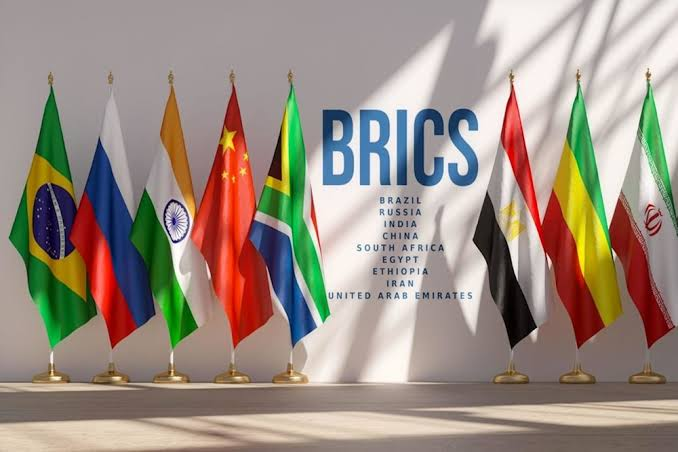
Global economics is changing fast. For decades, a small group of Western countries held almost all the power when it came to global trade, banking, and international decision-making. Today, that picture looks very different, largely because of a group called BRICS.
BRICS has turned into one of the most talked-about topics in global politics and economics. News headlines regularly discuss how member countries are trading in their own currencies, building new financial systems, and inviting new nations to join their alliance.
Understanding BRICS does not require a degree in economics. At its core, it is simply a group of major developing countries working together to gain more influence on the world stage. Here is a full breakdown of what BRICS actually is, why it was created, how it operates, and why it matters to everyday people across the globe.
Breaking Down BRICS: What Does the Acronym Stand For?
The name BRICS is an acronym made from the first letters of its original member countries:
- B – Brazil
- R – Russia
- I – India
- C – China
- S – South Africa
The term started back in 2001. An economist named Jim O’Neill working at Goldman Sachs came up with the label “BRIC” (without the “S”). He used it to describe four fast-growing economies—Brazil, Russia, India, and China—that he believed would dominate the global economy by the middle of the 21st century.
Build Funnels, Email Lists & Sell Online With One Free Tool
Create funnels, send emails, and sell online using Systeme.io without paying for multiple tools.
Create Free AccountFree forever • No credit card • Beginner-friendly
At first, it was just an economic idea written in a financial report. But the leaders of those four countries decided to turn the idea into reality. They began holding official summits in 2009 to discuss shared economic goals.
In 2010, South Africa was invited to join the group, adding the letter “S” to complete the acronym BRICS. The addition gave the alliance a strong footprint in Africa and turned a simple market prediction into a powerful diplomatic club.
The New BRICS+: A Historic Expansion
For over a decade, the five core nations made up the entire group. That changed dramatically when leaders held a historic summit in Johannesburg and formally invited several new member countries to join.
The expansion brought nations like Egypt, Ethiopia, Iran, and the United Arab Emirates into the fold. This expanded group is often called BRICS+.
This expansion changed the scale of the bloc completely:
- Population: BRICS+ represents nearly half of the entire population of the Earth.
- Economic Output: The group accounts for over 30 percent of total global economic output.
- Energy Control: With major oil producers like Iran and the UAE onboard, BRICS+ members now control a huge portion of the world’s crude oil production.
When new economic blocs expand, they alter how nations trade with each other. For example, understanding how regional trade shifts affect local economies can be seen in how ECOWAS faces strain from member exits, showing how alliance changes impact surrounding regions.
Why Was BRICS Formed in the First Place?
To understand why BRICS exists, it helps to look at how international power used to work. For decades after World War II, global rules and financial systems were designed mainly by Western nations, led by the United States and Western Europe.
Institutions like the International Monetary Fund (IMF) and the World Bank made key decisions about international loans, emergency financial aid, and global trade rules. Developing countries often felt their voices were not being heard in these institutions. They felt that loan conditions were often unfair or overly restrictive.
BRICS was created to address those exact concerns. The main goals included:
- Creating a multipolar world: Moving away from a world dominated by a single superpower or a single bloc of Western nations.
- Reforming global institutions: Demanding more voting power for developing nations in organizations like the United Nations and the IMF.
- Boosting trade between emerging markets: Helping developing countries trade directly with each other without relying entirely on Western markets.
- Improving infrastructure: Funding roads, ports, energy grids, and digital networks in developing countries.
As major players expand their reach, nations adapt their economic strategies. You can read more about these shifting dynamics in our analysis of how China challenges US influence globally.
Key Initiatives Driven by the BRICS Alliance
BRICS is not just a club where world leaders gather once a year to take photos. The group has created real tools and initiatives to change how global commerce works.
The New Development Bank (NDB)
One of the biggest moves made by BRICS was creating its own bank in 2015, known as the New Development Bank (NDB), headquartered in Shanghai, China.
The NDB works similarly to the World Bank. It gives loans to member countries and other developing nations for infrastructure and sustainable development projects. The key difference is that the NDB does not attach heavy political conditions to its loans.
Projects funded by the NDB include renewable energy plants, transportation systems, clean water infrastructure, and digital communications network expansion across South America, Asia, and Africa.
Trading in Local Currencies
For decades, if a business in Brazil wanted to sell goods to a company in India, both sides usually settled the payment in United States Dollars. That meant both countries needed large reserves of US Dollars to trade with each other.
BRICS members are actively working to change this habit through a process known as de-dollarization. Member nations now settle trade directly using local currencies like the Chinese Yuan, Indian Rupee, Brazilian Real, or UAE Dirham.
Trading in local currencies saves money on conversion fees and protects smaller countries from sudden fluctuations in the value of the US Dollar.
Alternative Payment Systems
Another major effort involves building secure digital messaging platforms for banking. Most international bank transfers currently use SWIFT, a network based in Europe.
BRICS countries are testing cross-border payment platforms that run independently of SWIFT. This ensures that trade between member states can continue uninterrupted even if international banking restrictions occur elsewhere.
Why Is BRICS So Important to the Global Economy?
The growth of BRICS matters whether you live in North America, Europe, Asia, or Africa. The decisions made inside this bloc directly impact global supply chains, food prices, energy costs, and job markets.
Huge Natural Resources and Manufacturing Power
BRICS brings together countries with incredible natural wealth and manufacturing capability:
- China is the world’s largest manufacturing powerhouse, producing electronics, machinery, and consumer goods sold worldwide.
- Russia and the UAE are major producers of oil, natural gas, and key industrial minerals.
- Brazil and India are agricultural giants, supplying food products like soy, beef, wheat, sugar, and rice across the globe.
- South Africa holds massive reserves of precious metals like gold, platinum, and critical raw materials used in modern technology.
When these nations coordinate their policies, they hold major influence over global commodity prices.
Economic Growth Outpacing Traditional Giants
For a long time, the group of wealthy Western nations known as the G7 (the United States, Canada, the United Kingdom, Germany, France, Italy, and Japan) drove most global economic growth.
Today, the growth rate in BRICS nations is consistently higher than in most G7 economies. As emerging economies grow, they create millions of new consumers, new technology hubs, and expanding business opportunities.
Track these shifts by reading our breakdown on how Nigeria targets a $1 trillion economy through international partnerships. You can also explore how GDP expansion drives local economic growth across developing regions.
How BRICS Affects Developing Nations and Emerging Markets
For developing nations across Africa, Latin America, and Southeast Asia, the rise of BRICS provides new opportunities that did not exist twenty years ago.
More Options for Development Funding
In the past, if a country needed billions of dollars to build a railway line or a solar power grid, it had very few places to turn. If traditional international lenders declined, the project sat stalled.
Build Funnels, Email Lists & Sell Online With One Free Tool
Create funnels, send emails, and sell online using Systeme.io without paying for multiple tools.
Create Free AccountFree forever • No credit card • Beginner-friendly
Now, governments can seek funding from the New Development Bank or partner directly with member states. Having multiple options gives developing nations more room to negotiate fair terms.
Equal Partnership and Shared Technology
BRICS focuses heavily on technology sharing and capacity building. Member countries exchange knowledge on renewable energy, agricultural technology, artificial intelligence, and digital payments.
Technology upgrades directly benefit everyday citizens and entrepreneurs. Modern artificial intelligence applications and digital tools are reshaping businesses everywhere. Check out our latest updates in our Technology & AI section to see how modern tools are transforming local and global businesses.
For independent creators, freelancers, and online business owners, growing global trade networks mean new audiences for digital content. If you want to learn how online creators build scalable digital models, take a look at our guides on YouTube automation trends.
Challenges and Disagreements Inside BRICS
While BRICS is growing stronger, it is not without internal challenges. The member nations are very different from one another, and they do not always agree on every topic.
Different Political Systems and Governments
The member countries have very different systems of government. Brazil, India, and South Africa are vibrant democracies. China is governed by a single party, and Saudi Arabia is a monarchy. Finding common political ground across such different governance models takes constant diplomacy.
Geographic and Economic Disparities
The economies in BRICS are not equal in size. China’s economy is larger than all other original members combined. This creates concerns among smaller members that one country could dominate the decision-making process.
Complex Border and Regional Relations
Some BRICS members have long-standing diplomatic tensions with one another. For instance, India and China have had border disputes for decades. Despite these disagreements, both countries continue to meet at BRICS summits because both see clear value in economic cooperation.
BRICS vs. The G7: A Quick Comparison
Understanding how BRICS fits into the world is easiest when compared side by side with the G7.
- Membership: The G7 consists of established, high-income Western economies (plus Japan). BRICS consists of large, fast-growing emerging markets across Asia, Africa, South America, and the Middle East.
- Focus: The G7 focuses on preserving established international standards, political democratic values, and traditional financial structures. BRICS focuses on reforming global governance, boosting South-South trade, and reducing reliance on Western financial networks.
- Demographics: The G7 represents around 10 percent of the world’s population. BRICS+ represents nearly 45 percent.
- Future Outlook: G7 economies are mature and growing at a steady pace. BRICS economies are expanding rapidly due to younger populations and fast urbanization.
Neither group controls the entire world, but the balance between them shapes global trade policies every single day.
Frequently Asked Questions (FAQs)
Is BRICS a military alliance like NATO?
No. BRICS is strictly an economic and diplomatic alliance. Member countries do not have a mutual defense treaty, and they do not operate a joint military force. They collaborate on economic growth, trade, infrastructure, and international diplomacy.
Will BRICS introduce a single common currency?
There are ongoing discussions about creating a shared digital reference unit or trade currency for member nations. However, replacing national currencies with a single physical currency (like the Euro in Europe) is not happening anytime soon. The immediate focus is on trading directly using each member’s national currency.
Can any country apply to join BRICS?
Yes. Dozens of countries across Africa, Asia, South America, and Eastern Europe have expressed interest or formally applied to join BRICS. The group reviews applications during its official summits and decides based on strategic location, economic contribution, and consensus among members.
How does BRICS impact the value of the US Dollar?
As more nations trade using local currencies, demand for US Dollars in international trade decreases slightly over time. While the US Dollar remains the dominant reserve currency globally, de-dollarization efforts by BRICS are gradually creating a multi-currency trading system.
Does BRICS benefit everyday citizens in member countries?
Yes. By encouraging direct trade and infrastructure investment, BRICS helps create jobs, improve transport infrastructure, lower banking fees for cross-border transactions, and make clean energy projects accessible to millions of people.
The Future of Global Power Balance
The rise of BRICS is a clear sign that global influence is shifting toward a broader, more diverse group of nations. Rather than relying on a single superpower or financial center, the global economy is evolving into a multi-polar system where multiple regional hubs work together.
This shift brings new trade routes, fresh investment opportunities, and more economic choices for countries that were previously left on the sidelines. As BRICS+ continues to expand its membership, build new financial networks, and increase local currency trade, its impact on everyday life—from fuel prices to job creation—will only continue to grow.
Staying informed about these international changes helps you understand how global news connects directly to your local community and personal finances.
To stay up to date on breaking world news, trend breakdowns, and practical lifestyle advice, visit our main about us page to learn more about our mission. If you have questions or story ideas you want us to cover, reach out directly through our contact page.
Join our growing online community and never miss an update by following us on Instagram, connecting with us on Facebook, and getting real-time news alerts on X (formerly Twitter).
