
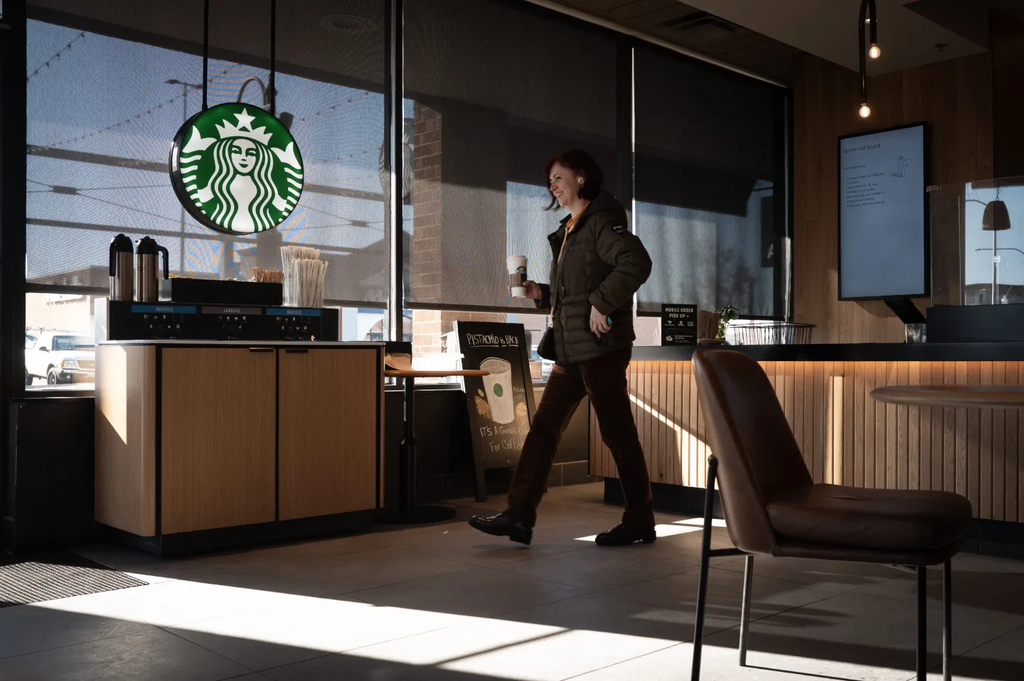
Starbucks is closing 250 stores across North America this week as part of a massive company reorganization. The coffee giant announced the sudden wave of closures in a official regulatory filing, sending shockwaves through local communities and daily morning coffee routines.
According to an internal message sent to employees by Starbucks Chief Operating Officer Mike Grams, the company targeted locations that are failing to hit financial targets or failing to deliver the customer experience expected from the brand. These shutdowns mark the second major wave of store closures under Chairman and Chief Executive Officer Brian Niccol, who took the helm in 2024 to lead a major corporate turnaround.
The closures affect approximately 1% of Starbucks’ nearly 18,000 stores across the United States and Canada. While closing 250 stores might seem like a small fraction on paper, the real-world impact is huge for local customers, baristas, and neighborhood shopping centers that rely on daily foot traffic.
What Is Happening at Starbucks Right Now?
Starbucks expects the process of closing these 250 underperforming coffeehouses to incur roughly $300 million in restructuring charges. Company reports submitted to regulators show that this total includes about $200 million in direct cash charges for lease cancellation agreements and employee separation packages. The remaining $100 million accounts for non-cash charges linked to asset disposals and coffeehouse equipment write-offs.
This move follows a previous restructuring effort that took place in late 2025. During that initial cleanup phase, Starbucks closed 627 stores across North America and Europe while cutting roughly 900 non-retail jobs. Additional corporate layoffs followed in early 2026, when the company trimmed another 300 office positions and closed several underused regional facilities.
The $0 Secret To Launching Your Entire Online Empire
Why pay hundreds every month for separate software? Build funnels, send emails, and make sales with Systeme.io completely free.
Get Started For $0Free Forever • No Credit Card Needed • Beginner-Friendly
Financial analysts at major market firms note that while these closures create heavy short-term costs, they are necessary to fix long-term profit margins. Industry reports covered by major media outlets like The Associated Press and Reuters highlight that Starbucks is prioritizing long-term health over holding onto physical locations that lose money month after month.
The company has chosen not to release a master public list of every location closing this week. However, local store managers have already begun notifying staff and putting up signage at affected locations across various US states and Canadian provinces.
Why Is Starbucks Shutting Down 250 Stores?
To understand why Starbucks is closing 250 stores this week, you have to look at the massive shift happening inside the corporate strategy. For years, Starbucks focused on expanding as quickly as possible. Every corner, mall, and drive-thru spot seemed to get a new green apron crew. But rapid expansion came with a hidden price tag: market saturation, cannibalized sales between nearby stores, and rising operational costs.
The “Back to Starbucks” Strategy Explained
When Brian Niccol left Chipotle Mexican Grill to become Starbucks CEO, he introduced a plan called “Back to Starbucks.” The core goal of this strategy is simple: turn every store into a warm, welcoming destination rather than just an assembly line for mobile orders.
Over the past two years, Starbucks has invested heavily in retrofitting existing cafes. The company set out to renovate 1,500 locations with cozier seating, warmer lighting, and better acoustic designs that encourage people to sit down and enjoy their drinks. At the same time, corporate management introduced new kitchen equipment designed to speed up drink preparation times and simplified complex menus that were overwhelming both customers and baristas.
As COO Mike Grams explained in his memo to staff, renovating and tracking store performance gave executive leaders a crystal-clear view of which cafes were benefiting from the new momentum and which ones were dragging down overall profits. Stores that continued to underperform despite heavy investments were put on the chopping block.
Slower Expansion and Higher Standards
Starbucks is also changing how fast it grows. In previous annual guidance reports, the company planned to open between 600 and 650 net new stores globally each year. Under the updated 2026 strategy, Starbucks has dialed back that expectation to roughly 440 net new stores.
Management wants to make sure every new location added to the network meets strict financial and customer experience standards. Rather than rushing to open hundreds of generic outlets, the coffee chain is focusing resources on high-volume drive-thrus, renovated community hubs, and strategic urban centers. Long-term corporate projections still aim for eventual expansion, but only after the current network runs at peak efficiency.
How These Closures Affect Coffee Drinkers and Local Communities
For millions of people, a morning trip to Starbucks is a hardwired daily habit. Finding out your go-to store is closing down can be surprisingly frustrating.
When a local store closes, neighboring Starbucks locations often experience an immediate surge in drive-thru traffic and mobile pickup orders. This sudden influx can cause longer wait times during peak morning hours, making it harder for everyday commuters to get their caffeine fix quickly.
These closures also highlight how daily routines are constantly shifting. Many consumers are re-evaluating how much time and money they spend on daily convenience items. Some coffee drinkers are choosing to brew premium coffee at home, while others are exploring local independent coffee shops.
If you find yourself adjusting your morning routine or looking for ways to streamline your daily schedule, learning how to use your phone less in 2026 without feeling like you are missing out can help you stay grounded when everyday habits get disrupted. Additionally, understanding how modern digital ordering apps track your preferences through everyday habits powered by artificial intelligence offers fascinating insight into why fast-food and coffee apps structure their rewards programs the way they do.
What This Means for Baristas and Local Workers
The human side of any retail closure is always the most important story. Hundreds of baristas, shift supervisors, and store managers are directly impacted by this week’s announcement.
Transfers, Severance, and Job Security
Starbucks leadership stated that store employees at affected locations will be offered transfer opportunities to nearby coffeehouses wherever feasible. Because Starbucks maintains a dense network of stores in most metropolitan areas, many baristas will be able to keep their jobs, hours, and benefits by moving to a neighboring location.
For workers in areas where nearby stores do not have open positions, Starbucks is providing severance packages and job placement assistance. While severance offers help soften the blow, losing a steady job remains a stressful experience for retail workers dealing with housing costs and everyday living expenses.
Send, Spend & Hold Money Worldwide Without Hidden Fees
Transfer money internationally at the real exchange rate and hold 40+ currencies in one account.
Open a Wise AccountMid-market rate • Fast transfers • 40+ currencies
The news comes during a complicated time for labor relations at the company. Over 700 US Starbucks stores have voted to unionize in recent years. While Starbucks has not explicitly connected store closures to union activity, labor organizers frequently closely examine store shutdown lists to see if unionized locations are disproportionately affected.
Finding New Opportunities in a Changing Job Market
For retail workers affected by corporate downsizing, exploring new career paths or extra income sources has become more important than ever. The modern labor market offers many alternative paths outside of traditional shift work.
Anyone navigating a job transition can stay updated on general employment trends by reading about how the US job growth bounces back and what unemployment rates mean for you.
If you want more flexibility than physical retail work provides, taking time to learn how to get a fully remote job that lets you work from anywhere in the world can open up flexible career paths. You can also explore flexible income streams by checking out 10 no-experience side hustles you can start right now.
The Bigger Picture: Corporate Restructuring and Changing Consumer Habits
Starbucks is not the only retail titan rethinking its physical footprint. Major chains across North America are adjusting to shifting consumer behaviors, rising supply costs, and changing economic conditions.
Shifting Consumer Preferences and Price Sensitivity
Over the past few years, inflation has pushed up the price of dairy, coffee beans, paper cups, and retail space leases. A specialty handcrafted drink at Starbucks can easily cost between $6 and $8. While loyal fans continue to buy their favorite drinks, price-conscious consumers are thinking twice before spending money on daily extras.
Executive commentary during recent investor calls showed that customer traffic has shown positive signs of recovery, but profitability per store remains under tight scrutiny. When a store faces rising rent costs, higher local minimum wages, and declining foot traffic, holding that location open becomes financially unsustainable.
Lessons for Small Businesses, Freelancers, and Entrepreneurs
The decision by Starbucks to close 250 underperforming stores contains valuable business lessons for entrepreneurs, small business owners, and digital creators. The main takeaway is simple: growing bigger is not always the same as growing smarter.
Just like a massive coffee corporation must cut underperforming locations to protect its overall health, independent business owners must regularly audit their operations. If a product line, service offering, or store location is draining your energy and capital without delivering a solid return, cutting your losses is often the healthiest choice you can make.
If you are running an independent brand or side business, you can apply these same lean principles to your operations:
The $0 Secret To Launching Your Entire Online Empire
Why pay hundreds every month for separate software? Build funnels, send emails, and make sales with Systeme.io completely free.
Get Started For $0Free Forever • No Credit Card Needed • Beginner-Friendly
- Build Sustainable Online Income: If you are transitioning into digital business models, read this guide on how to start freelancing and make money online today to build a flexible skill set.
- Leverage Modern Business Automation: Small business owners can save thousands of dollars on operational overhead by exploring how AI is becoming the ultimate first hire for small business programs.
- Monetize Creative Content: Creators looking to partner with brands can learn what user-generated content is and how to sell it.
- Focus on E-Commerce Efficiency: Physical retailers are increasingly shifting toward online sales models. If you want to build an online retail store without high inventory overhead, review these 15 trending dropshipping products to sell online for high profits.
By staying lean, watching profit margins, and adapting quickly to customer needs, small businesses can thrive even when major corporate giants struggle to keep their doors open.
Frequently Asked Questions (FAQs)
Why is Starbucks closing 250 stores this week?
Starbucks is closing 250 underperforming stores across North America to eliminate financial losses, streamline store operations, and improve overall profit margins. The move is part of CEO Brian Niccol’s “Back to Starbucks” turnaround strategy, which focuses on investing in high-performing locations and creating a cozier, faster customer experience.
How do I know if my local Starbucks is closing?
Starbucks does not publish a single master list of closing stores for the public. However, affected stores usually inform customers directly with posted signs, updated hours on the Starbucks mobile app, and notices from store staff a few days before the final operating day.
What happens to employees who work at the closing stores?
Starbucks Chief Operating Officer Mike Grams stated in an internal employee memo that baristas and store managers at closing locations will be offered transfers to nearby Starbucks stores where job openings exist. Employees who cannot be placed in a nearby location will receive severance support and transition assistance.
Is Starbucks closing stores because it is going out of business?
No, Starbucks is not going out of business. The company operates nearly 18,000 stores across North America and tens of thousands more worldwide. Closing 250 underperforming locations represents roughly 1% of its North American footprint. The company is actively opening new high-volume stores and retrofitting existing locations to improve sales performance.
How much money will this store closure plan cost Starbucks?
Starbucks estimates that closing these 250 locations will result in approximately $300 million in restructuring charges. This includes $200 million in direct cash charges for lease exits and severance payouts, alongside $100 million in non-cash charges for property and equipment write-offs.
Staying Ahead of the Curve
Corporate moves like the Starbucks store closures show just how fast the retail and business landscape can change. Companies that adjust quickly to consumer demand stay strong, while those that move too slowly are forced to make painful cuts down the road. Staying informed about consumer trends, market shifts, and career opportunities gives you a major advantage whether you are running a business, managing a team, or planning your personal finances.
To learn more about who we are and what drives our team, visit our About Page to explore our mission. If you have questions, feedback, or news tips you would like to share with our editorial staff, feel free to reach out directly through our Contact Page.
You can also follow along with our latest story updates, community discussions, and breaking news alerts across our social media platforms on Instagram, Facebook, and X (formerly Twitter).
