
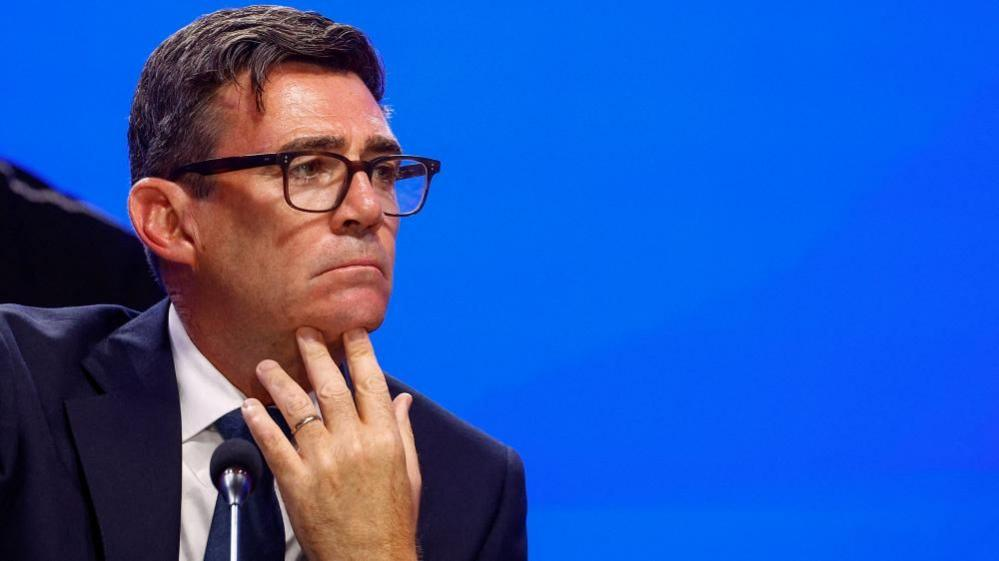
Britain and the European Union were supposed to spend Friday celebrating a brand-new chapter in their post-Brexit relationship. Instead, leaders in Brussels dropped a political bombshell just as UK Prime Minister Andy Burnham arrived for the high-stakes summit on November 20, 2026.
European officials made one thing crystal clear before the ink could even dry on the paperwork. Three major agreements covering food trade, carbon emissions, and youth travel will not take effect unless Britain agrees to slash university tuition fees for European students.
For months, negotiators on both sides have worked late into the night trying to fix some of the biggest everyday headaches created when Britain left the bloc in 2020. Shoppers wanted cheaper groceries, factories wanted fewer border taxes, and young people wanted an easier way to live and work abroad.
Now, all of those plans are tied directly to one emotionally charged question: how much should a student from Paris, Madrid, or Warsaw pay to attend a British university?
What Actually Happened at the Brussels EU-UK Summit Today?
The drama unfolded in Brussels during the second formal EU-UK summit, a follow-up to the inaugural gathering held in London back in May 2025. Originally scheduled for July 2026, the meeting was pushed back to November after former Prime Minister Keir Starmer resigned earlier in the year.
The $0 Secret To Launching Your Entire Online Empire
Why pay hundreds every month for separate software? Build funnels, send emails, and make sales with Systeme.io completely free.
Get Started For $0Free Forever • No Credit Card Needed • Beginner-Friendly
Prime Minister Andy Burnham traveled to Belgium hoping to sign off on a practical package of deals alongside European Commission President Ursula von der Leyen and European Council President António Costa. Downing Street had even signaled that if talks went smoothly, ministers would introduce a new “Cutting Costs Bill” in Parliament the very next week.
Yet as Burnham prepared to step into the summit room, EU diplomats delivered a blunt warning. According to live coverage from The Guardian, a joint statement from the EU Council and European Commission spelled out that all four strands of the summit form a single, indivisible package.
In plain terms, Brussels is refusing to let Britain cherry-pick the easy wins. The EU insists that the tuition fee agreement must provide equal treatment with British nationals for European students.
To avoid a complete collapse of the summit, negotiators hammered out a late compromise that gives Britain a six-month countdown. London now has until May 2027 to work out a legally binding settlement on student fees, or the other three agreements remain frozen on the shelf.
Why Are University Tuition Fees Suddenly the Biggest Dealbreaker?
To understand why a dispute over college classrooms is holding up food trucks and steel exports, you have to look at how dramatically Brexit changed higher education in Britain.
Before Britain left the European Union, students from all 27 EU member states were treated just like local British students when they applied to universities in England, Scotland, Wales, or Northern Ireland. They paid the exact same domestic tuition rate and could access the same student loan support.
Once Brexit took full effect, that arrangement vanished overnight. European applicants were reclassified as international students, placing them in the exact same fee bracket as students arriving from the United States, India, or Nigeria.
How Much More Do European Students Pay Since Brexit?
The financial jump for European families has been massive. Domestic undergraduate students in England currently pay capped tuition fees of around £9,535 to £9,790 per year.
By comparison, international tuition fees at British universities regularly climb anywhere from £20,000 to £38,000 per year depending on the university and the subject. For a standard three-year bachelor’s degree, that difference can easily add up to more than £60,000 in extra costs.
Unsurprisingly, thousands of young Europeans decided Britain was simply too expensive. Data from the Higher Education Statistics Agency, highlighted by The Campus Review, shows that total EU student enrollment at UK universities plummeted from roughly 153,000 in the 2020–21 academic year to around 63,600 by 2024–25.
Research from the University of Oxford’s Migration Observatory paints an even sharper picture, noting that the number of EU students starting brand-new courses in Britain dropped by 57% between 2020–21 and 2023–24. For European governments, bringing those numbers back up has become a top priority in any friendship reset with London.
Why Are British Universities So Worried About Losing £450 Million?
On the British side of the English Channel, cutting those fees back down creates a huge financial headache.
British universities are currently facing one of the tightest financial squeezes in decades. Because domestic tuition caps have barely kept pace with inflation, many universities actually lose money teaching British undergraduates.
To balance their budgets and fund scientific research, universities rely heavily on the higher tuition fees paid by international students, including those from Europe. Reports from London Loves Business estimate that slashing EU student fees back to domestic levels could cost around £450 million every single year.
University leaders warn that unless the British government steps in to cover that £450 million gap out of taxpayer money, several struggling institutions could face severe budget deficits, course closures, or staff layoffs.
Send, Spend & Hold Money Worldwide Without Hidden Fees
Transfer money internationally at the real exchange rate and hold 40+ currencies in one account.
Open a Wise AccountMid-market rate • Fast transfers • 40+ currencies
At the same time, spending £450 million of public money to subsidize European students is a tough political sell at home. Just recently, the UK government moved to freeze repayment thresholds on Plan 2 student loans for English and Welsh graduates—a decision the Office for Budget Responsibility says will pull an extra £400 million a year out of British workers’ pockets.
Asking British graduates to pay more on their own student loans while offering steep discounts to students from overseas is political dynamite, which explains why UK negotiators fought so hard to keep full “home fee” status out of today’s final text.
Which Three Major Brexit Reset Deals Are Now Sitting on Hold?
Because Brussels has linked everything together, the tuition fee standoff directly affects three major agreements that millions of ordinary people and businesses have been waiting for.
How Would the Food and Drink Deal Change Supermarket Prices and Border Checks?
The first agreement on the table is a veterinary and plant health deal—known in trade circles as a sanitary and phytosanitary, or SPS, agreement.
Since Brexit, British farmers, cheesemakers, meat exporters, and European food suppliers have dealt with mountains of extra paperwork, veterinary health certificates, and physical border inspections. Those delays add real costs to shipping fresh food across the Channel, and shoppers end up paying for that friction at the supermarket checkout.
Under the proposed deal, Britain would dynamically align its food and agricultural rules with European Union standards. In exchange, routine border checks on meat, dairy, wine, flowers, and fresh produce would disappear.
Even if the tuition fee row gets solved within six months, this food deal is not scheduled to kick in until around March 2028 because Parliament must pass new laws to match EU standards—a step that will even require Britain to drop a planned ban on foie gras imports.
One frustrating catch for animal lovers is that pet passports were left out of the current draft. That means British families taking their dog or cat on holiday to France or Spain will still have to pay up to £200 per trip for special animal health certificates until further changes are agreed.
Why Does Linking Carbon Markets Matter for British and European Factories?
The second agreement held in limbo involves climate policy and heavy industry.
Both the UK and the EU run emissions trading systems that charge factories and power plants for the carbon they release into the atmosphere. After Brexit, those two carbon markets split apart.
The $0 Secret To Launching Your Entire Online Empire
Why pay hundreds every month for separate software? Build funnels, send emails, and make sales with Systeme.io completely free.
Get Started For $0Free Forever • No Credit Card Needed • Beginner-Friendly
That split created a looming problem: both Brussels and London have been rolling out border carbon taxes on imported industrial goods like steel, cement, and electricity so foreign factories cannot undercut local green rules. Without a formal link between the two systems, British steelmakers selling into Europe—and European companies selling into Britain—face costly double charges and extra customs reporting.
Reconnecting the two emissions markets would exempt British and European businesses from each other’s carbon border taxes, protecting thousands of manufacturing jobs on both sides.
Who Gets to Use the New 100,000-Person Youth Mobility Scheme?
The third deal—and the one drawing the biggest public attention—is a brand-new youth mobility scheme for people aged 18 to 30.
If implemented, the program will let young British citizens live, work, study, volunteer, or travel in EU countries for up to three years, while giving young Europeans the exact same opportunity in Britain.
In the run-up to Friday’s summit, the two sides clashed over how big the program should be. British ministers initially wanted a strict cap of 50,000 to 80,000 visas a year to prevent net migration numbers from jumping. Brussels pushed hard for a much larger number, and as reported by The London Economic, negotiators closed in on a 100,000 annual cap.
There is one important catch for anyone currently in their late twenties: because individual European countries control their own national work permits, the youth mobility scheme might not fully open until 2028 or even January 2030.
On a brighter note for music fans, the draft text also includes a promise to explore better rules for British touring artists and bands, who have faced expensive visa and equipment paperwork across Europe since 2021.
What Is Britain Hoping to Get Back Through the Made in Europe Plan?
You might wonder why Prime Minister Andy Burnham was willing to discuss spending up to £450 million a year on European student fee discounts in the first place. The answer comes down to big industrial money.
The European Union is currently drafting a major piece of legislation called the Industrial Accelerator Act, widely known as the “Made in Europe” plan. Due to be finalized around spring 2027, this policy is designed to steer European government contracts and public subsidies toward European-made clean technology, including electric vehicles, renewable energy gear, and nuclear power components.
If Britain is locked out of the Made in Europe club, British carmakers, battery plants, and green energy firms could lose billions of pounds in European contracts.
Getting British manufacturers included in Made in Europe is arguably Burnham’s number-one economic goal. However, countries like France and members of the European Parliament have taken a tough stance. They worry that if Britain stays outside the EU’s trade-defense rules—such as high tariffs on subsidized Chinese electric cars—foreign companies could assemble parts in Britain and use the UK as a back door into the European market.
Seeing how badly London wants access to Made in Europe, EU negotiators used tuition fees as their strongest piece of leverage. Essentially, Brussels told London that if British factories want European public money, European students deserve fair tuition rates in British lecture halls.
Why Are Politicians in London Fighting So Hard Over This Deal?
Back home in Britain, the fallout from Brussels has immediately reignited fierce political arguments over Brexit.
Prime Minister Burnham has defended his strategy as basic economic common sense. Speaking ahead of the talks, he argued that the real test of any agreement is simple: does it lower everyday bills and make life better for working people in Britain? He also stressed that in an increasingly unstable world, Britain and Europe are stronger when they cooperate on trade, energy, and border security.
Opposition leaders see things very differently. Conservative Shadow Environment Secretary Victoria Atkins dismissed the negotiations as “an EU setback, not an EU reset,” warning that accepting EU food and industrial rules hands back control over British laws without giving Britain a seat at the decision-making table. Conservative leader Kemi Badenoch echoed that criticism, accusing the government of drifting back into paying money to Brussels while remaining outside the union.
Even inside Burnham’s own Labour Party, some lawmakers representing former industrial towns in northern England have expressed quiet nervousness. They worry that voters who backed Brexit in 2016 could turn against the government if they feel local taxpayers are footing the bill for cheaper university degrees for overseas students.
What Happens Next During the Six-Month Countdown?
Despite the tense headlines coming out of Belgium today, the Brexit reset is not dead—it is locked in a six-month overtime period.
Between now and May 2027, British and European negotiators will try to bridge the gap between two competing options leaked in the draft summit documents, as detailed by Anadolu Agency.
The first option is full “equal treatment,” where EU students pay the exact same ~£9,790 rate as British students, with the UK Treasury likely reimbursing universities for the difference. The second option is a middle-ground compromise: creating a “significantly reduced undergraduate” fee tier for European students that sits somewhere between domestic rates and full international prices.
Everything also hinges on how the EU’s Made in Europe industrial rules take shape next spring. If Brussels opens the door for British electric vehicle and clean-tech firms, Downing Street will have a much easier time justifying a tuition fee compromise to British voters and university vice-chancellors.
We love hearing how big global policy shifts like this affect your plans—from studying abroad to running a cross-border business. If you have a story tip, a question, or an opinion on today’s summit, reach out directly through our Whatsbuzzn contact page. You can also follow our daily breaking news updates and join the discussion on Instagram, Facebook, and X.
What Are the Most Frequently Asked Questions About the EU-UK Brexit Reset Deal?
Did the UK and EU Cancel the Brexit Reset Deal Today?
No, the deal has not been canceled. Both sides reached broad agreement on the frameworks for food trade, carbon emissions linking, and youth mobility at the November 20, 2026 Brussels summit. However, the EU made it clear that none of those three agreements will officially enter into force until Britain and the EU finalize a parallel agreement on university tuition fees within the next six months.
When Will European Students Actually Pay Lower Tuition Fees in Britain?
Nothing changes for students starting courses right away. Negotiators have six months—until May 2027—to agree on whether EU students will get full British “home fee” rates or a discounted mid-tier rate. Even after a final deal is signed, universities and governments will need time to update admissions and funding rules before lower fees appear on application forms.
When Can Young People Apply for the Three-Year Youth Mobility Visa?
While both sides moved close to a 100,000 annual visa cap for 18- to 30-year-olds, the program is not opening immediately. Because individual EU countries manage their own national work permits, leaked draft texts show the two sides aim to apply the agreement by 2028 and have placements running no later than January 2030.
Does This Deal Bring Back Free Pet Passports for British Travelers?
Unfortunately, not yet. Pet passports are tied to the wider food and animal health agreement, and they were left out of the current summit text. British pet owners traveling to the EU with dogs or cats still need to pay up to £200 per trip for animal health certificates until future updates are negotiated.
Does This Agreement Mean Britain Is Rejoining the EU Single Market?
No. Prime Minister Andy Burnham has repeatedly stated that the reset is about reducing trade friction and lowering household costs rather than reversing Brexit. Britain will remain outside the EU Single Market and Customs Union, though it is agreeing to align with specific EU rules on food safety and carbon emissions to remove border checks.
Where Does the UK-EU Relationship Go From Here?
Friday’s dramatic standoff in Brussels proves one undeniable truth about post-Brexit politics: ten years after the 2016 referendum, rebuilding trust between Britain and the European Union is still a tough, inch-by-inch negotiation.
Prime Minister Andy Burnham went to Belgium looking for practical wins that would lower supermarket prices and boost British industry. Brussels responded by reminding London that closer partnership comes with a price tag—and right now, that price tag is written on a university tuition invoice.
Over the next six months, every eyes-on-the-clock meeting between London and Brussels will come down to finding a middle ground that saves British universities from a £450 million funding hole while giving European students an affordable path back to UK campuses. Until that compromise is signed, Britain’s big Brexit reset stays firmly in the waiting room.
