
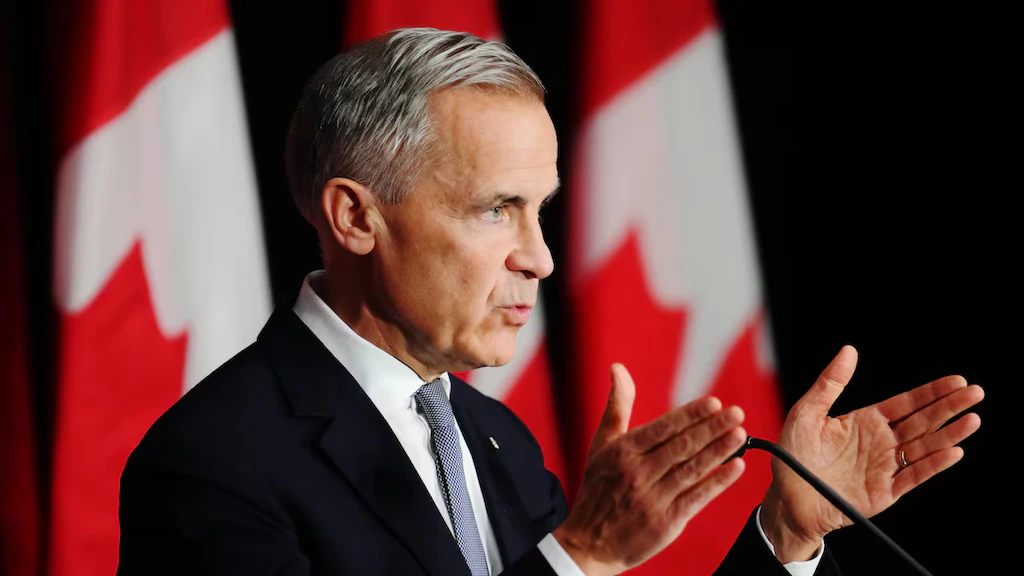
Canadian Prime Minister Mark Carney is pulling off one of the biggest economic moves in modern history. After months of rising tensions, harsh new tariffs, and impossible demands from Washington, Canada has officially hit pause on trade talks with the United States. Instead of backing down or accepting a bad deal, Ottawa is packing its bags and heading across the oceans to find brand-new friends in Europe, Asia, and beyond.
On paper, it looks like a bold and dramatic split. Canadian flags are flying in Brussels, high-stakes defense meetings are happening in Paris, and new trade pathways are opening across Asia. But behind all the big speeches and headline-grabbing handshakes, Mark Carney knows a secret that every economist already understands: you cannot simply erase geography.
The United States isn’t just Canada’s neighbor. It is an economic powerhouse sitting right next door. While building new partnerships around the world is a smart safety net, replacing the American market completely is nearly impossible. Understanding what this global pivot really means requires looking at why Canada walked away, where it is heading next, and the hard physical limits of reshaping a nation’s economy.
Why Canada Walked Away from Washington
To understand how Canada got here, you have to look at what happened at the bargaining table. For decades, Canadian companies and workers operated under clear trade rules with the U.S. Goods moved smoothly across the border, factories built parts together on both sides, and businesses could plan for the future with confidence.
That predictability vanished when new U.S. trade policies kicked in. Heavy tariffs were slapped on critical Canadian exports like steel, aluminum, energy, and agricultural products. Negotiators from Washington demanded changes that would directly undercut Canadian economic control, targeting everything from domestic supply management to national energy decisions.
The $0 Secret To Launching Your Entire Online Empire
Why pay hundreds every month for separate software? Build funnels, send emails, and make sales with Systeme.io completely free.
Get Started For $0Free Forever • No Credit Card Needed • Beginner-Friendly
Rather than signing a weak agreement that would harm workers for years to come, Mark Carney made the tough choice to call off negotiations and bring Canadian representatives back home to Ottawa. It was a dramatic step, but Canadians overwhelmingly supported the move. A major public opinion survey revealed that Canadians strongly stand behind PM Mark Carney’s decision to reject the U.S. trade deal.
Political leaders across the spectrum agreed that standing up for national interests was the only choice left. Even former Prime Minister Stephen Harper publicly remarked that Canada had no choice but to walk away from U.S. trade talks under such extreme pressure. To ease the immediate strain on domestic industries, Mark Carney promised government support for Canadians as the U.S. trade war deepens, signaling that Canada was ready to dig in for the long haul.
The Global Pursuit: Courting Europe, Asia, and Beyond
Once the door to Washington closed, Canada immediately began opening new ones around the world. At the World Economic Forum earlier this year, Mark Carney delivered a clear warning to middle-tier nations: in a world governed by raw power, smaller and medium-sized democratic countries must band together, or risk getting pushed around.
That philosophy quickly turned into action. Ottawa launched a massive diplomatic campaign focused heavily on Europe. The most talked-about move came when Canada started exploring a novel arrangement to gain associate status within the European Union. You can read the full story on how Canada’s pivot to Europe pushed for EU associate status as U.S. trade talks collapsed.
Naturally, a move this historic raised plenty of questions and a few misunderstandings. Critics began claiming that joining hands with Brussels would mean Canadians paying European taxes or handing over lawmaking authority. However, policy experts clarified that Canada isn’t paying EU taxes in this bold new alliance with Europe. Instead, the partnership focuses strictly on shared economic security, joint research, energy innovation, and mutual defense cooperation.
The transatlantic push did not stop there. Canada signed major new agreements with individual European nations:
- France: Canada entered into joint aerospace and technology deals. People began asking if Canada and France teaming up on space launches means Mark Carney is officially ditching America for Europe.
- Ukraine: Ottawa locked in a massive long-term defense agreement. Learn more about how Canada and Ukraine signed a historic 100-year deal involving millions of drones and air defense.
- European Union Defense: Canadian defense contractors gained access to Europe’s trillion-dollar military rearmament programs, allowing local firms to build for overseas partners.
This sudden European alliance drew swift commentary from Washington. Former President Donald Trump called Canada’s EU strategy laughable and warned of consequences. Carney did not back down, delivering a sharp response to clarify that Canada makes its own choices as a sovereign nation. You can see how Trump called Canada’s EU deal laughable and Mark Carney gave a fiery response.
At the same time, Canadian diplomats are busy in Asia and South America, working to expand free-trade deals with India, Japan, South Korea, and Mercosur member states. Canada is also paying close attention to broader shifts in international trade blocs, including how groups like BRICS are reshaping global economic power.
The Hard Reality: Geography and the Limits of Trade Diversification
While signing international deals looks impressive on news clips, running a national economy requires dealing with physical facts. This is where the concept of “limits” comes into play. Mark Carney is a skilled former central banker, and he knows that no matter how many agreements Canada signs in London, Berlin, or Tokyo, Europe and Asia cannot simply replace the United States overnight.
Here are the main reasons why replacing the U.S. market is much harder than it sounds:
1. Physical Infrastructure and Proximity
Canada and the United States share the longest undefended border on Earth, spanning thousands of miles. Pipelines carrying Canadian crude oil run directly into American refineries. Power grids in Ontario and Quebec send electricity straight into New York and New England. Freight trains carrying lumber, grain, and auto parts move back and forth every single day across seamless rail links.
Shipping those same products across the Atlantic to Europe or across the Pacific to Asia requires ports, cargo ships, specialized liquefied natural gas (LNG) export terminals, and massive shipping container fleets. Building that physical infrastructure takes years—sometimes over a decade—and costs billions of dollars.
2. Market Size and Consumer Habits
The U.S. economy is massive, and American consumers buy roughly 70 percent of everything Canada exports. American buyers use the same electrical outlets, drive similar cars, eat similar food, and follow similar product safety standards.
When a Canadian company sells to the U.S., shipping costs are low, delivery times are short, and customer habits are almost identical. Selling to Europe or Asia means dealing with different languages, complex local consumer laws, different electrical voltages, strict foreign border checks, and higher shipping rates.
3. European Domestic Protections
Europe is a fantastic market for high-tech items, clean energy, and specialized minerals, but it also protects its own farmers and local industries. European agricultural rules are notoriously strict, making it difficult for Canadian farmers to sell grain or meat at the same volume they used to sell south of the border.
Send, Spend & Hold Money Worldwide Without Hidden Fees
Transfer money internationally at the real exchange rate and hold 40+ currencies in one account.
Open a Wise AccountMid-market rate • Fast transfers • 40+ currencies
In simple terms, Europe wants Canadian critical minerals and green technology, but it isn’t going to buy every single commodity that Canada produces.
4. Supply Chain Integration
The North American car industry is a perfect example of deep economic integration. A single auto component might cross the Detroit River between Windsor and Detroit four or five times before it ends up in a finished vehicle. You cannot easily unpack forty years of integrated manufacturing and ship half-built engine blocks to Germany or Japan instead.
Mark Carney knows these limits well. His strategy isn’t about cutting off the United States forever or pretending North American geography doesn’t exist. Instead, it is about reducing vulnerability. If Canada exports 70 percent of its goods to one single neighbor, that neighbor holds total leverage during any disagreement. If Canada can reduce that share to 50 percent by selling more to Europe, Asia, and Latin America, Canada gains breathing room and stronger bargaining power.
Building at Home: The ‘Build Here’ Strategy and Everyday Impact
Because foreign trade diversification takes time, Canada’s strategy also focuses inward. The government introduced what it calls the “Build Here” strategy. The main goal is simple: make more of the things Canadians need right inside Canadian borders.
Rather than sending raw timber, crude oil, and raw minerals overseas and buying back finished products at higher prices, the plan encourages local processing, domestic manufacturing, and clean-energy projects. To dive deeper into this domestic effort, check out how Canada’s Build Here strategy shows how Mark Carney plans to fight back against new U.S. tariffs.
This policy shift is changing how everyday citizens think about shopping and travel. Across Canadian towns and cities, people are choosing locally made goods, supporting home-grown businesses, and opting for domestic vacation spots over traditional trips across the border. Read about the great northern backlash and why Canadians are ditching U.S. goods and vacations.
Building domestic factories, upgrading ports, and expanding clean-tech manufacturing will not solve every issue overnight. In the short term, tariffs mean higher prices at grocery stores, changes in product selection, and tighter budgets for families. But supporters argue that taking on short-term pain is better than accepting permanent economic control from a foreign power.
Frequently Asked Questions (FAQs)
Why is Canada looking for new trade partners right now?
Canada is actively seeking new trade partners because trade negotiations with the United States stalled following heavy new American tariffs and strict sovereignty demands. By expanding economic ties with Europe, Asia, and other regions, Canada aims to protect its domestic economy and reduce its heavy reliance on a single foreign market.
Is Canada actually becoming a member of the European Union?
No, Canada is not becoming a full member of the European Union, nor is it paying European taxes or giving up its lawmaking authority. Ottawa has explored “associate status” and special bilateral agreements with the EU to cooperate closely on defense, green technology, clean energy, and shared trade standards without sacrificing national independence.
Can Europe or Asia fully replace the U.S. market for Canada?
No single region can completely replace the U.S. market. The United States shares a massive physical border with Canada, along with decades of connected pipelines, rail lines, and shared manufacturing chains. While Europe and Asia offer valuable new opportunities, Canada’s goal is to spread its economic risk rather than pretend geography does not matter.
The $0 Secret To Launching Your Entire Online Empire
Why pay hundreds every month for separate software? Build funnels, send emails, and make sales with Systeme.io completely free.
Get Started For $0Free Forever • No Credit Card Needed • Beginner-Friendly
How does this trade war affect everyday Canadians?
In the short term, trade friction and tariffs can lead to higher prices on imported goods, shifts in consumer choices, and extra pressure on border-dependent industries. However, it has also sparked a strong surge in local shopping, increased support for Canadian-made products, and new government investments in domestic manufacturing and infrastructure.
What This Means for the Future
The current trade standoff between Canada and the United States marks the end of an era where seamless North American trade could simply be taken for granted. Mark Carney’s global strategy is a realistic attempt to navigate a changing world where old rules no longer apply.
By seeking new partners across Europe, Asia, and Latin America while investing heavily in domestic industries through the Build Here strategy, Canada is creating a safer, more balanced economic future. Prime Minister Carney knows that the United States will always remain Canada’s largest geographical neighbor and an essential economic factor. But by building real alternatives abroad and strength at home, Canada is proving that it will never be forced into a bad deal.
To learn more about our team and why we cover global stories that matter, visit our About Us page. Have thoughts, feedback, or a news tip to share with our editors? Reach out directly through our Contact Page.
Stay connected with us across social media for daily updates, viral stories, and trending news:
- Follow us on Instagram
- Join our community on Facebook
- Get real-time updates on X (formerly Twitter)
