
Trade relations between Canada and the United States have taken a dramatic turn. U.S. President Donald Trump has introduced a fresh wave of trade restrictions and import tariffs targeting Canadian goods. The sudden announcement has sent shockwaves through cross-border supply chains, leaving business owners and workers wondering what comes next.
Prime Minister Mark Carney is pushing back with a direct message to the nation and the world. Instead of backing down or waiting for Washington to change its mind, Canada is doubling down on a policy focused on national self-reliance: build here, produce here, and sell to the world.
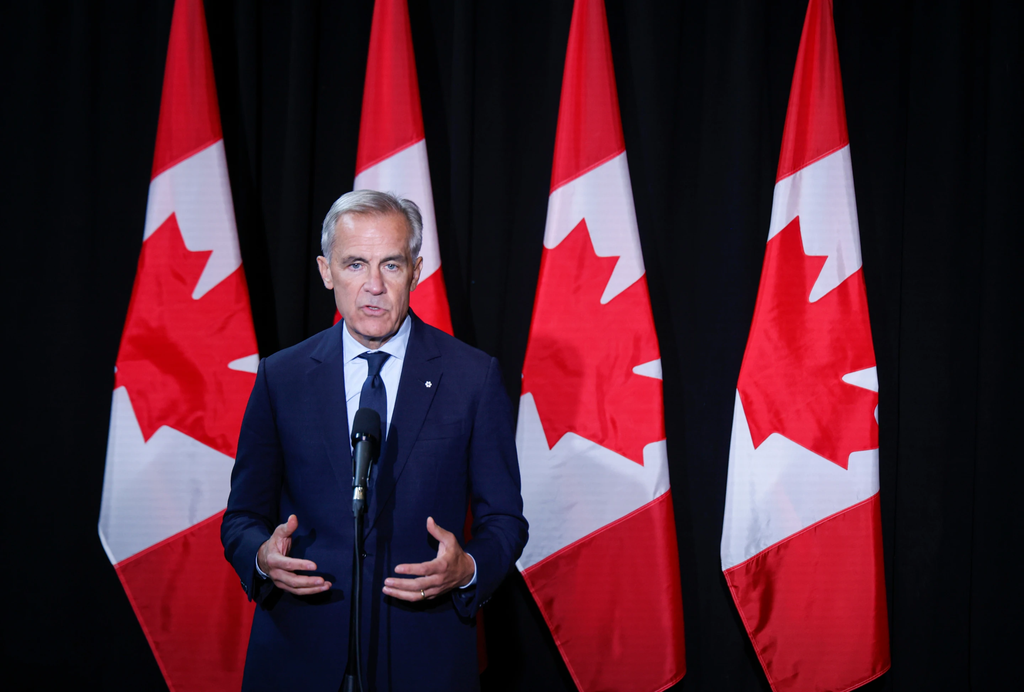
Speaking to reporters following meetings in Western Canada, Carney made it clear that Ottawa has a plan to protect local jobs and keep the economy moving forward. The strategy focuses on building critical infrastructure, expanding local manufacturing, and making Canada an attractive home for international investors who want stability in an uncertain world.
Businesses across North America are now scrambling to adjust before new import bans take full effect on September 29. Many companies are actively searching for ways to bypass tariff costs, with several considering shifting production lines directly onto Canadian soil.
The Escalating Trade Conflict Between Ottawa and Washington
The trade tension between the two long-standing partners did not happen overnight, but recent events have accelerated the dispute. After Washington unveiled new executive orders restricting trade, Ottawa responded with targeted counter-tariffs to protect domestic industries.
Build Funnels, Email Lists & Sell Online With One Free Tool
Create funnels, send emails, and sell online using Systeme.io without paying for multiple tools.
Create Free AccountFree forever • No credit card • Beginner-friendly
The immediate result has been widespread uncertainty across several key sectors, including automotive manufacturing, agriculture, steel, and consumer goods. For decades, Canadian and American factories have worked as a single integrated network. Parts often cross the border multiple times before a final product is assembled and sold.
Now, new tariff barriers threaten to break those shared supply chains. Industry experts warn that added costs will hurt businesses on both sides of the border and ultimately drive up prices for everyday shoppers.
Major grocery chains and retail suppliers are already feeling the pressure. Some suppliers have requested immediate price increases to cover tariff expenses, though large retailers are resisting those demands for as long as possible to protect consumers from sudden spikes in food bills.
Political leaders across Canada are expressing strong concern. Ontario Premier Doug Ford spoke out publicly about the situation, stating that earlier proposed trade arrangements would have harmed the local economy from top to bottom. Ford reaffirmed his support for expanding regional protections for local manufacturing workers.
At the same time, federal Opposition Leader Pierre Poilievre addressed international audiences, emphasizing that despite domestic political differences, Canadian leaders stand united when defending the country’s economic interests abroad.
Unpacking the ‘Build Here’ Strategy
At the center of Prime Minister Carney’s response is a broad economic blueprint aimed at transforming Canada from a regional supplier into an independent global power. The core idea is straightforward: produce more essential goods at home so the country is less vulnerable to decisions made in other capitals.
The “Build Here” initiative rests on several main pillars designed to strengthen domestic industries over the coming decade:
- Energy Powerhouse Investment: Canada is using its vast natural reserves to secure its standing as an energy superpower. This includes expanding oil, natural gas, and clean electricity networks across provinces.
- Critical Minerals Development: The country holds some of the world’s largest undeveloped deposits of critical metals and minerals. These raw materials are essential for building electric vehicles, batteries, microchips, and renewable energy grids.
- Skilled Workforce Training: To support new factories and construction projects, the government is funding apprenticeship programs in skilled trades. Covering training costs makes it easier for workers to enter high-paying industrial careers.
- Infrastructure Upgrades: Expanding ports, railways, and freight hubs helps Canadian goods reach markets in Europe, Asia, and Latin America without relying exclusively on U.S. transit routes.
- Housing Expansion: Accelerating residential construction aims to double the building pace over the next decade, ensuring growing communities have affordable housing for workers.
Carney pointed out that Canada offers a unique combination of strengths that few nations can match. The country boasts a highly educated population, access to rich natural resources, strong legal protections, and trade agreements reaching over half a billion consumers worldwide.
By reinforcing these foundation stones, Ottawa hopes to convince both domestic and international companies that building factories in Canada is a safer long-term choice than relying solely on U.S. operations.
High-Tech Manufacturing, AI, and the Drone Security Deal
A clear example of the “Build Here” approach in action is a historic agreement recently signed in Calgary. Prime Minister Carney met with Ukrainian President Volodymyr Zelenskyy to ink a 100-year strategic partnership agreement.
As part of this agreement, Canada pledged to dramatically scale up its defence manufacturing sector by producing millions of unmanned aerial vehicles over the next two years. Currently, Canada’s military drone inventory sits at roughly 2,000 units. The new plan represents a massive expansion in production capability.
This manufacturing drive is not just about heavy industry; it relies heavily on modern technology. The drones will combine real-world battlefield experience provided by Ukrainian forces with Canadian advanced manufacturing and artificial intelligence software.
Ottawa is establishing a national marketplace for drone technology to streamline procurement for national defence and international partners. Under the terms of the deal, one-third of all drones produced through this network will go directly to support Ukraine’s security efforts, while the rest will strengthen domestic defense reserves and export capacity.
This surge in advanced manufacturing highlights how physical production and digital innovation now go hand in hand. Businesses looking to understand how modern digital tools are reshaping modern industries can read more about automation and advanced systems in our technology and AI section.
How Companies Are Adapting to the Tariff Threats
As political leaders negotiate and set policy, private businesses are forced to take immediate action to survive. The threat of heavy import taxes is forcing executive teams to review their supply chains from top to bottom.
Many companies are choosing to relocate parts of their assembly work. By moving final assembly or component production into Canadian facilities, businesses can qualify for domestic protections and keep their products moving across international borders without incurring prohibitive border taxes.
Others are turning to digital transformation and automated operations to cut costs and offset potential tariff losses. From automated logistics management to streamlined digital marketing platforms, businesses are finding creative ways to stay profitable despite changing regulations.
This shift toward automated business models is not limited to large manufacturing plants. Entrepreneurs and content creators are also building digital assets that operate independently of geographical borders or trade tariffs. Those interested in exploring automated digital channels and online business strategies can learn more by reading about YouTube automation strategies.
Diversification is the common thread tying all these corporate strategies together. Whether a company makes physical auto parts or creates digital media, relying on a single market creates massive vulnerability when trade policies shift overnight.
What the Toronto Investment Summit Means for the Economy
To prove that Canada is ready to absorb new business, Prime Minister Carney is hosting a major international investment summit in Toronto. The event will gather global corporate executives, venture capitalists, and economic planners.
Carney’s pitch to these leaders is clear: Canada is far more than an economic neighbor to the United States. It is an independent economic powerhouse with direct access to European and Asian markets, backed by reliable legal systems and abundant clean power.
While Ottawa is not discouraging firms from doing business in the U.S., it is positioning Canada as a safe harbor against policy shifts and unexpected trade disputes. The goal is to secure long-term capital commitments in renewable energy, critical mineral processing, artificial intelligence, and specialized manufacturing.
If successful, this influx of global capital could create thousands of high-paying jobs across the country and cushion the overall economy against potential fallout from American import bans.
The Road Ahead for Consumers and Workers
While long-term plans sound promising on paper, everyday citizens are naturally asking how these trade disputes will affect their daily lives right now.
In the short term, consumers may see higher price tags on imported consumer goods, tools, and electronics that rely heavily on U.S. components. However, as domestic production scales up, local options should become more readily available and competitively priced.
For Canadian workers, particularly those in manufacturing, construction, and technology, the “Build Here” initiative offers significant potential benefits. Increased government funding for apprenticeships, combined with private investment in local factories, creates stable career opportunities less dependent on foreign economic shifts.
Government officials emphasize that Canada remains open to professional, respectful negotiations with Washington. Carney noted that Canada is always ready to sit down at the bargaining table to reach a fair solution. But until a reasonable agreement is reached, the focus will remain firmly on building up strength at home.
Build Funnels, Email Lists & Sell Online With One Free Tool
Create funnels, send emails, and sell online using Systeme.io without paying for multiple tools.
Create Free AccountFree forever • No credit card • Beginner-friendly
Frequently Asked Questions
What is the primary focus of Prime Minister Carney’s ‘Build Here’ plan?
The “Build Here” plan is an economic policy designed to strengthen domestic manufacturing, expand energy and critical mineral production, upgrade infrastructure, and train skilled workers within Canada. The goal is to reduce economic reliance on the United States and make the country more resilient against foreign trade tariffs.
When do the new U.S. import restrictions take effect?
The latest import bans and tariff measures announced by the U.S. government are scheduled to go into effect on September 29. Canadian officials and business leaders are using the intervening period to adjust supply chains and negotiate protections for key industries.
How does the drone deal with Ukraine fit into Canada’s economic strategy?
The agreement signed in Calgary combines Ukrainian operational experience with Canadian manufacturing and artificial intelligence technology. By scaling up production to build millions of drones over two years, Canada is expanding its high-tech defense manufacturing capacity and creating skilled industrial jobs.
Will Canadian consumers face higher prices because of these tariffs?
In the short term, tariffs on imported products can increase costs for retailers, which may lead to higher shelf prices for consumers on certain goods. However, Canadian grocers and retailers are actively working to resist price hikes, and domestic manufacturing efforts aim to stabilize costs over time.
How are Canadian political leaders reacting to the trade dispute?
Canadian leaders across political parties are standing up for national interests. Provincial leaders like Ontario Premier Doug Ford are expanding support for local workers, while federal leaders maintain that Canada is ready for professional negotiations while simultaneously expanding its international trade options.
Staying updated on international trade, technology trends, and world events helps individuals and business owners make smart decisions. To learn more about our mission to bring clear, accurate news to curious minds, visit our About Us page. If you have questions, feedback, or story ideas you would like to share, feel free to reach out directly through our Contact Us page.
You can also stay connected with our latest updates, breaking news stories, and detailed guides by following our official social media channels on Instagram, Facebook, and Twitter/X.
