
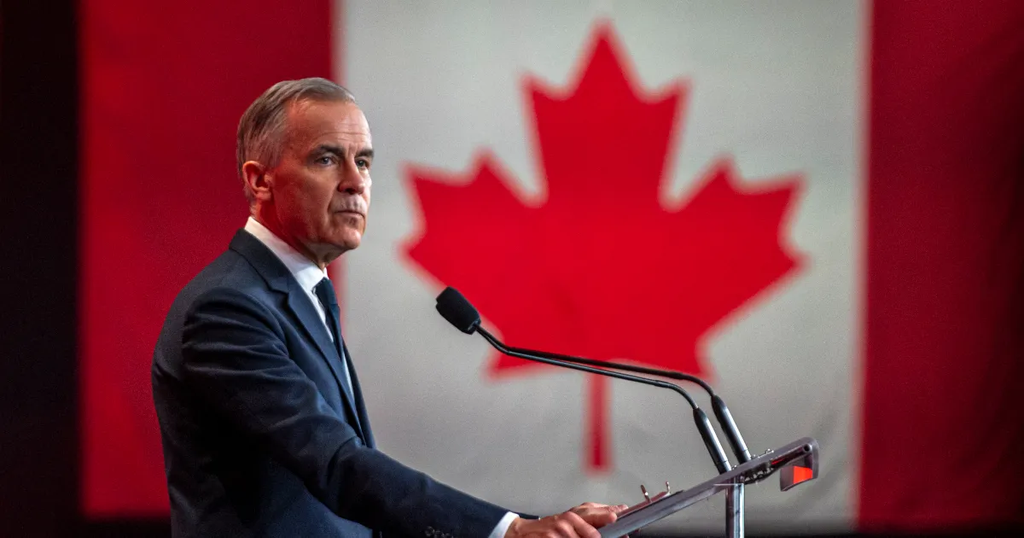
Canadian Prime Minister Mark Carney and Ukrainian President Volodymyr Zelenskyy have officially signed a historic 100-year partnership declaration during a high-profile summit in Calgary, Alberta. The broad agreement binds both nations together for the next century across defence, trade, energy, technology, and economic reconstruction.
The most eye-catching part of the announcement is Canada’s pledge to turn itself into a global drone manufacturing power. Prime Minister Carney revealed plans to build millions of military drones over the next two years, with one-third of all production heading straight to Ukraine to help defend its homeland.
Alongside the long-term century deal, Ottawa unveiled an immediate $350 million air defence package to help Ukraine protect its cities and critical power grids as winter approaches. The total support package announced during President Zelenskyy’s visit exceeds $2 billion, marking one of the largest strategic defence and economic commitments in Canada’s modern history.
This meeting comes at a pivotal moment in international politics. As global alliances shift and North American trade dynamics face pressure, Canada is taking a firm, independent stand on the world stage.
What Is Inside the Historic 100-Year Canada-Ukraine Partnership?
The 100-year partnership declaration signed in Calgary is not just a symbolic gesture. It creates a comprehensive strategic alliance designed to last far beyond the current war. Prime Minister Carney emphasized that the relationship between Canada and Ukraine has already flourished over the past century and will continue to grow in the hundred years ahead.
Build Funnels, Email Lists & Sell Online With One Free Tool
Create funnels, send emails, and sell online using Systeme.io without paying for multiple tools.
Create Free AccountFree forever • No credit card • Beginner-friendly
The official framework covers several critical pillars of long-term cooperation:
- Defence and Security: Deep industrial ties, joint military production, intelligence sharing, and long-term security guarantees.
- Energy and Energy Security: Collaboration on resilient energy grids, green energy development, and utilizing Ukraine’s massive underground gas storage systems to strengthen global energy stability.
- Trade and Economic Reconstruction: Joint commercial investments, reconstruction projects to rebuild destroyed infrastructure, and trade agreements that open new markets for both Canadian and Ukrainian businesses.
- Critical Minerals: Shared exploration and supply chain development for essential minerals needed in high-tech manufacturing, battery production, and defence tech.
- Technology and Artificial Intelligence: Direct partnerships between tech sectors to share software solutions, autonomous systems, and advanced engineering capabilities.
Speaking to reporters in Calgary, President Zelenskyy noted that these documents represent concrete actions rather than simple promises on paper. He pointed out that long-term stability requires reliable partners who understand that defending democracy is a shared responsibility.
This long-term planning aligns closely with Canada’s broader domestic and international shift. Ottawa has recently been overhauling its economic policies, fast-tracking energy development, and building stronger economic ties with European partners. You can read more about how Canada overhauls energy rules to understand how the government is positioning its natural resources for global security.
The Drone Revolution: Building Millions of Drones in Canada
One of the most surprising disclosures during the joint announcement was the current size of Canada’s military drone fleet. Prime Minister Carney admitted that the Canadian Armed Forces currently have only about 2,000 drones in their total inventory—a number that is vastly insufficient for modern defence needs.
To fix this gap, Canada is launching a massive industrial buildout to manufacture millions of drones within two years.
The Defence Drone Initiative Marketplace
To make this ambitious goal a reality, the Canadian government has launched the Defence Drone Initiative Marketplace. This digital procurement system is directly modeled after Ukraine’s famous “Brave1” platform, which allowed Ukraine to rapidly test, purchase, and deploy new battlefield technologies.
This national marketplace connects military units directly with nearly 400 Canadian manufacturers and suppliers. It cuts through traditional government red tape, allowing the military to order, test, and upgrade drones in weeks rather than years.
Initial Contracts and Production Goals
To kickstart the program, Ottawa awarded initial contracts worth up to $50 million. These first contracts will immediately increase the number of operational drones available to the Canadian military tenfold.
Under the new plan:
- Canada will scale up domestic production to reach millions of units over the next 24 months.
- One-third of all drones produced in Canada under this initiative will be shipped directly to Ukraine.
- Ukrainian drone companies—which have gained unmatched real-world experience—will partner directly with Canadian factories.
- Canadian expertise in advanced manufacturing, robotics, and technology and AI will be combined with Ukrainian software and combat-tested designs.
This massive manufacturing expansion comes at a time when Canada’s broader economy is looking for new engines of industrial growth. Economic analysts point out that expanding high-tech military manufacturing could further strengthen the national economy, building on recent trends where Canada GDP bounces back faster than expected.
$350 Million Air Defence Package and Immediate Military Aid
While the 100-year deal and drone factory plans focus on the future, Ukraine faces immediate threats on the ground today. Russian forces have increased missile and drone strikes against civilian cities and energy plants, making air defence Ukraine’s highest priority.
To address this urgent need, Prime Minister Carney announced a brand-new $350 million equipment package specifically for air defence interceptors.
Project Freya and Low-Cost Interceptors
Canada is delivering these air defence capabilities through the U.S. Jumpstart mechanism and is joining Project Freya. Project Freya is a major pan-European initiative focused on creating lower-cost, high-volume air defence interceptors.
Traditional air defence missiles can cost millions of dollars each, making it financially difficult to shoot down cheap incoming attack drones. Project Freya aims to produce affordable, highly accurate interceptor missiles capable of stopping incoming threats, including ballistic missiles and swarms of attack drones.
Industrial Partnerships on the Ground
The alliance is not just between governments; private industry is taking the lead. A major partnership was formally announced between General Dynamics Mission Systems-Canada and Ukrainian defence technology company Green Tech Harvest. Together, they will develop next-generation uncrewed aerial systems and counter-drone systems.
During the Calgary event, leaders were treated to live demonstrations from Ukrainian defence technology companies Airlogix and SkyFall. These companies demonstrated autonomous drones capable of navigating without satellite GPS signals—a crucial capability when operating in environments with heavy electronic jamming.
These breakthroughs show how defense technology is moving fast. We have seen similar shifts across the tech industry, where startups and established companies are racing to build autonomous systems. Readers interested in how global defense tech is changing can explore our coverage on how Palantir CEO teams up with Ukraine ex-defense chief to build next-generation defense systems.
Why Alberta Was Chosen for the Summit
Holding this historic meeting in Calgary, Alberta was a deliberate and meaningful choice. Alberta is home to over 350,000 Canadians of Ukrainian descent, with more than 70,000 living in Calgary alone. Ukrainian immigrants played a massive role in settling Western Canada over a century ago, building farms, towns, and industries.
Standing alongside President Zelenskyy, Prime Minister Carney captured this shared history in a single memorable line: “Ukrainians helped build Canada, and Canadians will help rebuild Ukraine.”
Beyond historical ties, Calgary is fast becoming a hub for technology, engineering, and advanced research. Institutions like the Southern Alberta Institute of Technology (SAIT) and local tech incubators provide the engineering talent needed to support drone research and clean energy development.
Following the public announcements in Calgary, both leaders traveled to Banff, where President Zelenskyy addressed the Canadian Cabinet behind closed doors. They discussed security cooperation, economic strategy, and Canada’s role in supporting broader European security.
Geopolitical Strategy: Canada’s Evolving Role in World Affairs
This 100-year deal with Ukraine reflects a broader shift in Canadian foreign policy. With political shifts and trade disputes occurring across North America and Europe, Ottawa is taking active steps to diversify its international alliances and strengthen its security partnerships.
Prime Minister Carney has been actively strengthening ties with European partners and NATO allies. Canada recently became the first non-European country to join the European Union’s Security Action for Europe (SAFE) program—a €150-billion defence procurement and financing initiative. Additionally, Canada was chosen as the headquarters for the new Defence, Security and Resilience Bank, created to finance NATO defence projects.
This proactive foreign stance comes during a period of complex diplomatic negotiations around the world. While US envoys arrive in Moscow for high stakes Ukraine peace talks, Canada is making it clear that any lasting peace must be built on long-term strength and deterrence rather than short-term concessions.
As Prime Minister Carney explained during the press conference, Canada’s goal after the war ends is not simply to “trust and verify.” Instead, allies must “deter and fortify”—ensuring that Ukraine and its democratic partners possess the military and economic strength to prevent future conflicts.
This firm stance on global security also mirrors Canada’s firm position in trade negotiations. For readers following North American politics, you can check our detailed reports on how Mark Carney promises government support as trade war deepens and why Canadians strongly stand behind PM Mark Carney decision to reject trade deal.
Canada has also shown a clear willingness to stand up for its identity and interests on the international stage, whether handling tough trade talks or responding firmly when foreign leaders make controversial statements. If you want a quick laugh on how Canadian leadership handles international banter, read our popular piece on how PM Mark Carney gives Donald Trump a quick lesson in history.
Build Funnels, Email Lists & Sell Online With One Free Tool
Create funnels, send emails, and sell online using Systeme.io without paying for multiple tools.
Create Free AccountFree forever • No credit card • Beginner-friendly
Ukrainian Battlefield Innovation Meets Canadian Industrial Power
The war in Ukraine has changed how modern military conflicts are fought. Drones are no longer just supporting tools used for scouting; they are central to modern combat, reconnaissance, logistics, and perimeter defense.
Ukraine has become an unexpected global leader in drone software, artificial intelligence, and rapid battlefield iteration. Because Ukrainian engineers work directly with front-line soldiers, they can update software code or redesign drone frames in a matter of days to overcome enemy counter-measures.
Canada brings crucial elements that Ukraine needs to sustain this innovation over the long term:
1. Scale and Manufacturing
Canada possesses massive raw material reserves, advanced manufacturing facilities, and secure industrial supply chains. Ukrainian designs can be mass-produced in Canadian factories away from the threat of missile strikes.
2. Artificial Intelligence and Autonomous Navigation
Canadian tech centers excel in software engineering and artificial intelligence. By integrating Canadian AI algorithms into Ukrainian drone hardware, these systems can stay effective even when satellite navigation and radio signals are blocked.
3. Supply Chain Security
With global supply chains facing uncertainty, building a domestic supply chain for critical electronics, batteries, and lightweight composite materials protects both nations from external disruptions.
For content creators, military analysts, and tech enthusiasts tracking these technological developments on video platforms, this shift is providing endless educational content. Check out our dedicated guide on YouTube automation to see how creators build engaging channels around breaking military and tech news.
Breakdown of the $2 Billion Total Support Announcement
To keep things clear and scannable, here is a clear summary of what is included in the new agreements signed by Prime Minister Carney and President Zelenskyy:
- $350 Million Air Defence Package: Funding for critical interceptor missiles delivered through the U.S. Jumpstart program and Project Freya.
- $50 Million Initial Drone Procurement: Immediate contracts awarded through the new Defence Drone Initiative Marketplace to boost Canadian inventory ten-fold.
- Millions of Drones Target: Commitment to build production capacity for millions of drones within two years, with one-third going to Ukraine.
- $23 Million for Counter-Hybrid Threats: Direct funding to help Ukraine counter cyberattacks, electronic warfare, and state-sponsored sabotage.
- Energy Infrastructure Support: Hundreds of millions in financial and technical assistance to help Ukraine repair and fortify its power grid before winter.
- 100-Year Strategic Partnership: A binding bilateral declaration to collaborate across trade, defense, critical minerals, energy, and reconstruction for the next century.
This multi-faceted deal balances immediate battlefield emergency needs with a thoughtful, hundred-year vision for economic and strategic cooperation.
Frequently Asked Questions (FAQs)
What is the 100-year deal signed by Canada and Ukraine?
The 100-year deal is a comprehensive bilateral declaration signed by Canadian Prime Minister Mark Carney and Ukrainian President Volodymyr Zelenskyy. It commits both nations to long-term strategic cooperation across defence, trade, energy security, critical minerals, reconstruction, and technology for the next century.
How many drones does Canada plan to build?
Canada aims to build the industrial capacity to produce millions of drones over the next two years. Currently, the Canadian Armed Forces have only around 2,000 drones in stock. Under the new initiative, one-third of all Canadian-manufactured drones will be sent to Ukraine to support its national defence.
What is the Defence Drone Initiative Marketplace?
It is a new digital procurement platform created by the Canadian government, modeled after Ukraine’s “Brave1” system. It allows the Canadian military to connect directly with nearly 400 Canadian and Ukrainian drone companies to quickly buy, test, and deploy uncrewed aerial systems and counter-drone technologies.
How much immediate financial and military support was announced?
The new measures announced during President Zelenskyy’s visit total over $2 billion. This includes an immediate $350 million air defence package for interceptors, $50 million in initial drone contracts, $23 million to combat hybrid and cyber threats, and hundreds of millions in winter energy infrastructure assistance.
Why was Calgary chosen for the signing ceremony?
Calgary and the province of Alberta have deep historical ties to Ukraine, being home to over 350,000 Canadians of Ukrainian descent. Calgary is also a growing hub for technology, energy innovation, and engineering, making it an ideal location for signing high-tech defence and energy agreements.
Will Canadian companies benefit from this agreement?
Yes. Canadian manufacturers, tech startups, and critical mineral producers will receive direct government contracts and form joint ventures with world-leading Ukrainian tech firms. The deal is designed to build up Canada’s domestic military manufacturing base while creating high-tech jobs.
Building a Secure and Connected Future
The signing of the 100-year agreement between Prime Minister Mark Carney and President Volodymyr Zelenskyy marks a dramatic new chapter in international relations. By uniting Ukrainian battlefield innovation with Canadian industrial power and high-tech resources, both nations are building a lasting framework for security and economic prosperity.
As Canada continues to strengthen its global partnerships and expand its domestic high-tech manufacturing, staying informed on international developments is more important than ever.
Want to learn more about our mission or get in touch with our team? Visit our About Us page to see what drives our newsroom, or drop us a message through our Contact Us page.
You can also follow our official social channels for real-time updates, breaking stories, and engaging discussions:
- Follow us on Instagram
- Connect with us on Facebook
- Join the conversation on X (formerly Twitter)
