
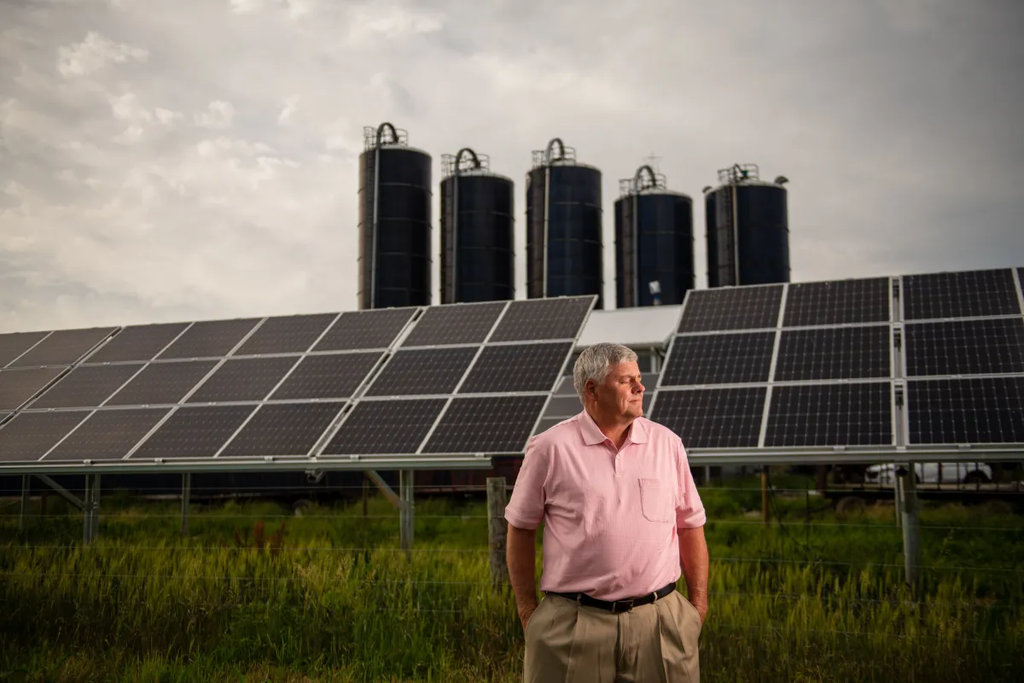
Across the American heartland, tractors are rolling through fields, but the mood in farming towns is heavier than it has been in decades. Drive through western Pennsylvania, Iowa, or Nebraska, and you will meet family farmers working sixteen-hour days just to watch their bank accounts drain. Rick Telesz, who grows corn and soybeans on 700 acres in Pennsylvania, spent his whole life working the land. Right now, he is paying roughly six dollars for every gallon of diesel fuel that goes into his tractor. His combine alone eats through 150 gallons of diesel in a single workday. When you do the simple math on that, it costs him nearly a thousand dollars every single day just to keep one machine running in his field.
Stories like Rick’s are unfolding across thousands of rural communities. American agricultural producers are getting hammered from both sides at the exact same time. On one side, the cost to grow anything has gone through the roof. Fertilizer prices are up sharply, equipment parts cost double what they used to, and fuel prices have exploded. On the other side, the prices farmers get paid for their crops have dropped, and major foreign buyers have cut back on buying American products.
As a result, growing food in America has become a losing business for the fourth straight year in a row. It is not just a rough patch or a bad weather season. It is a full-blown economic emergency that is forcing families off land they have owned for generations. What happens on these farms eventually affects what you pay at the grocery store, what kind of food lands on your family’s dinner plate, and how stable the whole country’s food supply really is.
The Double Whammy: Skyrocketing Costs and Falling Crop Prices
To understand why so many farmers are struggling, you have to look at the numbers. Farming is a business where you spend money for months before you make a single dime back. You buy seeds, fuel, and fertilizer in the spring, pray for good weather all summer, and hope the market price in the fall covers your bill. Over the last few years, that equation has completely broken down.
Diesel and Fertilizer: The Heavy Weight Squeezing Farmers
Every single task on a farm requires power and nutrients. You need diesel fuel to plow the ground, plant the seeds, spray the crops, and harvest the grain. Then you need even more fuel to dry the grain in giant bins so it does not rot before it goes to market. Diesel prices have surged by around 80 percent, reaching prices between $6.00 and $6.50 a gallon in many farming states, according to price tracking data from AAA.
The $0 Secret To Launching Your Entire Online Empire
Why pay hundreds every month for separate software? Build funnels, send emails, and make sales with Systeme.io completely free.
Get Started For $0Free Forever • No Credit Card Needed • Beginner-Friendly
On top of fuel, fertilizer costs have spiked by 15 percent over the past year alone. Fertilizer is made using natural gas and foreign minerals, which means global conflicts and trade hiccups hit farmers directly in the pocketbook. When a truck driver sees fuel prices go up, they can add a shipping surcharge to their invoice. When a grocery store sees power bills go up, they raise the price of milk. But a farmer cannot do that. Farmers do not get to set their own prices. They have to take whatever price the global commodities market gives them on the day they bring their grain to the elevator. That means every single dollar of added expense comes straight out of the farmer’s personal savings.
Why Crop Prices Are Falling While Everything Else Gets Expensive
You might assume that if everything costs more to produce, crop prices would automatically go up too. Sadly, that is not how agricultural markets work. Take corn as a simple example. A few years back, a bushel of corn sold for almost eight dollars. Today, that same bushel sells for little more than four to five dollars.
Even if a farmer grows a record-setting harvest with massive yields per acre, they are selling those crops into a market that pays significantly less per bushel than it did two years ago. When input expenses stay sky-high and crop sales drop, the math simply does not add up. Thousands of growers are realizing that the more crops they grow, the more money they end up losing.
The Trade War Impact and Collapsing Foreign Exports
America produces far more food than its citizens can eat. For decades, the survival of American agriculture relied on shipping excess grain, meat, and fiber to international markets. China, Mexico, and Canada have long been the biggest buyers of American farm goods. But global trade tensions and retaliatory tariffs have badly damaged those relationships.
What Happened to the Chinese Export Market?
China used to buy massive amounts of American soybeans, corn, and pork. When trade disputes kicked off and tariffs were placed on foreign goods, China responded by placing retaliatory tariffs on American agricultural exports. Instead of buying soybeans from the American Midwest, Chinese buyers started sourcing their grain from South American countries like Brazil and Argentina.
The impact was swift and devastating. U.S. soybean exports to China fell dramatically, dropping by as much as 70 percent compared to previous peak trade years. Once an international trade connection is broken, it does not magically come back overnight. South American growers expanded their farmland to meet Chinese demand, leaving American producers locked out of their biggest market. Without those large buyers, massive piles of grain sit in domestic storage, driving prices down even further.
The Bottleneck in Meat and Other Crops
It is not just row crops like corn and soybeans that are hurting. Livestock producers, cotton growers, and fruit farmers face similar trade walls. Beef and poultry farmers face massive bottlenecks at meat processing facilities. A small number of huge meatpacking companies control most of the slaughterhouses in the country. They buy cattle and chickens from farmers at rock-bottom prices, but charge grocery stores top dollar for packaged meat.
Because farmers have nowhere else to send their animals, they are stuck accepting whatever low rates the processing plants offer. Cotton and wheat exports have also slowed down significantly, leaving small producers with huge debts and warehouses full of unsold product.
Four Straight Years of Losses: The Brutal Financial Math
Most businesses cannot survive two bad years in a row, let alone four. Yet, according to analysts at the American Farm Bureau Federation, major crop producers across the country are facing their fourth consecutive year of financial losses.
Why Millions of Acres Are Running in the Red
When you talk to financial advisors in rural states, the math is heartbreaking. A farm might bring in hundreds of thousands of dollars in total gross sales, making it look profitable on paper to someone who does not understand agriculture. But once you subtract $100,000 for seed, $150,000 for fertilizer, $80,000 for diesel, $50,000 for equipment maintenance, insurance, and interest on land loans, that gross revenue vanishes completely.
In fact, official data from the U.S. Department of Agriculture projects that even when total farm revenues show slight upticks, net farm income keeps dropping because production costs eat up every cent. Many producers are losing anywhere from $50 to $150 on every single acre they plant.
The Spike in Farm Bankruptcies and Foreclosures
Because losses have dragged on for four years, bank accounts are empty. The safety cushion that kept many families afloat is gone. Data shows that farm bankruptcies rose by 19 percent over the past twelve-month period ending mid-2026. Bankruptcy attorneys in farming states like Iowa, Illinois, and Missouri report that more farmers are coming into their offices than at any time since the 1980s farm crisis.
Local banks that used to renew operating loans every spring are starting to say no. A farmer relies on an operating loan to buy seeds and fuel before planting season. When the bank looks at four years of red ink and refuses to extend credit, the farm stops operating overnight. Since 2020, an estimated 200,000 farms across America have closed down for good.
The Human Cost: Family Legacy and Mental Health
Behind all these charts, numbers, and market reports are real human beings. For most rural families, a farm is not just a job or a place of business. It is a family legacy passed down through three, four, or five generations.
Losing the Family Land Is More Than a Financial Loss
When a farm goes under, it feels like losing a family member. Farmers will sell off their extra tractors, skip personal medical care, or take on extra night jobs just to hold onto their land. A farmer can always buy another tractor down the road if things get better, but once you sell forty acres of family land, you will almost certainly never be able to buy it back.
Send, Spend & Hold Money Worldwide Without Hidden Fees
Transfer money internationally at the real exchange rate and hold 40+ currencies in one account.
Open a Wise AccountMid-market rate • Fast transfers • 40+ currencies
The pressure of being the generation that lost the family land creates an incredible amount of stress. Grandfathers and fathers worked that land through tough times, and the thought of signing away the deed creates a heavy emotional burden that is hard to describe to someone who grew up in the city.
The Growing Rural Mental Health Challenge
This pressure has created a quiet mental health emergency in rural counties across America. Farming is already an isolated job. You spend long days alone in a cab or barn with your thoughts. When financial stress builds up, many farmers feel they have nowhere to turn and no one to talk to.
Community groups and health organizations are stepping up to offer specialized support lines for rural families. Talking about stress and mental health used to be taboo in small farming towns, but neighbors are starting to check on neighbors more often. Admitting you need help is becoming a sign of strength rather than weakness, but the underlying financial pressure remains a constant threat.
Corporate Consolidation: Who Is Buying Up Broken Farms?
When a family farm goes out of business, that land does not just sit empty forever. Someone always steps in to buy it, and more often than not, it is not another local family.
The Rise of Big Agri-Corporations and Private Investors
As small independent farms fail, large corporate agricultural giants and private investment firms move in. These deep-pocketed investment groups view farmland as a safe, long-term asset that protects against inflation. They buy up thousands of acres at foreclosure auctions, combine smaller plots together, and hire contract workers to manage the ground.
Recent agricultural surveys show that while the total number of individual farms in America has shrunk by roughly 10 percent over recent years, the average size of remaining farms has grown significantly. Small family farms are disappearing, while mega-farms controlled by corporations keep getting bigger.
What This Means for Everyday Food Prices at the Grocery Store
This shift away from independent family farms directly affects everyday consumers. When a handful of huge corporations control the nation’s food production, competition decreases. Corporate farms have to answer to stockholders who demand high profit margins, which can lead to higher grocery store prices for milk, bread, meat, and fresh produce.
Furthermore, relying on a small group of massive agricultural conglomerates makes our national food system less resilient. Small, diverse farms adapt quickly to local weather changes, pests, and market needs. Mega-farms often rely on single-crop monoculture, which can leave the food chain vulnerable to sudden supply shocks.
What Needs to Change to Save the American Farmer?
Saving family farms requires immediate, practical solutions at both the national policy level and within local communities.
Policy Reforms, Trade Adjustments, and Local Support
- Rebuilding Export Markets: Policy leaders need to focus on securing stable, long-term international trade agreements that open doors for American grain and livestock without exposing growers to sudden tariff retaliation.
- Reforming Farm Safety Nets: Current crop insurance and government relief programs often favor giant agricultural companies while leaving smaller family operations without enough protection during severe downturns.
- Addressing Energy Costs: Stabilizing fuel costs and creating affordable access to domestic fertilizer inputs would immediately lower the cost of growing food.
- Enforcing Anti-Trust Laws: Federal regulators need to look closely at meatpacking monopolies and major equipment manufacturers to ensure fair prices for livestock producers and reasonable repair costs for machinery.
How Consumers Can Support Local Farmers
If you want to help keep family farms alive, you can make small changes in your weekly shopping habits. Buying directly from local farmers at community markets, joining a community-supported agriculture program, or choosing local brands at your grocery store keeps money directly in the hands of independent growers. Every dollar spent locally helps a farm family hold onto their land for another season.
The $0 Secret To Launching Your Entire Online Empire
Why pay hundreds every month for separate software? Build funnels, send emails, and make sales with Systeme.io completely free.
Get Started For $0Free Forever • No Credit Card Needed • Beginner-Friendly
Frequently Asked Questions (FAQs)
Why are American farmers facing financial trouble right now?
Farmers are facing a severe squeeze caused by skyrocketing operational expenses and dropping crop prices. The price of diesel fuel, fertilizer, and equipment has increased dramatically, while global trade disputes have reduced international demand for crops like soybeans and corn.
How much have farm expenses gone up recently?
Diesel fuel prices have jumped by roughly 80 percent, reaching around $6.00 to $6.50 per gallon in rural areas. Fertilizer prices have also risen by 15 percent over the last year, drastically increasing the cost to plant and harvest crops.
Why cannot farmers just raise their prices like other businesses?
Unlike most retail businesses or service providers, individual farmers do not set their own prices. They sell their goods into global commodities markets where prices are determined by international supply, trading algorithms, and speculation. They must accept whatever price the market offers when their harvest is ready.
How many farms have closed down in recent years?
Approximately 200,000 farms across the United States have shut down or gone out of business since 2020. Additionally, farm bankruptcies increased by 19 percent over the twelve-month period ending in mid-2026.
Who is buying up the land when family farms fail?
In most cases, failing family farmland is purchased by large corporate farming entities or private investment firms. These groups consolidate smaller farms into massive corporate operations, reducing the overall number of independent family-owned farms in the country.
How does the farm crisis affect people living in cities and suburbs?
When small farms close and corporate monopolies take over, food supply chains become less resilient and more vulnerable to price hikes. Over time, reduced competition and higher corporate overhead can drive up food prices at local grocery stores.
Understanding what is happening in rural communities helps us stay connected to where our food comes from. The challenges facing American farmers are real, complex, and urgent, but bringing attention to these stories is the first step toward finding real solutions.
To learn more about our mission to bring you real, timely stories on trending issues across the globe, visit our About Us page. Have a tip or a story from your local community that deserves to be heard? Feel free to reach out directly through our Contact Page.
You can also join the conversation and follow our daily updates on social media through our official channels on Instagram, Facebook, and X (Twitter).
