
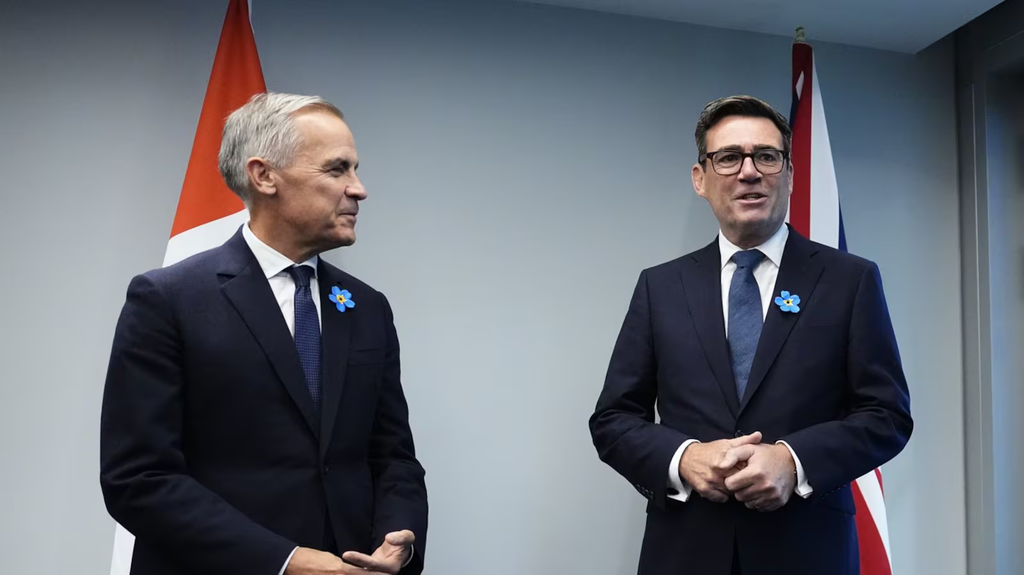
Canadian Prime Minister Mark Carney sent a bold message across the Atlantic from Strasbourg, France. He made it crystal clear that Canada will choose its own international partners, no matter what US President Donald Trump thinks about it. The direct declaration came right after Trump dismissed a new proposal for Canada to build closer ties with the European Union, calling the idea “laughable” and threatening new trade tariffs.
Trump went even further during a press gathering, suggesting that closer ties between Ottawa and Brussels could be viewed as a hostile act against Washington. But Carney stood firm. Speaking from the European Parliament, he told reporters that no outside nation gets to tell Canadians who they can do business with or what global agreements they can sign.
This high-stakes political drama is drawing massive attention worldwide because it marks a historic shift in how North American powers interact with Europe. It brings long-standing trade debates right back to the front page and sets up a major showdown over national independence, economic strategy, and foreign policy.
The Spark That Ignited the Global Feud
The entire disagreement began when European Commission President Ursula von der Leyen opened the door for Canada to become the very first associate member of the European Union. During her annual State of the Union speech in Strasbourg, she outlined an ambitious vision where Canada and Europe work together much more closely on economic security, technological growth, and shared defense goals.
While Canada and the European Union already trade under the Comprehensive Economic and Trade Agreement (CETA), this new offer goes far beyond standard buying and selling. It proposes deep, structured collaboration on artificial intelligence, defense manufacturing, green energy projects, space programs, and resilient supply chains.
The $0 Secret To Launching Your Entire Online Empire
Why pay hundreds every month for separate software? Build funnels, send emails, and make sales with Systeme.io completely free.
Get Started For $0Free Forever • No Credit Card Needed • Beginner-Friendly
The goal behind the proposal was simple and practical. Both Europe and Canada have felt the economic pressure of shifting global trade rules and sudden tariff threats from major economic powers. By linking up more tightly, both sides believe they can protect their domestic markets, strengthen their democratic institutions, and maintain their sovereignty in an unpredictable world.
Trump Fired Back: “Laughable” and a “Hostile Act”
It did not take long for Donald Trump to react to the news coming out of Strasbourg. During a meeting with reporters, Trump openly mocked the concept of Canada becoming an associate member of the EU. He called the idea laughable and labeled Canada a difficult trading partner that was taking a step in the wrong direction.
Trump then issued a sharp warning. He threatened to hit European imports with heavy tariffs if the bloc moved forward with the arrangement. He warned that Washington could limit or completely halt trade on certain goods if Canada and Europe created a alliance that harmed American commercial interests.
The US administration has consistently used tariffs as a main tool to protect domestic industries and push for favorable trade terms. In Trump’s view, Canada seeking a formal structural tie with European nations looks like an attempt to bypass North American trade norms and reduce reliance on American markets.
Mark Carney’s Response in Strasbourg: “Nobody Tells Us What to Do”
Mark Carney did not hold back when responding to the threats coming out of Washington. Speaking directly to the press after delivering his speech to European lawmakers, Carney delivered a calm but uncompromising statement on Canadian sovereignty.
Carney declared that Canadians are completely united on one basic principle: nobody is going to tell Canada what language to speak, what culture to embrace, or what partnerships to form around the world. He emphasized that Canada makes its own choices as a free and sovereign nation, and no foreign leader holds a veto over Canadian foreign policy.
Carney also rejected the claim that a closer EU relationship is designed to harm the United States. In fact, he argued that a stronger, more resilient Canada with diverse global alliances actually makes Canada a much better, more capable partner for the US in the long run. He noted that economic strength at home allows Canada to contribute more effectively to international security and stability.
What Does an EU “Associate Membership” Actually Mean?
Understanding what associate membership means requires looking at how the European Union operates. It is a brand new concept that does not currently exist under official EU treaties. To make it real, member nations across Europe would need to draft, debate, and approve new guidelines for non-European allies.
Under this proposed framework, Canada would not become a full European member state, nor would it give up its own laws, open its borders completely, or adopt the Euro currency. Instead, it would gain special access to European scientific research funding, joint defense manufacturing programs, critical mineral supply networks, and advanced technological initiatives.
Technology and digital innovation stand at the center of this proposed partnership. As artificial intelligence and tech platforms reshape global commerce, Canada and Europe want to pool their resources to build independent capabilities. You can explore how rapidly these trends are shaping the future by reading through our dedicated section on technology and AI.
Carney was also careful to clarify that Canada is not trying to build a rival superpower bloc. He stated directly that Ottawa is not attempting to create a third global power center, but rather seeking practical, common-sense cooperation on shared economic priorities like clean energy, space exploration, and secure payment systems.
A History of Growing Trade Tensions
To understand why this political clash is happening right now, you have to look at recent friction between Washington and Ottawa. Over recent years, trade relations across the North American border have faced repeated disruptions due to tariffs on steel, aluminum, timber, and agricultural products.
Canada has historically sent the vast majority of its exports across the southern border to the United States. However, political and economic leaders in Ottawa have realized that relying almost exclusively on a single trading partner leaves the national economy vulnerable whenever US trade policies change suddenly.
Seeking alternative trade allies in Europe, Asia, and other key regions has become a major national goal for Canada. The move toward Europe is not an emotional reaction; it is part of a long-term economic strategy designed to diversify supply chains and protect Canadian employment from trade shocks.
Modern digital channels and news platforms are following every twist and turn of this story. Online creators and media commentators are breaking down the geopolitical strategy behind these moves every day. If you want to see how digital creators build automated news channels and analyze breaking events online, take a look at our guide on YouTube automation.
Send, Spend & Hold Money Worldwide Without Hidden Fees
Transfer money internationally at the real exchange rate and hold 40+ currencies in one account.
Open a Wise AccountMid-market rate • Fast transfers • 40+ currencies
International Leaders Step In to Defend the Proposal
The sharp back-and-forth between Trump and Carney quickly drew strong reactions from leaders across Europe. European officials stepped up to defend their right to negotiate agreements with trusted democratic allies without outside interference.
French Minister for Europe Benjamin Haddad stated firmly that no foreign government has a veto over Europe’s geopolitical decisions. He pointed out that it is not up to Washington or anyone else to decide who European nations choose to partner with on global economic and security issues.
Official spokespersons for the European Commission also clarified that the proposed arrangement with Canada was never intended as a move against the United States. They pointed out that building economic resilience among democratic allies ultimately benefits the entire global trade network.
What Needs to Happen Before Any Deal Is Signed?
Even with all the excitement and political headlines, this agreement is still in its early stages. Several important steps must take place before any associate membership can actually become reality.
The next big moment comes at the end of October, when leaders from Canada and the European Union meet for an official summit in Montreal. At this summit, negotiators will begin working out the actual details, legal framework, and practical boundaries of the proposed partnership.
Mark Carney also assured the Canadian public that any finalized deal will be subjected to full democratic review at home. That means the Canadian Parliament will hold detailed debates, review every clause of the agreement, and hold a formal vote before anything is officially ratified.
Why This Geopolitical Feud Matters to Everyday People
International political debates can sometimes feel like abstract arguments between politicians, but disputes like this have very real consequences for ordinary citizens. Global trade decisions influence everyday costs, including prices for groceries, cars, home electronics, and heating fuel.
When tariffs are threatened or put into place, companies face higher costs to move goods across borders. Businesses usually pass those extra expenses directly down to consumers. A full-blown trade dispute between major economic powers can push up inflation and make everyday life more expensive for families.
By establishing reliable trade pipelines with European partners, Canada aims to keep essential goods moving smoothly. Having reliable alternative markets helps protect Canadian businesses and workers from sudden price spikes or supply shortages if border trade with the US gets disrupted.
Canada’s Push for Critical Minerals and Green Energy
A huge driving force behind Europe’s interest in Canada involves critical minerals. Canada holds massive natural reserves of lithium, nickel, cobalt, and graphite. These raw materials are necessary for manufacturing electric vehicle batteries, solar panels, modern microchips, and next-generation consumer electronics.
The $0 Secret To Launching Your Entire Online Empire
Why pay hundreds every month for separate software? Build funnels, send emails, and make sales with Systeme.io completely free.
Get Started For $0Free Forever • No Credit Card Needed • Beginner-Friendly
European countries are actively working to reduce their dependency on single nations for these essential resources. Partnering with Canada gives Europe a secure, ethically sourced supply of green technology inputs from a stable democratic partner.
In exchange, Canadian industries gain preferential access to European capital markets, cutting-edge research programs, and major clean energy investments. This win-win economic setup explains why both Ottawa and Brussels are eager to keep moving forward despite strong criticism from Washington.
Frequently Asked Questions (FAQs)
Why did Donald Trump call the Canada-EU proposal “laughable”?
Donald Trump dismissed the idea because he views closer ties between Canada and the European Union as an attempt by Canada to step outside North American trade arrangements. He argued that Canada was acting as a difficult trading partner and warned that joining forces with the EU could lead to new US tariffs on both Canadian and European goods.
Can Canada actually become a full member of the European Union?
No, Canada is not applying for full EU membership. Full EU membership is reserved for European nations. The proposal on the table is for a new “associate member” status. This would allow targeted cooperation on trade, technology, defense, and research without Canada adopting the Euro or giving up its national sovereignty.
What did Mark Carney mean when he spoke about Canadian culture and language?
Mark Carney was making a strong statement about national independence. He emphasized that Canadians decide their own cultural policies, official languages, and international alliances. His point was that no foreign country, regardless of its size or power, has the right to dictate Canada’s foreign policy choices.
How will an EU associate membership affect Canadian businesses?
If ratified, an associate membership would give Canadian companies easier access to European markets, research grants, and joint high-tech projects. It would also help secure stable supply chains for critical minerals, energy, and defense equipment, reducing reliance on any single foreign market.
Will Canadian citizens get to vote on this EU agreement?
While there will not be a direct national public referendum, Mark Carney confirmed that any final arrangement will be submitted to the Canadian Parliament for open debate and a formal vote. Elected representatives will review the terms before any binding deal is signed.
When will Canada and the EU make a final decision on this deal?
The process is still in its early stages. Formal discussions are scheduled to continue during the upcoming EU-Canada summit in Montreal at the end of October. Any final deal will take time to draft, review, and pass through parliamentary approval in Canada and EU member states.
The confrontation between Mark Carney and Donald Trump highlights how quickly global trade relationships are evolving. As Canada works to chart its own course and build stronger international ties, the ongoing debate between Ottawa, Washington, and Brussels will shape global economics for years to come.
Want to stay informed on the latest political developments, business trends, and tech news? Be sure to learn more about our team and what drives our coverage. Have thoughts on this story or a hot topic you want us to write about? Feel free to drop us a note through our contact page.
You can also follow our official social channels to stay updated on breaking news as it happens:
- Join the conversation on Facebook
- Get real-time updates on X (formerly Twitter)
- See our latest featured content on Instagram
