
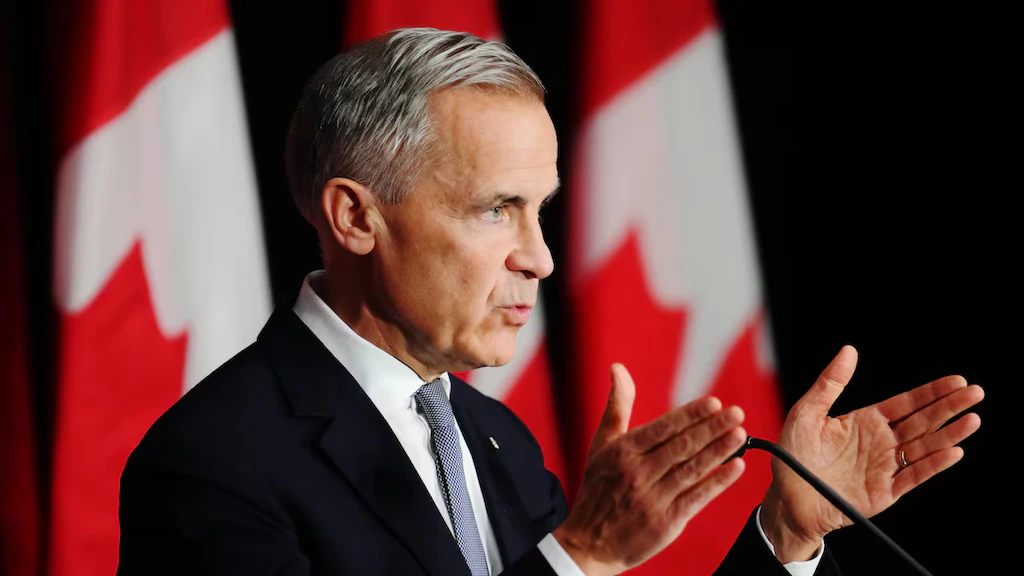
Canadian Prime Minister Mark Carney is pushing hard to create a unique alliance with the European Union, but big news just broke about how much this plan will actually cost taxpayers. Canada’s incoming ambassador to the EU, Jonathan Wilkinson, has publicly ruled out paying money directly into the 27-nation bloc’s central government budget.
Speaking on CBC’s radio program The House, Wilkinson cleared the air on growing rumors that Canada might end up funding European bureaucracy. He made it crystal clear that Canada will be very selective about where its money goes. The goal is to build strong economic and defense ties with Europe while keeping complete control over Canadian tax dollars and national sovereignty.
This statement comes right after Prime Minister Carney delivered a major address to the European Parliament, where he laid out a vision for an unprecedented partnership between Canada and Europe. But with economic pressure mounting at home and threats of new tariffs coming from Washington, many people are asking what this deal really means. Here is the full breakdown of what is happening, what Canada will actually pay for, and why this new strategy matters for everyday citizens.
The Big Question: Is Canada Writing a Blank Cheque to Europe?
When news first broke that Europe had offered Canada a special “associate membership,” critics and opposition politicians immediately raised alarms. Many wondered if Canada would end up like non-EU countries in Europe, such as Norway, which pay hundreds of millions of Euros each year directly into the EU budget just to trade in their single market.
Jonathan Wilkinson shut those worries down immediately. He explained that Canada is not joining the European Union and will not be handed a regular bill from Brussels. There will be no automatic financial contribution to the general European budget.
The $0 Secret To Launching Your Entire Online Empire
Why pay hundreds every month for separate software? Build funnels, send emails, and make sales with Systeme.io completely free.
Get Started For $0Free Forever • No Credit Card Needed • Beginner-Friendly
Instead, Canada will operate on a pay-as-you-go model for very specific, targeted programs. If a program directly benefits Canadian workers, researchers, or military forces, Canada will pay its fair share for that specific project. If it does not bring a clear return on investment, Canada simply will not participate.
This selective approach allows Canada to tap into massive European markets and technology programs without getting dragged into European political debates or paying for overseas government administration. You can read more about how Canada is pivoting to Europe after trade talks collapsed to see how this strategy fits into the country’s bigger political picture.
Why Mark Carney Is Turning to Europe Right Now
To understand why Ottawa is moving so fast toward Brussels, you have to look at what is happening across the southern border. Relations between Canada and the United States have hit a rough patch, with severe tariff threats and trade disputes creating uncertainty for Canadian businesses.
Prime Minister Carney has openly stated that Canada needs to build economic resilience so no single country can bully its industries or dictate its foreign policy. For decades, Canada relied heavily on trade with America. But as commercial friction increases, Ottawa is looking across the Atlantic to find stable partners.
When trade talks with Washington stalled, Carney made a historic trip overseas. If you want background on that diplomatic push, check out our report on why Mark Carney headed to Brussels after U.S. trade talks failed.
Recent national polls suggest that a large portion of the public supports this direction. Many citizens want the government to reduce reliance on American buyers and build deeper ties with friendly democratic allies. You can explore those public sentiment figures in our breakdown of how Canadians stand behind PM Mark Carney’s trade decisions. Carney’s team believes that by locking in deals with the EU, Canada secures its future against sudden economic shocks.
What Will Canada Actually Pay For? The 5 Key Areas
Even though Canada will not pay into the general EU budget, joint projects still require shared funding. Ambassador Wilkinson pointed out several key sectors where Canada is already investing or planning to co-fund initiatives with European partners.
1. Defense and Military Security
Security is at the top of the agenda. Canada recently became the first non-European country to join the EU’s massive Security Action for Europe (SAFE) defense initiative. This program provides low-interest loans and joint procurement opportunities for defense equipment.
By joining SAFE, Canadian defense manufacturers can bid on major European military contracts, while Canadian armed forces get access to top-tier equipment produced in Europe. Canada is also expanding its participation in European-led military coalitions. To see how military cooperation is expanding globally, read about why Canada is joining a UK-led military coalition.
2. Science, Research, and Student Exchanges
Canada wants to give its scientists, universities, and students direct access to Europe’s world-class research network. Ottawa is negotiating full entry into Horizon, the European Union’s flagship funding program for scientific innovation.
In addition, Canada is looking to join Erasmus+, Europe’s famous student exchange program. This would allow Canadian university students to study across Europe with government support, while bringing bright European researchers to Canadian campuses.
3. Technology, Artificial Intelligence, and Digital Trade
Technology is moving faster than ever, and both Canada and Europe want to set global rules together. The two sides are working on shared computing capacity, high-speed broadband infrastructure, and common safety guidelines for artificial intelligence.
Carney’s plan includes creating seamless, digital trade for non-agricultural goods and services, making it as easy for a Canadian tech worker to sell software in Berlin as in Toronto. For more stories on global tech policies and tools, check out our dedicated section on technology and AI updates. Understanding these digital shifts is also vital if you run online projects or want to learn about automated digital platforms like YouTube automation strategies.
4. Critical Minerals and Clean Energy
Europe is hungry for critical minerals like nickel, lithium, cobalt, and copper to power its green transition and build electric vehicles. Canada has huge reserves of these exact materials in the ground.
Under the proposed arrangement, European companies will invest capital directly into Canadian mining and processing operations. In return, Europe gets a secure supply of clean minerals that does not rely on hostile nations, while Canada creates high-paying jobs in resource-rich provinces.
Send, Spend & Hold Money Worldwide Without Hidden Fees
Transfer money internationally at the real exchange rate and hold 40+ currencies in one account.
Open a Wise AccountMid-market rate • Fast transfers • 40+ currencies
5. Financial Services Integration
Carney, a former governor of both the Bank of Canada and the Bank of England, understands global banking inside and out. His proposal explores integrating financial markets between Canada and the EU. This move could make it easier for Canadian banks, pension funds, and investment firms to operate across Europe without facing double regulations.
What About Borders, Passports, and Sovereignty?
One major worry among critics is whether an alliance with Europe means changing border controls or letting Brussels dictate Canadian laws. Ambassador-designate Wilkinson addressed this concern directly, dismissing claims that Canada would have to adopt open borders or accept European immigration rules.
He emphasized that Canada’s geographic position and border security needs are completely different from Europe’s internal Schengen zone. Canada will retain 100% control over its immigration quotas, passport checks, and national security decisions.
Furthermore, Carney has promised that every single detail of this proposed alliance will face debate and a formal vote in the Canadian Parliament. No secret treaties will be signed behind closed doors. Canadians will see the exact financial numbers and terms before any long-term deal becomes official law.
For a broader perspective on how Ottawa is responding to global trade pressures through domestic action, check out our guide on Canada’s new economic strategy to build home-grown industries.
How Washington and the World Are Reacting
The push for a deeper Canada-Europe partnership has not gone unnoticed in Washington. U.S. President Donald Trump has voiced harsh criticism of the idea, calling the proposed ties “laughable” and warning that closer economic integration between Ottawa and Brussels could be viewed as a hostile action.
Trump has warned that if Europe and Canada build a bloc designed to bypass American markets, the U.S. could respond with fresh tariffs. This rhetoric has raised concerns among export businesses that depend on cross-border trucking and supply chains. To understand the background of these international trade tensions, see our analysis on what the U.S.-Canada tariff war costs consumers.
Despite the warnings coming from Washington, both Prime Minister Carney and European Commission President Ursula von der Leyen remain committed to their talks. European leaders view Canada as a trusted democracy that shares their values on human rights, free trade, and international law. A summit planned in Montreal later this fall will bring top European officials together to hammer out the final details of the agreement.
Frequently Asked Questions (FAQs)
Will Canada become an official member of the European Union?
No. Canada is not applying to join the European Union as a full member state. Full membership requires being located in Europe, adopting EU treaties, and accepting central laws made in Brussels. Canada is pursuing a custom partner status that gives it economic access without giving up political control.
Will Canadian tax dollars go toward paying European bureaucrats?
No. Jonathan Wilkinson confirmed that Canada will not make general payments to the central EU budget. Canadian funds will only be spent on specific joint programs that Canada chooses to join, such as defense procurement, scientific research grants, or green energy projects.
The $0 Secret To Launching Your Entire Online Empire
Why pay hundreds every month for separate software? Build funnels, send emails, and make sales with Systeme.io completely free.
Get Started For $0Free Forever • No Credit Card Needed • Beginner-Friendly
Can Canadians now move, live, or work in Europe without a visa?
The proposed alliance does not grant automatic free movement or open-ended work visas for citizens. While the deal aims to simplify business travel and student exchange programs, each country will keep its standard passport and immigration controls.
What happens if the U.S. threatens more tariffs over this EU deal?
Prime Minister Carney has stated that Canada cannot let foreign tariff threats dictate its international partnerships. The Canadian government continues to negotiate with Washington while simultaneously opening new trade channels in Europe to protect the domestic economy from single-market risks.
When will Canadians see a final agreement?
Negotiations are actively ongoing leading up to the Canada-EU summit in Montreal. Prime Minister Carney has pledged that any final deal will be presented to the Canadian Parliament for debate and a binding vote before it takes effect.
Final Thoughts on Canada’s Strategic Shift
The clear message from Canada’s diplomatic team is that closer ties with Europe will not come at the expense of Canadian taxpayer money or national sovereignty. By choosing to co-fund specific high-value programs rather than paying into the general EU budget, Canada is striking a careful balance.
As world trade patterns undergo historic changes, Ottawa’s attempt to build an “Alliance for the Future” with Europe marks one of the biggest diplomatic pivots in decades. Whether this bold move successfully insulates the economy from external shocks will depend on how the final parliamentary vote plays out in Ottawa later this year.
To stay updated on breaking geopolitical updates, viral news, and deep analysis, explore our About Us page to learn more about our team. If you have questions or feedback on our coverage, feel free to reach out via our Contact Page. You can also follow our community across social media on Instagram, Facebook, and X (formerly Twitter) for daily updates.
