
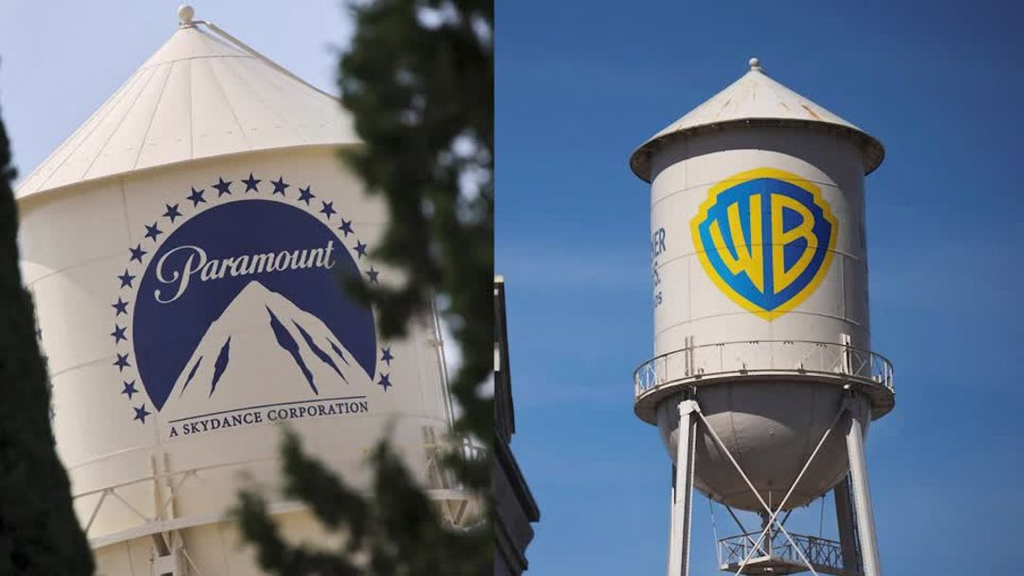
Paramount Skydance has officially launched a new plan to borrow $7.5 billion in debt. This massive pile of cash is meant to help pay for its breathtaking $110 billion merger with Warner Bros. Discovery. On top of that, Paramount plans to pull in an extra $44.4 billion in secured debt over the coming weeks, bringing the total debt package to nearly $49 billion. When you add up all the existing loans and obligations from both sides, the newly combined entertainment empire will be sitting on roughly $80 billion in total debt.
Borrowing billions of dollars to buy a rival studio sounds like something out of a wild Hollywood movie script, but it is real life. Mainstream investors, movie fans, and industry insiders are watching this deal with equal parts excitement and panic. A $7.5 billion loan is not just spare change; it is a massive financial gamble that could reshape how movies, TV shows, and streaming services operate for decades.
This huge move comes at a critical moment for the film industry. The deal has faced fierce pushback from labor unions, consumer advocacy groups, and state regulators. However, with heavy court battles wrapping up and massive deadlines approaching, Paramount is rushing to secure every dollar needed to cross the finish line.
The $110 Billion Mega-Deal Explained Simply
Understanding why a major Hollywood studio needs to borrow $7.5 billion starts with looking at the total price tag of this merger. Paramount Skydance, led by chief executive David Ellison, is attempting to acquire Warner Bros. Discovery in an overall deal valued at $110 billion.
Warner Bros. Discovery is one of the biggest names in media. It owns legendary entertainment brands like HBO, Max, the DC Cinematic Universe, the Harry Potter franchise, CNN, and a massive library of classic movies. Meanwhile, Paramount controls Paramount+, CBS, Nickelodeon, MTV, and major film franchises like Mission Impossible and Top Gun. Combining these two giants creates a mega-studio that rivals Disney and Netflix.
The $0 Secret To Launching Your Entire Online Empire
Why pay hundreds every month for separate software? Build funnels, send emails, and make sales with Systeme.io completely free.
Get Started For $0Free Forever • No Credit Card Needed • Beginner-Friendly
To pay for this giant acquisition, David Ellison and his team are pulling money from several different buckets:
- Equity Investments: About $47 billion in equity funding is coming from major backers, including three Middle Eastern sovereign wealth funds and the LionTree Investment Fund.
- Billionaire Backing: Larry Ellison, the billionaire founder of Oracle and David Ellison’s father, provided an irrevocable personal guarantee alongside private equity firm RedBird Capital Partners.
- Bank Commitments: Major financial institutions including Bank of America, Citigroup, and Apollo Global Management agreed to underwrite tens of billions in debt.
- The New $7.5 Billion Term Loan: Paramount launched a syndication drive to raise $7.5 billion through senior secured term “B” loans.
This new $7.5 billion loan, combined with cash on hand and previously announced financial commitments, gives Paramount the cash it needs to pay Warner Bros. shareholders and clear away older debt obligations.
Recent court documents and industry updates show how intense these negotiations have been behind closed doors. You can read more about the dramatic legal standoffs that built up to this moment in our coverage on California’s legal battles with Paramount.
Why Is Paramount In Such a Big Rush to Borrow Money?
Money moves fast in corporate media, but right now, the clock is ticking louder than ever for Paramount. There are two major reasons why the company is pushing hard to complete this debt raise immediately.
The $7 Million-a-Day Penalty Fee
Under the terms of the acquisition agreement between Paramount and Warner Bros. Discovery, a strict penalty clause kicks in if the transaction is delayed. Starting October 1, Paramount is obligated to pay Warner Bros. Discovery shareholders approximately $7 million every single day that the deal remains unclosed.
When you are losing $7 million a day just waiting around, every extra week of delay costs tens of millions of dollars. That gives Paramount every financial reason to finalize its debt syndication, gather the cash, and close the deal as fast as humanly possible.
Clearing Big Legal Hurdles
For months, the merger was stuck in legal quicksand. A coalition of twelve state attorneys general, led by California Attorney General Rob Bonta, alongside the Writers Guild of America (WGA), filed antitrust actions to block the combination. Opponents argued that merging two of Hollywood’s biggest film studios would destroy competition, reduce job opportunities for creative writers, and hurt local movie theaters.
However, Paramount reached a settlement to clear those domestic legal hurdles. To satisfy state regulators and union leaders, Paramount agreed to strict commitments:
- Theatrical Releases: Paramount promised to release a minimum of 30 feature films in cinemas every year for the first two years after the merger, increasing to 32 theatrical films annually for the following three years.
- Production Spending: The company agreed to spend an additional $1.5 billion above its 2025 domestic film production levels over a five-year period.
- Editorial Independence: Paramount promised to establish an independent editorial board for news outlets CBS and CNN, ensuring news reporting stays free from corporate or political interference.
With these legal fires put out, financial news outlets like Reuters and Variety reported that Paramount was cleared to go straight to Wall Street credit markets to launch its $7.5 billion loan drive.
The $80 Billion Debt Mountain: Why Wall Street Is Nervous
Borrowing money to grow a business is normal, but taking on $80 billion in debt is an extreme gamble. To put that into plain English, think of it like taking out a massive mortgage on a home you cannot quite afford, while using credit cards to buy expensive furniture, all while your monthly salary is unpredictable.
Many financial experts are asking a basic question: how is Paramount going to pay back this mountain of debt?
The Warner Bros. Debt Trap
Warner Bros. has already been through this exact cycle before. When Discovery merged with WarnerMedia a few years ago, the combined company was burdened with over $40 billion in debt. To pay down that debt, executives had to cancel finished movies, pull popular shows off streaming platforms, and lay off thousands of employees.
Now, Paramount is doing the exact same thing on an even larger scale. If you stack Paramount’s existing debt on top of Warner Bros.’ old debt, plus the new $49 billion debt package, the new company starts its life underwater.
Rising Interest Rates and Market Stress
When banks like Citigroup and Bank of America underwrote this deal, interest rate conditions were different. Today, corporate borrowing costs remain high. The financing package includes uncapped interest rates, meaning if credit markets get worse, lenders can charge Paramount even higher interest rates.
Every single percentage point increase in interest rates means hundreds of millions of dollars in extra annual payments just to cover the interest on $80 billion. That is money that cannot be used to produce new movies, build theme parks, or hire talent.
Send, Spend & Hold Money Worldwide Without Hidden Fees
Transfer money internationally at the real exchange rate and hold 40+ currencies in one account.
Open a Wise AccountMid-market rate • Fast transfers • 40+ currencies
What Happens If the Gamble Fails?
If the combined studio cannot generate enough cash flow from movie tickets and streaming subscriptions to pay its lenders, it will be forced to make tough decisions. Industry analysts warn that Paramount might have to sell off its most prized assets piece by piece.
In a worst-case scenario, tech giants with endless cash reserves like Apple, Amazon, or Netflix could end up buying pieces of the studio for a fraction of their original value. If you want to see how tech companies are building their entertainment power, check out our breakdown on Apple’s ambitious Hollywood strategies.
What This Mega-Merger Means for Movie Fans and Streamers
While billionaires and investment bankers talk about debt tranches and loan syndications, everyday consumers care about a much simpler question: what does this mean for my weekend entertainment?
Higher Subscription Prices
Running a streaming platform is already expensive. Paramount+ and Max (formerly HBO Max) have both raised their monthly subscription prices multiple times over the past two years.
With an $80 billion debt bill coming due every month, the new management team will be looking for quick cash. Users should expect streaming price hikes, stricter password-sharing rules, and more ad-supported subscription tiers. Combining Paramount+ and Max into a single mega-app is very likely, but getting access to all that content will almost certainly cost more money.
Focus on Safe Blockbusters
When a studio owes tens of billions of dollars, it cannot afford to take creative risks on unproven ideas. Studios in heavy debt tend to rely almost entirely on big-budget franchises, sequels, and established brand names that are guaranteed to draw crowds.
We have already seen how massive box office hits can keep studios afloat. For example, major releases like the latest Marvel films demonstrate how crucial blockbusters are for theatrical survival. You can read more about box office records in our article on Spider-Man’s historic box office run.
Smaller, original drama films or experimental projects may find it much harder to get greenlit under this debt-burdened regime.
The Competition with Streaming Giants
Paramount and Warner Bros. are uniting because neither studio could compete individually against streaming powerhouses like Netflix. Netflix has been expanding rapidly into gaming and live events to keep subscribers engaged without taking on crushing studio debt. You can explore how streaming platforms are diversifying in our article on how Netflix games are seeing massive growth.
How Technology and Automation Are Changing Studio Costs
To survive under $80 billion in debt, Paramount Skydance will have to cut operating costs across every department. That means relying heavily on new technology, digital automation, and artificial intelligence to streamline film production, marketing, and distribution.
The $0 Secret To Launching Your Entire Online Empire
Why pay hundreds every month for separate software? Build funnels, send emails, and make sales with Systeme.io completely free.
Get Started For $0Free Forever • No Credit Card Needed • Beginner-Friendly
Hollywood is already shifting toward automated content creation, automated video processing, and data-driven audience targeting. Studios use advanced algorithms to predict which scripts will perform best overseas, how to edit trailers for maximum social media engagement, and how to optimize digital ad spend.
For creators and media workers looking to understand how automation and smart tech are transforming digital media production, you can explore our detailed tutorials in our specialized categories:
- Learn how modern content automation works in our guide to YouTube Automation strategies.
- Stay updated on breakthrough innovations by visiting our hub on Technology and AI developments.
By leveraging modern technology, studios hope to lower overhead costs and keep production pipelines moving smoothly without sacrificing quality.
The Broader Impact on the Entertainment Industry
This deal represents one of the largest corporate consolidations in entertainment history. When two giant media companies merge under heavy debt, the ripple effects touch everyone working in the industry:
- Film Crews and Production Workers: Studio consolidations often lead to combined departments, meaning redundant jobs in marketing, distribution, and corporate operations get eliminated.
- Movie Theater Chains: The commitment to release 30 to 32 theatrical movies per year offers short-term relief to cinema owners who feared Paramount would send movies straight to streaming.
- Independent Filmmakers: As big studios merge into giant conglomerates, independent filmmakers must look toward alternative distribution models, creator platforms, and direct-to-consumer digital channels to find audiences.
To learn more about how we cover breaking media stories and entertainment business developments, feel free to visit our main About Page or drop us a message directly through our Contact Page.
You can also join the ongoing discussion on social media and follow our real-time updates across platforms:
- Connect with us on Instagram for daily highlights.
- Follow our official page on Facebook for news discussions.
- Catch fast updates and live commentary on X (Twitter).
Frequently Asked Questions (FAQs)
Why is Paramount raising $7.5 billion in debt right now?
Paramount Skydance is raising $7.5 billion through senior secured term loans as part of a broader $49 billion debt package. This money will directly fund its $110 billion merger with Warner Bros. Discovery and help pay down existing corporate debt obligations.
Will Paramount and Warner Bros. merge their streaming services?
While an official announcement on streaming app mergers has not been finalized, industry experts expect Paramount+ and Max to eventually combine into a single platform or offer bundled subscription packages to reduce churn and cut technology costs.
What happens if Paramount delays closing the deal past October 1?
Under the terms of the merger agreement, Paramount must pay Warner Bros. Discovery shareholders approximately $7 million per day starting October 1 for every single day the deal remains unclosed.
Did regulators approve the Paramount and Warner Bros. deal?
Yes. Paramount settled key antitrust lawsuits brought by California and eleven other states, as well as objections from the Writers Guild of America. In exchange, Paramount promised to keep high levels of theatrical film releases and establish an independent editorial board for CBS and CNN.
How much total debt will the combined company have?
After all loans, bond sales, and existing corporate debt are combined, the newly merged studio will carry approximately $80 billion in total debt.
The acquisition of Warner Bros. Discovery by Paramount Skydance marks a huge turning point in modern media history. Raising $7.5 billion in debt is just one step in a giant $110 billion consolidation that brings two historic Hollywood studios under one roof.
While the merger creates an entertainment powerhouse with legendary movie franchises and massive news networks, the towering $80 billion debt mountain leaves very little room for error. Over the coming years, executive choices regarding ticket prices, streaming fees, production budgets, and digital automation will determine whether this massive gamble leads to long-term success or financial disaster for Hollywood’s newest titan.
