
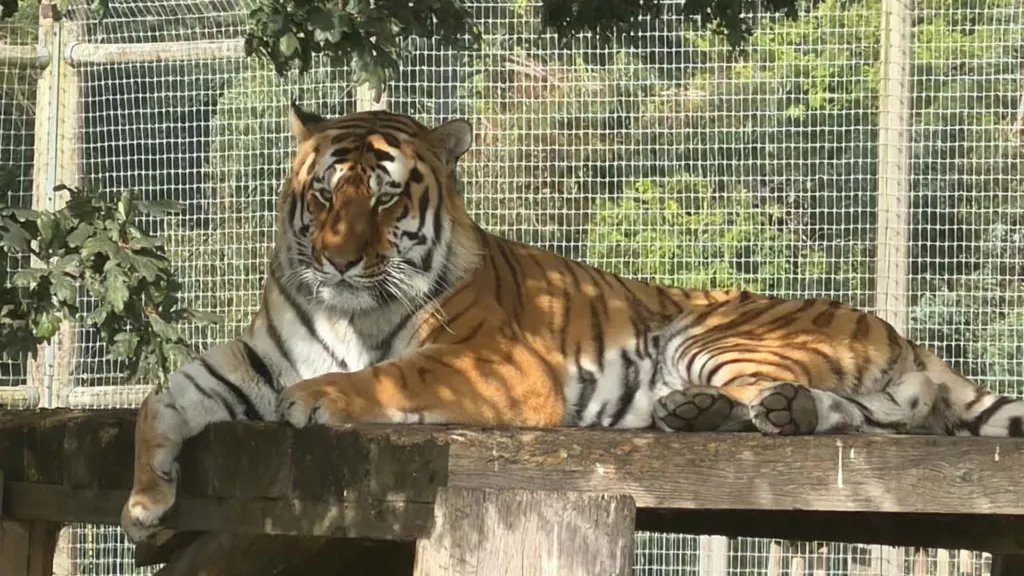
Yorkshire Wildlife Park near Doncaster has shut its doors to visitors following a horrifying tiger attack that left one man dead on Saturday afternoon. Emergency teams rushed to the popular UK attraction shortly after 1:30 PM after reports surfaced that a visitor had managed to enter the enclosure housing endangered Amur tigers. Despite the rapid response of paramedics, police, and air ambulance personnel, the man died at the scene from severe injuries.
The park confirmed it will stay closed through Sunday while law enforcement carries out an investigation and staff members receive grief counseling and trauma support. The shocking event has sent ripples across the country, sparking widespread discussion about park safety, human behavior around wild predators, and the welfare of captive big cats.
In the aftermath of the tragedy, zoo officials released a key update regarding the tiger involved in the incident. The park announced that the male tiger, named Altai, is unharmed and will not be put down. The decision has drawn praise from wildlife conservationists and animal lovers who argue that the animal was reacting purely on natural instincts.
Here is everything you need to know about what happened at Yorkshire Wildlife Park, why the gates remain locked, what experts are saying about big cat behavior, and what happens next as investigations continue.
Inside the Tragic Incident at Yorkshire Wildlife Park
The terrifying ordeal began around 1:35 PM on Saturday afternoon in the Land of the Tigers section of Yorkshire Wildlife Park. Witnesses visiting the popular attraction reported seeing an adult male climbing over safety barriers and entering the fenced habitat housing Amur tigers.
The $0 Secret To Launching Your Entire Online Empire
Why pay hundreds every month for separate software? Build funnels, send emails, and make sales with Systeme.io completely free.
Get Started For $0Free Forever • No Credit Card Needed • Beginner-Friendly
Eyewitnesses described moments of panic and confusion as visitors realized a person was inside the predator habitat. People nearby tried to scream and bang on the outer safety fencing to distract the tiger and scare it away from the visitor. However, the large predator reacted quickly to the intruder inside its territory.
Witness accounts state that the tiger grabbed the man shortly after he entered the primary habitat space. Panicked onlookers called emergency services immediately while wildlife park staff activated their emergency protocols to secure the site and evacuate all visitors from the immediate area.
Emergency crews including South Yorkshire Police, two land ambulances, and a regional air ambulance arrived at the scene within minutes. Paramedics made every effort to administer life-saving care, but the victim sustained critical injuries and was pronounced dead at the scene.
Police officers quickly established a secure perimeter around the tiger reserve while park management cleared the rest of the park to ensure public safety. South Yorkshire Police confirmed that the victim’s immediate family members have been notified and are currently receiving assistance from trained family liaison officers.
Authorities have not officially released the identity or age of the man involved, pending formal identification procedures and preliminary coroner reports. Officials emphasized that no other visitors or staff members were physically harmed during the event.
Why Yorkshire Wildlife Park Remains Closed
Yorkshire Wildlife Park management announced that the park would remain completely closed to the public through Sunday, with reopening dates subject to further official updates. The decision to keep the park closed stems from two primary necessities: assisting ongoing police inquiries and supporting trauma recovery for the staff.
First, law enforcement teams need unrestricted access to the scene. Detectives and forensic specialists from South Yorkshire Police are reviewing physical evidence, CCTV footage, and visitor testimonies to reconstruct the precise timeline of events. Investigators are examining how the victim managed to bypass multiple safety structures, including perimeter fencing and warning signs designed to keep people at a safe distance. Understanding how individuals breach secure areas is critical for ongoing safety assessments, much like broader inquiries into public safety and security breaches at high-profile properties.
Second, the psychological impact on zoo employees is a major factor behind the closure. Zookeepers, security personnel, and emergency responders who witnessed or managed the immediate aftermath are dealing with severe emotional shock. The management team stated that staff wellbeing is a top priority, and specialized mental health support and counseling services have been made available to everyone affected.
Visitors who booked tickets for the weekend have been advised to check official channels for rebooking or refund options. The park released an official statement expressing deep sorrow over the loss of life and extending heartfelt sympathies to the family and loved ones of the deceased.
Management reassured the public that all other animals across the park remain secure and well-cared for by essential care staff who remain on site during the temporary closure.
The Fate of Altai: Why the Tiger Will Not Be Euthanised
One of the biggest questions on the minds of the public following the tragedy was what would happen to the tiger involved. On Sunday morning, Yorkshire Wildlife Park issued a clear statement reassuring the public about the animal’s future.
The tiger involved in the attack is named Altai, a male Amur tiger who was transferred to Yorkshire Wildlife Park from a zoo in Norway in 2025 as part of an international breeding and conservation program. Park managers confirmed that Altai is safe, unharmed, and will not be euthanised as a result of the incident.
Zoo officials emphasized that Altai acted entirely on natural instinct when an unfamiliar presence entered his territorial living space. Amur tigers, also known as Siberian tigers, are apex predators with powerful territorial instincts. When an intruder enters their physical space, their immediate response is driven by defense and predatory reaction rather than malice.
Animals kept in accredited wildlife parks retain their wild instincts regardless of how long they have lived around humans. Expecting a big cat not to react when someone enters its physical domain is contrary to basic animal biology.
The park’s decision not to euthanise Altai received widespread support from wildlife enthusiasts, animal welfare organizations, and the general public. Many people took to social media to thank the park for recognizing that the animal was not at fault for defending its territory.
Send, Spend & Hold Money Worldwide Without Hidden Fees
Transfer money internationally at the real exchange rate and hold 40+ currencies in one account.
Open a Wise AccountMid-market rate • Fast transfers • 40+ currencies
Amur tigers are an endangered species native to the Russian Far East and northeastern China. With fewer than 500 individuals estimated to remain in the wild due to habitat loss and poaching, every single Amur tiger in human care plays a critical role in preserving the species from extinction.
Understanding Safety Protocols in Modern Wildlife Parks
The tragic event at Doncaster has reopened global conversations regarding how wildlife parks design barriers and handle safety measures. Modern zoos and safari parks are built around dual objectives: providing animals with spacious, natural environments while keeping visitors completely separated from dangerous species.
Physical Barriers vs Human Intent
Wildlife parks utilize a combination of physical barriers to prevent accidental contact between humans and animals. These barriers typically include high fencing, wide moat systems, glass viewing walls, and dense vegetation buffers.
- Stand-off fences are placed several feet in front of primary enclosure walls to prevent visitors from leaning over or touching the outer perimeter.
- Primary containment walls or mesh fences are engineered to withstand extreme physical force and prevent animals from escaping.
- Clear warning signage is posted at frequent intervals along visitor pathways to alert the public to potential danger.
While these measures are effective at preventing accidental falls or casual contact, standard zoo infrastructure cannot always prevent a determined individual from actively climbing over barriers. Short of placing big cats behind thick solid walls that eliminate natural light and natural behavior, no enclosure design can fully neutralize intentional security breaches.
Emergency Response and Protocols
When a security breach occurs inside a dangerous animal enclosure, zoo staff follow strict protocols designed to isolate the threat and protect human life. Emergency response procedures typically involve several steps:
- Immediate activation of park-wide emergency alerts to notify staff and security teams.
- Rapid evacuation of nearby visitors to secure indoor facilities or exit gates.
- Deployment of trained animal management teams equipped with distraction tools, CO2 extinguishers, or tranquilizer gear.
- Immediate dispatch of local emergency services, including police and medical response units.
In situations involving large apex predators like Amur tigers, tranquilizer darts do not take effect instantly. Sedatives often require several minutes to work, during which time an agitated animal can become more unpredictable. This highlights why keeping people physical separated from animals remains the only foolproof safety measure.
Social Media Ethics and the Plea from Police
As news of the tiger attack spread online, video clips recorded by bystanders began circulating across platforms like TikTok, X, and Facebook. The footage showed graphic details of the encounter inside the enclosure, triggering intense reaction across social media.
In response, South Yorkshire Police issued an urgent public appeal asking social media users to stop sharing and viewing the traumatic footage. Law enforcement officials noted that spreading graphic videos causes immense distress to the victim’s grieving family and interferes with official investigation processes.
Online platforms have faced growing scrutiny over how quickly graphic or traumatic content spreads during breaking news events. While social media allows news to travel instantly, it also creates challenges for law enforcement agencies attempting to manage sensitive investigations and protect the privacy of victims. Similar concerns about digital monitoring and information handling have emerged in other public safety contexts, such as discussions surrounding police intelligence and public crowd management.
Ethical content sharing is a crucial responsibility for social media users. Before re-sharing shocking videos or unverified claims online, individuals should consider the real-world emotional toll on families who are dealing with sudden loss.
The $0 Secret To Launching Your Entire Online Empire
Why pay hundreds every month for separate software? Build funnels, send emails, and make sales with Systeme.io completely free.
Get Started For $0Free Forever • No Credit Card Needed • Beginner-Friendly
Refraining from sharing graphic footage respects the dignity of the victim and allows official authorities to complete their investigation without unnecessary distraction.
Essential Safety Guidelines for Wildlife Park Visitors
Visiting a wildlife park or zoo is a popular activity for families, nature lovers, and travelers around the world. Every year, millions of people visit animal reserves safely by following standard rules and respecting the environment.
Whether you are exploring local nature reserves or planning international trips to famous animal sanctuaries, keeping safety at the top of your mind ensures a positive experience for everyone. If you are planning travel abroad to visit top attractions across the UK or Europe, staying organized with the right tools is key. You can check out our guide on essential travel apps for modern trips to help streamline your travel plans and stay informed on destination guidelines.
If you are traveling to the UK from abroad to explore popular wildlife destinations, make sure you understand entry requirements like the UK Electronic Travel Authorisation guide before booking your flights. Staying informed about local regulations and safety standards helps make every journey smoother.
Here are fundamental safety practices every zoo visitor should follow:
Respect All Safety Barriers and Signage
Stand-off fences, low wooden rails, and ropes are placed for a specific reason. Never lean over, sit on, or climb over any safety railing, regardless of how close you want to get for a photo or video.
Keep Children Close at All Times
Children are naturally curious and may not understand the hidden dangers behind low fences or glass walls. Always keep young children by the hand or within arm’s reach in crowded viewing areas.
Never Attempt to Feed or Provoke Animals
Feeding animals unauthorized food can cause severe digestive illness or provoke aggressive behavior. Avoid banging on glass viewing panels, shouting, or making sudden erratic gestures to get an animal’s attention.
Follow Zoo Staff Instructions Immediately
Zookeepers and park wardens are trained professionals who understand animal behavior and safety procedures. If a staff member asks you to step back or clear an area, follow their directions promptly without argument.
Stay Aware of Your Surroundings
Pay attention to posted warning signs and designated visitor walkways. Staying on marked paths ensures you remain in safe zones monitored by park staff and security cameras. If you are exploring major cities or urban centers during your travels, maintaining general awareness is equally important, as discussed in our deep dive into urban safety and crime awareness.
The Role of Big Cats in Wildlife Conservation
While incidents involving captive big cats are rare, they often spark debates about the necessity of keeping large predators in accredited parks. Understanding why facilities like Yorkshire Wildlife Park house endangered species helps put their broader mission into perspective.
Preserving Endangered Subspecies
Many big cat species in the wild face severe threats from poaching, habitat fragmentation, human conflict, and climate change. Captive breeding programs managed by accredited zoos serve as an insurance population against total extinction in the wild.
Amur tigers, for instance, were brought back from the brink of extinction in the mid-20th century when wild populations dropped to fewer than 50 individuals. Controlled breeding programs in accredited facilities help maintain genetic diversity across the global population.
For people interested in wildlife and animal diversity, learning about different species—whether through real-world conservation efforts or digital media like the detailed animal rosters found in popular media like GTA 6 animal features—reflects our deep fascination with the natural world.
Public Education and Research
Accredited wildlife parks allow millions of visitors each year to connect with species they might never see in the wild. Seeing these magnificent creatures up close fosters public empathy and encourages support for global conservation funds.
Furthermore, scientists and veterinarians gain valuable insights into big cat health, reproductive biology, and behavior by studying animals in human care. This knowledge directly informs conservation strategies used to protect wild populations in native habitats.
Frequently Asked Questions (FAQs)
Why is Yorkshire Wildlife Park closed right now?
Yorkshire Wildlife Park remains temporarily closed following a fatal incident on Saturday afternoon where a visitor entered a tiger enclosure and was killed. The park is closed to allow police to conduct a thorough investigation and to provide specialist psychological support to staff members affected by the tragedy.
Will the tiger involved in the attack be euthanised?
No, Yorkshire Wildlife Park has officially confirmed that Altai, the male Amur tiger involved in the incident, is safe and well and will not be euthanised. The park stated that the tiger was acting on natural animal instincts when an intruder entered its enclosure.
What kind of tiger was involved in the incident?
The tiger involved is an Amur tiger (also known as a Siberian tiger) named Altai. Amur tigers are an endangered subspecies native to eastern Russia and China, with only around 500 individuals remaining in the wild.
What should visitors do if they purchased tickets for closed days?
Visitors who bought tickets for days when the park is closed should monitor the official Yorkshire Wildlife Park website and social media channels for details regarding ticket rebooking, extensions, or refunds.
Is there any threat to public safety outside the enclosure?
No, South Yorkshire Police and park management confirmed that the tiger remained inside its enclosure throughout the incident. There was no escape and no ongoing danger to the general public outside the habitat.
The tragic event at Yorkshire Wildlife Park serves as a sobering reminder of the power and instinct of wild animals, even when living within managed sanctuaries. As South Yorkshire Police complete their investigation and the park team works through this incredibly difficult period, public support remains focused on honoring the memory of the victim and supporting the staff and conservationists dedicated to animal care.
If you have questions, feedback, or would like to get in touch with our team, feel free to visit our contact page. You can also stay connected with us and join the conversation on our social media platforms on Instagram, Facebook, and X (Twitter).
