
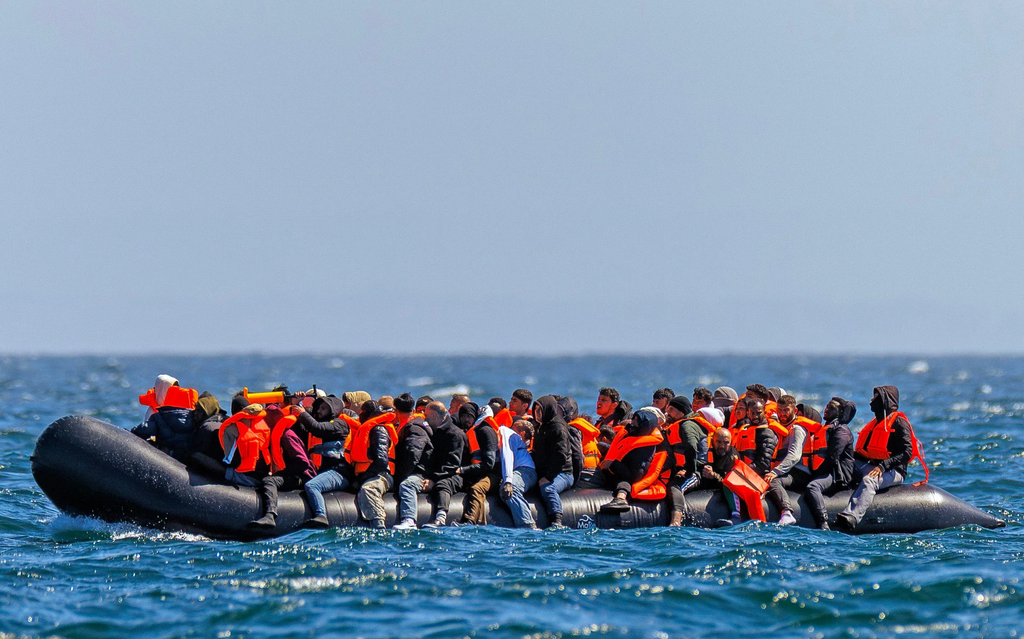
A tragic incident took place in the English Channel off the coast of northern France, where one person lost their life and 72 people were rescued from an inflatable boat attempting to reach the United Kingdom. The overcrowded vessel was carrying more than 110 people when it ran into severe difficulty in open waters.
French maritime authorities monitored the boat overnight near the coastal town of Gravelines after noticing it was carrying far more passengers than safety standards allow. When those on board requested help, rescue teams immediately moved in to pull survivors from the sea.
During the rescue operation, emergency medical crews found one person on board in critical condition. Paramedics performed CPR and dispatched a rescue helicopter, but the individual was pronounced dead shortly after. Three other individuals suffered injuries during the journey, with one requiring urgent hospital treatment.
This event highlights the extreme dangers thousands of people face every year while attempting to cross one of the busiest shipping lanes in the world on unsuitable, crowded boats.
Detailed Breakdown of the English Channel Rescue Operation
The rescue mission began late overnight when a French patrol vessel spotted the inflatable boat drifting in the Gravelines region, located between Calais and Dunkirk. Maritime monitoring teams kept close watch on the vessel as sea conditions began to deteriorate.
The $0 Secret To Launching Your Entire Online Empire
Why pay hundreds every month for separate software? Build funnels, send emails, and make sales with Systeme.io completely free.
Get Started For $0Free Forever • No Credit Card Needed • Beginner-Friendly
When the boat began taking on water and passengers panicked, rescue workers launched small inflatable rescue craft to transfer people to safety. Out of more than 110 people squeezed onto the small boat, 72 migrants were brought onto French patrol vessels and taken back to shore for medical evaluation.
According to an official statement from the Prefecture maritime de la Manche et de la mer du Nord, the situation on board quickly became chaotic as water entered the vessel. In addition to the person who died, three passengers received immediate medical attention for severe hypothermia, fuel burns, and crush injuries caused by severe overcrowding.
The remaining passengers on the boat chose to continue their journey toward British waters despite the rescue operation, a common occurrence when small vessels are intercepted near international maritime boundaries.
The Dangers of Overcrowded Small Boats
Inflatable boats used by human smugglers are rarely designed for sea travel across open channels. They are often cheap, low-quality rubber dinghies fitted with small engines that are not strong enough to handle unpredictable tides.
Smugglers regularly force between 80 and 120 people onto boats built to hold fewer than 20. This extreme overcrowding creates severe safety hazards:
- Heavy weight causes the floorboards of the boat to bend or snap under pressure.
- Fuel leaks from unsealed containers mix with seawater, causing severe chemical skin burns on passengers sitting on the floor.
- Sudden shifts in movement by frightened passengers can easily cause the vessel to capsize in high waves.
- Lack of life jackets or low-quality life jackets leaves many passengers unable to stay afloat if thrown into the water.
Sea Conditions in the English Channel
The English Channel is notorious for strong ocean currents, sudden shifts in weather, and extremely low water temperatures. Even during summer months, spending extended periods in seawater can cause hypothermia within minutes.
Commercial container ships and large ferry vessels pass through the Channel constantly. Small inflatable dinghies have very low visibility on commercial radar, creating a constant risk of collision with massive cargo ships that cannot stop quickly.
Why People Take the Risk to Cross the English Channel
Understanding why individuals board unsafe boats requires looking at the conditions in their home countries and the promises made by human smuggling networks. Most migrants attempting this journey come from regions affected by conflict, political persecution, economic collapse, or severe human rights abuses.
Many individuals spend months or years traveling across Africa, the Middle East, or Asia before reaching northern France. Once in coastal towns like Calais or Dunkirk, they often live in makeshift camps while waiting for an opportunity to cross to Britain.
Push Factors from Home Countries
People leaving their home countries are often fleeing situations where staying put poses an immediate danger to their lives or families. War, violent conflict, and religious or political persecution force millions of people worldwide from their homes.
In other cases, complete economic collapse leaves young people without jobs, food security, or access to basic healthcare. For these individuals, the chance of reaching safety in Western Europe outweighs the terrifying risks of crossing the ocean in a dinghy.
Pull Factors and the Appeal of the UK
Several specific factors draw asylum seekers toward the United Kingdom rather than remaining in mainland European countries like France or Germany:
- Language familiarity: English is widely spoken globally, making it easier for newcomers to communicate, seek work, and navigate daily life.
- Existing family connections: Many migrants already have relatives, friends, or community networks living in the UK who can offer housing and initial support.
- Perception of asylum procedures: Rumors and information shared online lead some individuals to believe the UK offers better long-term protection or faster processing times.
Human trafficking networks exploit these hopes. Smugglers charge thousands of dollars per person, promising a safe trip across the sea while ignoring basic safety measures.
Current Trends and Migration Data
The latest Channel crossing data reveals shifting patterns in small boat arrivals. Reports by news organizations like BBC News and official government statistics show that total crossing numbers fluctuate significantly depending on sea weather and police enforcement on French beaches.
While thousands of people continue to cross every month during clear weather windows, overall numbers so far this year remain lower compared to peak levels recorded in previous years. Over 16,000 migrants have crossed the Channel so far this year, representing a notable drop compared to the same period in recent years.
Send, Spend & Hold Money Worldwide Without Hidden Fees
Transfer money internationally at the real exchange rate and hold 40+ currencies in one account.
Open a Wise AccountMid-market rate • Fast transfers • 40+ currencies
Sudden Spikes After Poor Weather
Despite an overall decline in annual totals, individual days still see massive spikes in arrivals. Just prior to this recent fatality, nearly 500 migrants arrived in the UK in a single day across seven separate small boats.
These sudden surges happen because bad weather and high winds often hold back departures for days or weeks. When sea conditions clear up even briefly, human smugglers launch dozens of boats simultaneously from different beach locations to overwhelm police patrols.
The Role of “Taxi Boats”
French law enforcement has increasingly targeted smuggler groups on coastal land. In response, smugglers have changed their tactics by using what authorities call “taxi boats.”
Instead of inflating and launching boats directly from the sand in front of police officers, smugglers launch empty boats further up the coast or out at sea. The boats then cruise along the coastline to pick up groups of migrants who wade out into deep water to climb aboard.
This tactic forces migrants to wade up to their chests in freezing water, adding severe risk before the boat even begins its journey across the Channel.
Government Responses and Legal Measures
The government response to small boat crossings involves complex political, legal, and security measures across both sides of the English Channel.
UK Home Secretary Shabana Mahmood has stated that government agencies are actively expanding border enforcement measures overseas while working closely with French maritime police.
Closing Asylum Accommodation Hotels
One major focus of current UK policy is reducing reliance on hotels used to house asylum seekers while their claims are processed. The government has been actively closing down asylum hotels across the country, shifting toward larger centralized accommodation sites such as former military barracks and shared housing properties.
Government data shows that the number of asylum seekers living in Home Office hotels has dropped by roughly 50 percent compared to last year. Historic properties and hotels in popular tourist towns have been returned to normal commercial operations as alternative housing arrangements expand.
Enforcing Strict Penalties Against Smuggling Networks
Both the UK and French governments have introduced tougher criminal penalties for human trafficking rings. Law enforcement agencies are targeting:
The $0 Secret To Launching Your Entire Online Empire
Why pay hundreds every month for separate software? Build funnels, send emails, and make sales with Systeme.io completely free.
Get Started For $0Free Forever • No Credit Card Needed • Beginner-Friendly
- Financial networks used by smugglers to collect payment from migrants.
- Warehouses in Western Europe where illegal inflatable dinghies and outboards are stored.
- Social media accounts and messaging groups used by traffickers to market illegal passage.
Despite these enforcement efforts, high profit margins keep smuggling networks active. A single boat carrying 100 people can generate hundreds of thousands of dollars for trafficking gangs, making it easy for them to replace seized equipment.
How Modern Technology and AI Are Improving Maritime Rescue
Preventing loss of life in the English Channel relies heavily on advanced monitoring technologies. Coastguards and border control agencies now use sophisticated tools to spot small boats long before they sink or capsize.
If you are interested in how modern software and intelligent tools are transforming industries worldwide, check out our insights on technology and AI updates to learn how automated systems work in real-world applications.
Drone Surveillance and Thermal Imaging
High-altitude drones equipped with thermal imaging cameras patrol the coastlines of France and Britain day and night. Thermal sensors pick up heat signatures from human bodies even in pitch-black conditions or thick sea fog.
When a drone spots a small boat leaving a beach, it relays live video feeds directly to maritime rescue coordination centers. This allows coastguards to dispatch lifeboats and rescue helicopters immediately if a boat appears to be sinking or taking on water.
Artificial Intelligence in Maritime Navigation
Modern radar systems use artificial intelligence algorithms to distinguish small rubber dinghies from ocean waves and sea clutter. Standard marine radar often struggles to detect low-profile rubber boats, but AI-powered tracking tools analyze movement patterns to flag potential migrant vessels.
By predicting where a boat is drifting based on wind speed and tidal currents, rescue teams can reach struggling vessels much faster, preventing casualties before emergency calls are even made.
How Digital Media Outlets Cover Global News Events
Major news events like the English Channel migration crisis spread quickly across online platforms and digital news channels. Today, millions of people get their breaking news from video platforms, blogs, and independent content creators rather than traditional television broadcasts.
For digital creators looking to build channels that deliver timely news updates to global audiences efficiently, learning about YouTube automation guides offers valuable ideas on how to organize video production and research workflows.
Fact-Checking and Responsible News Coverage
Reporting on sensitive topics involving human loss requires accuracy and care. Digital news platforms play an important role in explaining complex issues without sensationalism.
Responsible reporting focuses on:
- Verifying official statements from maritime authorities before publishing claims.
- Explaining the human story behind headline statistics.
- Providing accurate background information on international migration laws.
By presenting clear facts, online platforms help audiences understand both the humanitarian reality and the political debate surrounding border control.
International Maritime Law and the Duty to Rescue
Under international law, every vessel at sea has a strict obligation to render assistance to any person found in danger of being lost.
The International Convention for the Safety of Life at Sea (SOLAS) states that ship captains must proceed with all speed to assist persons in distress, regardless of their nationality, legal status, or the circumstances in which they are found.
The Role of Coastguards and Volunteer Lifeboats
Both the French coastguard and Britain’s Royal National Lifeboat Institution (RNLI) work around the clock to respond to distress calls in the Channel. RNLI crews are volunteers who launch lifeboats in dangerous weather conditions to save anyone in trouble at sea.
Humanitarian organizations emphasize that rescue operations must always take priority over border enforcement when lives are at risk. Once survivors are brought to shore safely, legal and asylum procedures begin.
Long-Term Solutions to Prevent Channel Tragedies
Experts on international migration agree that stopping dangerous sea crossings requires long-term global solutions rather than short-term fixes:
- Establishing clear legal pathways for asylum applications outside of Europe so people do not need to rely on smugglers.
- Increasing international aid and economic support to countries suffering from severe instability.
- Strengthening joint intelligence operations between European nations to break up human trafficking operations.
Without addressing both the root causes of migration and the business model of smugglers, vulnerable people will continue risking their lives in unsafe boats.
Frequently Asked Questions (FAQs)
What happened in the recent English Channel incident?
A small inflatable boat carrying over 110 migrants ran into trouble while attempting to cross the English Channel near Gravelines, France. French maritime authorities rescued 72 people, but tragically, one person died and three others suffered injuries requiring medical care.
Why are English Channel crossings so dangerous for migrants?
The English Channel features freezing water temperatures, strong ocean currents, unpredictable weather, and heavy commercial ship traffic. Smugglers overcrowd small, low-quality inflatable boats far beyond safe capacity, making them prone to capsizing, flooding, or engine failure.
What are “taxi boats” in Channel crossings?
Taxi boats are inflatable vessels launched empty by smugglers from remote coastal areas. The boats cruise along the shore to pick up migrants who wade out into deep, freezing water. This tactic is used to avoid police officers stationed on sandy beaches.
How is the UK government working to reduce small boat crossings?
The UK government is working with French authorities to increase beach enforcement, crack down on human smuggling networks, and introduce stricter legal measures. The government is also closing asylum hotels and shifting accommodation to larger centralized sites like former military barracks.
How does technology help coastguards rescue boats in distress?
Coastguards use high-altitude drones, thermal imaging, satellite tracking, and AI-powered radar systems to detect small boats in real time. These technologies help rescue teams locate overcrowded dinghies quickly, even in dark or foggy conditions.
Final Thoughts and Staying Connected
The tragic loss of life in the English Channel serves as a stark reminder of the human cost behind global migration issues. As governments work on policy solutions and enforcement measures, the primary concern during emergency maritime operations remains saving human lives.
To learn more about our mission and how we cover major global events, visit our About Us page or get in touch directly through our Contact Us page.
Stay updated with the latest news, trending topics, and real-time updates by following our official social media channels:
- Follow us on Instagram
- Connect with us on Facebook
- Join the discussion on X (formerly Twitter)
