
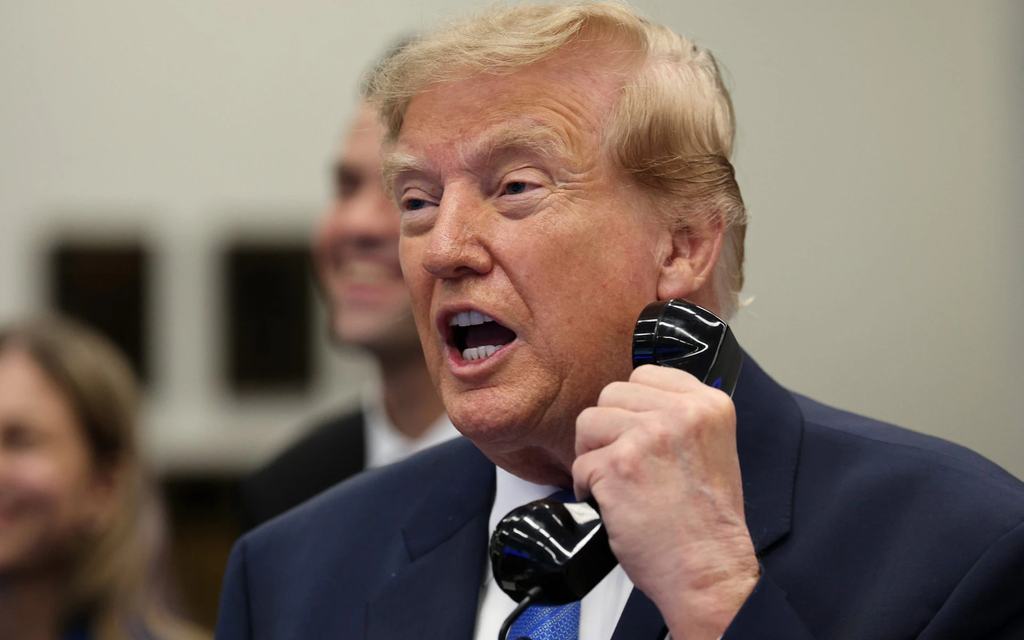
Washington has dropped a diplomatic shockwave across the Atlantic. The United States government is threatening to withdraw its long-standing support for British sovereignty over the Falkland Islands unless the UK significantly increases its military spending.
Senior Pentagon officials confirmed that Washington is placing Britain under special scrutiny. If the British government fails to establish a clear path toward meeting aggressive new NATO spending targets, the US could officially drop its neutral stance and support Argentina’s claim over the islands.
This unexpected ultimatum has caught political leaders and military analysts off guard. It represents one of the most aggressive foreign policy moves directed at London by an American administration in modern history. For Britain, where control of the Falkland Islands has been a point of national identity since the 1982 war, the threat hits at the very heart of its territorial sovereignty.
Inside the Ultimatum: Why the Falklands Are Suddenly on the Bargaining Table
How did a small archipelago in the South Atlantic become a bargaining chip in global military politics? The answer lies in a massive push by Washington to force European allies to pay more for their own defence.
Under a new military doctrine being developed at the Pentagon—often referred to as “NATO 3.0″—the Trump administration is demanding that European nations take full responsibility for conventional military defence on their continent. American officials are pushing allies to commit to a total defence spending target equal to 5% of their Gross Domestic Product (GDP).
The $0 Secret To Launching Your Entire Online Empire
Why pay hundreds every month for separate software? Build funnels, send emails, and make sales with Systeme.io completely free.
Get Started For $0Free Forever • No Credit Card Needed • Beginner-Friendly
Under this proposal, member countries would allocate 3.5% of their GDP directly to core military capabilities like troops, weapons, and combat readiness. The remaining 1.5% would be dedicated to national security infrastructure, including cybersecurity, power grid protection, and supply chain resilience.
Currently, Britain spends roughly 2.3% of its GDP on defence. While that meets NATO’s older target of 2%, American officials say it falls far short of what is needed today. The UK Treasury recently confirmed that its upcoming budget will not commit to hitting even a 3% target anytime soon, sparking frustration inside the Pentagon.
Because Britain has one of the largest economies and strongest military traditions in Western Europe, senior American officials say London is getting “special attention”. Washington believes Britain has the unique capacity to lead European defence, and officials are willing to use extreme diplomatic pressure to make it happen. When asked if the US would really change its position on the Falklands, one top official noted that conversations were direct and “nothing is being ruled out.”
The Backstory: How US-UK Tension Reached a Boiling Point
This sudden confrontation did not happen out of nowhere. Tension between Washington and London has been building over several months.
Earlier in the year, friction grew when the UK government refused to fully support American military operations during a rising conflict with Iran. That refusal caused deep frustration inside the White House, leading President Donald Trump to openly criticize European allies for relying on American protection while failing to support US initiatives abroad.
A leaked Pentagon memo from earlier in the year first hinted that Washington was looking at Britain’s overseas claims as potential leverage. At the time, foreign policy experts dismissed the memo as a minor internal discussion. However, recent statements from top Pentagon policy makers show that the idea has matured into an active diplomatic strategy.
For decades, the United States maintained a policy of official neutrality regarding who owns the Falkland Islands, while practically recognizing British administration of the territory. Threatening to abandon that neutrality and actively back Argentina is a radical departure from traditional diplomacy between the two allies.
According to reports published by The Telegraph, US defence leaders believe that strong measures are necessary to force European nations to build up their own militaries so the US can focus its energy elsewhere.
Britain’s Response: Why London Refuses to Budge
Downing Street was quick to reject any foreign challenge to its sovereign territory. British officials maintain that UK sovereignty over the Falkland Islands is non-negotiable.
The core of Britain’s legal and moral argument rests on the principle of self-determination. In a landmark 2013 referendum, the residents of the Falkland Islands voted almost unanimously—99.8% in favor—to remain a British Overseas Territory. Government leaders in London argue that no foreign power has the right to ignore the explicit democratic will of the people who actually live on the islands.
However, the timing of this pressure places the British government in a very difficult political spot. Leaders in London are currently managing tight domestic budgets, rising public spending demands, and difficult economic reforms.
To double military spending to meet Washington’s 5% target, the UK government would have to make massive cuts to public services like health care and education, or raise taxes significantly. Neither option is popular with voters.
At the same time, military experts acknowledge that Britain’s armed forces are facing operational challenges. While the Royal Navy operates two massive aircraft carriers, shortages in escorts, jet fighters, and personnel have created debates within London about military readiness. British leaders find themselves caught between US pressure to spend big on defense and domestic pressure to keep the economy stable.
The View From Argentina: A Surprising Diplomatic Gift
Across the globe in Buenos Aires, news of the US ultimatum was received with intense interest. For Argentina, the Falkland Islands—known in Latin America as Las Malvinas—have been a central territorial claim for over 180 years.
The dispute over the islands triggered a brief war in 1982 after Argentine forces occupied the territory. British forces responded quickly, reclaiming the islands after ten weeks of intense fighting. Since then, Argentina has consistently pushed for diplomatic talks over sovereignty, but London has refused to negotiate, pointing to the referendum results.
Send, Spend & Hold Money Worldwide Without Hidden Fees
Transfer money internationally at the real exchange rate and hold 40+ currencies in one account.
Open a Wise AccountMid-market rate • Fast transfers • 40+ currencies
Argentine President Javier Milei has continued to push for international recognition of Argentina’s claim. Facing internal economic challenges at home, Milei sees any shift in the US position as a major diplomatic victory.
If Washington follows through on its threat and drops its neutral position, it would fundamentally change the diplomatic balance in international forums like the United Nations. It would give Argentina its strongest backing from a major global power in decades and potentially force London onto the defensive internationally.
The region around the Falklands also carries strategic military and economic weight. Situated near the Drake Passage and key shipping routes between the Atlantic and Pacific oceans, the South Atlantic remains a critical maritime passage.
What NATO 3.0 Means for the Future of Global Security
This high-stakes dispute is about far more than just a cluster of islands in the South Atlantic. It highlights a fundamental transformation in how global security agreements are managed.
Under the vision outlined by senior Pentagon policy officials like Elbridge Colby, the US is seeking to shift its primary strategic focus toward the Indo-Pacific region. To free up American resources, Washington expects European nations to assume nearly full responsibility for European land, air, and sea defense.
This means European nations must invest heavily in modern military hardware, intelligence systems, and digital defense infrastructure. The transition requires governments to rethink how they manage budgets, technology, and strategic planning.
As defense strategy relies more on advanced computing, cyber defense, and automated systems, technology is becoming the backbone of modern military power. Anyone interested in seeing how technological shifts impact global industries and strategy can check out our deep dives into Technology & AI for clear explanations of where the tech world is heading.
Navigating Global News in a Changing World
Following fast-moving international politics can sometimes feel overwhelming. Major diplomatic shifts, military budget debates, and sudden policy changes happen quickly, but keeping up with them gives us a front-row seat to how world history is made.
Understanding international relations helps us make sense of wider economic trends, security policies, and national decisions that ultimately affect everyday life around the globe.
For creators and digital enthusiasts who want to learn how modern media platforms track, package, and share breaking news and viral stories with global audiences, exploring concepts like YouTube Automation offers great insights into building scalable content channels.
The $0 Secret To Launching Your Entire Online Empire
Why pay hundreds every month for separate software? Build funnels, send emails, and make sales with Systeme.io completely free.
Get Started For $0Free Forever • No Credit Card Needed • Beginner-Friendly
If you want to know more about our editorial mission and how we bring you clear, honest coverage on global events and pop culture, take a moment to visit our About Page. Have a question, feedback, or a story tip you want us to cover? Head over to our Contact Page and get in touch with our team.
You can also join our growing community on social media to share your thoughts on this story and get instant updates on global news. Connect with us on Instagram, follow our updates on Facebook, and join the live conversation on X (formerly Twitter).
Frequently Asked Questions
What threat did the US make against Britain over the Falkland Islands?
The US government warned that it could drop its long-standing support for British administration over the Falkland Islands and potentially recognize Argentina’s claim if Britain does not significantly increase its military spending to meet NATO targets.
Why is Washington pushing NATO allies to spend 5% of GDP on defence?
Under a new framework known as “NATO 3.0,” Pentagon officials want European allies to handle their own conventional defense. The 5% target includes 3.5% for core military forces and 1.5% for national security infrastructure like cybersecurity and power grids.
How has Britain responded to the US ultimatum?
Downing Street firmly rejected any challenge to its territory. British officials emphasized that the sovereignty of the Falkland Islands is determined by the islanders themselves, who voted overwhelmingly in 2013 to remain British.
What is Argentina’s stance on the Falkland Islands?
Argentina has claimed sovereignty over the islands (which it calls Las Malvinas) for nearly two centuries. President Javier Milei views Washington’s potential policy shift as a major diplomatic opportunity to reopen international talks over the islands’ future.
How much does Britain currently spend on its military?
Britain currently spends about 2.3% of its GDP on defence, which meets NATO’s historical 2% target but falls far short of the new 5% goal proposed by the Trump administration.
Could the US actually change its official stance on the Falklands?
While senior US officials stated that “nothing is being ruled out,” changing Washington’s official stance would represent an unprecedented shift in US foreign policy toward its closest ally. Currently, analysts view the threat primarily as high-stakes leverage to force higher defense spending.
A Turning Point in the Special Relationship
The threat to challenge British control of the Falkland Islands marks a dramatic moment in modern diplomacy. For decades, the partnership between Washington and London was built on unconditional strategic alignment. Today, that alliance is being re-evaluated through the lens of strict financial burden-sharing and military spending targets.
Whether London ultimately finds a way to increase its military budget or holds its ground on existing commitments, this high-stakes dispute proves that global relationships are changing fast.
As governments adjust to new geopolitical realities, the outcome of this showdown will send shockwaves through NATO and influence international relations for years to come.
