
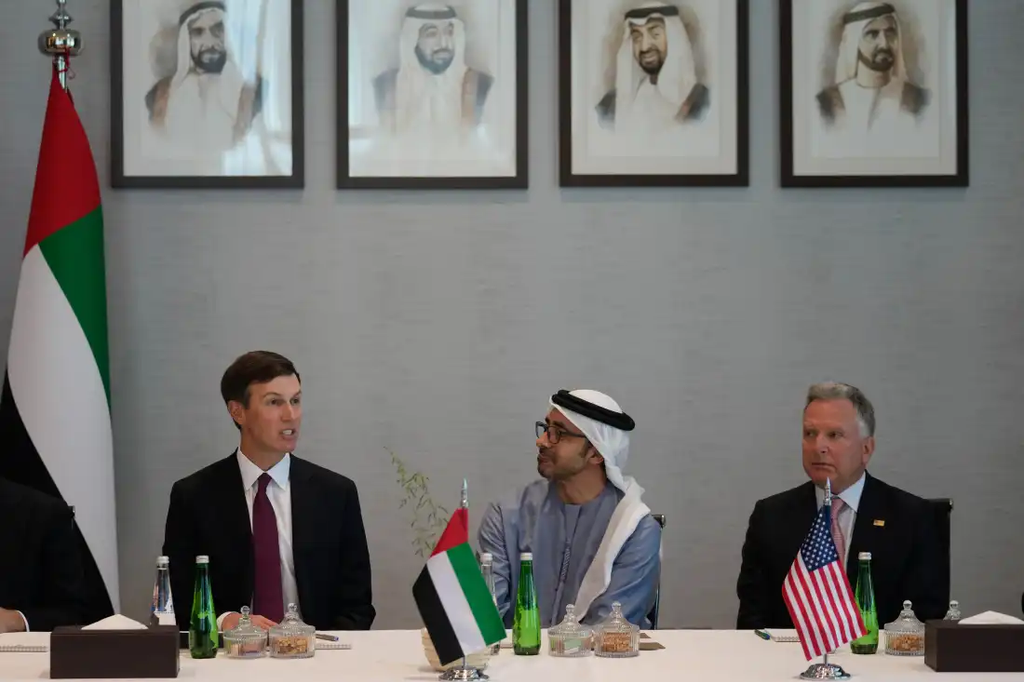
Senior officials from the United States, Russia, and Ukraine sat down in the same room in Abu Dhabi for direct, high-stakes negotiations. It marks the first time since early 2026 that all three sides have gathered around a single conference table to confront the future of the war.
For four intense hours behind closed doors in the United Arab Emirates, diplomats and defense officials tackled humanitarian crises, battlefront realities, and the difficult question of how to end the conflict. While nobody walked out claiming a final peace treaty, the gathering produced tangible progress: a massive, breakthrough prisoner swap agreement and the first substantive framework for long-term security talks.
News of the secret diplomacy came after months of back-and-forth shuttle missions across global capitals. When U.S. envoys arrived in Moscow for high-stakes Ukraine peace talks, skeptics wondered if Moscow and Kyiv would ever sit in the same room again. Abu Dhabi proved that, under intense international pressure, direct dialogue remains possible.
Inside the Room: Who Sat at the Table in Abu Dhabi
The meeting in Abu Dhabi was not a ceremonial photo opportunity. It was an unvarnished working session run by key decision-makers with direct access to their heads of state.
Representing the United States were presidential envoy Steve Witkoff and Jared Kushner, joined by top NATO commander U.S. General Alexus Grynkewich. Washington has made stopping the fighting a core priority, arguing that an endless war of attrition harms global stability.
The $0 Secret To Launching Your Entire Online Empire
Why pay hundreds every month for separate software? Build funnels, send emails, and make sales with Systeme.io completely free.
Get Started For $0Free Forever • No Credit Card Needed • Beginner-Friendly
The Ukrainian team arrived with serious intelligence and diplomatic clout. The delegation was led by Rustem Umerov, head of Ukraine’s Foreign Intelligence Service. Alongside him were Kyrylo Budanov, head of the Presidential Office; Davyd Arakhamia, the majority leader in Ukraine’s parliament; Serhiy Kyslytsya, first deputy head of the presidential office; and Vadym Skibitskyi, deputy head of Defense Intelligence.
Russia sent a seasoned delegation headed by presidential aide Vladimir Medinsky. He was flanked by Deputy Foreign Ministers Sergei Ryabkov and Mikhail Galuzin, Russian military intelligence (GRU) chief Igor Kostyukov, and senior General Staff operational strategist Yuri Zhigarlovsky.
Before sitting across from the Russians, the Ukrainian delegation met with senior representatives from the United Kingdom, France, Germany, Italy, NATO, and the European Commission. Kyiv wanted its Western allies fully briefed on the baseline positions before opening direct talks with Moscow.
Reports from inside the compound revealed a businesslike atmosphere. Handshakes were minimal and pleasantries were brief, but participants remained seated across the four-hour session, systematically working through an agreed list of critical topics.
The Immediate Breakthrough: A Historic Prisoner Exchange
The most concrete achievement from day one in Abu Dhabi was a deal on human lives. Negotiators agreed on a massive, reciprocal prisoner-of-war exchange.
President Volodymyr Zelenskyy confirmed that talks centered heavily on returning captured soldiers and detained civilians. Ukrainian officials noted that the exchange could involve swaps of 1,000 for 1,000, or potentially up to 1,500 people on each side. That scale would make it one of the largest single prisoner swaps in modern military history.
Ukrainian Deputy Head of the Presidential Office Iryna Vereshchuk highlighted that recent frontline operations significantly increased Ukraine’s pool of captured Russian troops. That shift gave Ukrainian negotiators stronger leverage at the bargaining table in the UAE.
Beyond soldiers, the humanitarian docket addressed the return of Ukrainian children taken into Russian territory during the war. Returning displaced families and children has been a moral non-negotiable for Kyiv. Reaching an initial agreement on this issue created the goodwill necessary for negotiators to schedule a second round of discussions.
In conflicts of this size, humanitarian breakthroughs often serve as the essential testing ground. When warring parties demonstrate they can successfully execute a massive prisoner swap, they build the minimal baseline trust required to talk about ceasefires and border security.
What the United States Is Putting on the Table
Washington entered the Abu Dhabi talks with a clear goal: establish a realistic path toward a durable settlement. The White House has consistently pushed both capitals toward compromise, pointing out the immense toll of sustained war.
Previous diplomatic trips set the stage for this meeting. After earlier rounds where Trump envoys headed to Kyiv for high-stakes peace talks, Washington laid out broad proposals to bridge the deep chasm between Russian and Ukrainian demands.
According to reporting from The Guardian, American negotiators introduced three core strategic concepts in Abu Dhabi:
- Binding Security Guarantees: The U.S. presented the idea of a bilateral or multilateral security framework for Ukraine that functions similarly to NATO’s Article 5 mutual defense principle, without requiring immediate formal NATO membership.
- Reviving the NATO-Russia Council: Negotiators explored reopening formal diplomatic channels between NATO and Moscow that were suspended in 2022, creating a permanent mechanism to prevent accidental escalation.
- Phased Sanctions Adjustments: U.S. representatives floated conditional sanctions relief for Russia, tied strictly to measurable troop withdrawals and verifiable peace milestones.
U.S. Secretary of State Marco Rubio, speaking from the Group of Seven meeting in Paris, acknowledged the progress while urging realism. Rubio stated that the Abu Dhabi discussions were very productive, but emphasized that deep disagreements remain.
The background of the American diplomatic team has played a prominent role in how these talks are perceived abroad. Insights into Washington’s diplomatic philosophy can be found in the untold story of Marco Rubio, which details how modern U.S. foreign policy balances domestic interests with international negotiations.
Ukraine’s Stand: Guarantees That Cannot Be Broken
For Ukraine, any talk of peace must confront bitter history. Ukrainian leaders remember the 1994 Budapest Memorandum, where Ukraine surrendered its nuclear arsenal in exchange for security assurances that failed to prevent the 2014 annexation of Crimea or the 2022 invasion.
Send, Spend & Hold Money Worldwide Without Hidden Fees
Transfer money internationally at the real exchange rate and hold 40+ currencies in one account.
Open a Wise AccountMid-market rate • Fast transfers • 40+ currencies
President Zelenskyy made it clear following the first session that Ukraine’s core requirements remain firm. In public remarks at the University of Copenhagen, he underlined that any peace plan must guarantee Ukraine’s sovereign independence, self-defense capabilities, and territorial integrity.
Kyiv’s representatives made three points clear to the American and Russian delegations:
- Paper Promises Are Insufficient: Security guarantees cannot be vague political statements. They must involve legally binding international commitments backed by real military force, modern weapons supplies, and air defense capabilities.
- No Unilateral Disarmament: Ukraine will not accept caps on its armed forces or restrictions on its right to form defense alliances with friendly nations.
- Accountability for War Damages: Russian reparations or the use of frozen Russian sovereign assets must contribute to rebuilding Ukraine’s devastated towns and electrical infrastructure.
Ukrainian defense partnerships continue to expand even as diplomacy proceeds. For example, Canada and Ukraine signed a historic 100-year defense agreement focusing on air defense and drone manufacturing, illustrating how Kyiv is cementing long-term security backing from international partners.
Russia’s Position: The Battlefield and the Negotiating Table
Moscow entered the Abu Dhabi talks with demands shaped by its long-running grievances regarding European security. Russian President Vladimir Putin has insisted that any resolution must address the root causes of the conflict, which the Kremlin frames as NATO expansion toward Russian borders.
Russian Foreign Minister Sergey Lavrov emphasized from Moscow that real progress requires restructuring the entire European security architecture before any final ceasefire can take hold. Russia’s delegation laid out positions that reflect this perspective:
- Permanent Neutrality for Ukraine: Moscow demands formal guarantees that Ukraine will remain non-aligned and never join the NATO alliance.
- Recognition of Territorial Realities: Russian envoys reiterated that any political settlement must reflect current territorial control across the Donbas, Zaporizhzhia, Kherson, and Crimea.
- Sanctions Removal: Moscow is pressing for the lifting of Western banking, energy, and export sanctions, pointing out that economic normalization must accompany any security treaty.
The economic battlefield remains closely tied to diplomatic talks. Despite previous rounds where Trump signed massive Russia sanctions, the Kremlin continues to use energy trade and diplomatic pressure to protect its financial foundation.
Even as Vladimir Medinsky expressed optimism at the start of the Abu Dhabi summit, fighting continued unabated. Russian forces launched coordinated missile and drone strikes against Ukrainian power stations in ten regions overnight. In response, Ukrainian long-range drones struck Russian energy infrastructure, underscoring that both sides are still fighting aggressively for leverage at the bargaining table.
Why Abu Dhabi Was Chosen as the Diplomatic Arena
Hosting talks between the world’s most powerful rivals is a delicate diplomatic assignment. The United Arab Emirates has systematically built a reputation as a trusted, neutral intermediary between East and West.
The UAE maintains strong security and economic relationships with the United States. At the same time, Abu Dhabi preserves extensive trade and diplomatic ties with Moscow and has consistently supported humanitarian channels for Ukraine.
Over the past four years, the UAE has facilitated dozens of successful prisoner swaps between Russia and Ukraine. That proven track record made the Emirates the natural destination when Washington sought a secure, confidential environment for trilateral talks.
The $0 Secret To Launching Your Entire Online Empire
Why pay hundreds every month for separate software? Build funnels, send emails, and make sales with Systeme.io completely free.
Get Started For $0Free Forever • No Credit Card Needed • Beginner-Friendly
The physical location provided total privacy. Media cameras were kept away from the negotiating rooms, allowing the delegations to talk candidly without having to perform for immediate television soundbites.
European Allies: Supportive but Anxious
Europe’s leaders watched the Abu Dhabi summit with a mixture of cautious hope and deep apprehension. European nations have borne the heaviest economic and security consequences of the war on their doorstep.
Senior European leaders worry that a bilateral deal orchestrated by Washington might compromise European security interests or force Ukraine into unfair concessions. German Chancellor Friedrich Merz warned that expectations should not be set too high, stressing that past Russian diplomatic promises have often unraveled. In Italy, Prime Minister Giorgia Meloni has expressed concern over fragmented, uncoordinated peace initiatives that could divide Western unity.
To address these concerns, Ukraine met directly with European officials in Abu Dhabi before opening trilateral discussions. European leaders issued a joint statement emphasizing that any future security settlement must respect national sovereignty and guarantee Ukraine’s independent decision-making.
European diplomatic activity has accelerated in response to these developments. European capitals are coordinating closely, as seen when leaders gathered during the emergency Downing Street summit with Volodymyr Zelensky to ensure that European defense commitments remain unified regardless of shifting American political winds.
Past Diplomatic Attempts and the Lessons Learned
The meeting in Abu Dhabi did not happen in a vacuum. Over the course of the war, multiple peace proposals have emerged and stalled.
Earlier efforts highlighted how fragile diplomatic promises can be. Observers will remember when Trump claimed Ukraine and Russia agreed to an energy ceasefire, only for mutual attacks to resume within hours on the ground.
Similarly, rhetoric from all capitals has swung wildly depending on battlefield momentum. When diplomatic friction spiked previously, Trump demanded Ukraine sign a peace deal as tensions boiled over, while Moscow frequently accused European nations of interfering with potential agreements.
The lesson learned from these previous attempts is straightforward: broad declarations mean nothing without detailed implementation plans. By focusing first on an enforceable prisoner exchange and building working groups for security guarantees, the Abu Dhabi format is taking a more grounded, step-by-step approach.
What This Means for Everyday People Across the World
International diplomacy can often feel abstract, but the decisions made in Abu Dhabi directly touch everyday household realities across the globe.
- Global Energy Bills: The war in Ukraine has created immense volatility in crude oil and natural gas prices. If the Abu Dhabi negotiations pave the way toward a predictable energy truce or an eventual end to hostilities, global fuel prices and domestic heating bills could see substantial long-term relief.
- Food Prices and Agricultural Stability: Ukraine and Russia are agricultural powerhouses, supplying significant portions of the world’s wheat, sunflower oil, and fertilizer. Diplomatic stability in the Black Sea and surrounding regions eases pressure on global food supply chains, helping lower grocery expenses.
- Government Spending and Inflation: Western nations have poured hundreds of billions of dollars into military aid, economic support, and refugee integration. A durable diplomatic resolution allows governments to redirect fiscal resources toward domestic infrastructure, healthcare, and economic relief.
- Humanitarian Relief: Above all, thousands of families whose loved ones are held in detention camps or serving on freezing frontlines stand to benefit immediately from prisoner releases and de-escalation.
Frequently Asked Questions (FAQs)
What took place during the Abu Dhabi talks?
Representatives from the United States, Russia, and Ukraine held four hours of direct trilateral talks in Abu Dhabi on November 10, 2026, marking their first joint meeting since earlier in the year. The discussions focused on humanitarian issues, prisoner exchanges, long-term security guarantees, and conditions for ending the war.
Who attended the negotiations?
The American delegation included presidential envoys Steve Witkoff and Jared Kushner, alongside NATO commander U.S. General Alexus Grynkewich. Ukraine was represented by Foreign Intelligence Service head Rustem Umerov, Presidential Office head Kyrylo Budanov, and parliamentary leader Davyd Arakhamia. Russia sent presidential aide Vladimir Medinsky, military intelligence chief Igor Kostyukov, and deputy foreign ministers Sergei Ryabkov and Mikhail Galuzin.
Did Russia and Ukraine sign a peace treaty?
No peace treaty was signed. Both sides remain far apart on key political and territorial issues. However, both parties described the four-hour session as substantive and constructive, agreeing to continue working on specific humanitarian and security tracks.
What was the major breakthrough agreed upon in Abu Dhabi?
The primary breakthrough was an agreement on a large-scale prisoner exchange. Negotiators worked through plans to swap up to 1,000 to 1,500 prisoners from each side, as well as the return of detained civilians and displaced children.
What kind of security guarantees is the United States proposing?
The U.S. has proposed a robust, enforceable security architecture for Ukraine that provides protection comparable to NATO’s Article 5 mutual defense provision, without granting immediate full NATO membership. Washington also suggested reviving the NATO-Russia council and reviewing sanctions in exchange for verified military pullbacks.
Why is Europe concerned about these talks?
European leaders support peace but want to ensure that any deal preserves Ukraine’s territorial sovereignty and protects broader European security. European governments met with the Ukrainian team before the main talks to ensure Western positions remained coordinated.
What happens next?
Negotiators scheduled follow-up meetings in Abu Dhabi to finalize the logistics of the prisoner swap and review technical proposals for security guarantees. Meanwhile, U.S. envoys are expected to continue shuttle diplomacy between European capitals, Kyiv, and Moscow.
The Road Ahead for Global Diplomacy
The four-hour meeting in Abu Dhabi does not end the war overnight. Deep territorial disagreements remain, mutual distrust is pervasive, and missiles continue to fly across the frontlines.
Yet, diplomacy rarely succeeds through grand single moments. It moves through difficult, unglamorous meetings in quiet conference rooms where warring nations begin to resolve small, practical problems. By locking in a massive prisoner exchange and establishing a working framework for security guarantees, the Abu Dhabi talks provided the first realistic diplomatic momentum the world has seen in months.
As second-round discussions continue, international observers will watch closely to see if the commitments made in the UAE translate into tangible progress on the ground.
For questions, story tips, or feedback on our reporting, you can reach out directly via our Contact Page.
