
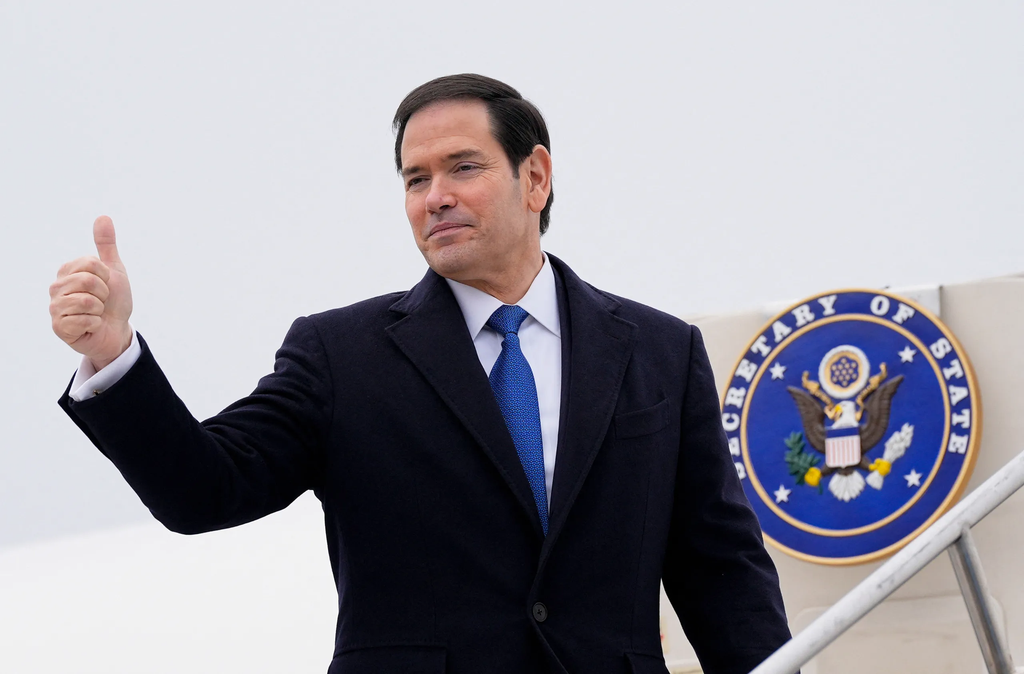
Marco Rubio did not take the traditional road to the highest halls of global power. Most modern top diplomats and high-ranking American leaders come from wealthy dynasties, elite family names, or generations of Ivy League pedigree. Rubio came from a tiny home in Miami, raised by working-class Cuban immigrants who worked long, exhausting shifts as a hotel maid and a bartender.
Today, his name commands international headlines as one of the most influential political operators on Capitol Hill and the global stage. From local city politics in Florida to high-stakes presidential debates, and ultimately to directing foreign policy as America’s chief diplomat, Rubio’s life reads like a political thriller.
Here is the complete, true biography of Marco Rubio: where he came from, how he fought his way up, the bitter rivalries he survived, and how he redefined conservative politics along the way.
Who Is Marco Rubio? Quick Overview and Profile
Marco Antonio Rubio is an American politician, attorney, and foreign policy strategist who has served as the United States Senator for Florida and a leading voice in modern international diplomacy. He first captured nationwide attention in 2010 during a dramatic political upset that launched him into the U.S. Senate, and later became a frontline candidate in the 2016 Republican presidential race.
- Full Name: Marco Antonio Rubio
- Date of Birth: May 28, 1971
- Place of Birth: Miami, Florida, United States
- Parents: Mario Rubio Reina and Oriales Garcia Rubio
- Spouse: Jeanette Dousdebes Rubio (married 1998)
- Children: Daniella, Amanda, Anthony, and Dominic
- Alma Mater: Tarkio College, Santa Fe Community College, University of Florida (BA), University of Miami School of Law (JD)
- Political Party: Republican
- Key Positions Held: City Commissioner of West Miami, Speaker of the Florida House of Representatives, U.S. Senator from Florida, U.S. Secretary of State nominee and top diplomatic leader
The Immigrant Roots: Escaping Hardship and Chasing the American Dream
To understand Marco Rubio, you have to look at where his family began.
The $0 Secret To Launching Your Entire Online Empire
Why pay hundreds every month for separate software? Build funnels, send emails, and make sales with Systeme.io completely free.
Get Started For $0Free Forever • No Credit Card Needed • Beginner-Friendly
In May 1956, his parents, Mario Rubio Reina and Oriales Garcia Rubio, packed their bags and left Cuba for the United States. This was two and a half years before Fidel Castro took over the island nation. They were not wealthy political exiles with millions in offshore accounts; they were ordinary, hardworking young people looking for work and stability.
After Castro seized power in 1959, returning home permanently became impossible. Mario took on grueling shifts as a hotel bartender, catering to Miami tourists. Oriales worked as a maid, cleaning rooms in luxury hotels on Miami Beach, and later worked on a factory floor assembling small goods.
Marco was born on May 28, 1971, in Miami. He was the third of four children. The household spoke Spanish, drank strong Cuban coffee, and lived around dinner-table conversations filled with memories of the island they lost.
In 1979, when Marco was eight years old, his father moved the family to Las Vegas, Nevada, chasing steady work in hotel hospitality. During their stay in the desert, his parents briefly joined the Church of Jesus Christ of Latter-day Saints, and young Marco spent several years immersed in Sunday youth groups before the family returned to their Roman Catholic roots.
The family moved back to Miami in 1985. The city was changing rapidly, booming with immigrant energy and heated debates about international freedom. Watching his father stand on his feet for twelve hours behind a bar made a lasting impression on young Marco. He realized early on that education and public service were his only reliable tickets to building a different life.
From Football Dreams to the Law Books
Marco was an energetic teenager who attended South Miami Senior High School, graduating in 1989. Like millions of American boys, his first genuine obsession was not politics or law. It was American football.
He worked hard on the field and earned an athletic football scholarship to Tarkio College, a small private school in Missouri. Rubio spent one year playing college football in the freezing Midwest plains. But life had other plans. The college soon fell into severe financial distress, and Rubio realized that a career in professional sports was completely out of reach.
He packed his bags, returned home to Florida, and enrolled at Santa Fe Community College in Gainesville. From there, he transferred to the University of Florida, where he earned his Bachelor of Science in Political Science in 1993.
Rubio knew that if he wanted to make a mark in government, a law degree was essential. He gained admission to the University of Miami School of Law, funding his studies with a massive pile of student loans. He worked part-time, studied late into the night, and graduated cum laude with his Juris Doctor in 1996.
By the time he finished law school, Rubio carried more than one hundred thousand dollars in student loan debt. It was a burden he openly talked about throughout his career, often reminding voters that he spent years paying off those loans just like any regular middle-class graduate.
Starting at the Bottom: Florida Politics and the Golden Boy Era
Rubio did not wait for an invitation to join the political arena. While still in law school, he volunteered on campaigns and worked as an intern for Ileana Ros-Lehtinen, the first Cuban-American woman elected to the United States Congress. Watching her work taught him how to connect directly with working-class Hispanic neighborhoods across South Florida.
In 1998, at only twenty-six years old, Rubio ran for his first public office: a seat on the West Miami City Commission. He knocked on doors, greeted local shopkeepers, and won.
Two years later, an unexpected opportunity opened up. A seat in the Florida House of Representatives became vacant after a special election. Rubio jumped into the crowded race. Despite running against older, more established figures, Rubio’s charisma, clear speaking style, and relentless work ethic carried him to victory in early 2000.
Once in Tallahassee, Florida’s capital, his rise was remarkably fast. While many new lawmakers spent years quietly sitting in the back of committee rooms, Rubio mastered legislative strategy. He made friends across different factions of the party.
By 2006, at only thirty-five years of age, Marco Rubio made history by becoming the first Cuban-American Speaker of the Florida House of Representatives.
Send, Spend & Hold Money Worldwide Without Hidden Fees
Transfer money internationally at the real exchange rate and hold 40+ currencies in one account.
Open a Wise AccountMid-market rate • Fast transfers • 40+ currencies
As Speaker, he launched a unique project called “100 Innovative Ideas for Florida’s Future.” Instead of sitting in back rooms with lobbyists, he traveled across the state, gathered ideas directly from everyday citizens at town halls, and published them in a physical book. He then pushed the legislature to pass dozens of those citizen-driven proposals into law. By the time his term ended in 2008, national Republican leaders were already watching him closely.
The 2010 Senate Miracle: How Rubio Beat the Establishment
When Rubio left the Florida legislature, most people expected him to take a lucrative corporate law job and wait his turn. But in 2009, he announced a daring move: he was running for the United States Senate seat being vacated by Mel Martinez.
On paper, his campaign looked completely hopeless. The sitting Governor of Florida, Charlie Crist, was a massively popular, wealthy, and well-connected moderate Republican who decided to run for the exact same Senate seat. Crist had the backing of the entire Washington Republican establishment, millions of dollars in campaign donations, and endorsements from top national figures. Rubio was polling in single digits, trailing Crist by over thirty points.
Instead of backing down, Rubio rode a historic wave of conservative grassroots rebellion known as the Tea Party movement. He traveled to small county fairs, visited church basements, and appeared on local conservative talk radio programs. He argued that Washington was spending too much money, creating endless national debt, and losing touch with basic constitutional limits.
His speeches caught fire on national television. Slowly, the poll numbers started to turn. By early 2010, Rubio had caught up to Crist. In a panic, Crist abandoned the Republican primary altogether and decided to run as an Independent candidate.
In November 2010, Marco Rubio pulled off one of the greatest political upsets in modern Florida history. In a three-way race against Crist and Democratic candidate Kendrick Meek, Rubio crushed the competition, winning almost forty-nine percent of the total vote.
At just thirty-nine years old, the son of a hotel maid and a bartender entered the United States Senate. Time Magazine quickly put him on its cover, dubbing him “The Republican Savior.”
The Washington Crucible: The Immigration Fight and Global Clashes
Arriving in Washington, Rubio was immediately treated as a rockstar. But he soon found out that the nation’s capital is a dangerous place for rising stars.
In 2013, Rubio decided to tackle one of the most toxic, complicated problems in American politics: immigration reform. He joined a bipartisan group of four Republicans and four Democrats known as the “Gang of Eight.” The group included heavyweight senators like John McCain, Chuck Schumer, and Lindsey Graham.
Together, they drafted a massive bill that aimed to dramatically tighten border security while creating a tough, decade-long pathway to legal status for millions of undocumented immigrants living in the shadows. The debate over who gets to live and work legally in the country has always been intense, as seen in ongoing discussions about how moving to America is getting harder for legal applicants.
The $0 Secret To Launching Your Entire Online Empire
Why pay hundreds every month for separate software? Build funnels, send emails, and make sales with Systeme.io completely free.
Get Started For $0Free Forever • No Credit Card Needed • Beginner-Friendly
While the Senate passed the comprehensive bill with sixty-eight votes, conservative voters and grassroots media outlets were furious. Many accused Rubio of backing an amnesty program. The House of Representatives refused to even vote on the proposal.
Rubio took significant political damage from the battle. He listened to the fierce public backlash and shifted his strategy, later arguing that no comprehensive reform could ever work until the southern border was completely sealed and secured first.
Instead of retreating into safe topics, Rubio pivoted heavily toward foreign policy and national defense. He secured prime assignments on the Senate Foreign Relations Committee and the Senate Select Committee on Intelligence.
Unlike many politicians who focus exclusively on domestic tax policy, Rubio spent long hours studying international dictatorships, intelligence briefs, and supply chains. He became Washington’s most outspoken critic of the Chinese Communist Party, warning years ahead of others that American reliance on Chinese manufacturing posed a severe threat to national security.
He also authored major bipartisan legislation, including the Uyghur Forced Labor Prevention Act, which blocked goods produced through forced labor in China from entering American markets. When national security threats emerged across the globe, Rubio was routinely the first senator summoned by television networks to break down international espionage, such as when Marco Rubio claimed a foreign power targeted a military base.
The Brutal 2016 Presidential Campaign and Donald Trump
By April 2015, Marco Rubio felt he was ready for the ultimate prize. Standing in Miami’s historic Freedom Tower—the symbolic entry point where thousands of Cuban refugees had been processed decades earlier—he announced his candidacy for President of the United States.
He framed his campaign as a generational choice. He argued that the twentieth century belonged to older leaders, but the twenty-first century needed a fresh, energetic conservative vision. For several months, his polished speaking skills, uplifting personal story, and optimistic tone made him a media favorite.
Then came Donald J. Trump.
The 2016 Republican primary shattered all normal political rules. Trump attacked his rivals with sharp nicknames, aggressive rhetoric, and populist energy. When Rubio attempted to stay above the chaos, Trump branded him with the nickname “Little Marco,” mocking his height, his water-drinking habits during speeches, and his traditional party talking points.
During a crucial debate in New Hampshire, New Jersey Governor Chris Christie dealt Rubio a heavy blow on live television, accusing him of sounding like a scripted robot who repeated twenty-five-second memorized speeches. Rubio struggled during that debate, repeating the exact same talking point multiple times, which immediately became an internet meme.
Desperate to fight back before the Florida primary, Rubio abandoned his sunny persona and began trading personal insults with Trump on stage, joking about Trump’s spray tans and the size of his hands.
It backfired completely.
Voters did not want a traditional young senator trying to imitate Trump’s insult comedy. On March 15, 2016, Trump decisively defeated Rubio in his own home state of Florida. That night, Rubio suspended his presidential campaign in front of a heartbroken crowd in Miami, acknowledging that voters were hungry for disruptive, anti-establishment change.
Rebuilding, Adapting, and the Transformation of an Alliance
Many politicians never recover from an embarrassing defeat on the national stage. Rubio took a completely different approach: he got back to work.
Realizing that Florida voters still valued his leadership, he decided to run for reelection to his Senate seat in late 2016 and won comfortably. He repeated that success in 2022, dismantling high-profile Democratic challenger Val Demings by more than sixteen percentage points, proving that his popularity in Florida had expanded across both Hispanic and non-Hispanic working-class communities.
During Donald Trump’s first presidency, Rubio made a calculated, practical move. Instead of remaining a bitter critic, he found common ground with the White House.
Rubio quickly became Trump’s primary informal adviser on Latin American policy. He helped shape the administration’s tough sanctions against Nicolas Maduro’s regime in Venezuela, tightened trade embargoes on Cuba, and pushed for stronger protections for democratic allies across South America.
When the COVID-19 pandemic paralyzed the global economy in early 2020, Rubio partnered with Democratic Senator Ben Cardin to create the Paycheck Protection Program (PPP). The emergency rescue program delivered hundreds of billions of dollars in forgivable loans directly to small businesses to keep workers on payroll, preventing an outright economic collapse for millions of families.
As congressional debates heated up over international conflicts and defense spending, Rubio consistently aligned with robust national security measures, backing strong stances on Middle Eastern operations like the Senate backing Trump’s regional strategies.
Rubio also evolved his economic philosophy. He moved away from pure, hands-off free-market libertarianism and began advocating for “common-good capitalism.” He argued that American corporations should not simply outsource factories to foreign sweatshops to maximize quarterly profits. Instead, he maintained that government policy should actively protect domestic manufacturing, blue-collar wages, and stable families.
The Appointment as America’s Chief Diplomat
When Donald Trump won the 2024 presidential election, the political landscape shifted dramatically. Trump needed trusted, experienced figures to run essential government agencies while carrying out an “America First” agenda.
In a historic move, Trump nominated Marco Rubio to serve as the United States Secretary of State, leading the U.S. Department of State.
The selection was significant for multiple reasons:
- Historic First: Rubio became the first Latino in American history to be nominated as Secretary of State.
- Global Realism: He brought deep institutional knowledge from his years on the Senate Intelligence and Foreign Relations committees.
- Firm Stance on Competitors: His appointment sent a crystal-clear signal to Beijing, Moscow, Tehran, and Havana that the administration would take an aggressive, hawkish approach to foreign competition.
Taking the helm of American foreign policy meant stepping into a volatile world filled with intense negotiations, including delicate diplomatic efforts like peace envoys sent to Kyiv for high-stakes negotiations. Rubio’s role placed him directly in charge of thousands of diplomats, embassies in nearly every country, and America’s international posture.
Personal Life: Faith, Family, and Football
Behind the bright studio lights and geopolitical debates, Marco Rubio lives a remarkably grounded family life in West Miami, just a short drive from the neighborhood where he grew up.
In 1998, Rubio married Jeanette Dousdebes. The two met at a neighborhood party when Rubio was nineteen and Jeanette was seventeen. Jeanette, who worked for a time as a professional cheerleader for the Miami Dolphins, attended the International Fine Arts College and has spent years working in charitable philanthropy, focusing on supporting vulnerable children and human trafficking survivors.
Together, they have four children:
- Daniella
- Amanda
- Anthony
- Dominic
Rubio is an active Roman Catholic who frequently speaks about the central role faith plays in his decision-making. He attends Mass regularly in Miami and has often described how his Christian beliefs keep him grounded when Washington politics becomes toxic.
And despite his busy travel schedule across world capitals, Rubio remains an obsessive fan of the Miami Dolphins. Friends often note that whether he is reviewing classified intelligence or traveling on official business, he rarely misses a Sunday afternoon game.
What Is Marco Rubio’s Net Worth?
Unlike many career politicians in Washington who accumulate tens of millions of dollars while in office, Marco Rubio’s financial profile looks much closer to the average middle-class professional.
According to public financial disclosure filings and official Senate records, Marco Rubio’s estimated net worth is between $400,000 and $1.5 million.
His wealth primarily consists of:
- His family home in West Miami, Florida
- State and federal retirement pension accounts
- Standard savings accounts and college savings funds for his children
- Royalties from his published books, including his popular memoir An American Son and his policy book American Dreams
For most of his early career, Rubio struggled with the same financial challenges facing many working families, including high credit card debt, mortgage payments, and six-figure student loans that he did not fully pay off until he received an advance for his first book in 2012.
Marco Rubio: Key Career Milestones
- 1971: Born in Miami, Florida to Cuban immigrant parents.
- 1993: Earns Bachelor’s degree in Political Science from the University of Florida.
- 1996: Earns Juris Doctor from University of Miami School of Law.
- 1998: Elected to the West Miami City Commission, beginning his public service career.
- 2000: Wins special election to the Florida House of Representatives.
- 2006: Becomes the first Cuban-American Speaker of the Florida House.
- 2010: Defeats Charlie Crist in an upset victory to win a seat in the U.S. Senate.
- 2013: Co-authors the bipartisan “Gang of Eight” immigration reform bill.
- 2015–2016: Runs for President of the United States, winning primaries in Minnesota, Puerto Rico, and Washington, D.C.
- 2016: Re-elected to the U.S. Senate for a second term.
- 2020: Co-creates the Paycheck Protection Program (PPP) to save millions of small businesses during the pandemic.
- 2021: Authors and passes the Uyghur Forced Labor Prevention Act.
- 2022: Re-elected to the U.S. Senate by a historic sixteen-point margin.
- 2024–2025: Nominated and confirmed as United States Secretary of State under President Donald Trump.
Frequently Asked Questions (FAQs)
What is Marco Rubio’s ethnic background?
Marco Rubio is a Hispanic American of Cuban descent. Both of his parents, Mario Rubio and Oriales Garcia Rubio, were born in Cuba and immigrated to the United States in 1956, three years before the Cuban Revolution.
What religion is Marco Rubio?
Marco Rubio is a practicing Roman Catholic. Although his family spent a few years attending the Church of Jesus Christ of Latter-day Saints during his childhood in Las Vegas, he returned to the Catholic Church as a young teenager and remains an active parishioner.
Did Marco Rubio serve in the military?
No, Marco Rubio did not serve in the military. He pursued higher education immediately after high school, earning his undergraduate degree from the University of Florida and his law degree from the University of Miami before entering local politics.
What was the “Gang of Eight”?
The “Gang of Eight” was a bipartisan group of eight U.S. Senators (four Republicans and four Democrats) who wrote a major immigration reform bill in 2013. Marco Rubio was a prominent Republican member of the group, which sought to increase border security funding while offering an earned pathway to legal status for existing undocumented workers.
What is Marco Rubio’s current role in government?
Marco Rubio was selected by President Donald Trump to serve as the United States Secretary of State, making him the top diplomat responsible for American foreign relations, international alliances, and global statecraft.
How many children does Marco Rubio have?
Marco Rubio and his wife, Jeanette, have four children: two daughters, Daniella and Amanda, and two sons, Anthony and Dominic.
Marco Rubio’s life story is proof of how quickly a family’s destiny can change in a single generation. A little over six decades ago, his parents landed in South Florida with basic suitcases, limited English, and no personal wealth. Today, their son sits at conference tables with world leaders, deciding questions of global war, peace, and trade.
His journey through state politics, bitter presidential rivalries, and grueling Senate debates shows a leader who knows how to adapt, survive, and build influence. As he steers American foreign policy through an increasingly complicated world, people across the globe will be watching his next moves closely.
