
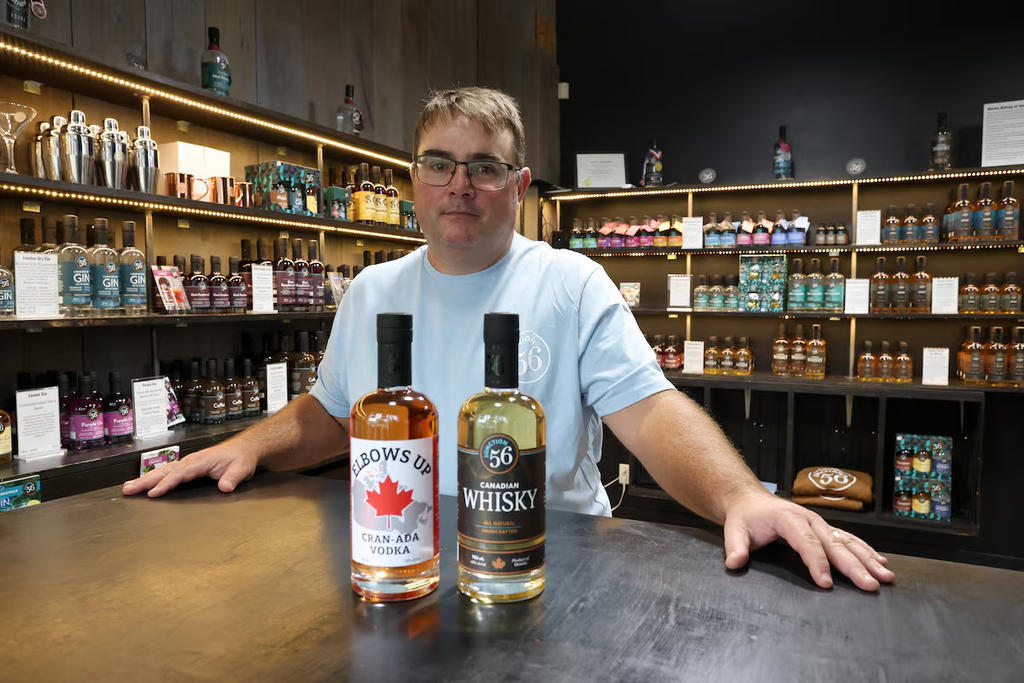
The trade conflict between the United States and Canada has taken another major turn. Starting September 29, 2026, the U.S. government is banning the import of most Canadian alcoholic beverages, alongside restrictions on dairy by-products and motorcycles. This step comes right after Canada launched C$27 billion (roughly $20 billion USD) in retaliatory counter-tariffs on American products.
The decision has caused widespread concern among distillers, winemakers, craft brewers, and store owners on both sides of the border. However, while the headlines mention a total shutdown, the actual rule contains specific details. Some types of alcohol and specific shipping arrangements fall outside the current ban, meaning certain products can still legally cross the border.
Here is a clear breakdown of what is happening, why the decision was made, which products can still enter the U.S., and how Canadian producers are adjusting to the sudden policy shift.
The U.S. Ban on Canadian Alcohol Explained
The White House announced the new import restrictions under section 338 of the Tariff Act of 1930. This law permits the U.S. president to bar imports from countries deemed to be discriminating against American goods or commerce.
The primary target of these new restrictions is the Canadian beverage sector. American officials stated that the policy is intended to balance trade conditions and respond to actions taken by Canadian authorities over the past year.
Build Funnels, Email Lists & Sell Online With One Free Tool
Create funnels, send emails, and sell online using Systeme.io without paying for multiple tools.
Create Free AccountFree forever • No credit card • Beginner-friendly
Which Alcohol Products Are Banned?
The ban specifically names several popular packaged alcohol categories. If packaged in individual containers ready for consumer retail sales under four litres, the following items are barred from entry starting September 29:
- Packaged Malt Beer: Bottled and canned beers produced by Canadian breweries.
- Sparkling Grape Wine: Sparkling wines, champagne-style wines, and related carbonated wine products.
- Whiskies: Canadian rye whiskies, Irish-style whiskies, and Scotch-style single malts produced in Canada.
- Other Distilled Spirits: Packaged rum, vodka, gin, tequila, mezcal, pisco, singani, vermouth, and brandy.
- Rice Wine and Sake: Specialty fermented rice beverages.
The ban also extends to non-alcoholic beer and specific dairy ingredients such as whey protein, invert molasses, and cane molasses.
Beyond outright bans, the U.S. government added a 50% tariff surcharge starting September 15 on several other Canadian exports. These items include select cheese products, paper, aluminum, wood, home furniture, and lighting fixtures.
The Loophole: Which Canadian Alcohol Shipments Can Still Cross the Border?
While the news sounds like a complete border blockade for drinks, customs specialists and legal advisors point out that the executive orders focus on specific product definitions. Certain categories and shipping methods are not included in the September 29 ban list.
1. Still Wine (Unsparkling Wine)
The official restriction specifically lists sparkling grape wine. Still wines—such as standard red, white, and rosé wines bottled without carbonation—are not named in the specific ban text. Winemakers in regions like Ontario’s Niagara Peninsula and British Columbia’s Okanagan Valley who ship still wine may continue exporting, provided their customs documentation clearly reflects standard still wine classifications.
2. Bulk Spirits Shipped in Large Containers
The executive order targets retail-packaged spirits in containers smaller than four litres. Spirits shipped in bulk drums, large totes, or tanker trucks—often sent across the border for blending, bottling, or aging by American partners—are classified differently under federal customs codes. As long as these bulk shipments remain above the four-litre threshold and are intended for commercial processing rather than immediate retail shelf placement, they fall outside the immediate ban list.
3. Products Already in U.S. Bonded Warehouses
Shipments that clear U.S. border inspection and enter U.S. customs-bonded warehouses prior to the September 29 deadline receive different treatment. Goods stored in bonded facilities before a ban takes effect are generally permitted to fulfill existing purchase orders. Canadian exporters are working quickly with their customs brokers to clear in-transit shipments before midnight on September 28.
4. Non-U.S. Transit Routes
Canadian distillers that export to international destinations in Europe, Asia, or South America using U.S. ports for transit (under bonded in-transit customs entries) can continue to do so. In-transit goods that do not enter U.S. domestic commerce remain exempt from local import bans.
How We Got Here: The Tit-for-Tat Trade War
To understand why alcohol became a central battleground, it helps to look at how trade tensions between Washington and Ottawa developed over the past eighteen months.
The dispute began when previous U.S. tariffs prompted several Canadian provincial governments to take direct action. Provincial liquor control boards—including the LCBO in Ontario, the SAQ in Quebec, and BC Liquor Stores in British Columbia—removed American-made spirits, wines, and beers from state-run store shelves in 2025.
That provincial boycott caused U.S. alcohol exports to Canada to drop by more than 70%. The White House cited those provincial store removals as a key reason for issuing an outright ban on Canadian alcohol rather than applying standard tariffs.
Relations grew more strained after bilateral trade negotiations collapsed. Earlier in the trade dispute, Donald Trump labeled Canada the worst trade abuser, setting a firm tone for trade negotiations.
When talks failed to produce an agreement, Canada implemented C$27 billion in counter-tariffs on American products shortly after midnight on September 8. Hours later, the White House responded with executive orders targeting Canadian alcohol, dairy by-products, motorcycles, and federal procurement contracts.
Timeline of the U.S.-Canada Alcohol Trade Dispute:
2025: Canadian provinces remove U.S. alcohol from government stores.
Mid-2026: Trade negotiations collapse without an agreement.
Sept 8, 2026 (00:01 AM): Canada applies C$27 billion in counter-tariffs on U.S. goods.
Sept 8, 2026 (Evening): White House issues executive orders banning Canadian alcohol.
Sept 15, 2026: 50% tariffs take effect on Canadian cheese, paper, and wood.
Sept 29, 2026: Import ban takes full effect for packaged Canadian alcohol.
Canadian Government and Industry Reactions
The news of the import ban triggered immediate responses from Canadian political leaders, industry associations, and business executives.
Canadian Prime Minister Mark Carney addressed the situation directly in a video message. He acknowledged that shifting away from reliance on U.S. markets would require effort, but insisted it was necessary for national economic independence.
“We have everything we need to pivot and prosper. That pivot will come at a cost. There’s always a cost to action. But it doesn’t come close to the cost of standing still,” Carney explained.
Earlier in the trade dispute, Mark Carney promised government support as the U.S. trade war deepens, assuring domestic manufacturers that federal aid programs would help affected industries find new buyers.
Public opinion in Canada remains firmly behind the government’s firm stance. Recent national polling shows that Canadians strongly stand behind PM Mark Carney’s decision to reject a bad U.S. trade deal, reflecting widespread national support for defending domestic trade policies.
Dominic LeBlanc, the Canadian minister responsible for U.S. trade relations, stated on X (formerly Twitter) that Ottawa is carefully assessing the new measures while remaining open to constructive talks if the U.S. decides to negotiate in good faith.
Candace Laing, President of the Canadian Chamber of Commerce, voiced concern over the escalating restrictions, noting that shutting down trade between long-time economic partners hurts workers on both sides of the border:
“The U.S. Administration is punishing Canada by punishing themselves, for the whole world to see.”
Economic Impact on Canadian Distillers and Winemakers
The Canadian spirits, wine, and beer industries play a major role in the national economy. The spirits sector alone contributes roughly $5.8 billion annually to Canada’s GDP and supports more than 48,800 full-time equivalent jobs across farming, distilling, packaging, logistics, and retail.
Unlike large international corporations that can shift production across international borders, small and mid-sized craft producers rely heavily on regional trade. For many craft distilleries in Ontario, Quebec, and Western Canada, exports to neighboring U.S. states represent up to 30% or 40% of their total annual revenue.
An outright import ban creates challenges that go beyond simple price adjustments:
- Production Halts: Distilleries with standing orders from U.S. distributors must pause bottling lines for U.S.-bound products.
- Inventory Strain: Warehouses in Canada are filling up with product originally intended for the U.S. market, tying up operational capital.
- Supply Chain Adjustments: Glass bottle suppliers, label printers, and local grain farmers who supply barley, rye, and corn are feeling the indirect effects of slowed production.
Despite these headwinds, economic indicators show that Canada’s broader commercial sector possesses underlying strength. Earlier economic reports revealed that Canada’s economy posted strong 3.3 percent GDP growth, demonstrating that domestic industries can adapt when market conditions shift.
To help businesses pivot toward new markets, national trade initiatives like the Canada Investment Summit 2026 are connecting domestic producers with investors and export partners across Europe, Asia, and Latin America.
Build Funnels, Email Lists & Sell Online With One Free Tool
Create funnels, send emails, and sell online using Systeme.io without paying for multiple tools.
Create Free AccountFree forever • No credit card • Beginner-friendly
Market Winners and Beverage Stock Reactions
While Canadian producers face temporary hurdles, market analysts note that the ban could shift market share toward domestic U.S. beverage companies and international suppliers not subject to the restrictions.
U.S. Stock Winners
With Canadian whiskies, beers, and spirits temporarily removed from American retail store shelves, domestic beverage companies are expected to secure additional shelf space in U.S. supermarkets and liquor stores:
- Constellation Brands (STZ): A major American producer of beer, wine, and spirits, positioned to capture beer and wine market share.
- Molson Coors Beverage Company (TAP): Possesses large U.S. brewing facilities that can fill gaps left by imported Canadian beers.
- Brown-Forman Corporation (BF.B): Producer of major American whiskey brands, which may benefit as consumers look for substitutes for Canadian rye whisky.
- Diageo (DEO): The global spirits giant could see increased demand for its non-Canadian whiskey and vodka brands across the U.S.
Conversely, dairy processing companies with cross-border supply networks—such as Canadian dairy giant Saputo—face revenue pressure due to U.S. restrictions on whey protein and specialized dairy derivative exports.
Practical Action Plan for Affected Exporters
For Canadian distillers, winemakers, and beverage business owners affected by these new trade rules, taking structured steps can help limit operational risk before the September 29 deadline.
Step 1: Audit Tariff Classifications
Exporters should review their 10-digit Harmonized System (HS) customs codes with a licensed customs broker. Confirm whether your product falls under banned classifications (such as packaged sparkling wine or bottled whisky under four litres) or exempt categories (such as still wine or bulk spirits shipped in large containers).
Step 2: Accelerate In-Transit Shipments
If you have pending U.S. purchase orders, coordinate with freight forwarders and U.S. importers immediately. Ensure shipments cross the border and receive official U.S. Customs clearance or enter a U.S. bonded warehouse before 11:59 PM on September 28.
Step 3: Review Distribution Agreements
Examine existing contracts with American distributors. Ensure force majeure clauses, delivery obligations, and payment terms cover government-mandated import bans so your business is not held financially liable for cancelled orders.
Step 4: Expand Domestic and Alternative Export Channels
Redirect excess inventory to domestic retail markets or pursue non-U.S. trade deals. Markets in the European Union, the United Kingdom, Australia, and Japan operate under active trade agreements with Canada and offer reliable growth potential for premium spirits and wines.
Step 5: Leverage Digital Marketing and Direct-to-Consumer Models
Many beverage brands are expanding their digital presence to market directly to local consumers and international buyers. Business owners interested in modern digital audience building can explore strategies like YouTube automation to reach global viewers, alongside tools in technology and AI to streamline direct sales and customer management.
Frequently Asked Questions (FAQs)
When does the U.S. ban on Canadian alcohol take effect?
The import ban on most Canadian alcoholic beverages officially takes effect on September 29, 2026. Higher 50% tariffs on separate goods like cheese, paper, and wood begin earlier, on September 15, 2026.
Are all Canadian alcoholic drinks completely banned from the U.S.?
No. The ban specifically applies to packaged malt beer, sparkling grape wine, rice wine, and spirits packaged in containers under four litres. Still (unsparkling) wines and bulk-shipped spirits in large containers over four litres fall outside the current ban list and can still cross the border.
Why did the United States specifically target Canadian alcohol?
The U.S. government cited Canadian provincial decisions in 2025 to remove American alcohol from government-owned liquor store shelves (such as LCBO and SAQ), alongside Canada’s C$27 billion counter-tariffs, as the main reasons for targeting Canadian alcohol under section 338 of the Tariff Act of 1930.
Can travelers still bring Canadian alcohol across the U.S. border for personal use?
Personal duty-free allowances for border travelers generally follow separate personal exemption rules, but commercial shipments and retail distribution orders are strictly subject to the September 29 import ban. Travelers should check current U.S. Customs and Border Protection (CBP) guidance at their port of entry before crossing.
What should Canadian distillers do if their shipments are currently in transit?
Exporters should contact their U.S. customs brokers immediately. Goods that clear U.S. customs or enter a U.S. bonded warehouse before September 29 can generally be fulfilled, but documentation must be verified ahead of time.
The ongoing trade dispute between Canada and the United States continues to evolve, creating shifting conditions for businesses, exporters, and consumers. While the new U.S. import ban presents real challenges for Canadian beverage producers, understanding product exemptions, moving quickly before deadilnes, and building non-U.S. export channels will help companies navigate these changes successfully.
To stay updated on trade news, business insights, and major global stories, explore our about page or reach out through our contact page. You can also follow our community updates on social media through Instagram, Facebook, and X (formerly Twitter).
