

U.S. President Donald Trump has launched a fierce public attack on Canada, calling the northern neighbor one of the worst abusers in global trade and stating directly that he does not want Canadian products entering the United States.
The sharp comments came during a series of posts on his Truth Social platform. His words mark a dramatic rise in tension between two countries that share the longest undefended border in the world and billions of dollars in daily trade.
The outburst followed a total breakdown in recent trade talks between Washington and Ottawa. For months, negotiators from both countries have struggled to find common ground on auto manufacturing, agricultural tariffs, and cross-border energy sales. Trump made it clear that his patience with traditional diplomatic talks has completely run out.
His statements sent shockwaves through financial markets, car companies, and political offices across North America. Workers on both sides of the border are now trying to figure out what this trade war means for their jobs, car prices, and everyday expenses.
What Trump Said in His Truth Social Rant
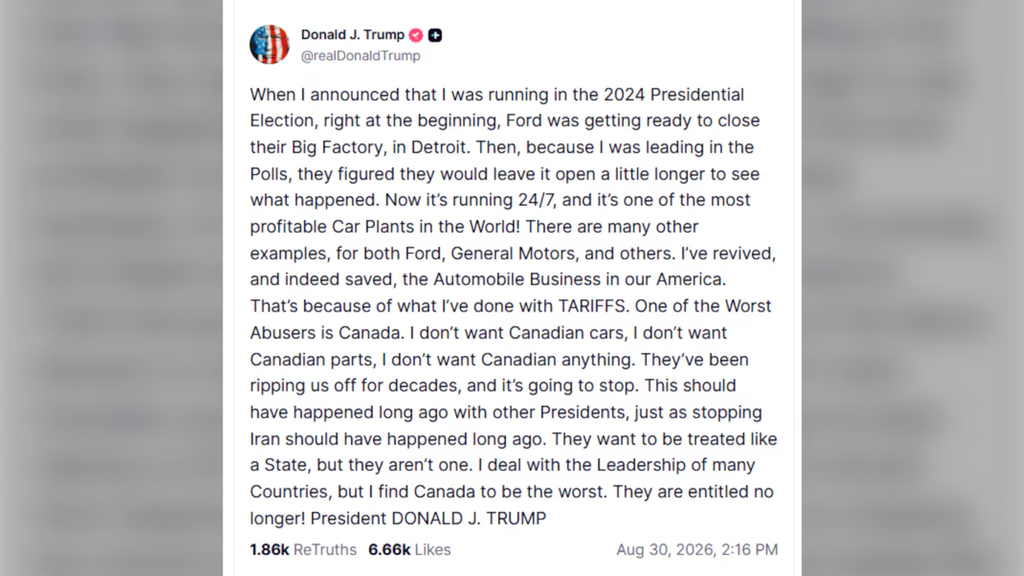
Trump used his social media account to voice long-standing complaints about American manufacturing losses. He claimed that past decisions by previous American leaders allowed other countries to take advantage of the United States. He singled out Canada as a prime target, accusing Ottawa of exploiting American trade open policies for decades.
The $0 Secret To Launching Your Entire Online Empire
Why pay hundreds every month for separate software? Build funnels, send emails, and make sales with Systeme.io completely free.
Get Started For $0Free Forever • No Credit Card Needed • Beginner-Friendly
He wrote that Canada is one of the worst offenders when it comes to trade balances. He insisted that the United States has been losing tens of billions of dollars every single year in its economic relationship with Canada. Because of this, he stated he no longer wants Canadian products flowing into American markets.
The Direct Attack on Canadian Products and Auto Parts
In his posts, Trump focused heavily on the automotive industry. Car plants and parts manufacturers have operated across the U.S.-Canada border for decades as a deeply connected system. Components frequently cross the border multiple times before a final vehicle rolls off the assembly line.
Trump rejected this shared system outright. He stated clearly that he does not want Canadian cars or Canadian parts coming into the country. He argued that importing these goods hurts American workers and takes away factory jobs that belong in cities like Detroit or Cleveland.
He added that Canada expects to enjoy all the perks of being a U.S. state without actually being one. In his view, special allowances for Canadian businesses must end immediately.
Calling for Canadian Companies to Pack Up and Move South
Rather than encouraging negotiations to fix trade rules, Trump offered a direct instruction to Canadian companies. He told any Canadian business currently selling products to American buyers that they should pack up their factories and relocate across the border into the U.S. right away.
He explained that moving production into the United States is the only way for these businesses to avoid heavy tariffs. He claimed that companies are already lining up to return to American soil to bypass these costs. According to his argument, setting up shop inside the country eliminates the tariff barrier and helps rebuild the domestic workforce.
He pointed to recent investments by major automakers as proof that tariff threats produce results. He claimed his strong tariff warnings saved the American automotive industry from total collapse and forced companies to keep factories open in Michigan and neighboring states.
Why Trade Negotiations Between the US and Canada Collapsed
To understand why this argument exploded so suddenly, you have to look at how trade talks between Washington and Ottawa have unfolded over recent months. Negotiators had been meeting regularly in Washington to work through disputes over trade fees and export limits. However, neither side was willing to compromise on key demands.
American officials insisted that Canada remove protections for domestic industries like dairy and lumber while accepting new import limits on Canadian manufacturing. Canadian officials countered that those demands violated existing North American trade principles and would harm local workers.
When trade ministers failed to reach an agreement after intense sessions, talks ended abruptly without a set date to resume. That sudden collapse opened the door for public attacks and severe tariff threats.
How the Tariff Battle Started
The current fight built up over several steps. Washington first warned that it would impose steep 50 percent tariffs on selected Canadian exports if trade imbalances were not fixed. These tax threats targeted key industries like steel, aluminum, and auto manufacturing.
Canada tried to ease these tensions by making policy adjustments. Canadian leaders scrapped a planned digital services tax that American tech companies strongly disliked. They also adjusted rules on international streaming services to meet American requests.
Despite those moves, the U.S. administration remained unsatisfied. American officials pointed out that several Canadian provinces still maintained strict rules against imported products, such as American alcohol. As both sides held their ground, frustration boiled over into public statements.
The Canadian Government’s Response to Washington
Canadian leaders responded quickly to Trump’s public statements. Canadian Prime Minister Mark Carney made it clear that Ottawa will not back down or accept unfair pressure during trade negotiations. He acknowledged that negotiating with the White House is tough, but stressed that Canada will always defend its economic sovereignty.
Other Canadian political figures took an even firmer stance. Premier Doug Ford of Ontario stated that Canada would never back down from threats that endanger local manufacturing jobs. Provincial leaders across Canada have urged the federal government to stand firm and prepare counter-measures if the United States follows through on its tariff promises.
Send, Spend & Hold Money Worldwide Without Hidden Fees
Transfer money internationally at the real exchange rate and hold 40+ currencies in one account.
Open a Wise AccountMid-market rate • Fast transfers • 40+ currencies
The official position from Ottawa remains focused on protecting Canadian workers, keeping supply chains stable, and finding fair solutions through open discussion rather than threats. You can read more about how major international news outlets cover these trade developments on reporting networks like CTV News and official updates from CBC News.
What This Means for the Automotive Industry
The automotive sector stands right in the middle of this trade dispute. For more than fifty years, the auto markets of the U.S. and Canada have operated as a single, highly integrated network. Car brands like Ford, General Motors, Stellantis, and Toyota rely on parts produced in both countries to build complete vehicles.
Engine blocks cast in Ontario might be shipped to Michigan to be assembled into engines, then sent back to Canada to be installed in a car destined for dealerships in Florida. Separating this deeply connected system is practically impossible without causing huge disruptions and massive extra costs.
How Car Manufacturing Works Across the Border
Car production works best when parts move smoothly across borders without extra fees or long border delays. Modern manufacturing uses a method called just-in-time delivery. Factories do not keep huge stocks of extra parts in warehouses; instead, parts arrive at the factory floor right when workers need them.
If heavy tariffs are applied to Canadian auto parts, every single step in this production chain becomes much more expensive. American car factories that rely on Canadian parts would face immediate cost increases. In response, automakers might be forced to halt production lines, rewrite supplier contracts, or find replacement parts from other sources, which takes years to organize.
Despite the harsh statements coming from Washington, some car companies are still investing in Canadian facilities. General Motors recently announced major funding for a new facility in Ontario. This shows that major companies believe long-term demand and established supply chains remain valuable even during tense political fights.
What High Tariffs Could Do to Car Prices for Everyday Buyers
If tariffs move forward as threatened, regular consumers buying cars will feel the impact in their wallets. When car manufacturers face extra production taxes, they pass those extra expenses straight to the buyer.
Auto industry analysts warn that a 50 percent tariff on Canadian cars and components could increase the average price of a new vehicle in North America by thousands of dollars. Prices for replacement parts like brake pads, engines, and electronic modules would also jump up.
Higher prices make buying new cars harder for regular families. This could slow down overall car sales, force dealerships to trim staff, and reduce work hours for mechanics and factory workers across North America.
Beyond Cars: Energy, Retail, and Everyday Consumers
While auto parts make up a huge portion of cross-border trade, the conflict touches many other parts of the economy. Energy exports, consumer goods, food, and tourist travel are all caught in the middle of this disagreement.
The $0 Secret To Launching Your Entire Online Empire
Why pay hundreds every month for separate software? Build funnels, send emails, and make sales with Systeme.io completely free.
Get Started For $0Free Forever • No Credit Card Needed • Beginner-Friendly
Canada is the largest foreign supplier of crude oil, natural gas, and electricity to the United States. Many American refineries along the East Coast and Midwest depend directly on heavy crude oil coming from Canadian pipelines. Blocking or taxing Canadian energy would drive up heating bills and gas prices for millions of American households.
At the same time, Canadian shoppers are changing their buying habits in response to trade tension. Many Canadian consumers are choosing to buy locally made goods rather than importing items from across the border.
The Role of Oil and Energy Exports
Energy trade shows just how closely tied the two nations really are. Canadian energy companies send millions of barrels of oil across the border every single day. American refineries are built specifically to process that type of crude oil into gasoline and diesel.
If tariffs or trade bans were applied to Canadian energy, American energy companies would struggle to replace those supplies quickly. While some analysts suggest the U.S. could source oil from other international partners, shipping oil overseas takes longer and costs much more than using existing cross-border pipelines.
Because of this reality, energy experts believe energy products may end up protected from extreme tariffs, even as political leaders trade harsh statements.
How Small Businesses and Shoppers Are Adapting
Small and medium businesses are already adjusting to this period of trade uncertainty. Smaller companies do not have huge cash reserves to absorb sudden 50 percent price hikes on materials.
Some Canadian firms that sell products online to American customers have paused their cross-border shipping until trade policies become clearer. Others are looking for new buyers in Europe, Asia, and Latin America to reduce their dependence on the American market.
On the retail side, shoppers are paying closer attention to country-of-origin labels on grocery store shelves. Many consumer groups are encouraging people to buy domestic products to support local farms and manufacturers during this period of economic friction.
How Digital Media and Technology Are Tracking the Trade Crisis
News about trade disputes moves faster today than ever before. Social media posts, real-time economic tracking tools, and digital publishing platforms allow people around the world to stay updated as events unfold.
You can explore more about how modern tools, data processing, and digital media transform how political news spreads by checking out our articles on technology and AI.
Online creators and independent media channels also play a huge role in breaking down complicated economic news for everyday audiences. If you create video content online or want to learn how modern media channels build news audiences quickly, read our guides covering YouTube automation.
Online News, Social Platforms, and AI Policy Tracking
In past decades, trade disputes were analyzed mainly by traditional newspaper journalists and television anchors. Today, artificial intelligence tools scan speech transcripts, social media posts, and government policy drafts the moment they are published.
Financial analysts use AI to predict how tariff shifts might change shipping schedules, supply costs, and company stock prices within seconds of a major announcement. This instant flow of information helps businesses respond faster, but it can also increase market volatility when world leaders post sharp comments online.
Creators and Digital Media Outlets Breakdown
Independent creators use digital channels to break down these big geopolitical topics into bite-sized explanations. People want quick, direct answers without wading through hundreds of pages of legal trade agreements.
By breaking complex news down into clear videos, blog posts, and podcasts, creators make global economics understandable for everyone. This shift gives everyday readers a much better chance to grasp how international decisions impact their local stores and monthly budgets.
Frequently Asked Questions
Why did Donald Trump call Canada a trade abuser?
Trump stated that Canada has used unfair trade practices, high tariffs on certain agriculture sectors, and trade imbalances to take advantage of the United States for decades. He pointed specifically to automotive trade and argued that American manufacturing lost out while Canadian factories benefited.
How could tariffs impact car prices in North America?
Because car manufacturers build vehicles using parts made in both the United States and Canada, putting heavy tariffs on Canadian auto parts increases total production costs. Automakers pass those extra costs down to buyers, which could raise the price of new cars and replacement parts by thousands of dollars.
Can Canadian companies easily move their operations to the United States?
Moving a manufacturing business across national borders is very difficult and expensive. Companies must purchase land, build new factories, hire new workers, and set up brand-new supply lines. While some large corporations might expand American facilities to avoid tariffs, smaller businesses often cannot afford such a costly move.
What is Canada doing to defend its businesses against these trade threats?
Canadian leaders have stated they will stand up for local businesses and workers. Prime Minister Mark Carney and provincial leaders are preparing potential retaliatory tariffs on American goods if Washington implements new trade taxes. Canadian officials are also working to strengthen domestic trade between provinces and build trade relationships with other countries.
What Comes Next for US-Canada Trade Relations
The relationship between the United States and Canada is facing one of its toughest moments in modern history. Statements declaring a complete rejection of Canadian products signal a major shift away from decades of open economic partnership.
However, the reality of shared borders, deeply connected supply chains, and mutual dependency on energy and goods means both nations need each other. As business leaders, auto executives, and workers push for stability, pressure will continue to grow on both sides to find a realistic solution before tariffs cause lasting damage to workers across North America.
Staying informed on fast-moving global news helps you make better decisions for your business, career, and personal finances. To learn more about our publication and our mission to make complex news simple, visit our About Page. If you have questions, feedback, or news tips, feel free to reach out directly through our Contact Page.
You can also follow our official social channels to get instant updates on trending news, technology stories, and viral events as they happen:
- Follow us on Instagram for visual stories and quick updates.
- Connect with us on Facebook to join community discussions.
- Join the conversation on X (formerly Twitter) for real-time news alerts.
